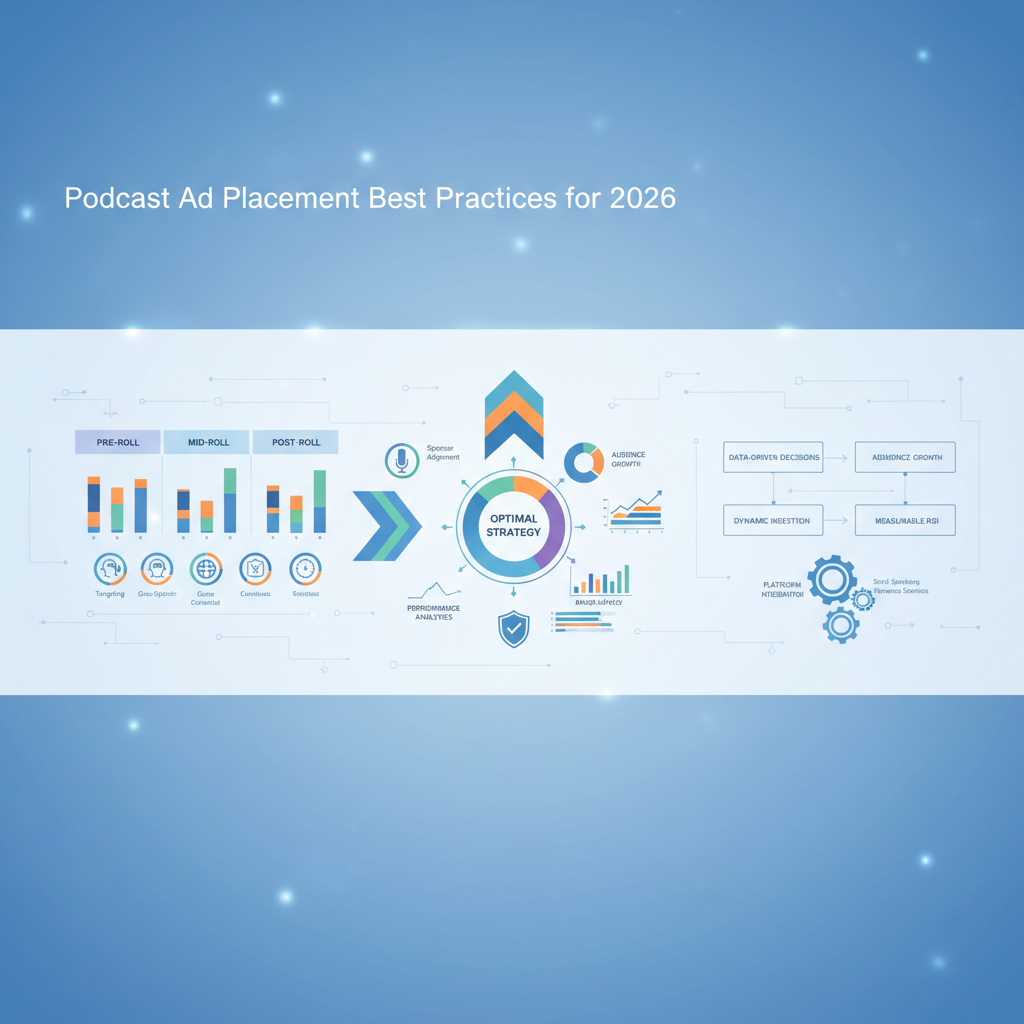
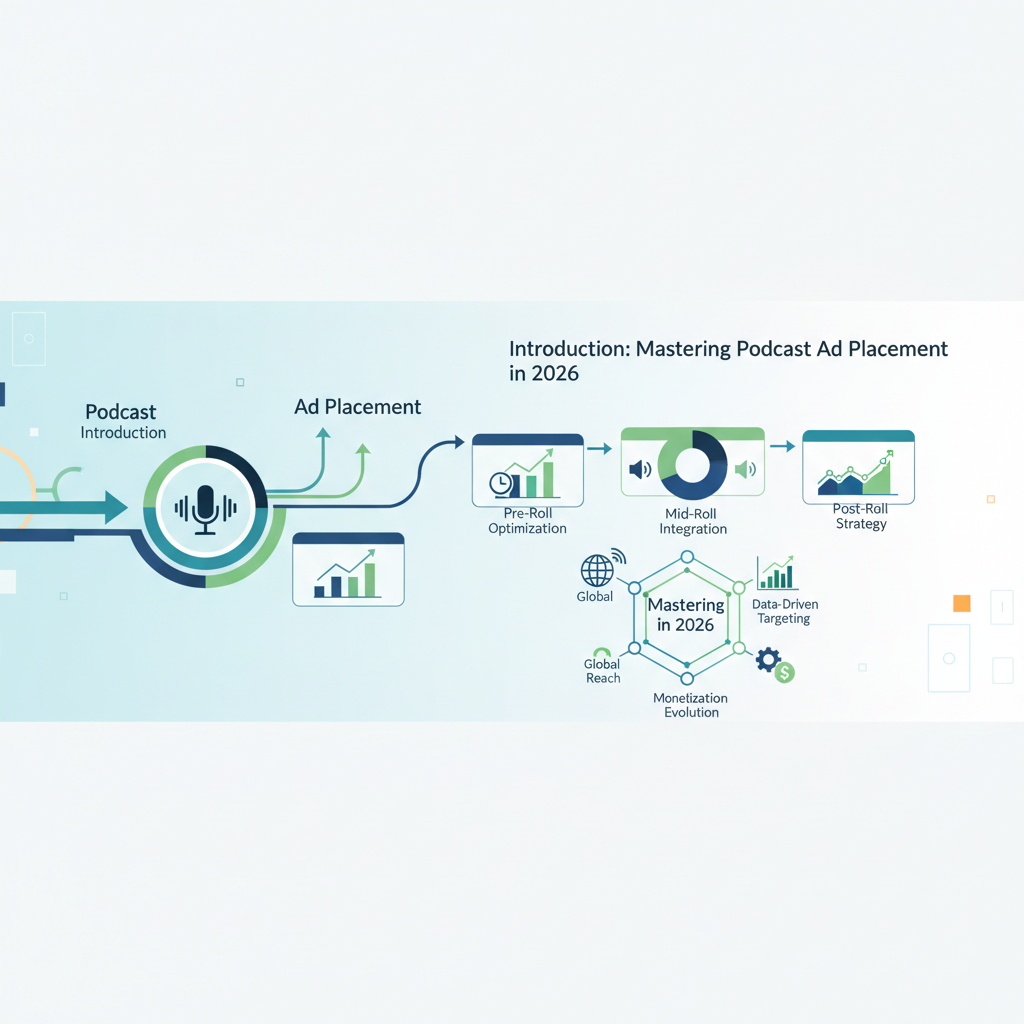
Introduction: Mastering Podcast Ad Placement in 2026
In 2026, the question for brands is no longer if they should advertise on podcasts, but how to do so effectively. The audio landscape is more vibrant—and more crowded—than ever.
With listenership reaching unprecedented heights and ad spend continuing its meteoric rise, simply securing a spot on a popular show is no longer a guaranteed path to success.
The modern podcast listener is discerning; they crave authenticity and are quick to tune out anything that feels disruptive or disingenuous.
This shift has placed an immense new pressure on advertisers to move beyond simple demographics and focus on a more nuanced factor: placement.
Why Strategic Ad Placement is Crucial for ROI
The difference between an ad that converts and one that gets skipped often comes down to where it’s placed within an episode.
A perfectly crafted message can fall flat if it interrupts a crucial moment in a true-crime narrative or feels tonally disconnected from a comedy show’s lighthearted banter.
This is where mastering podcast ad placement best practices becomes a critical lever for maximizing return on investment. It’s about more than just choosing between pre-roll, mid-roll, or post-roll. It’s about understanding the content’s rhythm, the host’s delivery style, and the listener’s mindset at the exact moment your ad plays.
At Big Pond Podcasts, we guide brands in navigating this complex terrain, ensuring their message enhances, rather than detracts from, the listening experience.
An ad that feels like a natural part of the conversation or a welcome recommendation from a trusted host is infinitely more powerful than one that feels like a jarring interruption.
As you’ll discover in this guide, strategic placement is the key to unlocking the true potential of podcast advertising, turning passive listeners into engaged customers. Getting it right is what separates a wasted budget from a campaign that resonates and drives real results.
Understanding Your Audience and Ad Goals
Before you even think about writing ad copy or negotiating rates, you must lay the groundwork. The most effective podcast ad placement best practices are built on a solid foundation of two key elements: a deep understanding of your target listener and a crystal-clear set of advertising goals. Without these, you’re essentially advertising in the dark, hoping your message randomly finds the right person. A strategic approach starts with knowing who you’re talking to and what you want them to do.
Defining Your Target Listener
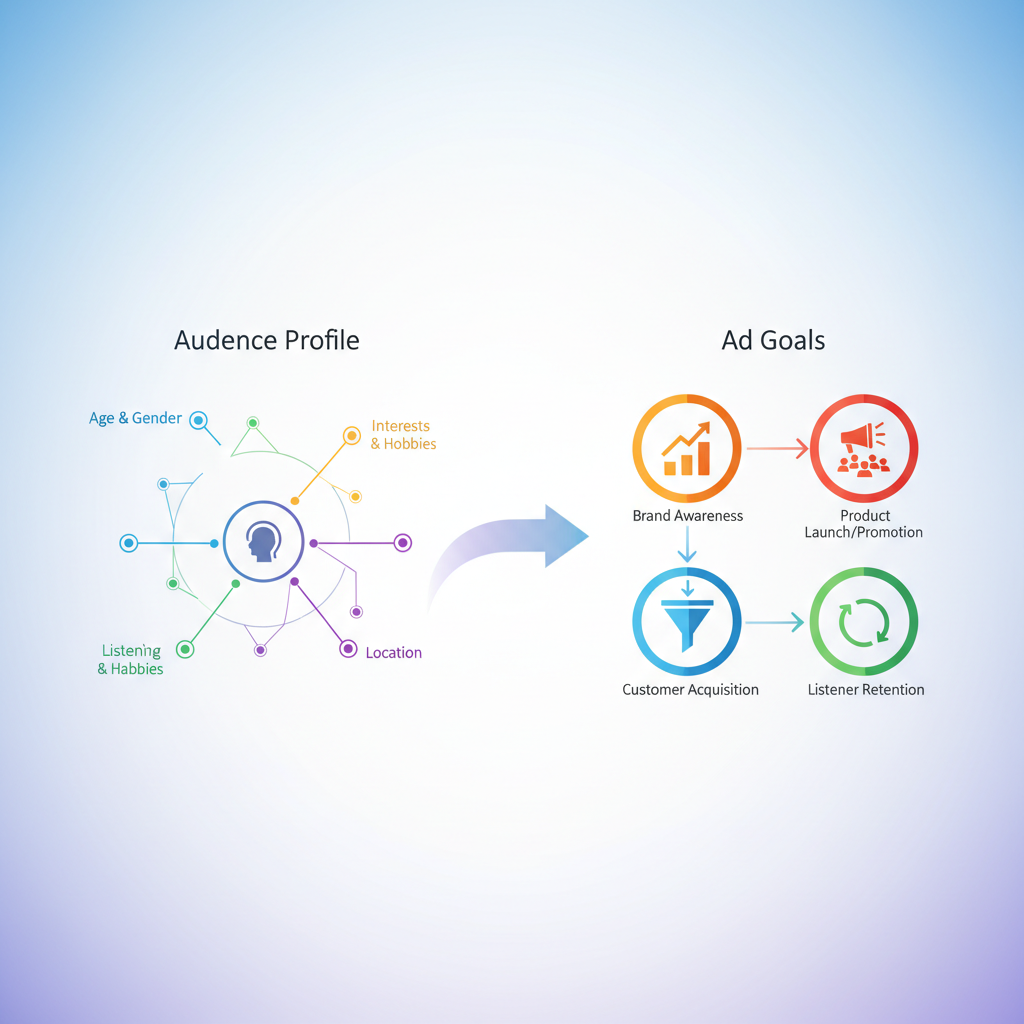
To achieve a strong return on investment, you need to move beyond basic show popularity and focus on audience alignment. This requires digging into both demographic and psychographic data.
Demographics tell you who your listeners are (age, location, gender), while psychographics explain why they listen—their interests, values, hobbies, and pain points. You can gather this information through listener surveys or by analyzing detailed reports.
For instance, podcasters using platforms like Big Pond Podcasts often have access to advanced analytics that paint a clear picture of their audience, making it easier for advertisers to verify a good fit. Aligning your ad with these specific listener profiles ensures your message resonates instead of irritates.
Setting Clear Advertising Objectives
Once you know your audience, define exactly what you want your ad to accomplish. Your objective will dictate the ad’s content, tone, and call-to-action. Most podcast advertising goals fall into one of three categories:
- Brand Awareness: The primary goal here is to increase familiarity and recall for your brand among a specific audience. The ad is designed to be memorable and build trust over time.
- Lead Generation: You aim to capture listener information, often by driving traffic to a landing page to download a guide, sign up for a webinar, or join an email list.
- Direct Sales: This objective is focused on driving immediate purchases, typically by offering a unique discount code or a special link exclusively for listeners.
Choosing the Right Ad Formats and Types
Once you’ve identified the right podcasts, the next step is selecting the ad format that will resonate most with their audience. This decision is central to effective podcast ad placement best practices, influencing everything from listener engagement to campaign ROI.
Exploring Different Ad Slots
The three primary ad slots are pre-roll (before the content), mid-roll (during a content break), and post-roll (after the content). Each has distinct advantages. Mid-roll ads typically command the highest listener engagement as they are placed within the core content, but pre-roll ads are unskippable for the first few seconds and excellent for broad brand awareness. Post-roll ads are often best for strong calls-to-action aimed at loyal listeners who stay until the very end.
| Ad Slot | Typical Engagement | Best For |
|---|---|---|
| Pre-roll | Moderate | Brand awareness, quick announcements |
| Mid-roll | High | Detailed promotions, direct response |
| Post-roll | Low | Strong CTAs for loyal listeners, bonus offers |
Native vs. Programmatic Advertising
Beyond timing, the delivery style is crucial. Host-read ads are a form of native advertising where the creator personally endorses your product. This method leverages the powerful bond of trust between the host and their listeners, often resulting in higher conversion rates due to its authentic feel.
Strategic Placement: Where and When to Insert Ads
The most effective ad campaigns are not just about great creative; they’re about impeccable timing. Understanding where to place ads within your episode is a critical component of podcast ad placement best practices and directly impacts listener engagement and revenue.
Optimizing Ad Breaks for Listener Experience
The three primary ad slots—pre-roll, mid-roll, and post-roll—each serve a different purpose. Mid-rolls consistently command the highest rates because they capture listeners when they are most engaged. However, poorly placed mid-rolls are also the most likely to cause listeners to drop off.
To avoid ad fatigue, limit the number and duration of your ad breaks. For a 30-minute episode, a single 60-second mid-roll break is often sufficient. For a 60-minute show, two well-placed mid-roll breaks can work without disrupting the flow.
The goal is to make the ad experience tolerable, if not enjoyable, by respecting the listener’s time. Overloading an episode with ads is a swift way to lose subscribers.
| Ad Placement | Listener Engagement | Best For |
|---|---|---|
| Pre-roll | Moderate | Quick brand awareness, announcements |
| Mid-roll | High | In-depth promotions, direct response calls |
| Post-roll | Low | Bonus offers, repeating a call-to-action |
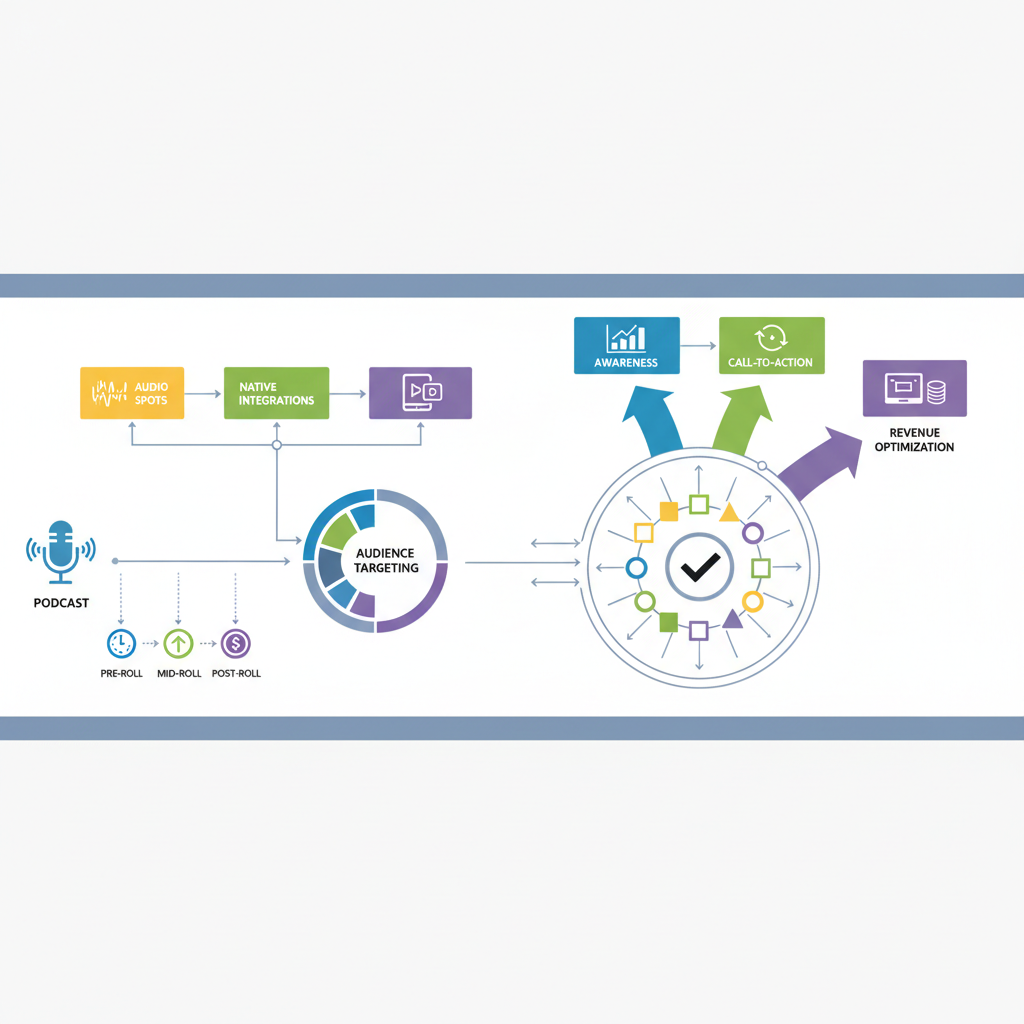
Considering Podcast Content and Flow
The art of strategic placement lies in making ads feel like a natural part of the show rather than a jarring interruption. Instead of dropping an ad at an arbitrary timestamp, look for organic transitions in your content.
These could be at the end of a segment, after a significant point has been made, or during a natural pause in the conversation.
Measuring Ad Performance and Optimization
Launching your ad is only the beginning. True success comes from diligently measuring performance and optimizing your strategy over time.
Without data, your campaign is running on guesswork, which is a surefire way to waste your budget. Effective measurement is the cornerstone of any successful podcast advertising initiative, allowing you to maximize return on investment (ROI).
Key Metrics for Podcast Ad Success
To get a full picture of your ad’s impact, you need to look beyond a single number. Start with top-of-funnel metrics like downloads and impressions, which tell you about your ad’s potential reach. Next, gauge engagement with the listen-through rate (LTR); a high LTR suggests your creative is resonating with the audience.
The most critical metrics, however, are tied to conversions. Track these using:
- Promo Codes: Unique codes attributed to specific shows or campaigns.
- Vanity URLs: Easy-to-remember URLs (e.g., yourbrand.com/podcast) that direct listeners to a specific landing page.
- Pixel-Based Attribution: Sophisticated tracking that connects ad listens to website actions.
A/B Testing and Iteration
Once you’re tracking these metrics, you can begin to optimize. This is where A/B testing becomes invaluable. By testing one variable at a time—such as the ad copy, the call-to-action, or even the ad’s position—you can identify what drives the best results.
For example, does a pre-roll ad with a direct offer outperform a mid-roll ad with a brand story?
Hosting platforms like Big Pond Podcasts provide detailed analytics dashboards that make tracking these variables straightforward, empowering you to make data-driven decisions.
This continuous cycle of testing, learning, and refining is fundamental to podcast ad placement best practices. It ensures your campaign evolves, improves, and consistently delivers a stronger return on your ad spend.
Frequently Asked Questions About Podcast Ad Placement
Navigating the nuances of monetization can be challenging. Here are answers to common questions about podcast ad placement best practices to help you build a successful and listener-friendly strategy for 2026 and beyond.
How many ads should I place in a 30-minute podcast episode?
For a 30-minute episode, a common best practice is to include two to three ad slots: one pre-roll (at the beginning), one mid-roll (around the 15-minute mark), and one post-roll (at the end).
This structure provides monetization opportunities without disrupting the listener experience too much.
Is it better to have host-read or produced ads?
Both have their strengths. Host-read ads feel authentic and personal, often leading to higher listener trust and conversion rates as they sound like a genuine endorsement. Produced ads, created by the brand, are scalable and ensure consistent messaging across multiple podcasts but can sometimes feel more jarring to the listener.
What’s the ideal length for a podcast ad?
Ad length typically corresponds to its placement. Pre-rolls are usually short and sweet at 15-30 seconds. Mid-rolls are the premium slot and can run for 60-90 seconds, allowing for deeper storytelling. Post-rolls are often around 30 seconds, serving as a final call-to-action.
How can I ensure my ads reach the right audience?
Modern podcast hosting platforms enable sophisticated targeting. Dynamic Ad Insertion (DAI) allows you to target listeners based on factors like geographic location, device type, and other available demographic data, ensuring your sponsor’s message connects with the most relevant audience segments.
What are the privacy considerations for podcast advertising in 2026?
As of 2026, listener privacy is paramount. The trend is moving away from third-party tracking toward privacy-centric solutions. This means leveraging contextual targeting (placing ads on relevant shows) and relying on first-party data collected with user consent is becoming the industry standard.
Can Big Pond Podcasts help with ad placement strategies?
Conclusion: Elevate Your Podcast Advertising Strategy in 2026 and Beyond
As we move forward in 2026, the anachronistic approach of simply interrupting a podcast with a generic ad is definitively over. True success lies in creating a seamless, value-driven experience where advertisements feel less like a disruption and more like a relevant recommendation from a trusted source. The core of modern podcast advertising is connection, and mastering the art of placement is how you forge that bond with listeners.
Recap of Key Best Practices
Throughout this guide, we’ve explored the foundational pillars of effective ad placement. It begins with a deep, data-informed understanding of your target audience.
From there, it’s about strategically choosing your format—whether the immediate impact of a pre-roll, the deep engagement of a mid-roll, or the lasting impression of a post-roll—and aligning it with the show’s natural rhythm.
Balancing the authenticity of host-read ads with the scale of programmatic insertion allows for a flexible and powerful campaign. Implementing these podcast ad placement best practices is no longer a competitive advantage; it’s the standard for achieving a meaningful return on your investment.
The Future of Podcast Advertising
The landscape of audio advertising is continuously evolving. Looking ahead, expect dynamic ad insertion (DAI) to become even more sophisticated, allowing for hyper-targeted, real-time ad serving based on listener demographics, location, and even listening habits.
The integration of AI will refine this process further, predicting the most effective ad placements for maximum resonance. As an advertiser, your ability to adapt and embrace these technological shifts will directly correlate with your success.
The future belongs to those who leverage data and technology to create smarter, more context-aware advertising campaigns. To stay ahead, you must treat learning and adaptation as continuous parts of your strategy. By doing so, you can master the podcast ad placement best practices of tomorrow.
Ultimately, executing a sophisticated strategy requires a platform built for the modern era of podcasting. Services like Big Pond Podcasts are designed to simplify this complexity, offering intuitive tools for dynamic ad insertion, detailed analytics, and access to a diverse network of shows. Partnering with a platform that understands the nuances of ad placement empowers you to focus on what matters most: crafting a brilliant message that connects with an engaged audience.
