Our Blog
Podcast Subscriptions vs Memberships: Where the Fees Go
Apple takes up to 30% while flat-fee tools charge $30 a month. Compare platform fees and private feeds for your podcast.
No. They solve different problems, and mixing them up is how creators end up with three gated feeds, confused listeners, and a conversion rate that never climbs.
Comparison at a Glance
| Use Case | Pricing | Best Feature | Watch Out For |
|---|---|---|---|
| Apple Podcasts Subscriptions | 30% platform fee in each subscriber’s first year, 15% after, per Beamly’s fee comparison | In-app purchase inside the listening app fans already use | Highest fee of the compared platforms |
| Spotify Memberships | 10% flat platform fee covering processing, per Beamly | Private RSS link lets members listen outside Spotify too | Fee applies to new members; some older members kept 5.5% |
| Supercast | $0.59 per subscriber per month plus Stripe fees, per Acast | Cost shrinks as a share of revenue as your list grows | Transaction and recurring billing fees stack on top |
| Patreon | 10% platform fee on pages published after August 4, 2025, per Talks.co | Built-in community and posts beyond audio | Processing, currency conversion, and Apple’s iOS cut can stack |
| Beamly | $30/month billed annually, 0% platform fees, per Beamly | Flat price regardless of subscriber count | Annual billing commitment |
| Paid Memberships Pro | Self-hosted, pricing set by the creator | Private feed plus BuddyPress, BuddyBoss, or bbPress community integration, per Paid Memberships Pro | You run the infrastructure yourself |
| Substack | Creators keep 90%, Substack takes 10%, per Acast | Free to publish, newsletter and podcast hosting combined | Built for writing first, audio second |
| Apple Podcasts Channels | Free to create, per Apple | Subscribers are 20% more likely to listen to other shows in your channel | Only useful if you run more than one show |
Should you monetize podcasts through in-app subscriptions or external private feeds?
Here’s the constraint nobody tells you upfront: your listener’s app choice limits your pricing model before you’ve picked a single perk.
A fan who lives inside Apple Podcasts won’t jump to a browser to pay you. A fan who lives on Spotify expects the purchase to happen there too.
That’s the whole case for in-app subscriptions. Apple Podcasts Subscriptions lets you launch a premium tier inside the same app where listeners already browse and press play. You can offer ad-free listening, early access, and bonus episodes, and Apple handles the billing relationship.
Spotify runs a parallel system called Spotify Memberships. A listener taps a locked episode or membership banner, picks a tier, pays, and gets unlocked content back inside Spotify. But Spotify also hands you a Private RSS Link in the confirmation email, according to Spotify’s support page. That link works in any podcast app, not just Spotify. So a member who prefers Overcast or Pocket Casts can still listen to your bonus content without being trapped inside Spotify’s player.
That’s a bigger deal than it sounds. In-app subscriptions tie your bonus content to one platform’s ecosystem. A private RSS feed doesn’t.
This is where tools like Paid Memberships Pro come in. It distributes private podcast feeds containing bonus episodes and early access, the same core mechanic as the native platform options. But it adds something neither Apple nor Spotify offers out of the box: community integration with BuddyPress, BuddyBoss, and bbPress forums.
A members-only forum, close look articles, or behind-the-scenes content sit alongside the audio feed, all gated by the same login.
Should you pick in-app or external? Ask where your audience already is.
If 90% of your downloads come through Apple Podcasts, fighting that habit with an external paywall is a losing battle. Use the in-app tool.
If your audience is scattered across apps, or if you want more than audio (community, articles, video), a private feed through something like Paid Memberships Pro gives you one gate instead of three separate app-specific subscriptions.
One mistake we see constantly: creators launch a subscription on every platform at once. Three separate purchase flows for the same bonus content. Listeners get confused about which one they already paid for, support tickets pile up, and conversion drops because nobody wants to figure out which app to pay in.
Pick one primary purchase path. Mirror the content elsewhere if you must, but don’t make listeners choose.
Independent membership tools replace revenue cuts with flat monthly pricing
The math changes fast once your list grows, and that’s the decision this section supports: flat-fee tools get cheaper per subscriber as you scale, while percentage-based platforms don’t.
Look at the numbers. Beamly itself, billed at $30/month annually with 0% platform fees, keeps that same $30 regardless of how many members you have.

That spread is the whole argument for flat-rate tools. A percentage fee feels small at 50 subscribers. At 1,000, it’s real money leaving every month, forever, as long as you keep those subscribers.
But flat pricing has its own trade-off. You pay the fee whether you have 10 members or 10,000. Early on, before you’ve built an audience, that fixed cost can outweigh a percentage cut on small revenue.
Supercast sits in an interesting middle spot. It charges $0.59 per subscriber per month plus Stripe’s processing fees, according to Acast, so the cost shrinks as a percentage of revenue the bigger your subscriber base gets. Talks.co’s comparison also notes Supercast layers a transaction fee of 2.9% plus $0.30 per payment, plus 0.7% on recurring billing, on top of that per-subscriber charge. Patreon, by contrast, charges a 10% platform cut for new creators plus processing, currency conversion, and up to 30% in fees on iOS purchases.
Spotify’s own legal terms draw a clear line here too. Spotify describes Paid Subscriptions as service options that require payment before access, and explicitly states it’s “not responsible for the products and services provided by such third parties” for promotional offerings from outside partners, per Spotify’s legal page. That’s worth knowing if you’re layering a third-party deal on top of a Spotify membership tier. Spotify isn’t backing that part of the arrangement.
Here’s the judgment call: don’t pick a pricing model based on where you’re today. Pick it based on where you’ll be in twelve months.
If you expect to stay under a couple hundred subscribers, a percentage fee probably costs less in raw dollars than a flat monthly charge. If you expect real growth, a flat fee starts paying for itself once you cross whatever breakeven point matches your chosen tool’s price.
Run the math on your own numbers before committing. A spreadsheet with three columns (expected subscribers, your show’s price point, and each platform’s fee) takes ten minutes and saves months of second-guessing.
Native channel tools increase network discovery but risk lapsed renewals
Run more than one show? Apple’s channel feature changes the math, but it comes with a billing trap most creators don’t see coming until it bites them.
If you have multiple shows, Apple lets you group them into a channel for free. You can then offer a single channel-level subscription covering premium benefits across one or more of those shows.
The payoff is measurable. Listeners who subscribe to your channel are 20% more likely to listen to your other shows in that channel than nonsubscribers, according to Apple’s own data. That’s cross-show discovery you don’t get from running separate, disconnected feeds.

But a channel subscription is still a recurring payment, and recurring payments depend on a working card on file. This is where the Apple Podcasters Program adds a real constraint: you need a valid payment method tied to your Apple account before your plan’s renewal date, or the program itself can expire, according to Apple’s support documentation.
The consequence isn’t abstract. If a subscriber is up for billing renewal while your membership has expired, Apple states plainly that “their renewal will fail and a refund will be issued.”
Think about what that means in practice. A listener who has paid you for six months straight hits a billing cycle the same week your own payment method lapsed. Their card gets charged, nothing happens, and Apple refunds them automatically. You just lost a renewal you’d already earned, and the listener saw a failed transaction tied to your name.
That’s not a hypothetical edge case. Expired cards, canceled business accounts, updated billing details that never got synced, any of these trigger it.
The fix isn’t complicated: check your payment method on file every time you update a card anywhere else in your financial life. Set a calendar reminder tied to your renewal date, not just a mental note.
Choose channel subscriptions if you run multiple shows and want listeners to discover your other content, not just your flagship one. Choose a single-show subscription if cross-promotion doesn’t apply to you yet, or if managing one payment relationship with Apple feels like enough to track without adding a second layer of renewal risk.
Validate engagement before you build any tier
Before picking a platform, or a price, or a bundle of perks, check whether anyone wants to pay for what you’re about to gate. Build your free audience first.
Track which episodes generate the most direct listener engagement. Replies, reviews, social mentions, these are the signals, according to Acast’s guide to podcast subscriptions.
Then introduce a paid tier for the segment of listeners already showing up for you in those ways.
This matters more than fee comparisons or feature lists. A perfectly priced subscription on the cheapest platform still fails if nobody was engaged enough to want more from you in the first place.
Most successful podcast subscriptions land between $5 and $20 a month, per Acast, though the right number for your show depends on audience size, how much content you’re willing to gate, and what your listeners already pay for comparable things. Some creators keep almost everything free and charge only for extras. Others build subscription-first shows where the public feed is closer to a trailer.
Use-Case Verdicts
Choose Apple Podcasts Subscriptions if your audience is overwhelmingly on Apple’s platform and you want the lowest-friction purchase path, even with the higher fee.
Choose Spotify Memberships if your show already lives on Spotify for Creators and you want the option to extend access via private RSS to listeners on other apps.
Choose Supercast or a similar per-subscriber tool if you expect strong growth and want fees that shrink as a share of revenue over time.
Choose Beamly or another flat-fee platform if you already have, or expect to quickly reach, enough subscribers that a percentage cut would cost more than a fixed monthly price.
Choose Paid Memberships Pro if your bonus content goes beyond audio, community forums, written close looks, video, and you want one login gating all of it.
Choose an Apple Podcasts channel if you run multiple shows and want a single subscription to drive listeners across your catalog.
Frequently Asked Questions
What is the actual difference between a subscription and a premium membership?
A subscription usually refers to the in-app purchase models run by Apple Podcasts or Spotify, where the platform handles billing and the listener opens up content inside that same app. A premium membership typically describes an independent, creator-run offering, like one built through Paid Memberships Pro, Supercast, or Patreon, distributed via a private RSS feed or member login that works across apps. Both gate the same kinds of content, bonus episodes, ad-free feeds, early access, but the platform relationship and fee structure differ.
Does Spotify take a cut of podcast subscription revenue?
No, according to Spotify’s own community support team, 0% of paid podcast subscription revenue goes to Spotify. That revenue goes directly to the podcast creator, with Spotify simply providing the in-app purchase option so listeners don’t have to leave the app, per Spotify’s community forum. Spotify Memberships, the newer tiered product, does carry a 10% platform fee for new members as of its October 2026 rollout, per Beamly, which is a separate mechanism from the paid-subscription model described in the forum post.
Can I run a private podcast feed without Apple or Spotify at all?
Yes. Tools built for this, like Paid Memberships Pro, distribute a private feed containing bonus episodes and early access content independent of any single listening app, per Paid Memberships Pro’s documentation. Members get a feed URL to add to whatever app they already use, Apple Podcasts, Overcast, Pocket Casts, anything that accepts a custom feed.
Why would a listener’s renewal fail even though they want to keep paying?
If the podcast creator’s own Apple Podcasters Program payment method has lapsed, the entire program plan can expire. When that happens, a subscriber’s renewal attempt fails automatically and Apple issues a refund instead, per Apple’s support page. The listener did nothing wrong. The failure traces back to the creator’s account, not the subscriber’s card.
Is it worth bundling multiple shows into one subscription?
It depends on whether you run more than one active show. If you do, grouping them into a free Apple Podcasts channel and offering a channel-level subscription makes cross-show discovery measurably more likely, listeners who subscribe to a channel are 20% more likely to listen to the creator’s other shows in that channel, per Apple’s own data. If you only run a single show, this feature doesn’t apply and a standard show-level subscription is the simpler path.
Before you commit to a platform or a price, get the engagement signal right first. A gated tier built on guesswork, rather than on episodes your listeners already reply to, review, and share, tends to underperform no matter how well you price it or which fee structure you pick.
Book a call with us to talk through your show’s specific numbers before you launch a tier you can’t easily walk back. Contact Big Pond Podcasts to talk through your next step.
About the author
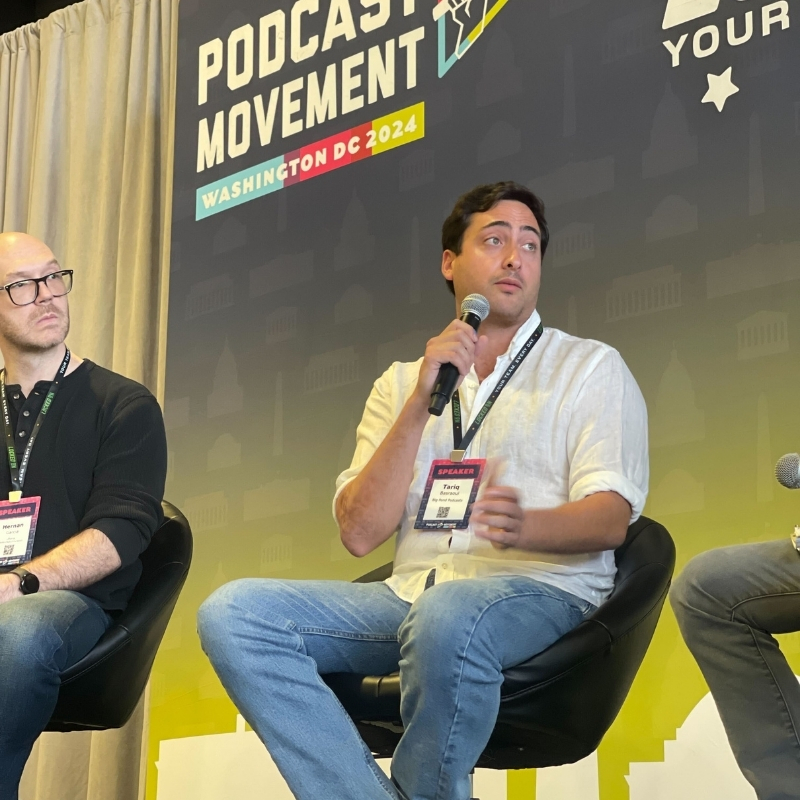
Tariq Basraoui
CEO
Tariq O’Keefe Basraoui, Co-Founder of Big Pond Podcasts, is a seasoned digital marketer and community builder with a track record of success at platforms like TikTok and Zencastr. Known for launching Zencastr’s Creator Network to over 15,000 members in 18 months, his expertise lies in growing user bases and enhancing brand engagement.
His strategic approach to growth and community engagement has established him as a leader in creating some of the fastest-growing media networks in podcasting.