Our Blog
How to Reach a Niche Audience That Doesn’t Click Ads
Follow six steps to reach a niche audience that avoids ads, using zero-link posts, newsletter buys, and a one-page audit.
A producer spends $400 boosting a LinkedIn post with a link to episode 12. It gets 390 impressions and four clicks. The same week, a plain text post from a competitor, no link, no ask, pulls 800 impressions organically.
Same platform, same audience, opposite result.
That gap is the whole problem with ad-resistant niche audiences. They’re not ignoring your show.
They’re ignoring the format.
By the end of this, you’ll have a working plan for reaching a niche podcast audience that treats ads and links as noise, using platform-native posts, newsletter placements, partner alignment, and a way to report results without click data.
Prerequisites
- A clear sense of who your niche audience actually is (not “podcast fans,” but the specific community, interest, or identity group they share)
- At least one piece of show content you can repurpose as a standalone post (a quote, a stat, a story beat)
- Access to your show’s social accounts and, ideally, an email list or newsletter relationship in your niche
- A way to track mentions, shares, and saves, since you won’t be tracking clicks
Step 1: Diagnose why your audience won’t click
Your niche audience isn’t lazy. They’re trained.
LinkedIn posts with a link preview attached get a median of 414 impressions. Posts without one get 795, according to MagicPost’s study cited by Semrush. That’s not a glitch. Readers and the platform both treat an outbound link as a reason to scroll past.
Search behaves the same way. When Google shows an AI summary, only 8% of searchers click an organic result below it. Without a summary, 15% click through, according to Pew Research data cited by Semrush.

So the fix isn’t a better link. It’s fewer links. Verifiable outcome: you can name, in one sentence, which platform habit is suppressing your current posts.
Step 2: Post the full idea natively, with no link
Stop treating social posts as teasers. Treat them as the content.
A post that delivers the whole message, a quote, a finding, a short story, needs no click to pay off for the reader. Semrush points to exactly this pattern: a post with no link and no missing information performs better because users “don’t need more details” to get value from it, according to Semrush’s zero-click marketing analysis. The approach of building native-to-platform content that delivers standalone value, instead of relying on bait-and-switch tactics, is the same principle laid out in the Zero Click Marketing book.
The trade-off is real. You give up the easy download counter. You can’t point to a click number and call it proof.
What you get instead is reach. More people see the idea. Some of them remember your show’s name. A few go looking for you later, on their own terms, which is a different kind of intent than a forced click.
Big Pond Podcasts believes a show’s advertising value rests on audience demographics, engagement rates, and niche relevance, not download counts. A post that gets shared and commented on inside a tight community is doing exactly that work, even with zero clicks attached to it.
Step 3: Buy into newsletters your audience already trusts
Ads inside a trusted newsletter don’t feel like ads the same way a banner does. The reader opted in.
They know the sender.
That changes how a native placement lands.
If a full sponsorship slot is out of budget, cost-per-click native ads inside a newsletter ad network are a cheaper way in. Paved describes this option as a way to reach publications “for a fraction of the cost of a traditional sponsorship,” running through its programmatic ad network.
This matters for a tight budget specifically. A dedicated sponsorship buy commits you to one newsletter, one audience, one price. A CPC native placement spreads smaller spend across more inboxes and only charges when someone actually engages.

The catch: native ads still need a reason to stop a scroll. A niche audience that already ignores display ds will ignore a lazy native one too.
Step 4: Align with distribution partners on who you’re actually targeting
Cross-promotion only works when both sides agree on the target. Vague swaps waste the slot.
In channel marketing, a data-driven ideal customer profile gives vendors and partners a shared definition of the right prospect, so both sides segment and engage the same qualified audience at the right moment, according to DemandScience’s guide to advanced targeting. Personalization is table stakes now. Without a shared profile, partners end up targeting adjacent but different audiences and wondering why the swap underperformed.
For a podcast, this means picking cross-promotion partners by audience match, not download count. A show with 2,000 loyal listeners in your exact niche beats a show with 20,000 listeners in a loosely related one.
Before agreeing to any swap, write down three traits your ideal listener shares. Check the partner’s show against those traits, not against their stats page.
Step 5: Report reach without a single click
No clicks doesn’t mean no proof. It means a different kind of proof.
Executives and budget holders trained on click attribution will ask for numbers you don’t have. The fix isn’t to invent a number.
It’s to show presence instead.
SparkToro’s advice for this exact fight: show that competitors are already succeeding with social engagement, AI answer appearances, and newsletter mentions, and use those examples as the argument, according to SparkToro’s zero-click marketing FAQ. Catalog where your show (and competing shows) show up: newsletter features, AI summary citations, social threads talking about an episode.
Attribution was always rougher than it looked. SparkToro puts it plainly: the old click-based measurement was “always a guesstimate,” and the guess has only gotten worse as data sources dry up and privacy rules tighten.
Verifiable outcome: a one-page audit listing every place your show was mentioned, quoted, or featured last month, with no click numbers attached.
Step 6: Let the community find you through its own channels, not your feed
A gym owner built an audience by writing about gym-ownership problems for an audience that was 90% gym owners, according to Two Brain Business. No ad spend. No funnel. Just years of solving the same problems the audience already had, in public.
That’s the model worth copying. Niche podcasts tend to carry a more loyal listenership than big-name shows, even with smaller audiences, according to Acast’s guide to niche podcast sponsorships.
Loyalty is the asset.
Reach is secondary.
Finding where that loyalty already lives matters more than any single tactic. Look at the podcast community building strategies your target niche already gathers around, whether that’s a subreddit, a Discord, or a regional Facebook group, and show up there as a contributor first.
This takes longer than a paid push. Budget for patience, not just dollars.
Troubleshooting
Your native posts get impressions but no mentions of your show name. The post delivered value but didn’t carry your identity. Add a one-line credit inside the post body itself, not a link.
A newsletter placement underperforms. Check audience match first, format second. A perfectly written ad in the wrong newsletter still fails.
A cross-promotion swap brings traffic that doesn’t convert to listeners. The partner’s audience profile didn’t match yours as closely as the download numbers suggested. Revisit the shared profile before the next swap.
Leadership still wants a click number. Give them the competitive audit instead, and frame it as the number that still exists when clicks don’t.
Frequently Asked Questions
Does zero-click content mean I should stop linking to my episodes entirely?
No, it means separating platforms by purpose. Native posts on social carry the full idea with no link; your show notes, newsletter, and website still need links for people who want to go deeper. The data above applies to feed posts and search snippets, not every channel you own.
How long before native content outperforms link-based posts?
There’s no fixed timeline in the research here. Link-attached posts get suppressed engagement on platforms like LinkedIn, so removing the link removes that specific drag. How fast that shows up depends on your posting frequency and how good the standalone content is.
Is a newsletter CPC placement better than a direct sponsorship?
It depends on budget size and risk tolerance. CPC native ads cost less upfront and only charge on engagement, a better fit for a tight budget testing a new niche. A direct sponsorship guarantees placement regardless of performance, better suited once you already know the audience converts.
Can I measure success at all without clicks?
Yes, through mentions, shares, saves, and newsletter or AI-summary appearances, tracked manually rather than through an analytics dashboard. It’s slower to compile but it’s the standard SparkToro recommends for reporting in a zero-click environment.
Reaching an audience that won’t click isn’t a workaround for weaker marketing, it’s an acknowledgment that trust and presence now carry the weight clicks used to carry, and the shows that build both will keep reaching listeners long after another boosted post gets scrolled past. Contact Big Pond Podcasts to talk through your next step.
About the author
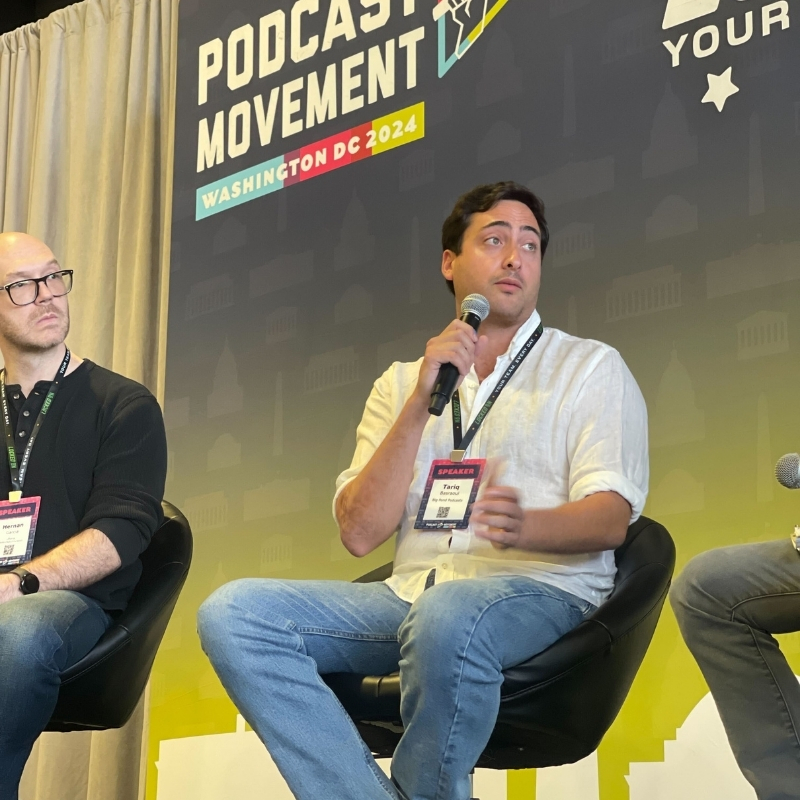
Tariq Basraoui
CEO
Tariq O’Keefe Basraoui, Co-Founder of Big Pond Podcasts, is a seasoned digital marketer and community builder with a track record of success at platforms like TikTok and Zencastr. Known for launching Zencastr’s Creator Network to over 15,000 members in 18 months, his expertise lies in growing user bases and enhancing brand engagement.
His strategic approach to growth and community engagement has established him as a leader in creating some of the fastest-growing media networks in podcasting.