
Understanding the Fundamentals: What is CPM in Podcast Advertising?
Your podcast is gaining momentum, and brands are finally taking notice. But when an advertiser asks for your rates, a moment of panic might set in. What do you charge? How do you set a price that’s fair to you and attractive to them? This is where understanding a crucial industry metric comes into play: CPM. Grasping this concept is the first step toward effectively monetizing your content and understanding the landscape of podcast advertising cost per mille.
Defining Cost Per Mille (CPM)
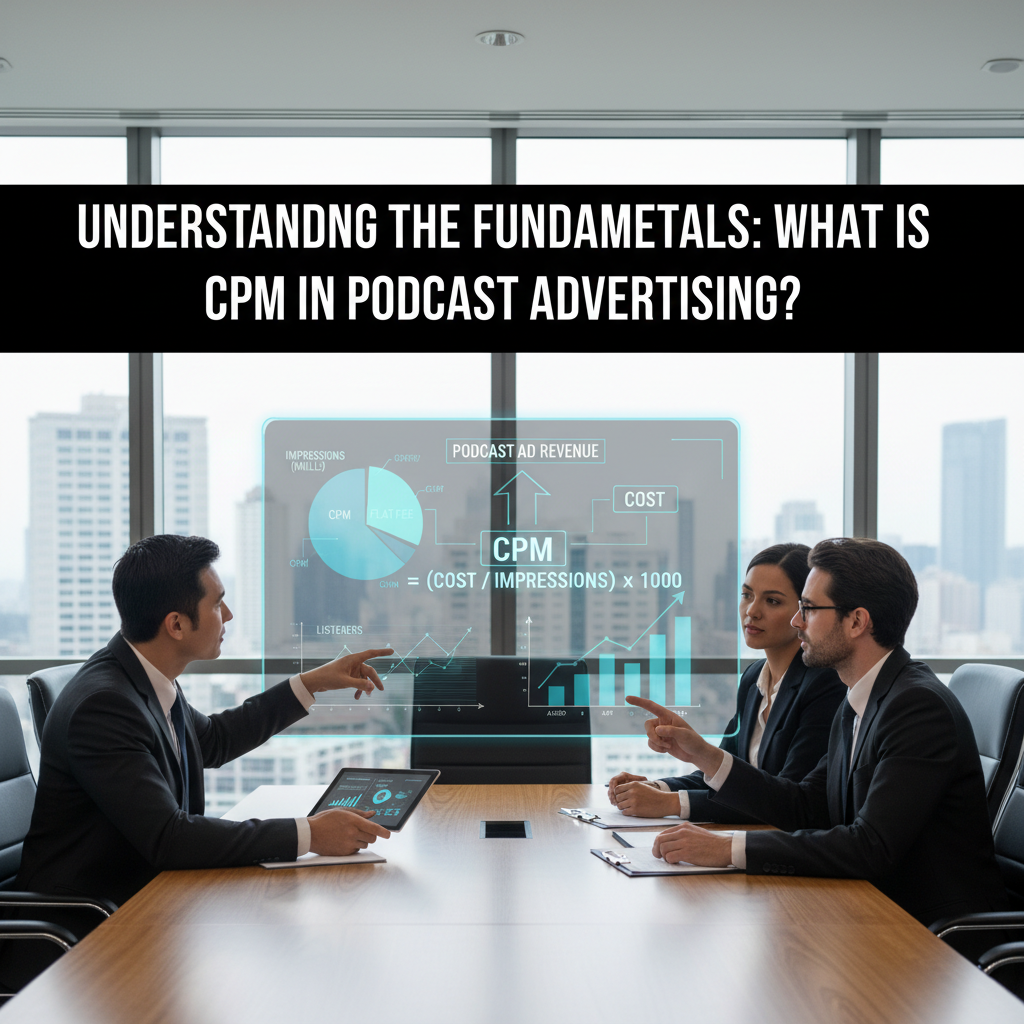
CPM stands for “Cost Per Mille,” with “mille” being the Latin word for a thousand. In the simplest terms, CPM is the price an advertiser pays for one thousand listens or impressions of their advertisement. If a podcast has a CPM of $25, it means an advertiser will pay $25 every time their ad is downloaded 1,000 times within your episode. It’s the standard unit of currency in the audio advertising world, providing a clear benchmark for pricing. You’ll see this metric used everywhere, from independent creator rate cards to large-scale programmatic ad marketplaces.
Why CPM Matters in Podcasting
CPM is the great equalizer. It allows both podcasters and advertisers to compare ad costs across shows of vastly different sizes on an apples-to-apples basis. Without it, how could an advertiser fairly compare placing an ad on a niche show with 5,000 listeners to a chart-topper with 500,000? CPM standardizes the value, shifting the focus from total audience to the cost of reaching a thousand targeted individuals. This enables advertisers to make informed budget decisions and helps you price your ad slots competitively, ensuring your podcast advertising cost per mille aligns with industry expectations for your genre and audience type.
Calculating Your Podcast Ad CPM
The formula for calculating CPM is straightforward. You can use it to determine your rate or to see what CPM an advertiser’s offer equates to.
CPM = (Total Ad Cost / Total Impressions) x 1000
For example, if an advertiser offers you $400 for a mid-roll ad in an episode that you project will receive 20,000 downloads, the calculation would be: ($400 / 20,000) * 1000, which equals a $20 CPM. Understanding this simple calculation empowers you to navigate negotiations with confidence.
Factors Influencing Podcast Advertising CPM in 2026
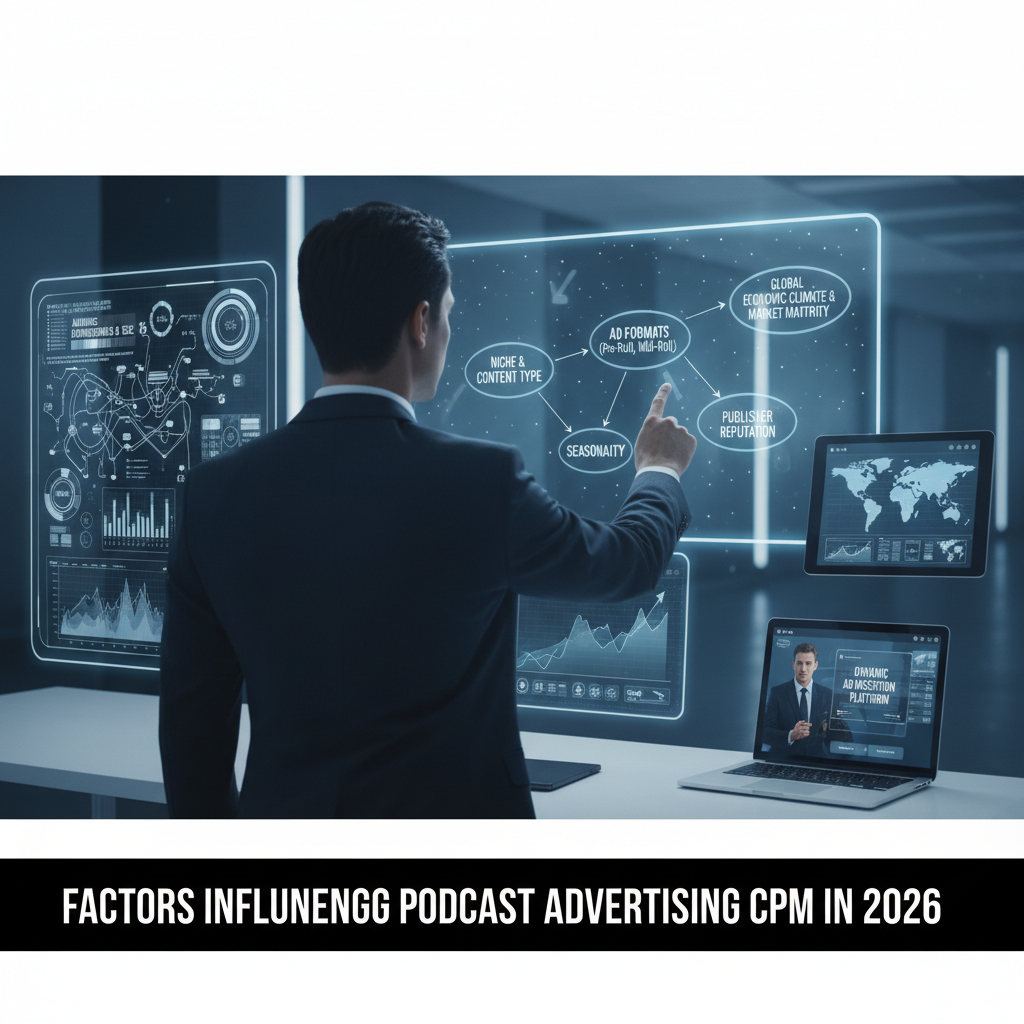
The podcast advertising cost per mille isn’t a universal flat rate. Instead, it’s a dynamic figure that shifts based on several critical factors that determine an audience’s value to an advertiser. Understanding these variables is essential for both podcasters setting their rates and brands building their campaigns in 2026.
Podcast Niche and Audience Demographics
The more targeted the audience, the higher the CPM. A general pop culture podcast may have a large listenership, but a show dedicated to enterprise financial software or surgical robotics can command a much higher rate. Advertisers are willing to pay a premium to reach a concentrated group of high-value decision-makers, such as CFOs or surgeons, because the potential return on investment is far greater. Even with a smaller audience, a specialized podcast offers unmatched access to a specific demographic, making it incredibly valuable. Exploring niche podcast advertising opportunities in 2026 reveals just how lucrative a focused podcast can be.
Ad Format (Host-Read vs. Programmatic)
The delivery of your ad significantly impacts its price. Host-read ads, where the host personally endorses a product in their own voice, are the gold standard for podcast advertising. They feel authentic and leverage the deep trust between the host and their listeners, commanding the highest CPMs. In contrast, programmatic ads are automatically inserted into ad slots, offering scale and efficiency but lacking the personal touch of a host endorsement. Consequently, programmatic CPMs are typically lower. Platforms built for modern podcasters, such as Big Pond Podcasts, offer robust tools to seamlessly manage both dynamic insertion for host-read ads and programmatic fills, giving creators full control over their monetization strategy.
Exclusivity and Ad Placement
Where an ad appears within an episode is just as important as what the ad says. The placement hierarchy generally follows listener engagement levels:
Average Podcast Advertising CPM Rates for 2026
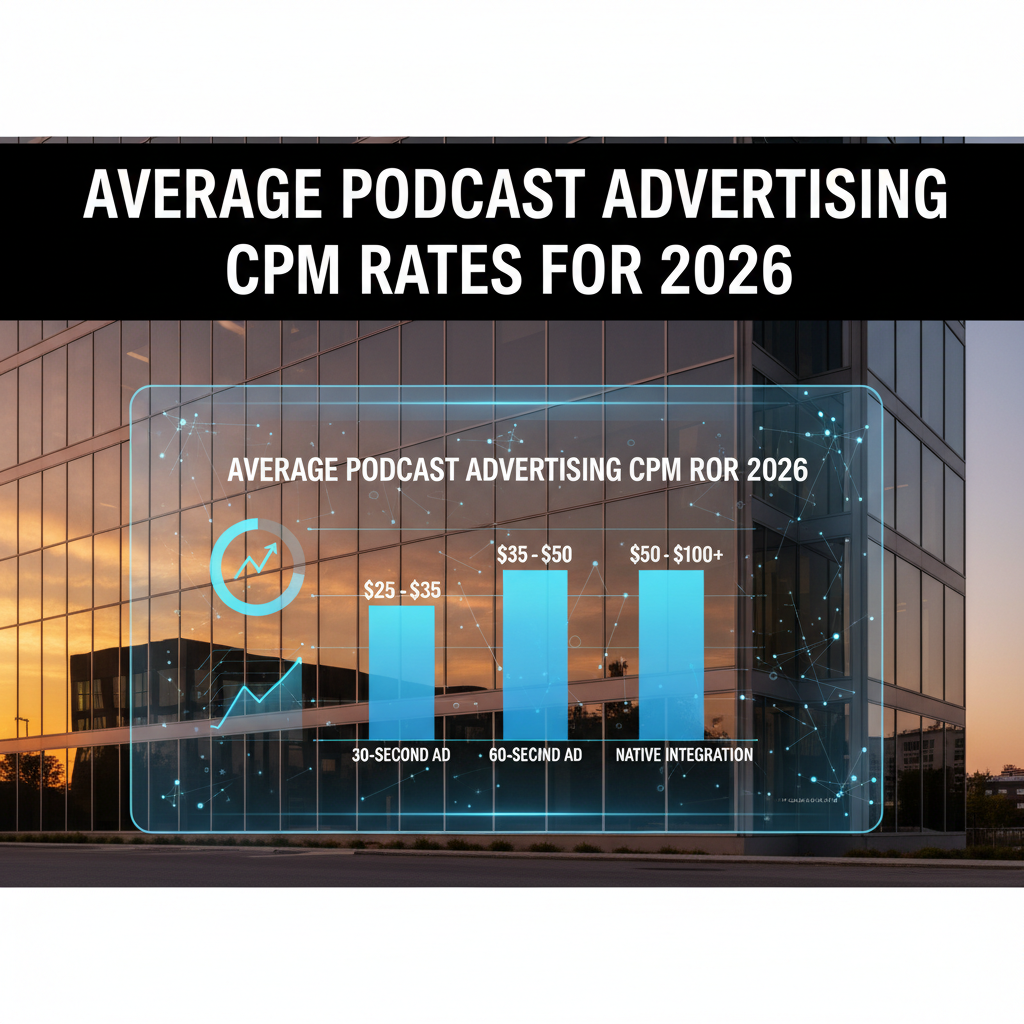
Understanding the typical podcast advertising cost per mille is essential for both creators and advertisers. While a standard $18 to $25 CPM is a common ballpark figure for a 60-second ad, the actual rate you can command varies significantly based on your show’s genre, audience engagement, and ad placement. As the industry matures, these nuances become even more critical for effective monetization.
Industry Benchmarks by Genre
Not all podcast downloads are valued equally. Advertisers are willing to pay a premium for access to highly targeted, affluent, or niche audiences. Shows in categories like business and technology often command the highest CPMs due to the purchasing power and professional relevance of their listeners. Here are some typical CPM ranges you can expect to see across popular genres in 2026.
| Podcast Genre | Typical 30-Second Ad CPM | Typical 60-Second Ad CPM |
|---|---|---|
| Business & Finance | $25 – $40 | $30 – $50+ |
| Technology | $22 – $35 | $25 – $45 |
| Health & Wellness | $20 – $30 | $22 – $40 |
| True Crime | $18 – $25 | $20 – $35 |
| Comedy & Entertainment | $15 – $22 | $18 – $30 |
CPM Trends and Predictions for the Future
The outlook for podcast advertising remains strong. Industry experts predict a continued upward trend in CPM rates through 2026 and beyond, driven by enhanced measurement tools and the proven ROI of podcast ads. The growth of dynamic ad insertion allows for more sophisticated targeting, making every impression more valuable. We also anticipate a surge in value for hyper-niche podcasts, where a smaller but highly dedicated audience can be more valuable to a brand than a massive, general one.
Big Pond Podcasts: Maximizing Your Ad Value
Beyond CPM: Other Important Podcast Advertising Metrics
While the podcast advertising cost per mille provides a useful baseline for comparing reach, it doesn’t measure the actual impact of your campaign. To truly understand your return on investment, savvy advertisers look at performance-based metrics that connect ad spend to tangible business outcomes.
Cost Per Acquisition (CPA) and Return on Ad Spend (ROAS)
For advertisers focused on direct response, CPA and ROAS are the gold standard. Cost Per Acquisition (CPA) measures exactly how much you spend to gain one new customer through your podcast ad. Return on Ad Spend (ROAS) takes it a step further, calculating the total revenue generated for every dollar spent on your campaign. A campaign with a low CPM might seem efficient, but if it fails to drive conversions, its CPA will be high and its ROAS low. These metrics shift the focus from a thousand impressions to one valuable action, providing a clear picture of campaign profitability.
Listener Engagement and Conversion Rates
Not all downloads are created equal. A podcast with a deeply engaged and loyal audience often delivers far superior results, even if its CPM is slightly higher. High listener engagement—where audiences trust the host and value their recommendations—translates directly into higher conversion rates. This is because ads, especially host-read endorsements, feel less like an interruption and more like a trusted suggestion. The unique trust established through strong podcast host endorsement deals is a powerful asset that dramatically influences an ad’s effectiveness beyond simple impressions.
Brand Lift and Attribution Models
Strategies for Optimizing Your Podcast Ad Spend
Paying a premium CPM means nothing without tangible results. To maximize your return on investment, you need a strategy that goes beyond simply booking an ad slot. Effective optimization ensures every dollar you spend works harder for your brand, turning listeners into loyal customers and justifying your podcast advertising cost per mille.
Targeting the Right Audience
The foundation of any successful campaign is reaching the right people. Move beyond broad show categories and use detailed audience data to your advantage. Advanced hosting platforms provide deep insights into listener demographics, interests, and listening habits, allowing you to pinpoint shows whose audiences align perfectly with your ideal customer profile. This laser-focused targeting means less wasted spend and a more efficient campaign. By ensuring your message reaches listeners most likely to convert, you dramatically improve the effectiveness of your ad budget.
Crafting Effective Ad Creatives
An ad is only as good as its creative. For host-read spots, the key is authenticity. Collaborate with the creator to develop talking points that feel genuine to their voice and build on the trust they’ve established with their audience. For more on this, our guide to Podcast Host Endorsement Deals: 2026 Guide offers valuable insights. For programmatic ads, your creative must be clear, concise, and feature an immediate call-to-action that captures attention in a shorter timeframe.
Negotiating and Measuring Performance
A show’s listed rate card is often a starting point, not a final price. Don’t hesitate to negotiate terms, especially for multi-episode campaigns, ad bundles, or longer-term partnerships. More importantly, you must measure what matters. Track performance beyond simple download numbers by using unique promo codes, vanity URLs, and post-purchase surveys to attribute sales directly to your podcast ads. This data is crucial for calculating your true ROI, proving the campaign’s value, and making informed decisions about where to invest next.
Frequently Asked Questions About Podcast Advertising CPM
Navigating the world of podcast monetization can bring up many questions. Here are clear answers to some of the most common queries podcasters have about CPM rates and ad revenue.
Is a high CPM always better?
Not necessarily. While a high podcast advertising cost per mille indicates strong demand for your audience, it isn’t the only metric for success. An ad with a lower CPM that results in high-quality conversions for a brand is far more valuable. This builds trust and leads to long-term renewals and stronger partnerships. The ultimate goal is to find the right balance between a competitive rate and an advertiser whose products genuinely connect with your listeners. A strong sponsor fit often outperforms a slightly higher CPM from a mismatched brand.
What’s the difference between IAB-certified and self-reported impressions?
Accurate tracking is the bedrock of advertiser trust, and understanding impression types is key.
- Self-Reported Impressions: This is often a raw download count from a hosting server. It can be less reliable as it may include partial downloads, bots, or multiple pings from a single device without confirming playback.
- IAB-Certified Impressions: The Interactive Advertising Bureau (IAB) provides a technical standard for measuring a unique file download that is played for at least one minute. This is the industry-accepted gold standard that advertisers depend on for reliable data.
Can small podcasts earn significant ad revenue?
Absolutely. Advertisers increasingly seek out smaller, highly-engaged niche audiences. If your podcast serves a dedicated community—like urban gardeners or vintage synth enthusiasts—brands in that space will pay a premium to reach them. A loyal audience of 1,000 can be much more valuable than a disengaged audience of 10,000. To learn more, read our guide on Niche Podcast Advertising Opportunities in 2026.
How does Big Pond Podcasts help with ad monetization?
Conclusion: Navigating the Evolving Landscape of Podcast Ad Pricing
Understanding the podcast advertising cost per mille is foundational, but it’s only the starting point for a successful campaign. As we’ve seen, the CPM is not a one-size-fits-all metric. It’s a dynamic figure that shifts based on audience size, listener demographics, ad format, host influence, and the specificity of your niche. A high CPM on a top-charting podcast can provide incredible reach, while a more modest CPM on a smaller show might offer unparalleled access to a highly engaged and loyal community, delivering a stronger return on investment.
The most effective podcast advertising strategies look beyond the initial cost to focus on value and campaign goals. The ultimate objective is not to find the cheapest placement but to find the most efficient one. This means striking a delicate balance between the ad spend and the quality of audience connection. A host-read ad, for example, often carries a premium price but can generate deep trust and drive conversions in a way that other formats can’t. The key is to align your budget with your goals, whether that’s mass-market brand awareness or targeted lead generation.
As the podcasting landscape continues to evolve in 2026, staying informed on industry benchmarks and listener behavior is essential for both advertisers and creators. The platforms and technologies we use to measure success are becoming more sophisticated, allowing for better tracking and more strategic decision-making. For podcasters looking to monetize effectively or brands aiming to find the perfect audience, access to clear analytics is no longer a luxury—it’s a necessity.
Whether you’re an advertiser looking for your next high-performing campaign or a podcaster ready to unlock your revenue potential, Big Pond Podcasts provides the insights and tools you need to navigate this exciting medium with confidence. Explore our advanced analytics and monetization features today to make smarter, data-driven decisions.
