
Choosing a programmatic ad platform feels like a high-stakes decision, because it is. Go with the wrong one, and you’re stuck with low CPMs, irrelevant ads that annoy your listeners, and a support team that takes three days to answer a simple question. The best programmatic platform for podcasts provides precise targeting, transparent reporting, and robust inventory control, ensuring your ad slots are filled with relevant campaigns at the highest possible CPMs. For most independent creators, this means a platform that combines a large ad exchange with intuitive controls.
This isn’t just about filling unsold inventory anymore. Programmatic advertising accounts for a growing share of podcast revenue. The question isn’t if you should use programmatic, but how you choose the right partner to do it effectively.
Our Methodology
To determine the best programmatic platform for podcasts, we focused on platforms that excel in three core areas. First, we evaluated the scale and quality of their ad marketplace, prioritizing those with access to premium advertisers. Second, we assessed the platform’s technology, specifically its targeting capabilities, reporting dashboard, and ease of use. Finally, we considered the monetization tools and support offered to creators, weighting platforms that help you not just fill inventory but also grow your revenue. This list reflects dozens of hours of testing, analysis of industry reports, and conversations with podcasters in our network.
Top Programmatic Platforms for Podcast Advertising
Here are the top platforms that deliver results for podcasters.
1. Triton Digital
Triton Digital is an industry heavyweight, and for good reason. It offers a comprehensive suite of tools that covers everything from ad serving (Tap) to audience measurement. Its programmatic marketplace, a2x, is one of the largest and most respected in the audio world, connecting publishers with thousands of advertisers globally.
What sets Triton apart is its focus on enterprise-level solutions and its deep integration with major audio players. This means access to sophisticated campaign management tools and a massive pool of demand. While it can be more complex to set up than some newer platforms, the power and scale it provides are unmatched for larger podcasts and networks aiming to maximize their programmatic yield.
- Best for: Established podcasts and networks that need powerful, scalable tools for managing large volumes of inventory.
- Watch out for: The platform’s complexity can be overwhelming for beginners, and it may require more technical resources to manage effectively.
2. AdsWizz
Owned by SiriusXM, AdsWizz is another giant in the audio advertising space. Its end-to-end platform includes an ad server, a supply-side platform (SSP), and connections to all major demand-side platforms (DSPs). This gives podcasters an incredible amount of flexibility and control over their ad strategy.
AdsWizz excels at offering a variety of ad formats, from standard pre-rolls and mid-rolls to more innovative formats like dynamic host-read ads. Their AudioMatic marketplace provides robust targeting options, allowing you to match ads to listeners with impressive accuracy. Contextually relevant ads boost purchase intent by 14%, a key strength of AdsWizz’s technology. This makes it a great choice if you want to advertise on podcasts with surgical precision.
- Best for: Podcasters who want granular control over ad placements and access to a wide range of ad formats.
- Watch out for: Similar to Triton, its feature set is vast and can come with a steeper learning curve and potentially higher costs.

3. Kevel
Kevel (formerly Adzerk) takes a different approach. It’s not an ad network but an API-first platform that lets you build your own custom ad server. This is the ultimate solution for publishers who want total control and are frustrated by the “black box” nature of other programmatic platforms.
With Kevel, you can design your own ad marketplace, set unique targeting rules, and create custom ad units that fit your show perfectly. This is not a plug-and-play solution; it requires development resources to implement. However, for podcasts with unique audiences or those wanting to build a proprietary advertising solution, Kevel offers a level of customization that is simply not possible with other platforms. You can learn more about picking the right tools by checking out our guide on how to choose a podcast monetization platform.
- Best for: Tech-savvy publishers and large media companies that want to build a fully customized, in-house programmatic ad solution.
- Watch out for: Requires significant engineering resources to build and maintain, making it unsuitable for most independent creators.
The best ad platform isn’t just a tool, it’s a partner. If their support team can’t explain how their targeting works in simple terms, they are hiding something.
4. SoundStack
SoundStack was formed from the merger of several well-known audio companies, including WideOrbit and Voxnest (Spreaker). This combination created a powerful, integrated platform that serves everyone from independent podcasters to large broadcast groups. Its platform provides hosting, distribution, and multiple monetization options under one roof.
Their programmatic offering is strong, providing both a private marketplace and open exchange access. What makes SoundStack compelling is its effort to simplify the complex world of audio advertising. The platform is designed to be user-friendly, allowing creators of all sizes to tap into programmatic revenue without needing a degree in ad tech. Shows continued growth in podcast listenership, making accessible platforms like SoundStack increasingly important for new creators entering the market.
- Best for: Independent podcasters and small networks looking for an all-in-one platform that combines hosting with easy-to-use monetization tools.
- Watch out for: While powerful, it may not offer the same depth of customization or enterprise features as Triton or AdsWizz.
5. Big Pond Podcasts
We built Big Pond Podcasts because we saw a gap in the market. Many platforms were either too complex for the average creator or too limited in their monetization options. We wanted to create a space that empowers podcasters to not only monetize their show but also to grow their audience. We work with over 1,300 podcasts, giving us a unique perspective on what creators truly need.
Our platform combines intuitive podcast management tools with a robust programmatic marketplace designed to put your brand in the right ears. We focus on connecting you with quality advertisers who respect your audience, ensuring ad placements feel relevant, not disruptive. We believe that successful monetization is a byproduct of a great listener experience, and our tools are built around that philosophy. You can get a feel for our approach by reading about some of the best ad platforms.
- Best for: Creators who want a supportive partner and an integrated platform to help them both monetize and grow their podcast.
- Watch out for: As a newer platform, our marketplace is constantly growing, but may not have the sheer volume of the largest legacy players for extremely niche content.
If your ad platform makes you choose between a good listener experience and making money, you need a new platform. The two should go hand-in-hand.
Factors to Consider When Choosing a Programmatic Podcast Platform
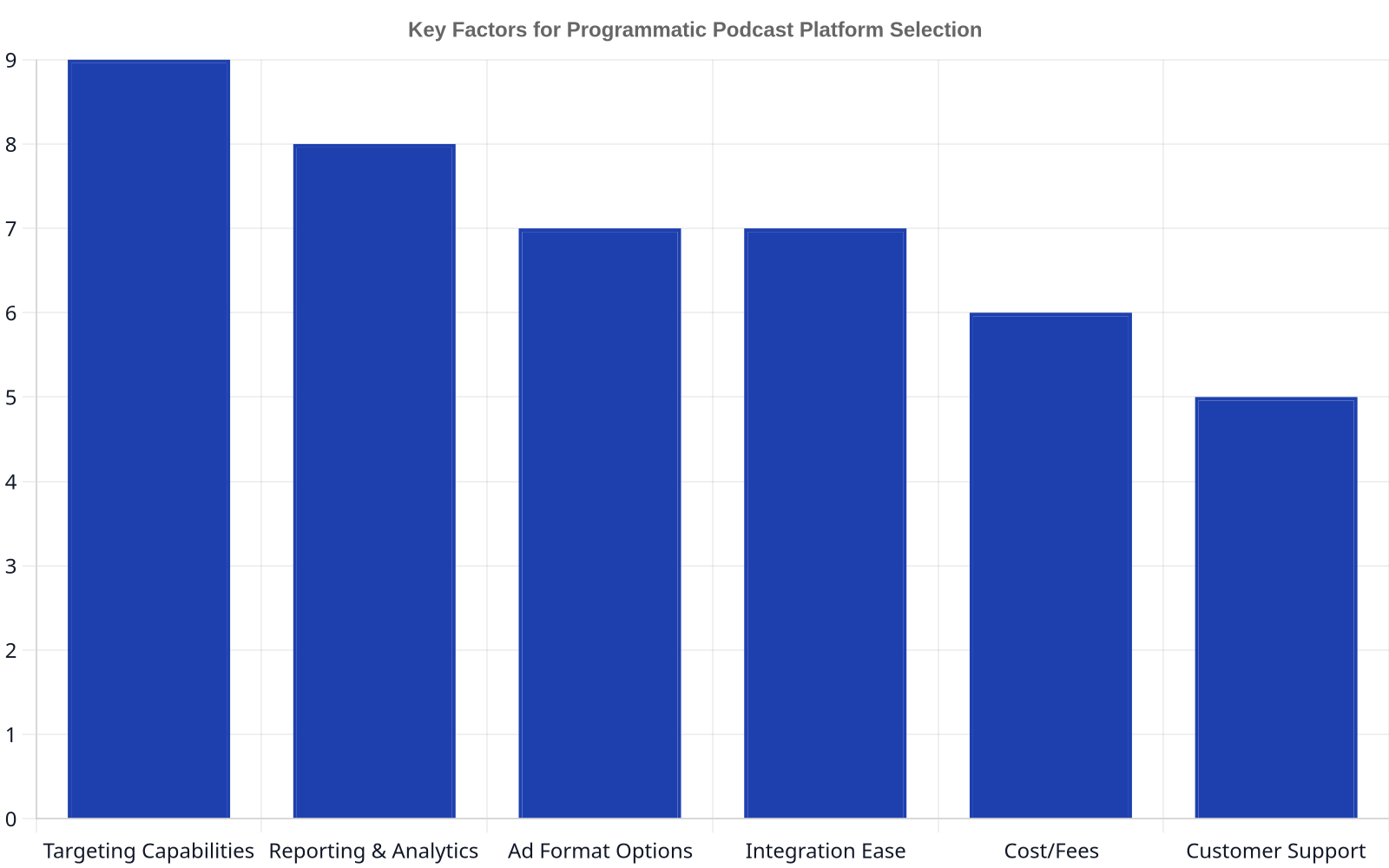
Finding the right platform is more than just picking a name from a list. You need to assess how its features align with your specific goals. Are you trying to fill a few unsold ad slots, or are you building a comprehensive monetization strategy? Here are the critical factors to evaluate.
First, analyze the platform’s targeting capabilities. The power of programmatic is its ability to match ads with listeners. Look for platforms that offer targeting based on demographics, location, listening behavior, and content categories. The more granular the targeting, the higher the relevance of the ads and the better the CPMs.
Second, demand transparency in reporting. You should be able to see exactly who is advertising on your show, how much you’re earning per impression, and what your fill rate is. A platform with a confusing or opaque dashboard is often hiding inefficiencies. Look for real-time analytics that give you actionable insights into your ad performance.
Third, consider the inventory controls. A good platform lets you set floor prices to protect your inventory’s value. It should also allow you to block certain advertisers or entire categories to ensure the ads align with your brand. Without these controls, you risk devaluing your ad slots and alienating your audience with low-quality or irrelevant promotions.
Podcast Ad Spend Trends
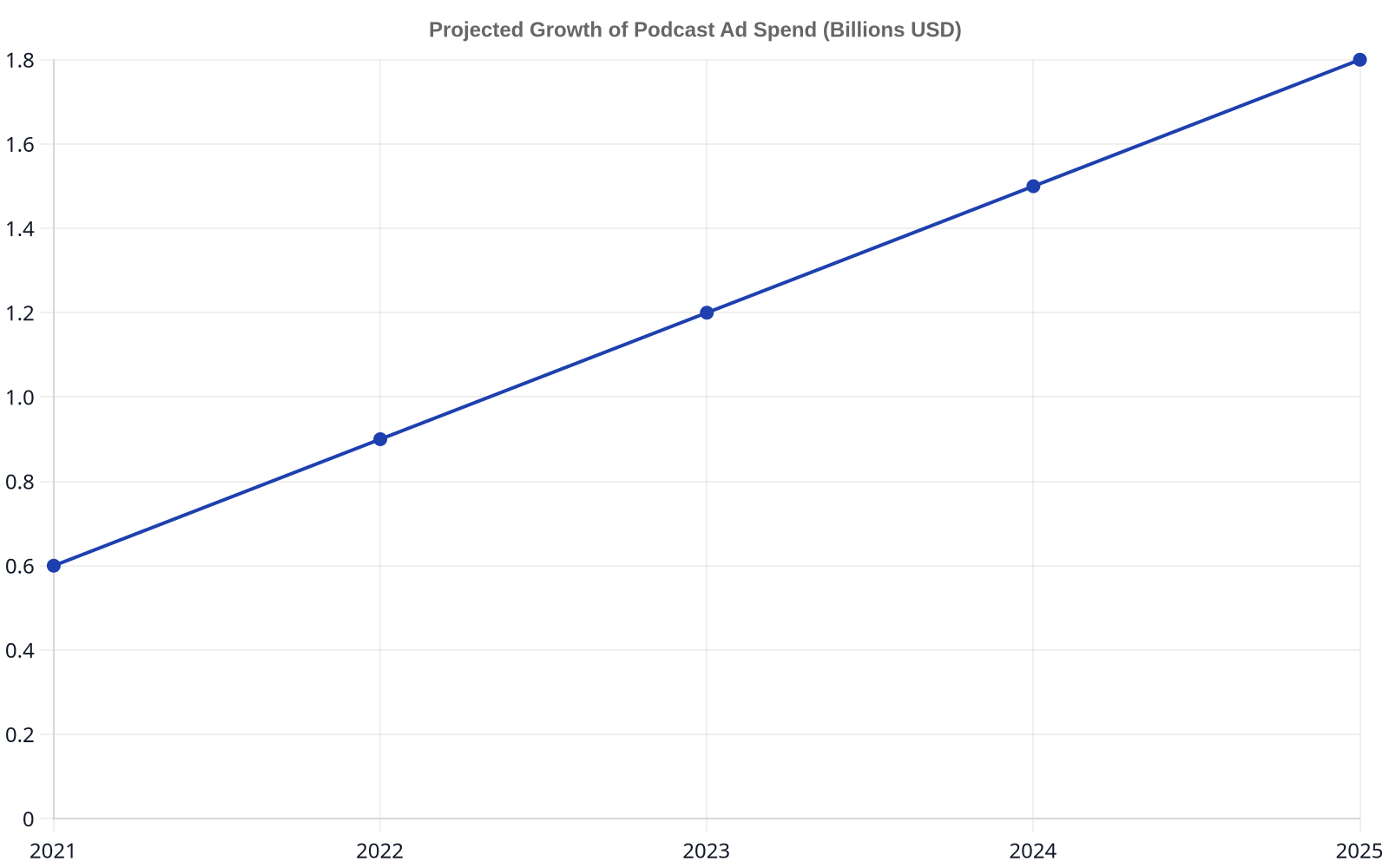
The podcast advertising market is not just growing; it’s maturing. While host-read ads remain a powerful tool, programmatic advertising is rapidly closing the gap. Advertisers are drawn to the efficiency, scale, and data-driven targeting that programmatic offers. According to a forecast from eMarketer, US podcast ad spending is expected to reach nearly $3 billion in 2024 and continue its strong upward trajectory.
This growth is fueled by advancements in technology and measurement. As platforms develop better tools for tracking ad impressions and attributing conversions, more brands are shifting their budgets to programmatic audio. This trend represents a massive opportunity for podcasters. By embracing programmatic, you can tap into a larger pool of ad revenue and automate much of the sales process, allowing you to focus on what you do best: creating great content.

Summary of Top Programmatic Podcast Platforms
| Platform | Key Strength | Ideal User |
|---|---|---|
| Triton Digital | Enterprise-level scale and tools | Large podcast networks |
| AdsWizz | Advanced targeting and ad formats | Publishers wanting granular control |
| Kevel | Fully customizable ad server APIs | Tech-heavy media companies |
| SoundStack | All-in-one hosting and monetization | Independent creators and small networks |
| Big Pond Podcasts | Integrated growth and monetization | Creators seeking a supportive partner |
Choosing the right platform is a critical step in your podcasting journey. Whether you need the raw power of an enterprise solution or the user-friendly approach of an integrated platform, the best choice is the one that aligns with your show’s goals and your audience’s expectations. If you’re ready to take the next step and effectively monetize your podcast, we’re here to help.
FAQ
What is programmatic podcast advertising?
Programmatic podcast advertising is the automated buying and selling of ad space in podcasts. Instead of manual negotiations, software is used to purchase ads, target specific audiences, and insert those ads into episodes, often in real-time. This makes the process more efficient and scalable for both advertisers and podcasters.
How are programmatic ad CPMs determined?
CPM (Cost Per Mille, or per thousand impressions) for programmatic ads is determined by a real-time bidding auction. Factors influencing the price include the podcast’s audience size and demographics, the ad placement (pre-roll, mid-roll), the advertiser’s budget, and the level of targeting data available. Highly targeted, niche audiences often command higher CPMs.
Can I use programmatic ads along with host-read ads?
Yes, absolutely. A hybrid strategy is often the most effective way to maximize revenue. You can sell premium slots directly to sponsors for host-read ads while using programmatic to fill any remaining or unsold inventory. Many platforms allow you to manage both types of ads from a single dashboard.
What is the difference between an ad server and an ad exchange?
An ad server is a piece of technology that stores ads and delivers them to podcast listeners. It’s what inserts the audio file into the episode. An ad exchange is the marketplace where advertisers bid on inventory from publishers. Think of the ad server as the delivery truck and the exchange as the warehouse where the goods are bought and sold.
How do I get started with programmatic advertising for my podcast?
To get started, you need to partner with a podcast hosting provider or a dedicated monetization platform that offers programmatic capabilities, like the ones listed in this article. You will typically need to enable monetization in your dashboard, set your ad insertion points (e.g., pre-roll, mid-roll), and configure any brand safety controls. The platform will then connect your inventory to ad exchanges.
About the author
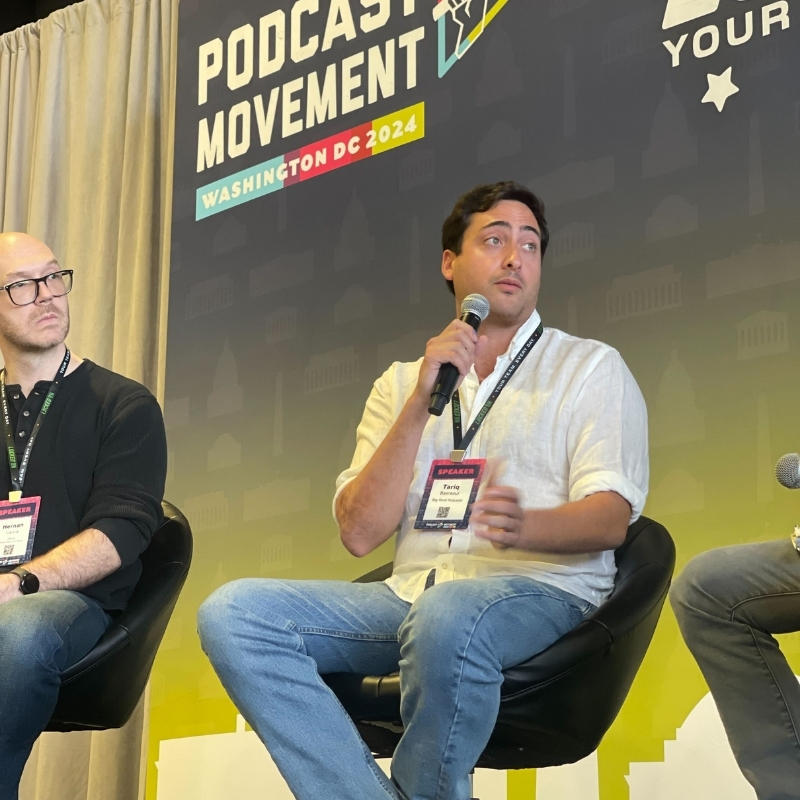
Tariq Basraoui
CEO
Tariq O’Keefe Basraoui, Co-Founder of Big Pond Podcasts, is a seasoned digital marketer and community builder with a track record of success at platforms like TikTok and Zencastr. Known for launching Zencastr’s Creator Network to over 15,000 members in 18 months, his expertise lies in growing user bases and enhancing brand engagement.
His strategic approach to growth and community engagement has established him as a leader in creating some of the fastest-growing media networks in podcasting.
