

Top Podcast Statistics for 2026: What Creators Need to Know
Is podcasting still growing? It’s a question I hear a lot. The short answer is a resounding yes. The most critical podcast statistics for 2026 show that listenership continues to climb, with projections indicating over 500 million monthly listeners globally. Monetization is also maturing, with advertising revenue expected to exceed $5 billion this year. For creators, this translates to a larger potential audience and more viable income streams than ever before, provided they understand the evolving listener habits and market dynamics shaping the industry.
To compile this list of top podcast statistics for 2026, we analyzed data from several authoritative sources. Our methodology involved synthesizing the latest reports from Nielsen, Edison Research, and the IAB, focusing on data published in late 2025 and early 2026. We prioritized metrics that directly impact creators and advertisers, ranking them based on their strategic importance for growth and monetization. This isn’t just a data dump; it’s a curated look at the numbers that should shape your strategy this year.

Podcast Audience Growth Trends
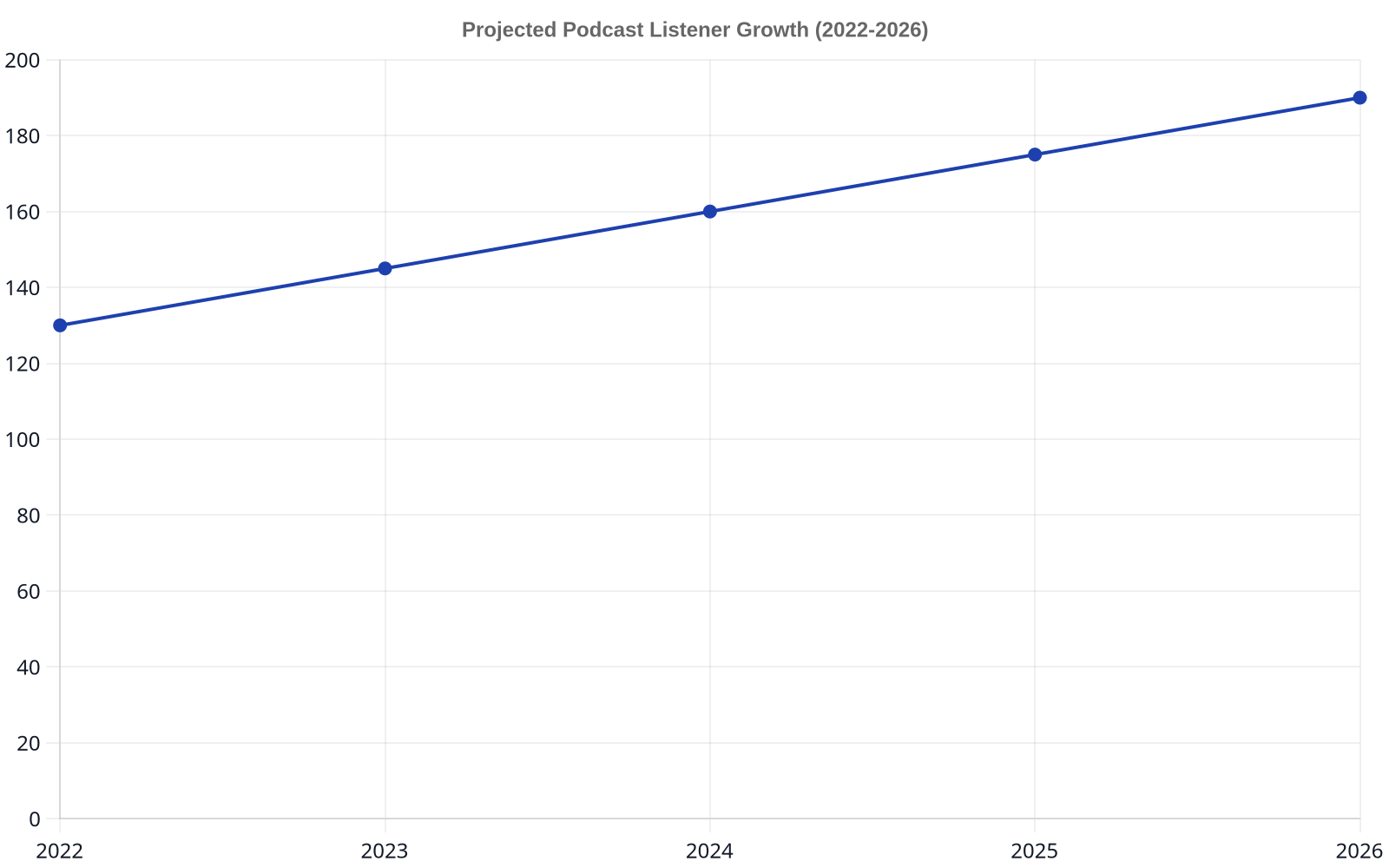
Podcast listenership isn’t just growing; it’s accelerating. The base of monthly listeners has expanded consistently year over year. Projections from Edison Research show that by the end of 2026, the number of monthly podcast listeners in the U.S. alone is set to cross 150 million. This represents nearly half of the population aged 12 and over, a significant milestone for the medium.
This growth creates a massive opportunity. With a potential reach of over 200 million monthly listeners across our network of 1,300+ shows, we see firsthand how this expanding audience translates into real engagement for creators. The key is understanding who these new listeners are and what they’re looking for. Growth is no longer confined to major cities; it’s happening in suburban and rural areas, bringing new demographics and interests into the fold.
- Best for: Creators looking to justify investment in new content or advertisers considering the medium for the first time.
- Watch out for: Assuming all growth is the same. Niche genres are seeing some of the fastest expansion.
- Statistic: A 2025 report from Insider Intelligence projected that US podcast ad spending would surpass $4 billion in 2025 and continue its upward trajectory.
Top Podcast Listener Demographics
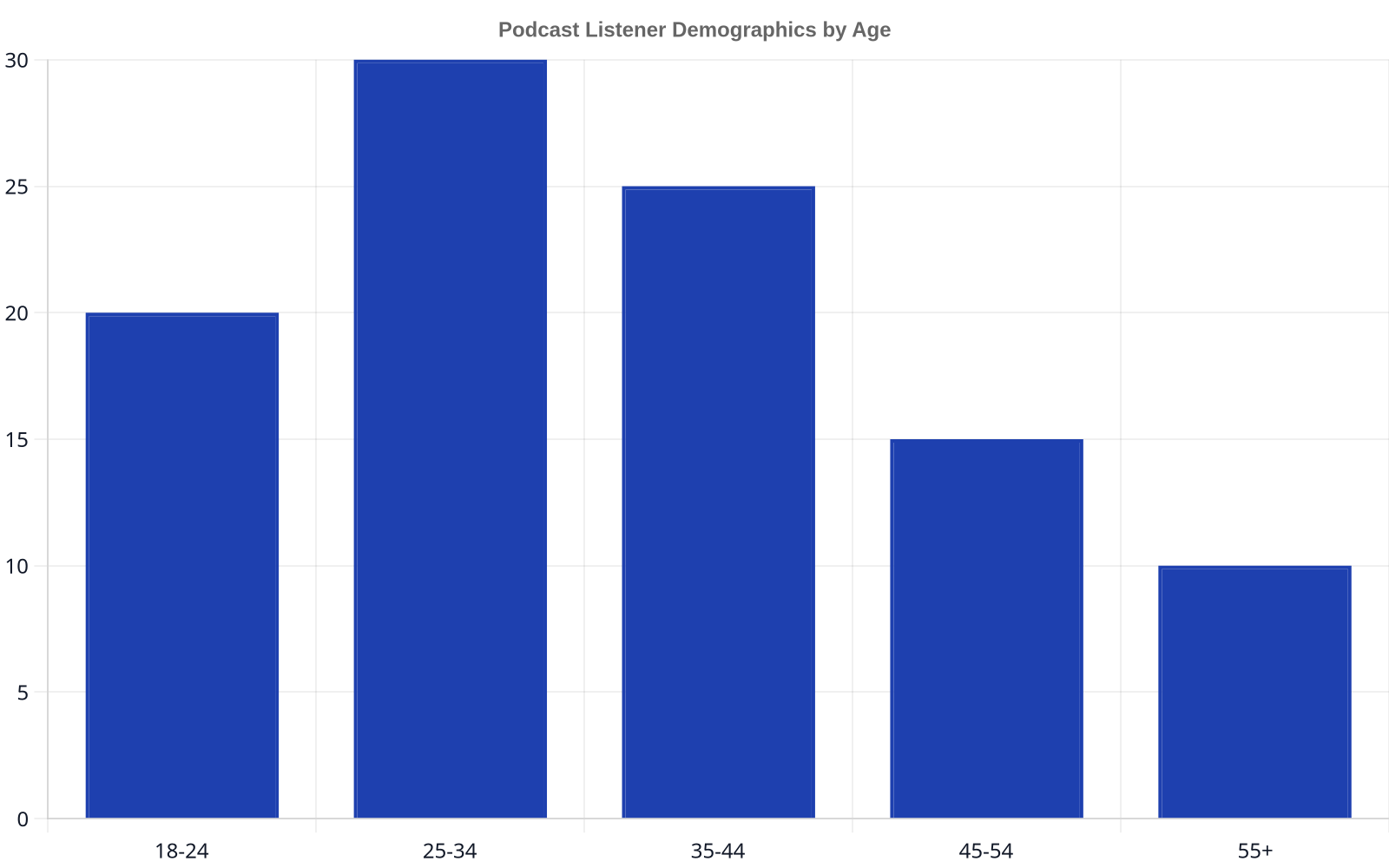
For a long time, the stereotypical podcast listener was a millennial male in a major city. That’s simply not the reality anymore. Listenership has diversified significantly. While the 25-44 age group still forms a core constituency, the fastest growth is now seen in the 55+ demographic, which has nearly doubled its podcast consumption in the last three years.
This demographic shift is crucial for content strategy and ad targeting. It signals that podcasts on topics like retirement, health, and hobbies are finding dedicated audiences. It also means that advertisers can now reach niche consumers across a much broader spectrum of consumer segments. The idea of a “podcast listener” has been replaced by many different listener profiles.
- Best for: Advertisers seeking to reach specific age and interest groups; creators developing new show concepts.
- Watch out for: Relying on outdated demographic profiles for your listener persona.
- Statistic: 43% of the US 12+ population have listened to a podcast in the last month.
Podcast Discovery and Consumption Habits
How do listeners find new shows? Word-of-mouth and social media recommendations remain powerful, but platform-based discovery is catching up. Spotify and Apple Podcasts now drive a significant portion of new show discovery through their curated charts and personalized recommendations. An analysis by Chartable (now part of Spotify) showed that being featured on a platform’s main page can lead to a 500% spike in downloads in a single day.
Don’t just make a great podcast. Make it easy to find. Your discovery strategy is as important as your content strategy.
Consumption habits are also evolving. While the average commute remains a prime listening time, “at-home” listening has solidified its place since 2020. This shift has favored longer, more immersive content formats. Furthermore, listeners are becoming more platform-loyal, often sticking to a single app for all their podcast needs. This makes your presence and optimization on major platforms a critical part of your growth plan.
- Best for: Creators finalizing their marketing and distribution strategy.
- Watch out for: Neglecting platform-specific optimization, like creating video versions for YouTube or engaging with Spotify’s Q&A features.
- Statistic: 28% of podcast listeners discover new shows through recommendations from a podcast app.

Podcast Monetization Avenues
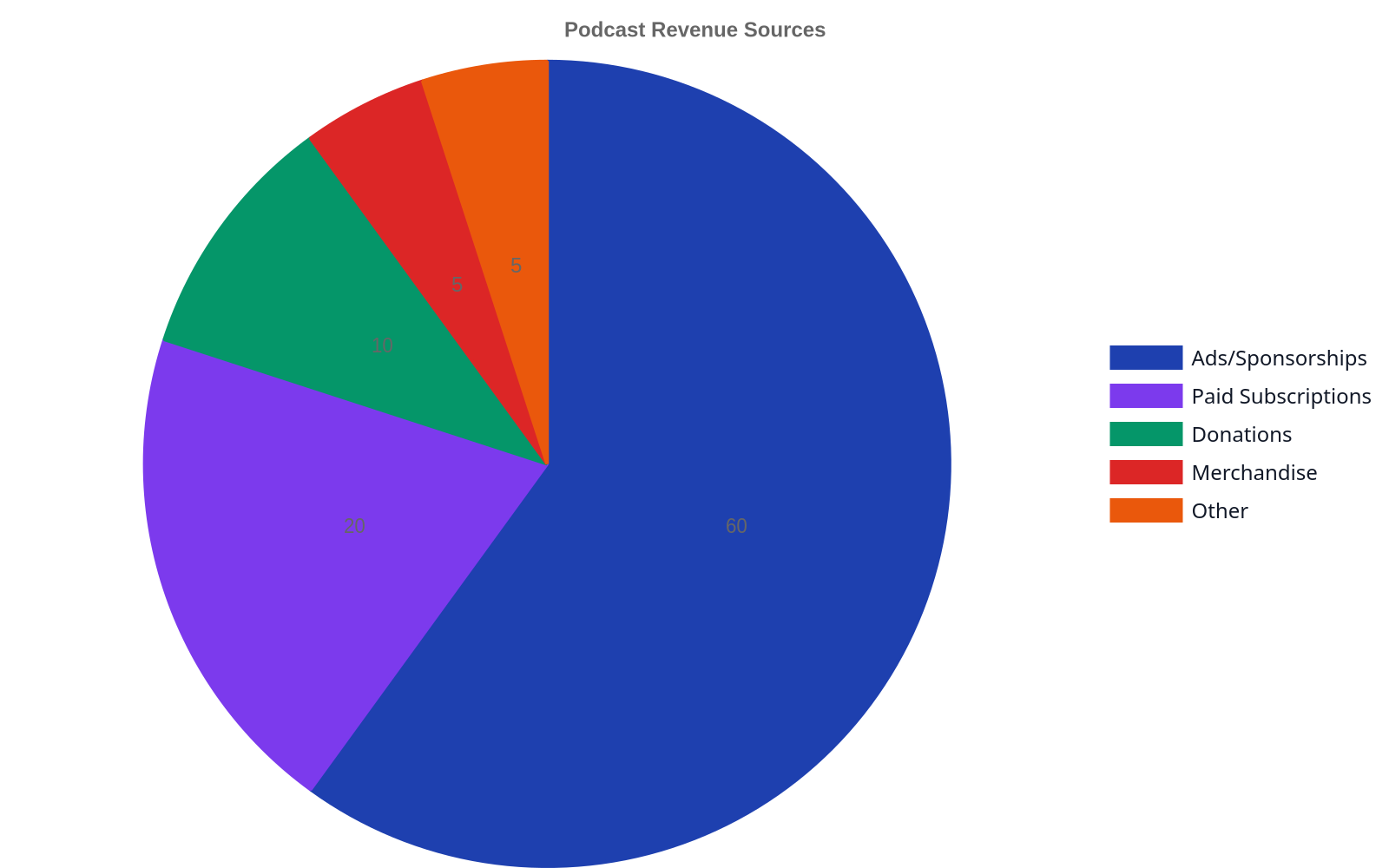
Advertising remains the dominant monetization model, projected to be a $5 billion industry in 2026. Within that, host-read ads continue to deliver the highest ROI for brands. They build on the trust between a host and their audience, something we specialize in facilitating. Exploring podcast host endorsements is often the most logical first step for established shows.
However, direct listener support is the fastest-growing revenue stream. Models like subscriptions, premium content, and one-off donations via platforms like Patreon are empowering creators to build sustainable income directly from their communities. This dual approach of advertising and direct support creates a resilient revenue base. We help creators navigate this landscape to monetize their podcasts effectively, taking the stress out of securing sponsorships and managing payouts.
Building a business from your podcast isn’t about choosing one revenue stream. It’s about layering several.
- Best for: Podcasters with an established audience who are ready to explore revenue options.
- Watch out for: Putting all your eggs in one basket. Diversifying revenue streams protects you from market shifts.
- Statistic: dynamically inserted, host-read ads are the most preferred ad type for brands, accounting for a significant portion of revenue.
FAQ
What is the average number of podcast listeners?
Costs and outcomes vary widely by scope. Ask providers for figures specific to your situation.
How many podcasts are there in 2026?
The number of active podcasts fluctuates, but as of early 2026, data from Podcast Index indicates there are over 4 million podcasts in its directory, though only a fraction of those are actively producing new episodes.
What is the most popular podcast genre?
According to Edison Research, Comedy consistently ranks as the most popular podcast genre in the United States, followed closely by News and Society & Culture. However, True Crime often generates the most dedicated and high-engaging fan bases.
How long should a podcast be?
There’s no single right answer, as ideal length depends on your content, format, and audience. However, data from Amplifi Media shows that the average listening session is around 22 minutes. Many successful podcasts align their episode length with average commute times, falling in the 20-40 minute range.
Is it too late to start a podcast in 2026?
Absolutely not. While the market is more crowded, it’s also more mature. Success now requires a clearer strategy and a more defined niche, but the audience and revenue potential have never been greater.
About the author
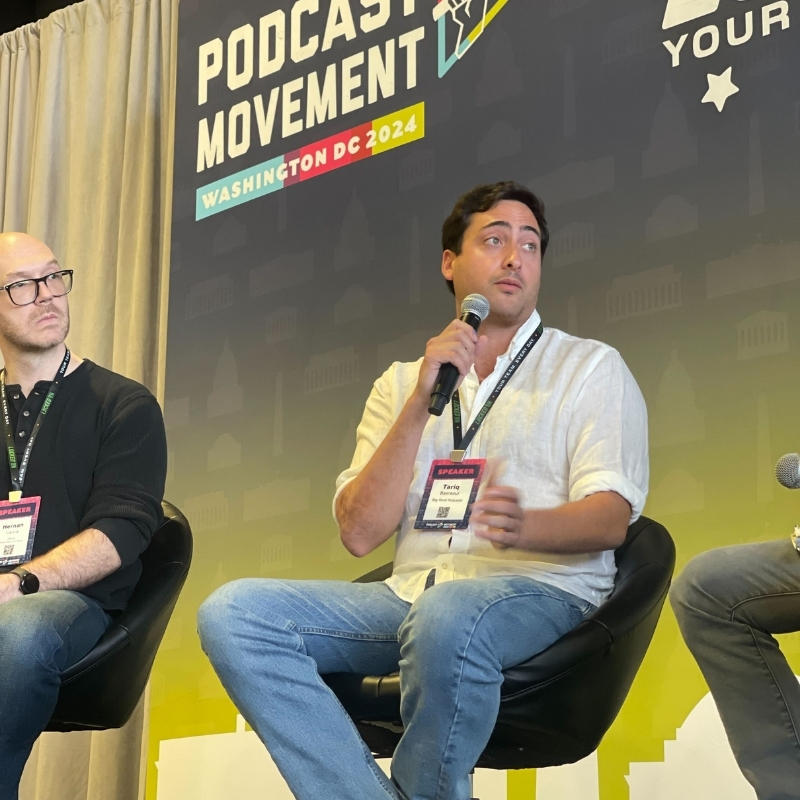
Tariq Basraoui
CEO
Tariq O’Keefe Basraoui, Co-Founder of Big Pond Podcasts, is a seasoned digital marketer and community builder with a track record of success at platforms like TikTok and Zencastr. Known for launching Zencastr’s Creator Network to over 15,000 members in 18 months, his expertise lies in growing user bases and enhancing brand engagement.
His strategic approach to growth and community engagement has established him as a leader in creating some of the fastest-growing media networks in podcasting.
