
You identify AI-generated podcast inventory by analyzing RSS feed metadata, monitoring traffic validation metrics, and checking supply-demand imbalances in ad networks. This protects your campaign budget from fraudulent audio schemes that mimic human listeners. Paying for synthetic inventory squanders ad spend and ruins brand safety before your message ever reaches a real audience.
Spot Ad Fraud Schemes Driven by Supply Shortages
High demand for audio inventory outpaces legitimate supply, creating space for synthetic shows and fake listens. Media planners face a severe supply shortage for high-quality audio inventory. This imbalance lets bad actors slip synthetic shows into programmatic exchanges to siphon campaign budgets.
Brand-safety firm DoubleVerify uncovered an audio ad fraud scheme called BeatSting that exploited this exact gap. The operation generated fake audio traffic and cost unprotected advertisers up to $1 million per month. Over several years, that single scheme drained up to $20 million from campaign budgets.
Automated operators set up fake podcast feeds using AI voice synthesis and botnets to spoof listener requests. They bypass basic network checks by mimicking the download patterns of human audiences. You protect your budget by auditing the publisher network’s fill rates and historical listener growth.
Start by mapping the audience targeting capabilities of your chosen network against its overall inventory size. Real human audiences grow in recognizable curves, tied to specific demographics and geographic regions. Synthetic bot traffic scales instantly across unrelated genres to consume available ad impressions.
Big Pond Podcasts lets buyers discover growth and monetization opportunities for podcasts by targeting actual listeners. Planners use the platform to define ideal listeners by demographics, interests, podcast genre, and geography. Our team grows your listenership, then sells against it using host-read, programmatic, and direct brand deals.
Compare that transparent targeting against opaque network bundles that refuse to disclose show-level data. Fraud networks obscure their individual RSS feeds behind generic network IDs. They force buyers to bid on aggregated inventory categories without verifying the underlying host or content.
Request an episode-level placement report from the exchange before clearing the insertion order. You check the report for suspicious concentration among unknown shows. If an obscure technology podcast suddenly accounts for 40% of your total network impressions, investigate that specific feed.
Look for impossible listening density during off-peak hours in the target geography. Human listeners stream podcasts during morning commutes or evening downtime in their local time zones. Botnets generate a flat, continuous stream of ad requests at 3 AM.
Verify the back catalog of any show claiming premium tier listener volume. Legitimate podcasts build their download numbers over dozens of episodes and months of consistent publishing. Fraudulent AI-generated shows often feature only three or four episodes that instantly generate millions of ad requests.
Examine the ad formats the network actually supports and delivers. Real shows integrate multiple formats naturally. You pick from pre-roll, mid-roll, host-read, and programmatic ad placements when working with verified platforms like Big Pond Podcasts.
Synthetic audio inventory relies entirely on programmatic dynamic ad insertion (DAI) because there is no real host to read a script. Exclude shows that only accept programmatic pre-roll ads and refuse host-read requests entirely. This simple filter removes a large portion of AI-generated audio farms from your media plan.
Review the IP addresses generating the ad requests if the network provides log-level data. Fraud rings often route their fake listens through data center IP ranges rather than residential internet service providers. Filter out impressions originating from known server farms to cut off synthetic traffic at the source.
Check for anomalous device fragmentation in the listener reports. A normal podcast audience uses a mix of Apple Podcasts, Spotify, and various mobile web browsers. AI fraud schemes frequently report 100% of their traffic coming from a single outdated user agent or obscure desktop application.
You secure your buy by demanding show-level transparency from every vendor. Make the network prove their supply actually matches the volume they offer in the open exchange. If an exchange claims to have 50 million impressions in a highly specific niche, ask for the publisher list.
Legitimate networks provide media kits detailing their top-performing shows and host biographies. Synthetic audio farms stall or refuse these requests, citing publisher privacy or network aggregation rules. Drop any partner that cannot produce a verifiable list of the podcasts carrying your brand’s message.
Practitioners know that a refusal to provide transparency is a guaranteed red flag. You cannot optimize an audio campaign if you do not know where the ads actually play. Demand the data upfront to keep your budget out of fraudulent networks.
Validate Listenership Using Audio Measurement Tools
Deploy dedicated audio verification tools to track invalid traffic directly on the ad platforms. Buying programmatic audio without independent measurement leaves your campaign blind to server-side spoofing. You catch botnets by validating the ad delivery data through a recognized third-party vendor.
The trade-off of deploying verification tools is platform compatibility. You gain exact insight into non-human traffic, but you rely on the host platform permitting the measurement tag. Not every audio app or network allows external pixels to monitor their ad streams.
A survey by Integral Ad Science found 87% of media experts expressed concern over audio ad fraud. This widespread risk prompted IAS to launch its ad measurement tool on platforms like Pandora. The integration allows advertisers to actively identify and block invalid traffic on that specific platform.
Audio measurement works differently than standard display viewability tracking. Podcasts often rely on server-side ad insertion (SSAI), meaning the hosting server stitches the ad directly into the audio file. The verification tag fires when the server requests the ad, not necessarily when the human listener hears it.
This server-side blind spot makes it easier for AI-generated shows to fake their engagement metrics. Bots ping the podcast host to download the file, triggering the ad impression without ever playing the audio. Measurement tools counter this by analyzing the cadence, origin, and headers of those server requests.

Configure your verification partner to monitor continuous playback anomalies. A bot downloading a synthetic podcast pulls the entire 50-megabyte file in less than a second. A real user’s mobile app streams the file in chunks or downloads it at standard connection speeds.
Set strict thresholds for acceptable invalid traffic (IVT) in your campaign settings. Most verification platforms separate IVT into general invalid traffic (GIVT) like known data center crawlers, and sophisticated invalid traffic (SIVT) like device hijacking. Audio fraud schemes heavily rely on SIVT to mask their botnets as real mobile devices.
Review the verification platform’s failure reports every week during the campaign. Look for specific publisher IDs that consistently trigger high SIVT flags. When you spot a publisher exceeding a 5% invalid traffic rate, pause their line item immediately.
Say your measurement dashboard shows a publisher delivering 50,000 impressions over the weekend. You dig into the logs and see 98% of those impressions originated from residential proxies masking server farms. You block that publisher ID and reallocate the budget to verified channels.
Reviewing the campaign logs helps you spot the difference between genuine measurement errors and intentional spoofing. A broken measurement tag simply stops sending data back to your dashboard. A spoofed tag sends perfectly sequential, mathematically impossible engagement metrics.
If a publisher reports exactly 10,000 impressions every single day for a week without a single digit of variance, the data is likely fake. Real human traffic fluctuates based on the day of the week, holidays, and natural listening habits.
Work directly with your verification vendor to set up custom alerts for audio campaigns. Ask them to build a dashboard view that isolates podcast server-side insertion metrics from your display and video buys. This prevents synthetic audio traffic from hiding inside your larger, verified media plan.
Verification tools also catch synthetic inventory by monitoring the user agent string. Fraudsters sometimes forget to rotate their simulated browser headers when generating fake listeners. A measurement pixel flags thousands of requests coming from an identical, five-year-old Android operating system version.
Prioritize platforms that support client-side tracking whenever possible. Client-side measurement pings the verification server only when the media player actually begins playing the audio. This provides a much stronger signal of human presence than a simple server-side download receipt.
You must actively enforce the data these tools provide, rather than just passively collecting reports. Build an inclusion list of verified, clean publishers and update it based on the measurement feedback. Exclude networks that continually attempt to pass off AI-generated audio as human engagement.
Inspect RSS Metadata and Production Cadence
Music platforms enforce strict metadata tags for synthetic tracks, but podcast directories lack universal labeling standards. You cannot rely on the platform to automatically flag an AI-generated show for you. You must manually inspect the podcast’s RSS feed for the distinct metadata signatures of automated content mills.
Spotify requires mandatory AI disclosure for music using the DDEX metadata standard adopted in late 2025. However, these strict metadata labeling requirements do not currently extend to podcasts. This forces buyers to act as their own compliance officers when vetting new audio inventory.
Open the podcast’s raw RSS feed in a browser to check its underlying XML structure. Synthetic shows often use generic, automated text generators to populate their mandatory feed fields. A human creator carefully writes unique show notes, while a bot pastes repetitive keyword variations into the <description> tag.
Check the <itunes:author> and <itunes:owner> tags for verifiable human identities. Legitimate podcasts list a real person or a recognized production company. AI-generated feeds frequently use random alphanumeric strings, disposable email addresses, or highly generic names like “Tech News Daily Admin.”

Search for the host’s name outside of the podcast directory. A real podcast host has a LinkedIn profile, a Twitter account, or a personal website related to their show’s topic. If the host only exists within the RSS feed and has zero external digital footprint, flag the inventory.
Analyze the <pubDate> tags to expose impossible production schedules. A high-quality, hour-long podcast takes a human team several days to research, record, and edit. AI audio mills can synthesize and publish a dozen fake episodes in a single afternoon.
Your RSS audit finds a new true-crime podcast that launched last week and already has 80 fully produced episodes. The publication timestamps show these hour-long episodes were uploaded exactly four minutes apart. No human production team works that fast, making it obvious synthetic inventory.
Listen to a random three-minute segment of the audio itself to verify the metadata checks. Synthetic voice generation has improved, but it still struggles with natural human breathing patterns and emotional pacing. You will hear flawless pronunciation delivered with a repetitive, robotic cadence that never varies.
Pay attention to the background noise and room tone of the recording. Fully AI-generated podcasts often feature dead silence between perfectly synthesized words.
Check the show’s artwork inside the <itunes:image> tag. Fraud operators frequently use AI image generators to create the podcast cover art. Look for warped text, impossible geometry, or the distinct glossy smoothing typical of automated image generation tools.
Cross-reference the episode titles for algorithmic patterns. Synthetic shows scrape trending topics and feed them directly into the title generator. You will see a feed full of identical structures with no human creativity or variation.
Examine the explicit rating tags in the metadata. Human creators actively manage their <itunes:explicit> tags based on the actual content of the specific episode. Automated content mills often leave this tag entirely blank or apply a blanket setting without regard for the generated script.
Verify the feed’s hosting provider by looking at the enclosure URLs. Scammers often use free or highly obscure hosting platforms to avoid paying overhead on their fake network. A premium show generating real listener volume will use an established, enterprise-grade podcast hosting service.
Taking the time to manually inspect a suspicious RSS feed saves thousands of dollars in wasted programmatic spend. It only takes five minutes to check the XML tags and search the host’s name. That quick audit provides far more brand safety than relying entirely on algorithmic network filters.
Practitioners know that a suspicious RSS feed rarely has just one error. The combination of hidden owners, impossible upload speeds, and repetitive metadata confirms the show is a synthetic trap. Block the entire feed at the exchange level before your ads ever serve on it.
About the author
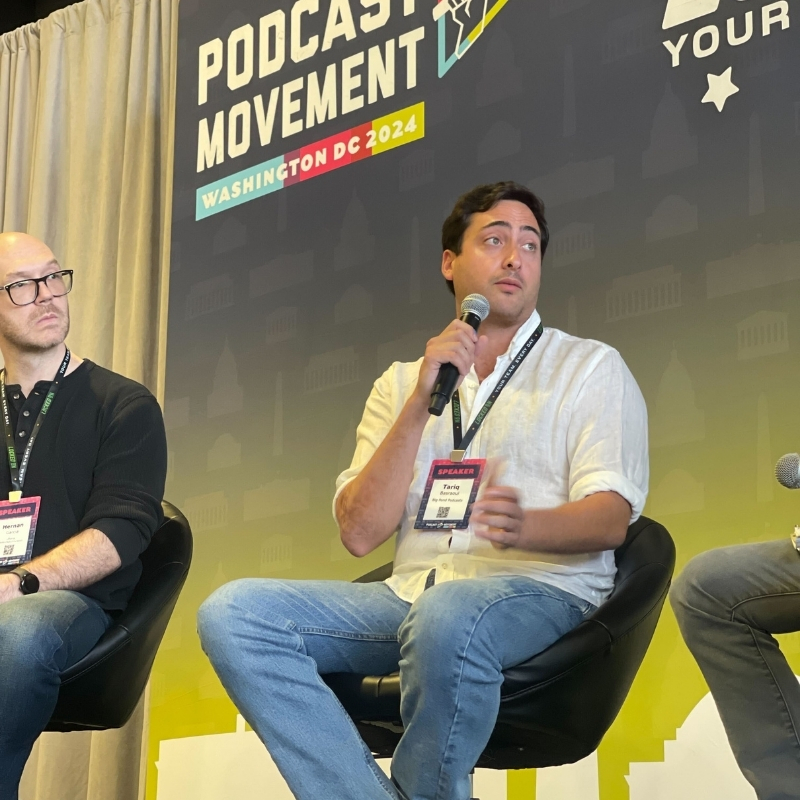
Tariq Basraoui
CEO
Tariq O’Keefe Basraoui, Co-Founder of Big Pond Podcasts, is a seasoned digital marketer and community builder with a track record of success at platforms like TikTok and Zencastr. Known for launching Zencastr’s Creator Network to over 15,000 members in 18 months, his expertise lies in growing user bases and enhancing brand engagement.
His strategic approach to growth and community engagement has established him as a leader in creating some of the fastest-growing media networks in podcasting.
