

Integrating YouTube into your podcast ad buy is a strategic necessity in 2026. With YouTube now a primary platform for podcast consumption, an integrated approach allows advertisers to reach audiences across both audio and video formats. This dual-platform strategy capitalizes on the trust of host-read podcast ads and the massive scale of YouTube, driving higher brand recall and providing sophisticated retargeting opportunities. It’s no longer a question of either/or, but how to effectively combine them for maximum impact on your campaign’s bottom line.

The New Reality: YouTube as a Dominant Podcast Platform
The landscape of podcast consumption has fundamentally shifted. Once a purely audio-driven medium accessed through dedicated apps, podcasting has found a massive new home on YouTube. This isn’t a fringe trend; it’s a mainstream behavior that advertisers must acknowledge to remain effective.
The Scale of YouTube Podcasting
Recent data illustrates the platform’s dominance. YouTube users watched over 400MM hours of podcast content monthly, with 1B users globally viewing podcast content on the platform in a single month. These numbers confirm that for a significant portion of the audience, the podcast experience is a visual one. Ignoring YouTube means missing a substantial, engaged segment of the market.
Platform Investment Signals Long-Term Viability
YouTube is actively encouraging this shift. The company has announced it is developing more tools to support podcasters, improve monetization, and enhance discovery on the platform. This investment signals that YouTube sees podcasting as a core part of its future, providing advertisers with a stable and growing environment for their campaigns. Brands that establish an integrated strategy now will be better positioned as these tools and features mature.
Defining the Ad Formats: Podcast vs. YouTube
Before crafting a strategy, it’s crucial to understand the distinct ad formats available on each platform. While the goal is the same, reaching an audience, the execution and listener experience differ significantly.
Traditional Podcast Advertising
Podcast ads are typically audio-based and designed to feel native to the listening experience. The main formats include:
- Host-Read Ads: These are endorsements read by the podcast’s host. They are highly effective due to the trust and rapport the host has with their audience. They can be “baked-in” (permanently part of the audio file) or dynamically inserted (swapped programmatically based on listener demographics or time). At Big Pond, we facilitate host-read ad placements to connect brands with these trusted voices.
- Pre-recorded Ads: These are produced by the advertiser and function like traditional radio spots. They offer more creative control but can lack the authentic feel of a host-read endorsement.
- Programmatic Ads: We also help creators and advertisers by selling programmatic ads, which are inserted automatically based on algorithms, allowing for precise targeting at scale.
Ad placement is also key. We work with advertisers on pre-roll ad formats that capture attention at the start, mid-roll ads that run during content breaks, and post-roll ads that catch dedicated listeners who finish the episode.
YouTube Video Advertising
YouTube ads are inherently visual and integrated into the video-watching experience. Key formats relevant to podcast simulcasts include:
- Skippable In-Stream Ads (Pre-roll/Mid-roll): These are the most common format, playing before or during a video. Viewers can skip them after 5 seconds, meaning the first few seconds are critical for capturing attention.
- Non-Skippable In-Stream Ads: These are shorter ads (typically 15-20 seconds) that must be watched in their entirety before the video content plays.
- Bumper Ads: These are very short, 6-second, non-skippable ads designed for quick brand messages and high recall.

Comparing Ad Performance: Engagement, Attention, and Conversion
An effective media buy depends on understanding how each platform performs against key metrics. Podcasts and YouTube offer different strengths, and an integrated campaign uses both to its advantage.
The Intimacy and Engagement of Podcast Ads
Podcast listeners are a highly engaged audience. Because listening is often a solo activity done with headphones, the experience is intimate and focused. This “lean-in” environment means listeners are more receptive to messages, especially when delivered by a trusted host. This translates to real business outcomes, with host-read ads driving significant brand lift.
Don’t just count downloads. Measure the trust a host has built over hundreds of episodes, because that’s the currency your ad is actually spending.
The Reach and Retargeting of YouTube Ads
YouTube’s strength lies in its immense scale and sophisticated targeting capabilities. With over 2 billion logged-in monthly users, the platform offers unparalleled reach. Its advertising tools allow for granular targeting based on demographics, interests, viewing history, and even specific search queries. Furthermore, its visual nature allows for direct calls-to-action (CTAs), like clickable end screens and links in the video description, which can drive immediate traffic and conversions. The challenge, however, is capturing attention in an environment where skipping ads is a reflexive action for many users.
Attribution and Measurement Differences
Measuring podcast ad effectiveness has historically relied on methods like promo codes, vanity URLs, and post-campaign brand lift surveys. While attribution is improving with better technology, it can still be less direct than YouTube’s pixel-based tracking.
YouTube offers strong, real-time analytics on impressions, click-through rates (CTR), view duration, and conversions. This makes it easier to quantify direct ROI but may not fully capture the brand-building value that a more passive, audio-based ad delivers. A 2023 Nielsen study emphasized that while direct clicks are lower in podcasting, metrics like purchase intent are exceptionally high, particularly for host-read ads.
Podcast Advertising vs. YouTube Pre-Roll Cost Comparison
| Attribute | Podcast Advertising | YouTube Pre-Roll | |
|---|---|---|---|
| Audience Engagement | High (active listening) | Moderate (often passive viewing) | |
| Targeting Precision | Niche, interest-based | Broad, demographic/interest-based | |
| Ad Experience | Integrated, less interruptive | Interruptive, skippable | |
| Brand Recall | Strong (auditory memory) | Moderate (visual/auditory) | |
| Cost Efficiency (CPM) | Higher (per engaged listener) | Potentially lower (per view) | |
| Call to Action | Direct, verbal prompts | Visual links, verbal prompts | |
| Creative Demands | Audio production | Video production |
Understanding the pricing models for both platforms is essential for budget allocation. The related keyword, podcast advertising vs YouTube pre-roll cost comparison, highlights a central question for media buyers. The value isn’t just in the price but in what you get for it.
Podcast CPMs: Paying for Engagement
Podcast advertising is typically priced on a Cost Per Mille (CPM) basis, meaning the cost per 1,000 downloads. Rates vary widely based on audience size, niche, and ad placement. Mid-roll slots in popular podcasts command the highest prices. Our network, for instance, sees an $22.35 Avg. 60-Sec CPM, which provides a benchmark for what quality inventory can command. While this CPM may seem higher than some digital alternatives, you are paying for a highly engaged and difficult-to-reach audience that trusts the content creator.
YouTube CPVs and CPMs: Paying for Reach and Views
YouTube advertising uses a mix of models. For skippable in-stream ads, you often pay on a Cost Per View (CPV) basis, where you are charged when a user watches at least 30 seconds of your ad (or the full ad if it’s shorter) or interacts with it. For non-skippable formats and bumper ads, you typically pay on a CPM (Cost Per Thousand Impressions) basis. YouTube CPMs can be lower than podcast CPMs, but the definition of an “impression” is different: it simply means the ad was served, not necessarily that it was watched or heard with intent. Podcasting’s CPMs are justified by its premium, targeted environment.
Integrating YouTube into Your Podcast Ad Strategy

An integrated approach doesn’t just mean buying ads on both platforms; it means creating a cohesive campaign where each channel complements the other. For a deeper look at proven campaigns, you can explore some podcast advertising case studies.
Here is a simple process for integration:
- Identify Simulcast Opportunities: Start by identifying podcasts in your niche that already publish full video episodes on YouTube. These are your prime targets for a fully integrated buy.
- Align Creative Assets: For a host-read ad on a simulcast show, ensure the host mentions any visual elements for the YouTube audience. If running separate ads, create a visual ad for YouTube that is thematically consistent with your audio ad for the podcast.
- Set Up Cross-Platform Tracking: Use consistent vanity URLs and promo codes across both platforms to help normalize your attribution data. Use Google Analytics and platform-specific pixels to track user journeys that start on one platform and convert on another.
- Launch and Optimize: Run your campaigns and monitor performance on both platforms. Look for insights in the data. For example, do podcast listeners who are later retargeted on YouTube convert at a higher rate?

Advanced Strategy: Retargeting Listeners Across Platforms
The real power of an integrated strategy is unlocked through cross-platform retargeting. This is where you can turn passive audio listeners into active website visitors or customers.
From Podcast Listener to YouTube Viewer
If a podcast has a companion website for show notes and episodes, you can place a tracking pixel on that site. When listeners visit the site to get more information, they are cookied. You can then create a custom audience in Google Ads to serve targeted video ads to these users the next time they are on YouTube. This is a powerful way to reinforce your message, as the user is already familiar with your brand from the podcast.
From YouTube Viewer to Converted Customer
Conversely, you can retarget users who have viewed your video ad or visited your YouTube channel. If they watched your ad but didn’t click, you can serve them a different creative or offer. By combining the high-trust introduction from a podcast with the powerful, direct-response tools of YouTube, you create a full-funnel marketing machine.
An integrated ad buy isn’t about being on two platforms. It’s about making the two platforms work as one cohesive system to move a listener from awareness to action.
Creative Best Practices for a Visual-Audio World
Adapting an audio-first ad for a visual platform requires thoughtful execution. Simply running a black screen with audio is a missed opportunity.
For Simulcast Host-Reads
Work with the host to ensure they’re not just reading a script but are engaging with the camera for the YouTube audience. If they are demonstrating a product, the video component becomes the primary asset. Ensure the product is well-lit and clearly visible.
Repurposing Audio for YouTube Ads
If you have a great audio ad, you can create a simple but effective video for it. This doesn’t require a massive budget. You can create an audiogram (a static image with an animated waveform) or a simple slideshow with key text callouts. The goal is to provide enough visual interest to keep the viewer from immediately skipping while the audio delivers the core message. Audio remains a powerful medium, and enhancing it visually can boost its effectiveness.
Managing Your Integrated Ad Buy
Executing a cross-platform campaign introduces new complexities around ad frequency, audience fatigue, and compliance. An integrated approach requires careful management.
Frequency Capping and Audience Fatigue
Bombarding the same user with the same ad on every platform is a recipe for annoyance and brand damage. Use frequency caps within your ad platforms to limit how many times a single user sees your ad in a given period. More importantly, vary your creative. A user who heard a 60-second host read on a podcast should see a shorter, 15-second visual reminder on YouTube, not the same long-form ad again.
Compliance and Disclosures
Both podcasts and YouTube have rules regarding ad disclosures. The FTC requires that endorsements must be clearly disclosed as advertisements. In podcasts, this is often done with a verbal cue from the host. On YouTube, this can involve verbal cues, text overlays, and checking the “includes paid promotion” box. Ensure your campaigns are compliant with the rules of both platforms to avoid penalties. Considering the discoverability of your show is also important, which is where Podcast SEO becomes a valuable tool for ensuring you are found by the right audience in the first place.
Monetization for Creators: A Two-Pronged Approach
For podcast creators, this convergence is a massive opportunity. By expanding to YouTube, you open up a second major revenue stream. You can now monetize your podcast through both podcast-specific ad networks and the YouTube Partner Program.
This dual-platform presence makes your show more attractive to advertisers who are looking for integrated campaign opportunities. You can offer a package deal: a host-read ad in the audio podcast, plus a pre-roll spot on the YouTube version of the episode. This allows you to command higher rates and offer more value to your brand partners. Diversifying revenue is key, and knowing choose a podcast monetization platform is a critical first step for any creator serious about growth.
FAQ
How much does it cost to advertise on podcasts vs. YouTube?
Podcast advertising is usually sold on a CPM (cost per 1,000 downloads) basis, with rates like our network’s average of $22.35 for a 60-second ad being a solid benchmark. YouTube often uses a CPV (cost per view) model for skippable ads, where you pay when someone watches for a set duration. YouTube CPMs can be lower, but podcast ads often deliver a more engaged, niche audience for the price.
What are the main types of podcast ads?
The primary types are host-read ads, where the host personally endorses a product; pre-recorded ads, which are produced by the advertiser; and programmatic ads, which are inserted automatically. These can be placed as pre-roll (before the show), mid-roll (during the show), or post-roll (after the show).
Can I target specific audiences on both podcasts and YouTube?
Yes, but the methods differ. On YouTube, targeting is highly granular, using demographics, interests, keywords, and viewing behavior. Podcast targeting has traditionally been show-based: you buy ads on shows whose audience aligns with your target customer. However, programmatic technology is bringing more demographic and behavioral targeting to podcast advertising.
How is ad performance measured differently on podcasts and YouTube?
YouTube offers direct, real-time metrics like views, click-through rates, and conversions via tracking pixels. Podcast ad performance is often measured more indirectly through promo code usage, custom vanity URLs, and brand lift surveys conducted before and after a campaign. The goal of both is to measure ROI, but the tools are different.
Is a video podcast necessary to advertise on YouTube?
No. While advertising on a video podcast (simulcast) is ideal for an integrated campaign, it’s not the only option. You can create standalone video ads for YouTube, such as audiograms or simple animations using your audio ad’s sound, and target them to audiences who have shown an interest in podcast content or specific topics.
Ultimately, the question is not if your podcast ad buy should include YouTube, but how. A thoughtful, integrated strategy that plays to the strengths of both platforms will deliver superior results to a siloed approach every time. If you’re ready to build a campaign that captures audiences across audio and video, discuss your strategy.
About the author
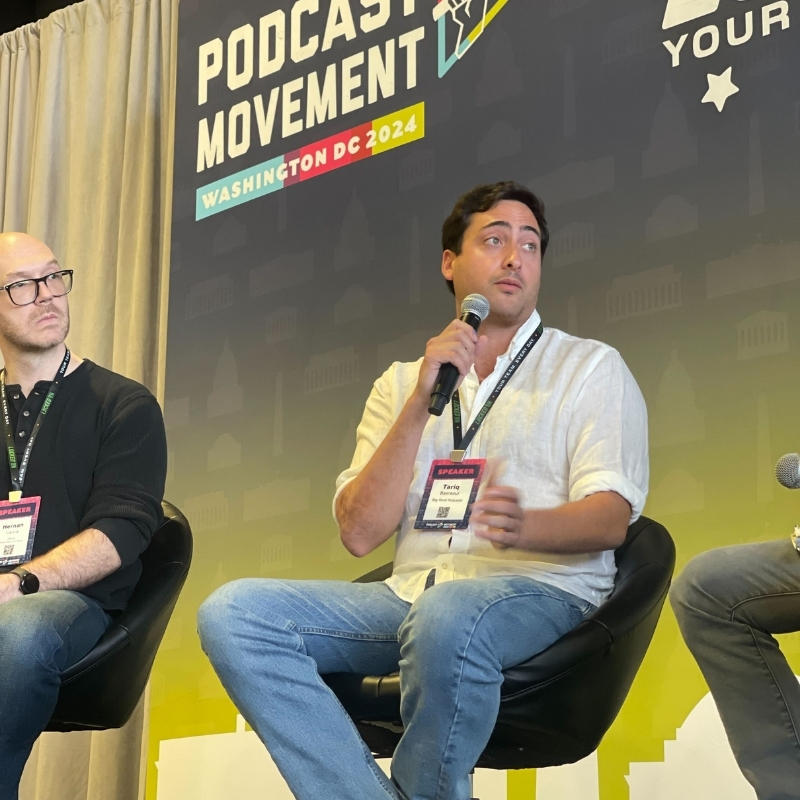
Tariq Basraoui
CEO
Tariq O’Keefe Basraoui, Co-Founder of Big Pond Podcasts, is a seasoned digital marketer and community builder with a track record of success at platforms like TikTok and Zencastr. Known for launching Zencastr’s Creator Network to over 15,000 members in 18 months, his expertise lies in growing user bases and enhancing brand engagement.
His strategic approach to growth and community engagement has established him as a leader in creating some of the fastest-growing media networks in podcasting.
