
Stop thinking about “getting” sponsors. You don’t just “get” a sponsor like you get a package in the mail. You earn a partner by building a media property that a brand needs to be part of. Getting sponsors for your podcast is the result of a deliberate process: defining your audience, proving their engagement, and creating content so specific that a brand can’t afford to ignore you. It starts with treating your podcast like a business, not a hobby, and preparing a professional pitch that demonstrates undeniable value and alignment.

Why Your Podcast Needs Sponsors
Sponsorship is more than just a revenue stream. It’s a powerful validation of your podcast’s influence and reach. When a brand invests in your show, they are publicly stating that your audience is valuable.
Moving from Passion Project to Viable Business
Most podcasts start from passion. But passion doesn’t pay for hosting, new microphones, or editing software. Sponsorship provides the financial fuel to improve your production quality, dedicate more time to content, and scale your operations.
This transition forces you to adopt a business mindset. You start tracking metrics that matter, understanding your value proposition, and thinking strategically about your content’s commercial appeal. This is the first step toward building a sustainable media asset, not just a weekend hobby.
The Credibility That Comes with Sponsorship
Attaching a reputable brand to your podcast lends it instant credibility. It signals to new listeners that your show is established and respected within its niche. A sponsor acts as a third-party endorsement.
This effect compounds over time. Your first sponsor is the hardest to land. Once you have one, others are more likely to follow, creating a flywheel of revenue and authority.
Preparing Your Podcast for Sponsorship
Brands don’t sponsor podcasts; they sponsor audiences. Before you even think about outreach, you need to get your house in order. This means knowing your audience inside and out and packaging your show professionally.
Define Your Niche and Audience
Who are you talking to? “Everyone” is the wrong answer. A tightly defined niche is a sponsor’s best friend. A podcast about “vegan baking for busy parents” is infinitely more attractive than a general “food” podcast.
Use your podcast hosting analytics, survey your listeners, and create a detailed audience persona. Know their age, location, interests, and pain points. The more specific you are, the easier it is for a brand to see the fit.
Build Your Media Kit: The Sponsorship Resume
Your media kit is a professional document that sells your show. It’s your podcast’s resume, and it needs to be sharp, concise, and persuasive. Trying to pitch a sponsor without one is like applying for a job without a CV.

A media kit isn’t just a list of numbers. It’s a story about your audience and the unique connection you have with them. It tells a brand why they belong in that conversation.
Your media kit must be a living document, updated at least quarterly with your latest numbers and audience insights. You can check out our guide on how to get more podcast listeners to see how to boost the numbers that sponsors care about.
Key Metrics Beyond Downloads
Downloads are just one piece of the puzzle. Smart brands are increasingly looking at engagement metrics to gauge a podcast’s true influence. High downloads with low engagement can be a red flag.
Track metrics like listener retention (how long people listen), social media engagement (comments, shares on episode posts), and email newsletter open/click rates. These numbers prove that your audience isn’t just downloading; they are listening and acting. This is how you demonstrate the real ROI of sponsoring your show.
The Podcast Sponsorship Journey: A Step-by-Step Guide

Securing a sponsor is a process with distinct stages. Following these steps methodically will increase your success rate and help you build long-term partnerships rather than one-off deals.
Step 1: Research and Prospecting
Don’t just email every company you can think of. Create a “dream 100” list of ideal sponsors. These should be brands whose products or services genuinely align with your audience’s needs and interests.
Listen to other podcasts in your niche. Who is sponsoring them? Use tools like Sponsorlu to see which brands are actively spending on podcast advertising. Your goal is to find companies that already believe in the medium.
Step 2: The Initial Outreach and Pitch
Your first contact should be hyper-personalized. Find the right person. Usually a marketing manager, brand manager, or media buyer. Use LinkedIn and email lookup tools like Hunter to find their contact information.
Your pitch email must be short, direct, and value-focused. Reference a specific part of their marketing or a recent campaign. Explain exactly why your audience is their ideal customer. Attach your media kit and propose a brief call to discuss a potential partnership.
Step 3: Negotiation and Contracting
Once a brand shows interest, the negotiation begins. Be prepared to discuss rates, ad formats, number of ad slots, and the campaign duration. This is where you need to be confident in your value. Our network, for instance, sees an $22.35 Avg. 60-Sec CPM, which gives you a benchmark for what quality inventory can command.
Always get everything in writing. A formal contract protects both you and the sponsor. It should outline the scope of work, payment terms, deliverables, and disclosure requirements. It’s wise to have a lawyer review your first few sponsorship contracts to avoid common pitfalls.
Step 4: Ad Creation and Execution
Work with the sponsor to create an ad that feels authentic to your show. A host-read ad that integrates naturally into your content will always outperform a generic, pre-produced spot. This is where your unique voice and relationship with your audience shine.
Provide the sponsor with the final audio for approval before the episode goes live. Meet your deadlines and communicate clearly throughout the process. Professionalism is key to turning a one-time sponsor into a recurring partner.
Step 5: Reporting and Relationship Management
The job isn’t over when the ad runs. Provide the sponsor with a performance report after the campaign. This should include download numbers for the sponsored episodes and any other relevant engagement metrics you tracked.
Check in with your contact periodically. Maintain the relationship even when they aren’t actively sponsoring you. A simple email sharing a recent win or an interesting audience insight can keep you top-of-mind for their next budget cycle.
Building Your Sponsorship Media Kit

A professional media kit is non-negotiable. It’s the first impression a potential sponsor will have of your show as a business entity. It should be a visually appealing PDF, typically 2-5 pages long.
What to Include in Your Media Kit
- Introduction: A brief, powerful summary of your podcast. What is it about, who is it for, and what makes it unique?
- About the Host(s): A short bio that builds credibility and personality. Why are you the right person to host this show?
- Audience Demographics: This is the most important section. Include data on age, gender, location, income, and interests. Use charts and graphs to make the data easy to digest.
- Key Statistics: Feature your most important metrics prominently. This includes monthly downloads, listener retention, social media followers, and email subscribers.
- Sponsorship Opportunities & Rates: Clearly outline the types of ads you offer (pre-roll, mid-roll, post-roll) and your pricing. It’s common to present rates based on CPM (cost per mille, or 1,000 listeners).
- Case Studies/Testimonials: If you have past sponsors, include a brief case study or a testimonial from them. Social proof is incredibly persuasive.
- Contact Information: Make it easy for them to take the next step. Include your name, email address, and a link to your website.
Understanding Different Sponsorship Models
| Host-Read Ads | Pre-Roll/Mid-Roll Ads | Branded Segments | |
|---|---|---|---|
| Delivery Method | Spoken by host | Pre-recorded, inserted | Integrated into content |
| Integration | Most organic | Less organic, more transactional | Deepest, content-driven |
| Flexibility | Less scalable, unique to episode | Highly flexible, dynamic | Requires planning, can be ongoing |
| Listener Trust | Highest | Moderate | High, if well-integrated |
| Effort Required | Moderate (host script) | Low (insertion) | High (content creation) |
Not all sponsorships are created equal. The structure of your ad deals can vary significantly. Understanding the different models allows you to offer flexibility to sponsors and find a format that works best for your show.
| Feature | CPM (Cost Per Mille) | CPA (Cost Per Acquisition) | Value-Based/Flat Rate |
|---|---|---|---|
| Basis | Cost per 1,000 downloads. | Payment for each conversion (e.g., sale, lead). | Fixed fee per episode or campaign. |
| Best For | Shows with large, consistent download numbers. | Shows with a highly engaged, action-oriented audience. | Newer shows with smaller audiences or established shows with high influence. |
| Risk | Lower risk for the podcaster, higher for the sponsor. | Higher risk for the podcaster, lower for the sponsor. | Balanced risk, easy to budget. |
| Example | A sponsor pays $25 CPM for an episode with 10,000 downloads, for a total of $250. | A sponsor pays you $50 for every customer who signs up using your unique code. | A sponsor pays a flat $500 for a mid-roll ad in one episode, regardless of downloads. |
Host-Read vs. Programmatic Ads
Host-read ads are performed by you, the host. They are powerful because they carry your personal endorsement. Programmatic ads are inserted automatically by an ad network and are often generic. While programmatic ads can fill unsold inventory, they lack the authenticity and trust of a host-read ad. Most premium sponsors will insist on a host-read format.
Baked-In vs. Dynamic Ad Insertion (DAI)
“Baked-in” ads are permanently part of the episode’s audio file. They will be heard by everyone who downloads that episode, forever. Dynamically inserted ads are placed in your ad slots at the time of download. This means you can swap out ads over time, sell ads on your back catalog, and target ads based on the listener’s location. Many platforms, including our own at Big Pond, help podcasters with managing brand deals and payouts through dynamic insertion.
Where to Find Potential Sponsors
You have a great show and a polished media kit. Now, where do you find the brands to pitch? You need to be proactive and look in the right places.
Direct Outreach
This is the most effective method, but also the most labor-intensive. It involves identifying brands that align perfectly with your audience and reaching out to them with a personalized pitch. The “dream 100” list mentioned earlier is your starting point. This strategy has the highest potential for landing lucrative, long-term deals because you are hand-picking the perfect fit.
Podcast Advertising Marketplaces
Several platforms exist to connect podcasters with sponsors. Marketplaces like Gumball and Podcorn allow you to create a profile and have brands find you. These can be a good way to get your first few sponsors, but they often take a significant cut of the revenue. They are a good entry point but direct outreach often yields better results in the long run.

Podcast Networks and Agencies
Joining a podcast network can give you access to a dedicated sales team that will find sponsors for you. Networks aggregate shows to offer advertisers a larger reach. At Big Pond, for example, we specialize in securing podcast sponsorships for the creators on our platform, leveraging our industry connections and our network of over 1,300 shows to find the right brand partners. Agencies also work on your behalf, but typically for a percentage of the deals they close. For podcasters focused on creating great content, this can be an efficient way to monetize your podcast.
Negotiating Your Sponsorship Deal
Negotiation is where many podcasters leave money on the table. It can be intimidating, but with the right preparation, you can secure a deal that reflects your true worth. Don’t be afraid to ask for what you want.
Know Your Worth
Before you enter any negotiation, know your numbers. What is your average CPM? What is your bottom-line price? Be prepared to justify your rates with your audience demographics and engagement metrics.
Don’t just sell downloads. Sell access to a community. Sell trust. That is something a banner ad can never replicate.
If a brand pushes back on your price, don’t immediately offer a discount. Instead, try to add value in other ways. Could you offer an additional social media post or a mention in your email newsletter? Get creative with the package. For more ideas on how to frame your value, look into our thoughts on podcast success stories.
Common Pitfalls to Avoid
- Exclusivity Clauses: Be wary of signing deals that prevent you from working with other brands in the same category. If you agree to exclusivity, make sure you are being compensated handsomely for it.
- Unclear Deliverables: The contract should be crystal clear about what you are expected to provide. How many ad reads? How long should they be? Are there specific talking points you must include?
- Payment Terms: Avoid “net 90” payment terms if you can. Aim for net 30 or, even better, payment upfront. Cash flow is critical for independent creators. A platform that helps with managing brand deals and payouts can be a lifesaver here.
Legal and Ethical Considerations
Once you start earning money from sponsors, you step into a new world of legal and ethical responsibilities. Ignoring these can damage your reputation and even lead to legal trouble.
FTC Disclosure Guidelines
In the United States, the Federal Trade Commission (FTC) has clear guidelines for endorsements. You must disclose when you are being paid to promote a product. This isn’t just good ethics; it’s the law.
This disclosure must be clear and conspicuous. For a podcast, this means stating verbally that the segment is a “sponsorship,” “advertisement,” or “paid promotion.” Burying a disclosure in your show notes is not enough.
Maintaining Authenticity and Trust
Your relationship with your audience is your most valuable asset. Don’t jeopardize it for a quick buck. Only partner with brands you genuinely believe in and whose products you would feel comfortable recommending to a friend.
If a sponsor asks you to say something you don’t believe, you should refuse. Your listeners can spot a phony endorsement from a mile away. Losing their trust will cost you far more than any single sponsorship deal is worth. This is why our model focuses on putting your brand in the right ears, ensuring the fit is authentic from the start.
Further reading
FAQ
How many downloads do I need to get a sponsor?
However, a small show with a highly engaged, niche audience can often secure sponsors with fewer downloads.
How much should I charge for a podcast ad?
Pricing is typically based on a CPM (cost per mille) model. For a new podcast, a flat-rate deal might be easier to negotiate.
What is a podcast media kit?
A podcast media kit is a one-sheet or short presentation that provides an overview of your show for potential sponsors. It includes your podcast’s description, host bio, audience demographics, download and engagement statistics, and sponsorship rates. It is your professional resume for advertising.
What’s the difference between CPA and CPM deals?
CPA stands for “Cost Per Acquisition,” where you only get paid when a listener performs a specific action, like making a purchase or signing up for a service using your promo code. CPM is more predictable for the podcaster, while CPA is lower-risk for the advertiser.
Do I need a contract for a podcast sponsorship?
Absolutely. A contract protects both you and the sponsor by clearly defining the scope of the campaign, including deliverables, ad placement, payment terms, and timelines. Never work with a sponsor on a handshake deal, especially for significant campaigns. Getting terms in writing avoids misunderstandings and provides legal recourse if something goes wrong.
Where can I find brands that want to sponsor podcasts?
You can find sponsors through direct outreach to brands you admire, by joining podcast advertising marketplaces, or by signing with a podcast network that has a dedicated sales team. For a detailed breakdown of these options, you can explore our advice on how to find podcast advertisers.
Do I have to read the ad script exactly as provided?
It depends on the sponsor and the contract. Some brands provide strict scripts, while others provide talking points and encourage hosts to use their own voice. Host-read ads are generally more effective when they sound authentic, so try to negotiate for the flexibility to adapt the script to your style. Most experienced podcast advertisers understand this and prefer it.
Ready to turn your podcast into a business? Monetizing your show can seem complex, but you don’t have to do it alone. At Big Pond Podcasts, we help creators like you connect with the right brands, manage campaigns, and grow your revenue. Learn more about how we can help you with sponsorships by contacting us today.
About the author
Tariq Basraoui
CEO
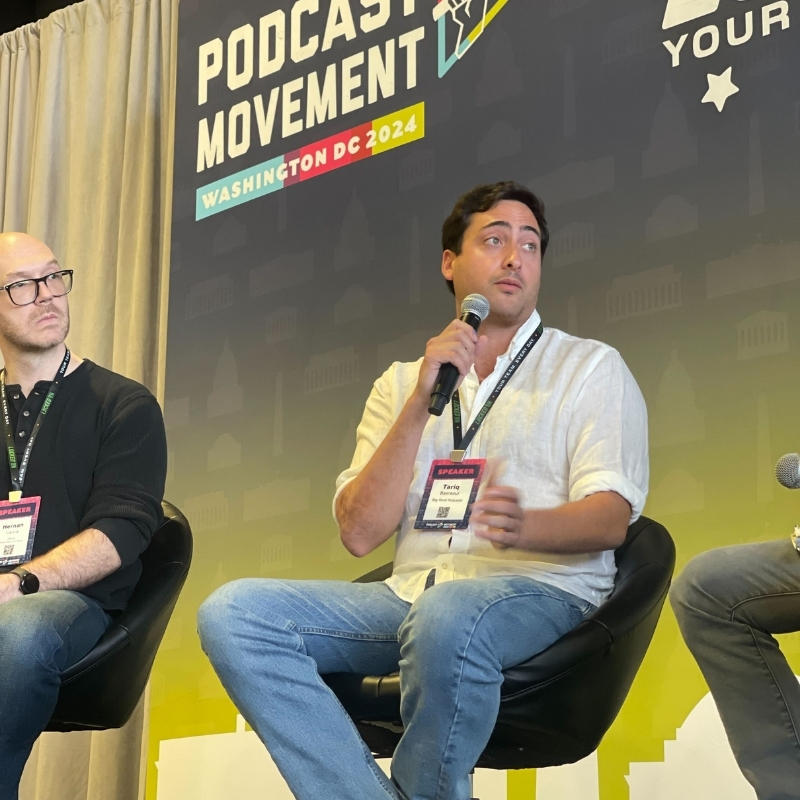
Tariq O’Keefe Basraoui, Co-Founder of Big Pond Podcasts, is a seasoned digital marketer and community builder with a track record of success at platforms like TikTok and Zencastr. Known for launching Zencastr’s Creator Network to over 15,000 members in 18 months, his expertise lies in growing user bases and enhancing brand engagement.
His strategic approach to growth and community engagement has established him as a leader in creating some of the fastest-growing media networks in podcasting.
