

Securing podcast advertising sponsorships deals requires a systematic approach beyond just having a large audience. It involves creating a professional media kit, strategically identifying and pitching aligned brands, understanding various ad models like CPM and flat-fee, and negotiating contracts that reflect your show’s true value. For many podcasters, this means treating your show like a product and building a repeatable sales process. This process can begin once you consistently hit 5,000 to 10,000 downloads per episode.

Defining Your Podcast’s Value Proposition for Sponsors
Sponsors are not buying downloads; they are buying access to a trusted relationship with a specific audience. Your first job is to define and prove the value of that access. This goes far beyond a single listener number.
Beyond Download Numbers: Audience Demographics and Engagement
Your total download number is just the starting point. Sponsors want to know who is listening. Use your podcast hosting platform’s analytics or listener surveys to provide concrete data on age, gender, location, income, and interests. High engagement metrics, such as a completion rate above 80% or an active social media community, demonstrate a loyal and attentive audience.
Quantifying Your Niche Authority
A smaller, highly-targeted audience can be more valuable than a large, general one. A podcast about vintage fountain pen restoration with 5,000 listeners is a perfect match for a specialty ink manufacturer. Clearly articulate your niche and why your authority within it makes your listeners the ideal customers for a specific brand.
Articulating Brand Fit and Alignment
Show a potential sponsor you’ve done your homework. Explain exactly why their brand values, product, and target customer align with your audience. A successful pitch isn’t about what the sponsor can do for you, but what your audience can do for them. For instance, if you host a podcast on sustainable living, pitching a company like Patagonia by highlighting shared values is far more effective than a generic email.
Building a Media Kit That Closes Deals
Your media kit is your professional resume. It should be a concise, well-designed document that gives a brand everything it needs to make a decision. A sloppy or incomplete media kit signals that you are an amateur.
Essential Components of a Professional Media Kit
A complete media kit must include several key elements. Start with a brief bio of you and the show, outlining your mission and a description of your ideal listener. Include clear audience statistics and demographics, and detail your sponsorship packages with rates and ad types. Finally, provide contact information and links to your podcast and social media.
Presenting Your Data: Downloads, Demographics, and Case Studies
Don’t just list numbers; present them with context. Use graphs to show listener growth over the past 6-12 months. Include testimonials from listeners or, even better, case studies from past sponsors. Even if it’s just a successful affiliate campaign, showing a track record of driving results is powerful. This is a key part of our strategy as we help over 1,300+ podcasters monetize and grow their shows.
Design and Formatting Best Practices
Your media kit should be a clean, 1-3 page PDF. Use your podcast’s branding, including logos and color schemes, for a professional look. Ensure the document is easy to read and skim, using headings, bullet points, and visuals to break up text. Tools like Canva offer templates that can be easily customized.
Four Channels for Finding and Pitching Sponsors
There is no single path to securing podcast advertising sponsorships deals. Most successful podcasters use a mix of strategies. The right channel depends on your show’s size, niche, and your available time.
Direct Outreach: The Cold Email That Works
Direct outreach gives you the most control. Research brands that are already advertising on similar podcasts or that align perfectly with your audience. A personalized email that shows genuine interest in their brand and clearly explains the value for them gets a much higher response rate than a generic template. Keep it short, attach your media kit, and suggest a clear next step, like a brief call.
Leveraging Podcast Ad Networks and Marketplaces
Platforms like Gumball or Spreaker connect podcasters with advertisers. These marketplaces can be a good starting point, especially for newer shows, but they often take a significant commission. Networks are a step up, where a team actively sells your inventory, which is part of how we operate at Big Pond by selling direct brand deals for our creators.
Working with Sponsorship Agencies
Once your show reaches a substantial size (typically 50,000+ downloads per episode), you might consider working with a specialized podcast advertising agency. Companies like Ad Results Media or Oxford Road work with large brands to place ad buys across a portfolio of shows. They handle the sales and negotiation, allowing you to focus on content.
Inbound Leads: Making Yourself Discoverable
Make it easy for brands to find you. Create a dedicated “Sponsor” or “Advertise With Us” page on your website. Link your media kit and provide a clear contact form. This positions you as a professional media property ready for business.
Choosing the Right Sponsorship Model
| CPM (Cost Per Mille) | CPA (Cost Per Acquisition) | Flat Fee | |
|---|---|---|---|
| Basis | Impressions | Listener Action | Fixed Duration/Episode |
| Payout Type | Variable | Variable (Performance) | Fixed |
| Risk to Podcaster | Low | High | Low |
| Predictability | Moderate | Low | High |
| Best For | Large audience | Direct response | Niche audience/Emerging |
The financial structure of your deal impacts everything from your income stability to the sponsor’s perception of value. Understanding these models is critical for negotiation. Each one allocates risk differently between you and the sponsor.
CPM (Cost Per Mille): The Industry Standard
CPM means “cost per thousand” listeners. If your 30-second mid-roll ad has a $25 CPM and your episode gets 10,000 downloads, the ad spot costs $250. This is the most common model, favored for its predictability. At our network, we see a $22.35 Avg. 60-Sec CPM, which is a strong benchmark for quality inventory.
Flat-Fee and Value-Based Pricing
A flat-fee model involves a set price per episode or for a block of episodes, regardless of download numbers. This is common for smaller shows or for sponsorships that include more than just an ad read, like social media posts. Value-based pricing goes a step further, setting the price based on the strategic value of your specific audience, not just its size.
Affiliate and Performance-Based Deals
In an affiliate model, you earn a commission for every sale generated through your unique promo code or link. This is low-risk for the sponsor, making it a great entry point for new podcasters. However, your income is not guaranteed and depends entirely on your audience’s purchasing behavior. Some deals can be a hybrid, combining a lower flat fee with a performance bonus.
| Feature | CPM (Cost Per Mille) | Flat-Fee | Affiliate / CPA |
|---|---|---|---|
| Income Predictability | High | Very High | Low / Variable |
| Podcaster Risk | Low | Low | High |
| Sponsor Risk | Medium-High | Medium | Very Low |
| Best For | Shows with stable downloads (>10k/ep) | Niche shows, new shows, bundles | All sizes, especially to prove value |
Ad Placements and Delivery: Technical Considerations
The technical side of ad delivery affects both listener experience and your workflow. The choices you make here determine the longevity and monetization potential of your back catalog. Sponsors will have preferences you need to accommodate.
Pre-Roll, Mid-Roll, and Post-Roll: Strategic Placement
Mid-roll ads, placed in the middle of your content, are generally the most valued because listeners are already engaged. Pre-roll ads (before the show starts) and post-roll ads (after the show ends) have higher skip rates but can still be effective. A standard 60-minute podcast might have one pre-roll and two mid-roll slots available for sponsors.
Baked-In vs. Dynamic Ad Insertion (DAI)
Baked-in ads are edited directly into the episode audio file, meaning they live there forever. This is simple but means you can’t update ads or monetize your back catalog with new deals. Dynamic Ad Insertion (DAI), used by platforms like Megaphone, inserts ads at the moment of download. This allows you to run different campaigns across your entire catalog, sell based on geography, and keep your ad inventory fresh.
The Rise of Video Podcast Sponsorships
With platforms like YouTube and Spotify investing heavily in video podcasts, new sponsorship opportunities have emerged. Brands are interested in visual placements, from logos on screen to product demonstrations by the host. These integrated sponsorships can command higher rates than audio-only ads, but require more production effort.
“The shows that break through in 2026 treat podcasting like a product, not a content format. They define a precise audience, invest in production infrastructure, distribute across every platform, and build revenue models that make the show financially self-sustaining — or profitable — within 12-18 months.”
The Podcast Sponsorship Deal Lifecycle

A one-time ad read is a transaction. A long-term partnership is a business. Managing the entire lifecycle professionally ensures you not only land a deal but also keep it.
Step 1: Prospecting and Initial Outreach
This stage is about research and qualification. Build a list of 20-30 dream sponsors that align with your audience. Use tools like LinkedIn Sales Navigator to find the right marketing contacts at those companies. Send a personalized pitch and follow up politely but persistently.
Step 2: Negotiation and Contracting
Once a sponsor shows interest, the negotiation begins. Be prepared to discuss rates, ad placement, number of spots, and tracking methods. Here are key tactics for the negotiation process:
- Anchor High: Start with a rate at the top end of your acceptable range. It’s easier to negotiate down than up.
- Know Your Walk-Away Point: Decide on your minimum acceptable terms before the conversation starts.
- Bundle and Unbundle: If they can’t meet your price for a package, offer a smaller package (e.g., fewer ad spots) or add value (e.g., a social media mention) to justify your price.
- Get It in Writing: Always use a formal contract. A simple one-page agreement outlining deliverables, payment terms, and disclosure requirements protects both you and the sponsor.
Step 3: Ad Creation, Fulfillment, and Reporting
This is where you deliver the value. For host-read ads, work with the sponsor to get the talking points right while keeping it in your authentic voice. Meet all deadlines for script approval and ad placement. After the campaign runs, provide a simple report showing download numbers for the sponsored episodes and any available conversion data.
Step 4: Managing Renewals and Long-Term Partnerships
The most profitable sponsorships are long-term ones. About 30-45 days before a campaign ends, check in with your contact. Share the results, thank them for the partnership, and open the conversation about renewal. Offering a slight discount for an annual commitment can be a powerful incentive.
Setting Rates and Measuring ROI
Pricing your inventory correctly and proving its effectiveness are the cornerstones of a sustainable podcast business. Misunderstanding these can lead you to undervalue your work or fail to retain sponsors. This is a core part of securing podcast advertising sponsorships deals.
How to Set Your CPM and Flat-Fee Rates
Industry-standard CPM rates for podcasts typically range from $18 for a 30-second ad to $50 for a 60-second host-read ad. Your exact rate depends on your niche, audience engagement, and download numbers. For a flat fee, calculate what you would earn via CPM and add a premium for the simplicity and guaranteed income. You can find more detail on this in our guide to podcast advertising cpm.
Proving Value: Attribution and ROI for Sponsors
Attribution is the holy grail for sponsors. The easiest methods are vanity URLs (e.g., brand.com/podcast) and unique promo codes. Some sponsors use post-purchase surveys asking “How did you hear about us?” More advanced sponsors may use pixel-based attribution from companies like Chartable to track listener journeys from download to purchase.
Common Misconceptions About Sponsorship Viability
Many podcasters believe they need a massive audience like that of Serial, which had 75 million listeners for its first season, to get sponsors. This is false. A highly engaged niche show with just a few thousand listeners can be incredibly attractive to the right brand. Another misconception is that you must have a certain number of episodes; a strong plan and a well-defined audience are more important than a huge back catalog.
A sponsor isn’t buying a 60-second spot. They’re buying a trusted endorsement delivered to a hyper-engaged audience that you spent years building. Price accordingly.
Legal and Ethical Considerations
Ignoring the rules can damage your credibility and lead to legal trouble. Professional podcasters understand their obligations to their audience and the law. This professionalism includes how we approach managing brand deals for our creators.
Understanding FTC Disclosure Guidelines
The Federal Trade Commission (FTC) requires that you clearly disclose when you are being paid to promote a product. According to FTC endorsement guides, this disclosure must be hard to miss. For podcasts, this means stating it verbally within the ad itself (e.g., “Thanks to our sponsor, Brand X…” or “This episode is brought to you by…”). Simply putting it in show notes is not sufficient.
Key Clauses in a Sponsorship Agreement
Your contract should be clear and concise. Key clauses to include are: payment schedule and terms, a clear description of the deliverables (e.g., two 60-second mid-roll ads), content approval process, usage rights for the ad creative, and an exclusivity clause defining whether you can work with the sponsor’s competitors. A well-drafted agreement prevents future disputes.
B2B vs. Consumer Sponsorship Nuances
Sponsoring a B2B podcast is different from a general consumer show. B2B deal sizes are often larger, but sales cycles are much longer. The goal may not be an immediate online sale but lead generation for a high-ticket service. A Content Allies report on B2B podcasting highlights that ROI is often measured in qualified leads or strategic partnerships, not just direct sales, requiring a different approach to both pitching and reporting.
Further reading
- Podcast policy | University Policy Manual
- Endorsements in Podcasting: Is There a Need For Regulation?
Frequently Asked Questions
How many downloads do I need to get a sponsor?
While there’s no magic number, most brands and networks start looking at shows once they consistently achieve 5,000 to 10,000 downloads per episode within the first 30 days of release. However, a hyper-niche show with a very valuable audience (e.g., CIOs, doctors) can secure deals with as few as 1,000 downloads per episode.
What is a typical CPM rate for podcasts in 2026?
In 2026, typical CPM rates range from $18 to $25 for a 30-second ad and $25 to $50 for a 60-second ad. Host-read ads command the highest rates due to the authentic endorsement they provide. Our network’s average for a 60-second spot is $22.35, but rates can go much higher for podcasts in sought-after niches like finance or technology.
Should I accept products instead of cash for a sponsorship?
Accepting products (a “contra” deal) can be a good strategy when you’re starting out. It helps you build a track record of working with brands and provides social proof for your media kit. However, you should quickly transition to cash payments as your show grows. The value of the product should still be equivalent to what you would charge in cash.
How do I handle a sponsor who wants creative control over the ad?
It’s a negotiation. Your response should be that your audience listens because they trust your voice. You can explain that a script that sounds like a corporate ad will be less effective than an authentic endorsement. Offer to work with them on key talking points but insist that the final delivery must be in your own style. This is a non-negotiable part of providing effective host-read ads.
What’s the difference between a sponsorship and an endorsement?
A sponsorship is the overall business agreement where a brand pays to be associated with your podcast. An endorsement is a specific type of ad creative within that sponsorship, typically a host-read ad, where you personally vouch for the product or service. The IAB Podcast Advertising Revenue Study shows that these personal endorsements are a primary driver of the industry’s growth.
Treating your podcast like a business is the first step toward monetization. Building a professional media kit, understanding pricing models, and learning how to pitch and negotiate are the core skills for securing podcast advertising sponsorships deals. It requires a strategic process, but it’s a learnable one. If you’re ready to grow your show and connect with the right brands, reach out to our team at Big Pond.
About the author
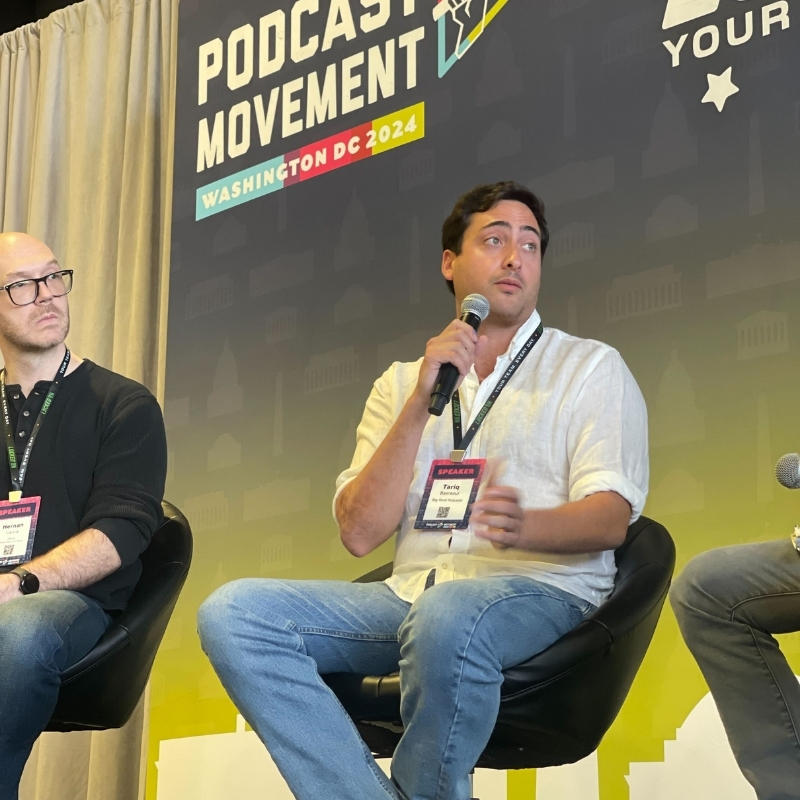
Tariq Basraoui
CEO
Tariq O’Keefe Basraoui, Co-Founder of Big Pond Podcasts, is a seasoned digital marketer and community builder with a track record of success at platforms like TikTok and Zencastr. Known for launching Zencastr’s Creator Network to over 15,000 members in 18 months, his expertise lies in growing user bases and enhancing brand engagement.
His strategic approach to growth and community engagement has established him as a leader in creating some of the fastest-growing media networks in podcasting.
