

The Future of Podcast Monetization 2026: Beyond the Ad Spot
The future of podcast monetization in 2026 moves past a sole reliance on advertising. It is defined by a diversified portfolio including direct listener support through subscriptions, the precision of programmatic ads, and revenue streams from niche content. For creators, success means building a direct relationship with your audience and treating your podcast as the core of a multi-faceted media business, not just a series of audio files. At Big Pond, we are focused on this full-cycle approach to creator monetization.
The End of the One-Track Mind: Diversification is Non-Negotiable
For years, the monetization path was linear: build an audience, then sell ad spots. That model is now dangerously outdated. Relying on a single revenue stream, especially one tied to fluctuating ad markets, introduces fragility into your business.
The most resilient creators in 2026 will operate like modern media companies, building multiple, independent income sources around their core content. This is the central pillar of the future of podcast monetization in 2026. You can explore more strategies in our guide on podcast monetization strategies.
Direct Listener Payments: Subscriptions and Memberships
Direct payments from your audience represent the most stable form of revenue. This isn’t just about putting episodes behind a paywall. It’s about offering premium, exclusive value that a loyal listener is happy to pay for.
This could be bonus episodes, ad-free listening, early access, or community features like a private Discord server. Platforms like Patreon and Supercast have normalized this behavior, but platform-agnostic tools are making it even more accessible for independent creators to own their audience relationship completely.
Affiliate Revenue: From Afterthought to Primary Income
Affiliate marketing is no longer just a small-time bonus. For many podcasts with a strong niche, it can outperform advertising. Instead of being paid a flat fee for reads, you earn a percentage of every sale you drive.
This model aligns your incentives directly with the advertiser’s success, making for a more authentic partnership. When you genuinely use and recommend a product, your audience trusts that recommendation far more than a generic ad spot. The key is finding partners that are a perfect fit for your listeners’ needs and interests.
The “Value-for-Value” Model Comes of Age
The “value-for-value” model, popularized by the Podcasting 2.0 initiative, is gaining serious traction. It allows listeners to stream micropayments directly to creators as they listen. This is facilitated by new podcast apps that support the protocol.
While it doesn’t replace other models, it provides a frictionless way for your most engaged fans to show support without committing to a monthly subscription. It captures value from the long tail of your audience who appreciate your work but might not convert on a higher-friction offer. It’s a fascinating development detailed on the official Podcasting 2.0 project site.
Future of Podcast Monetization 2026: The Ad Tech Revolution
Advertising isn’t going away; it’s getting smarter, more precise, and more effective. The brute-force approach of baking in the same ad for every listener is being replaced by technology that serves the right ad to the right person at the right time. For a deeper look, see our breakdown of podcast ad trends.
Programmatic Ads Reach Full Maturity
Programmatic advertising uses automation to buy and sell ad inventory. In 2026, its targeting capabilities are finally catching up to the rest of the digital world. This means advertisers can target listeners based on demographics, interests, and listening habits with incredible precision.
For podcasters, this means better fill rates and higher CPMs because your inventory is more valuable. Our network, for instance, sees an average 60-second CPM of $22.35, a benchmark showing what quality, targeted inventory can command. The IAB has been instrumental in creating standards that make this programmatic evolution possible.
AI’s Role in Ad Creative and Contextual Targeting
Artificial intelligence is changing both the creation and placement of ads. AI tools can now generate synthetic voice ads, localize campaigns for different regions, and even optimize ad copy based on performance.
More importantly, AI can perform contextual analysis of an episode’s content. This allows it to place an ad for a hiking boot company right after a segment about a mountain climbing adventure. This relevance makes the ad feel less like an interruption and more like a helpful suggestion.
Shoppable Audio and Interactive Formats
The wall between audio content and e-commerce is crumbling. New ad formats allow listeners to interact directly with an ad using their voice or a tap on their phone. Imagine hearing an ad for a meal kit service and saying, “Send me the offer,” to receive a text with a signup link.
These formats dramatically reduce friction and make attribution crystal clear for advertisers. As explored in publications like AdExchanger, this move towards interactive audio ads is a major shift, turning passive listeners into active participants.
| Monetization Model | Primary Metric | Key Advantage | Major Challenge in 2026 |
|---|---|---|---|
| Traditional Baked-in Ads | Downloads (CPM) | Simplicity of execution | Low targeting, poor attribution, fixed to catalog |
| Programmatic Ads | Targeted Impressions | Scale, efficiency, high relevance | Can feel impersonal if not well-integrated |
| Subscriptions/Memberships | Member Lifetime Value | Predictable, recurring revenue | Requires significant extra value creation |
| Affiliate Marketing | Conversions/Sales (CPA) | High earning potential, authentic | Dependent on partner quality and tracking |
| Value-for-Value | Listener Engagement | Frictionless, captures casual support | Relies on listener adoption of new apps |
Your Niche is Your Fortress
In a world of infinite content, the only durable advantage is a specific, well-served audience. General-interest podcasts compete with everyone for attention. A hyper-niche show competes with almost no one.
Relying on a single revenue stream is no longer a strategy; it’s a liability. The most resilient creators operate like modern media companies, not just audio producers.
This focus allows you to build a deep, trusted relationship with your listeners, which is the foundation of every effective monetization strategy. Across the 1,300+ podcasts in our network, we see this pattern repeat: the more defined the audience, the more diverse the revenue opportunities.
Why Hyper-Specific Content Commands Premium Rates
An advertiser like American Express or Walmart doesn’t just want to reach a million people. They want to reach the right people. A podcast about financial planning for freelance creatives with 10,000 listeners is infinitely more valuable to a fintech company than a general pop culture show with 100,000 listeners.
This is why niche shows can often command CPMs that are double or triple the industry average for their ad inventory. You aren’t just selling ears; you’re selling a pre-qualified, highly engaged audience segment.
The Creator as a Brand: Merch, Courses, and Live Events
Your podcast is the top of your personal brand’s funnel. It’s the engine for building trust at scale. That trust can then be channeled into other ventures that your audience is eager to support.
This is a core concept of the creator economy that podcasters are perfectly positioned to capitalize on. From selling branded merchandise to hosting paid workshops, launching digital courses, or running live virtual events, your podcast becomes the marketing engine for a full-fledged business.
Reviving Your Back Catalog with Dynamic Insertion
Your back catalog is a dormant asset. With baked-in ads, an episode from two years ago is still running an ad for a campaign that ended 18 months ago. This is a massive waste of valuable inventory.
Dynamic Ad Insertion (DAI) technology solves this. It allows you to swap ads in and out of your entire library of episodes, ensuring that every download, whether of a new episode or one from your archives, serves a relevant, current ad. This instantly multiplies your available ad inventory without creating a single new piece of content.
Measurement Matures: Proving Real-World Impact
For years, the biggest complaint from advertisers about podcasting was the lack of sophisticated measurement. The download was a flimsy proxy for engagement, and proving ROI was a murky process reliant on vanity URLs and discount codes. That is no longer the case.
Moving Beyond the Download: Engagement as the Key Metric
The key metric for 2026 is not downloads, but actual listener engagement. Platforms are now able to provide data on listen-through rates, drop-off points, and even audience demographics. This allows creators to understand what’s resonating and advertisers to know their message was actually heard, not just downloaded and ignored.
The Power of First-Party Data in a Privacy-First World
As privacy regulations and browser changes phase out third-party cookies, first-party data becomes gold. This is data you collect directly from your audience. When a listener subscribes to your newsletter, joins your membership, or buys a product, they are giving you valuable information you can use to serve them better.
Podcasters who build these direct channels of communication will have a significant advantage. They can build rich audience profiles that allow for powerful ad targeting and content personalization without relying on invasive tracking.
Closing the Loop with Advanced Attribution
Attribution is the science of connecting an ad exposure to a customer action. New tools are making this possible for podcasts. Pixel-based tracking and other cross-device solutions can now determine if a listener who heard an ad on their phone later visited the advertiser’s website on their laptop.
This provides the hard proof of ROI that major brands demand, unlocking larger advertising budgets and solidifying podcasting’s place as a performance marketing channel.
Your community is the asset. The podcast is just the tool you use to build it. Monetization follows community, not the other way around.
How to Prepare Your Podcast for This New Era
Adapting to the future of podcast monetization requires a shift in mindset and strategy. It’s about thinking like a business owner, not just a content creator. Here are the first steps.
1. Audit Your Current Monetization Stack
Start by evaluating where your revenue comes from now. Is it all from a single source? What percentage is from advertising versus direct listener support?
- Analyze Your Audience: Who are they and what do they value? Surveys are a great tool for this.
- Evaluate Your Content: Does your content naturally lead to affiliate opportunities or premium extensions?
- Identify Single Points of Failure: If your primary revenue source disappeared tomorrow, what would happen?
- Research New Models: Based on your audience, which new streams (subscriptions, affiliate, etc.) are the most logical fit?
2. Build Your Community Flywheel
Your most important job is to build a direct relationship with your listeners. Start a newsletter. Create a simple online forum or chat group. The goal is to create a home for your audience that you own, independent of any single podcasting app or social platform.
This community becomes a flywheel. Engaged members advocate for your show, attracting new listeners and creating a powerful feedback loop that makes your content better and your monetization more effective.
3. Select Partners Who Understand This Future
Not all hosting platforms or ad networks are created equal. You need a partner that provides the tools and expertise for a diversified monetization strategy. When evaluating options, you must know choose a podcast monetization platform that supports your long-term vision.
Look for platforms that offer integrated support for dynamic ad insertion, subscriptions, and robust analytics. Working with a network that understands how to connect niche shows with premium brands is also critical. Growing a creator network to over 15,000 members, as I did with the Zencastr Creator Network, taught me that the right infrastructure is the foundation for scalable success.
FAQ
What is the easiest way to start monetizing a podcast in 2026?
The simplest entry point is often affiliate marketing. You can join established programs like Amazon Associates or find niche brands with programs relevant to your content. It requires no minimum download numbers and allows you to start generating revenue based on the trust you’ve already built with your audience.
Can small podcasts still make money?
Yes, absolutely. In many ways, 2026 is the best time to be a small, niche podcaster. By hyper-focusing on a specific audience, you create an asset that is extremely valuable to the right advertisers and highly appealing for direct support models like subscriptions and affiliate sales.
Is programmatic advertising better than host-read ads?
Neither is inherently “better”; they serve different purposes. Host-read ads offer deep authenticity and trust. Programmatic ads offer scale, precision targeting, and a way to monetize your back catalog effectively. The most successful strategy often involves a hybrid approach, using host-reads for key partnerships and programmatic to fill remaining inventory.
How will AI change podcast monetization?
AI will make monetization more efficient and effective. It will power better contextual ad targeting, help generate ad creative, provide deeper audience analytics, and even enable new formats like AI-driven interactive ads. For creators, it acts as a powerful co-pilot for optimizing revenue.
What is a “value-for-value” model?
The value-for-value model is a form of direct listener support that allows for frictionless micropayments. Using a compatible podcast app, listeners can stream small amounts of money (often fractions of a cent per minute) directly to the podcaster as they listen, or send one-time “boosts.” It’s a way to monetize engagement from listeners who might not sign up for a monthly subscription.
The podcast monetization landscape is more complex than ever, but it’s also filled with more opportunity. By diversifying your revenue, embracing new technology, and building a direct relationship with your audience, you can build a thriving and resilient podcast business. If you are ready to explore these opportunities for your show, let’s connect and discuss a strategy.
About the author
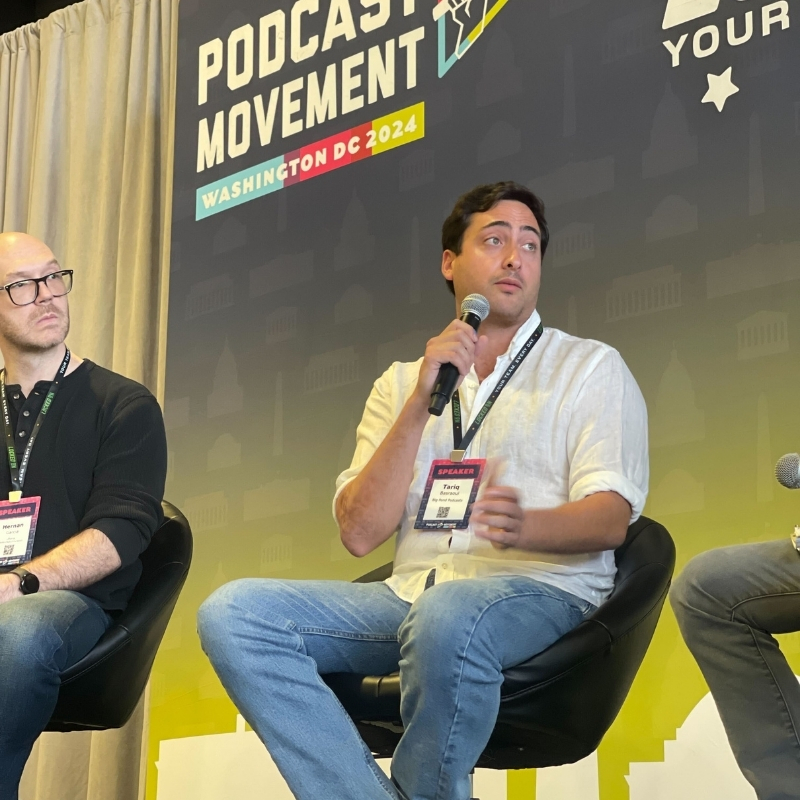
Tariq Basraoui
CEO
Tariq O’Keefe Basraoui, Co-Founder of Big Pond Podcasts, is a seasoned digital marketer and community builder with a track record of success at platforms like TikTok and Zencastr. Known for launching Zencastr’s Creator Network to over 15,000 members in 18 months, his expertise lies in growing user bases and enhancing brand engagement.
His strategic approach to growth and community engagement has established him as a leader in creating some of the fastest-growing media networks in podcasting.
