

The most effective podcast audience growth hacks involve a multi-pronged approach beyond just creating good content. You need to master discoverability through targeted podcast SEO, forge strategic cross-promotions with other shows, and build a real community around your podcast using social media. Consistency in publishing, paired with analyzing listener data from tools like Podtrac or Chartable, provides the foundation. These actions turn passive listeners into an engaged, growing audience, which is the key to long-term success and monetization.

Foundation: Content Planning and Consistency
Your audience builds a habit around your show. A predictable publishing schedule (whether daily, weekly, or bi-weekly) is the bedrock of listener retention. Weekly podcast listening remains a dominant media behavior, highlighting the importance of regularity.
Establishing a Predictable Publishing Schedule
Consistency isn’t about frequency; it’s about reliability. Choose a release day and time and stick to it religiously. A listener who expects your show on Tuesday morning and finds it there builds trust in your brand.
This predictability extends to episode length. If your audience subscribes for a 20-minute commute-sized show, a sudden 90-minute episode can disrupt their routine and lead to a drop-off.
Content Pillars and Thematic Consistency
Your podcast needs a clear premise. Define 3-5 content pillars or core topics that every episode will touch upon. This focus helps you attract a specific target audience and makes it easier for new listeners to understand what your show is about at a glance.
For example, a podcast on financial independence might have pillars like: debt reduction strategies, investing for beginners, and passive income streams. A show that jumps from finance to gardening to celebrity gossip will struggle to retain a core following.
Audio Quality as a Retention Tool
Poor audio is one of the fastest ways to lose a listener. Invest in a decent microphone like the Audio-Technica AT2020 or the Rode PodMic. Record in a quiet, treated space to minimize echo and background noise.
Listeners might forgive an occasional stumble over words, but they will not tolerate constant humming, clipping, or muffled audio. Clean sound is a sign of professionalism and respect for your audience’s time.
Mastering Discoverability with Podcast SEO
Podcast directories are search engines. Treating them as such is one of the most powerful, yet overlooked, podcast audience growth hacks. Your show’s visibility depends on how well you optimize it for discovery.
Optimizing Episode Titles and Show Notes
Your episode titles should be descriptive and keyword-rich. Instead of a vague title like “Episode 54: Chat with Jane,” use “Growing a Startup to $1M with Jane Doe, CEO of Acme Inc.” The latter is far more likely to be discovered by someone searching for startup growth strategies.
Your show notes are prime real estate for SEO. Include a detailed summary of the episode, mention key topics and guest names, and link to any resources discussed. According to a guide on podcast SEO, search engines index this text, making your episodes discoverable through standard web searches.
Leveraging Transcripts for Search Engines
Posting full transcripts of your episodes on your website is a powerful tactic. Each transcript creates a content-rich page that Google can crawl and index. Someone searching for a specific phrase or topic mentioned in your episode can land directly on your site.
Services like Otter.ai or Descript can automate this process, making it an efficient way to repurpose your audio content for SEO benefits. This opens up a significant channel for organic audience growth from users who may not even be browsing podcast apps.
Choosing the Right Categories and Tags
Within platforms like Apple Podcasts and Spotify, categories are the primary way users browse for new shows. Choose the most relevant primary category for your podcast, but also select specific subcategories where you can stand out.
For example, instead of just “Business,” you might choose “Business > Entrepreneurship.” This puts you in a smaller, more relevant pool, increasing your chances of being featured or climbing the charts in that niche.

Strategic Collaborations and Cross-Promotions
Borrowing an audience is the fastest way to build your own. Collaborating with other podcasters puts your voice directly in the ears of established, engaged podcast listeners. This is one of the most effective advanced strategies to grow a podcast audience.
Identifying and Pitching Guest Appearances
Appearing as a guest on other podcasts in your niche introduces you to a pre-qualified audience. Identify shows that share a similar target listener but are not direct competitors. Craft a personalized pitch that clearly explains the value you can provide to their audience, suggesting 2-3 specific topics you can discuss with expertise.
When you’re on the show, remember to mention your own podcast and tell listeners what they can expect. This direct call-to-action is crucial for converting their listeners into your subscribers.
The single best promotion for a podcast is another podcast. Your future listeners are already there; you just need to be introduced.
Executing Effective “Promo Swaps”
A promo swap is a mutual agreement between two podcasts to run a short promotional trailer for each other’s show. This can be a 30-60 second pre-recorded ad or a host-read endorsement. These are highly effective because they come with an implied recommendation from a trusted host.
Here is a simple process for arranging a promo swap:
- Identify Potential Partners: Look for shows of a similar size and audience demographic. Use tools like SparkToro or simply browse your category on Apple Podcasts.
- Reach Out with Data: Contact the host with your key stats: average downloads per episode, listener demographics, and a link to your show. Propose a swap.
- Provide a Professional Promo: Create a high-quality 30-second audio clip that explains your show’s value proposition and ends with a clear call-to-action (e.g., “Search for The Growth Show wherever you get your podcasts.”).
- Agree on a Schedule: Determine the dates and number of episodes the promos will run on. Confirm when your partner’s promo will air on your show.
- Track the Results: Use a custom link or a simple survey to ask new listeners how they found you. Monitor download spikes on the days your promo airs.
This structured approach is crucial for successful podcast cross-promotion.
Joining a Podcast Network for Amplified Reach
Podcast networks offer a way to scale your collaboration efforts. At Big Pond Podcasts, we connect our creators for cross-promotional opportunities across a network of over 1,300 podcasts. This collective power provides a massive boost in reach that is difficult to achieve independently.
Being part of a larger ecosystem can lead to features in network-wide marketing campaigns and access to larger advertisers. The goal is to tap into a shared audience pool, accelerating growth for everyone involved.
Building and Engaging Your Listener Community
Audience growth isn’t just about acquisition; it’s about retention. Turning listeners into a community transforms your show from a passive broadcast into an active, participatory brand. True growth comes from building a loyal base that advocates for you.
Using Social Media to Create a Dialogue
Don’t just use social media to announce new episodes. Use it to continue the conversation. Ask questions related to the episode’s topic, share behind-the-scenes content, and respond to comments.
Sharing your face, your personality, and glimpses behind the scenes helps consumers trust you, allowing them to stop seeing you as a faceless corporation and start seeing the person (or people) behind the brand. This trust is what drives word-of-mouth growth, as consumers buy from brands they feel connected to.
Encouraging Listener Feedback and Reviews
Reviews and ratings on platforms like Apple Podcasts and Spotify act as social proof and can influence their algorithms. Actively ask your listeners to leave a review at the end of your episodes. Read some of the best reviews on-air to show you’re paying attention and to encourage others.
This feedback loop also provides valuable insights. Listeners will tell you what they love and what they want more of, helping you refine your content strategy. This is a core part of effective podcast community building.
Creating Exclusive Content for Superfans
Identify your most engaged listeners and give them a reason to connect more deeply. This can be a private Facebook Group, a Discord server, or a newsletter. Our co-founder, Tariq Basraoui, saw this firsthand when he launched Zencastr’s Creator Network, growing it to over 15,000 members in 18 months by providing exclusive access and community features.
Offer bonus content, ad-free episodes, or early access in these private channels. This not only strengthens your relationship with your biggest fans but also creates a compelling reason for casual listeners to join the community.
Podcast Growth Tactic Comparison
| Tactic | Average Cost | Effort Level | Time to Results |
|---|---|---|---|
| Podcast SEO | Low | Medium | 3-6 Months |
| Cross-Promotion | Low (time) | Medium | 1-2 Months |
| Paid Advertising | High | Low-Medium | Immediate |
| Community Building | Low-Medium | High | 6-12+ Months |

Analyzing Your Data to Inform Growth
Gut feelings can only get you so far. To achieve sustainable podcast audience growth, you need to understand your data. Analytics platforms provide a roadmap, showing you what’s working and what isn’t.
Data tells you where your audience is coming from and, more importantly, why they stay or leave. Ignoring it is like trying to navigate without a map.
Key Metrics to Track
Don’t get lost in vanity metrics. Focus on the numbers that matter for growth. Downloads per episode (within the first 30 days) is the industry standard for measuring audience size.
Other critical metrics include:
- Listener Demographics: Age, gender, and geographic location help you understand your audience profile.
- Audience Retention/Drop-off: Which parts of your episodes cause people to stop listening? This is crucial for improving content.
- Traffic Sources: Which apps and websites are your listeners coming from?
Tools for Podcast Analytics
Your podcast host (like Blubrry or Captivate) provides basic analytics. For deeper insights, use third-party tools. Chartable and Podtrac offer powerful, free analytics that provide cross-platform data and demographic information.
These tools help you verify your audience size and understand your position in the market. This data is essential not just for growth but also for attracting potential advertisers.
Turning Insights into Actionable Changes
Data is useless without action. If you notice a significant listener drop-off at the 5-minute mark of every episode, your intros might be too long. If you see a spike in listeners from a guest’s appearance, seek out similar guests.
This is where we often help creators when we audit your show. We analyze the data to find the friction points and help you fix what’s holding it back. This systematic approach to improvement is a key part of our strategy for audience growth.
Leveraging PR for Wider Reach
Public relations is about earning media coverage rather than paying for it. A feature in a popular blog, newsletter, or online magazine can introduce your podcast to thousands of potential new listeners in an instant. This is a crucial element for anyone serious about how to increase podcast audience organically.
Crafting a Compelling Media Kit
Your media kit is your podcast’s resume. It should be a professional, one-page document that includes:
- Your podcast’s description and cover art.
- Your host bio and headshot.
- Key listener statistics (downloads, demographics).
- Links to your best episodes and social media profiles.
- Contact information.
Having this ready makes it easy for journalists and potential collaborators to see your value proposition quickly. Canva offers excellent templates for creating a visually appealing media kit.
Pitching Your Story to Journalists and Bloggers
Don’t just pitch your podcast; pitch a story. Tie your show’s expertise to a current event, a new trend, or a unique human-interest angle. According to an explainer from the Public Relations Society of America (PRSA), successful PR is about creating relevant narratives.
Research journalists who cover your niche and send them a short, personalized email. Explain why your story is relevant to their audience now. A well-timed, relevant pitch is far more effective than a mass email blast.
FAQ
How long does it take to see real podcast audience growth?
For most independent podcasts, expect to see meaningful, consistent growth after 6-12 months of applying these strategies. Early wins can come from cross-promotions in the first 1-2 months, but sustainable, organic growth from SEO and community building takes longer. The key is persistence.
What are the best free tools for podcast promotion?
Several excellent free tools exist. Use Canva for creating social media graphics and audiograms. Leverage free versions of analytics tools like Chartable and Podtrac. For collaborations, you can use Rephonic‘s free search features to find similar podcasts.
How do I find the right podcasts for cross-promotion?
Look for shows with a similar audience size and demographic. Listen to a few episodes to ensure their tone and quality align with your brand. The ideal partner is in an adjacent niche, not a direct competitor, for example, a nutrition podcast could collaborate with a fitness podcast.
Does social media marketing actually work for podcasts?
Yes, but its primary function is community building and engagement, not direct downloads. Use platforms like Instagram, X (formerly Twitter), or TikTok to share clips, post behind-the-scenes content, and interact with listeners. This deepens the relationship and turns listeners into advocates who will share your show organically.
Growth is a System, Not a Secret
Implementing these podcast audience growth hacks is not about finding a single magic bullet. It’s about building a systematic engine for discovery, engagement, and retention. By combining consistent, high-quality content with smart SEO, strategic collaborations, and genuine community building, you create multiple pathways for new listeners to find and fall in love with your show. This is the foundation for long-term success and monetization. If you’re ready to implement a professional strategy to build your audience, let’s discuss how we can help.
About the author
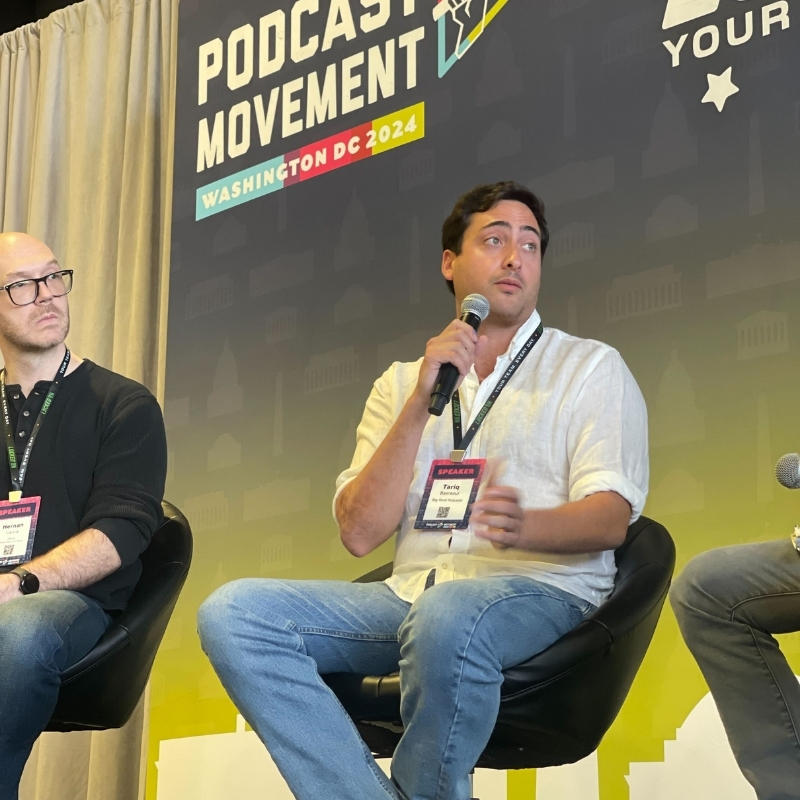
Tariq Basraoui
CEO
Tariq O’Keefe Basraoui, Co-Founder of Big Pond Podcasts, is a seasoned digital marketer and community builder with a track record of success at platforms like TikTok and Zencastr. Known for launching Zencastr’s Creator Network to over 15,000 members in 18 months, his expertise lies in growing user bases and enhancing brand engagement.
His strategic approach to growth and community engagement has established him as a leader in creating some of the fastest-growing media networks in podcasting.
