

A podcast feed drop is a content-sharing arrangement where one podcast publishes a full episode from another show directly into its own RSS feed. This tactic introduces a host’s audience to new, relevant content, acting as a powerful endorsement and a direct pipeline for new listener acquisition. It is a mutual growth strategy, often reciprocal, designed to cross-promote shows with similar listener profiles without creating new content. A well-executed podcast feed drop strategy can significantly expand your reach.

How a Feed Drop Works
The core process involves two non-competing shows agreeing to share content. First, you identify a partner with a similar audience demographic but a different enough topic to be complementary. You both agree on which high-performing, self-contained episode to share.
For example, consider a hypothetical partnership between a show about sustainable living and another focused on minimalist home design. The sustainable living show, with 10,000 listeners, drops an episode from the home design show into its feed. This is framed with a custom intro from the host explaining why their audience will appreciate this new perspective.
The final step is the technical execution via your podcast host, where you schedule the partner’s episode to appear in your public feed for an agreed-upon duration. A successful drop delivers new, engaged listeners to both podcasts.
What a Feed Drop Is Not
Understanding what a feed drop isn’t helps clarify its unique value. It is not simply a promo swap, which involves reading a 30 or 60-second ad for another show. A feed drop shares an entire piece of content, giving a much deeper and more authentic sample of the partner show.
It is also different from a guest appearance. While guesting on another podcast is a fantastic cross-promotion tactic, it requires creating new content, whereas a feed drop utilizes existing episodes. This makes it a more efficient method to build your audience.
Finally, it is not the same as a paid ad placement. While money can be involved, feed drops are typically non-monetary agreements based on mutual benefit and audience sharing. These are the kinds of strategic relationships we foster within our network of over 1,300+ podcasts.

The most effective feed drops feel like a genuine recommendation from a trusted friend, not a business transaction.
Key Strategic Considerations for a Feed Drop
A successful podcast feed drop strategy depends on more than just finding a willing partner. Execution requires careful planning across several key areas to maximize impact and avoid potential pitfalls. Paying attention to these details is a core part of how we function as an incubator for shows aiming for sustainable growth.
Choosing the Right Partner
Your ideal partner has an audience that mirrors yours in psychographics but doesn’t cover the exact same subject matter. A recent Edison Research report shows that listeners are actively seeking new shows, making a relevant recommendation powerful. Use tools like Podchaser to analyze audience data and discover shows with high listener overlap but low direct competition. The goal is to find perfect niche audience alignment.
Selecting the Best Episode
Do not drop an episode that is part of a multi-part series or heavy with inside jokes. Select a standalone episode that represents your show’s best work and is easily accessible to a first-time listener. The episode should provide immediate value and serve as a strong hook to convert them into a regular subscriber.
Legal and Logistical Agreements
Even for an informal swap, a simple written agreement is crucial. This document should outline the duration the episode will remain in the feed, confirm you have the rights to share the content, and set clear expectations. Using a basic framework, like a modified podcast guest release form, can provide a starting point for formalizing the terms.
Don’t measure a feed drop by download numbers alone. Watch for the ‘echo’—social media mentions, website traffic, and a halo of new subscribers in the following weeks.
Measuring Success and Risks
Track the performance of the dropped episode in your analytics platform. Look for a download spike that exceeds your baseline, but also monitor your own show’s subscriber numbers in the days following the drop. Success isn’t just about a one-day download bump; it’s about converting a percentage of that new audience into long-term listeners. It’s also critical to choose the right choose the right platform that gives you clear analytics.
The primary risk is audience rejection. If the content is a poor match, you could receive negative reviews or lose subscribers. Mitigate this by being transparent in a custom intro, explaining exactly why you’re sharing this specific episode and what value it holds for your listeners.

A thoughtful podcast feed drop strategy is one of the most effective, content-driven growth tactics available. It leverages trust and curation to build audiences organically. If you’re ready to explore strategic partnerships and monetization, you can get in touch with our team.
Further reading
Frequently Asked Questions
How do I approach another podcast for a feed drop?
Start with a personalized email that shows you are a genuine listener of their show. Reference a specific episode you enjoyed and explain why you believe your audiences align. Include your podcast’s stats, such as average downloads per episode and audience demographics, to make a clear, data-backed case for a partnership.
How long should a feed drop stay in my feed?
There’s no single rule, but common practice is to keep the dropped episode in the feed for one to two weeks before archiving it. Some podcasters choose to leave it up permanently as a bonus episode. This should be agreed upon with your partner beforehand.
Can a small podcast do a feed drop with a larger one?
Yes, but you must offer clear value beyond a simple reciprocal swap. You might offer a multi-episode drop, a social media promotional package, or access to a particularly niche and engaged audience that the larger show wants to reach. It’s about creating a compelling, asymmetrical offer.
What’s the difference between a feed drop and a feed swap?
The terms are often used interchangeably. However, a “feed swap” more strongly implies a reciprocal arrangement where both podcasts agree to drop each other’s content. A “feed drop” can be a one-way promotion, though this is less common.
Are there tools to find feed drop partners?
Yes, platforms like Podchaser, Rephonic, and Podmatch are designed to help creators find other podcasts for cross-promotion. They provide data on audience demographics and listener overlap, which is invaluable for identifying strong potential partners. You can find more on podcast statistics to better inform your search.
About the author
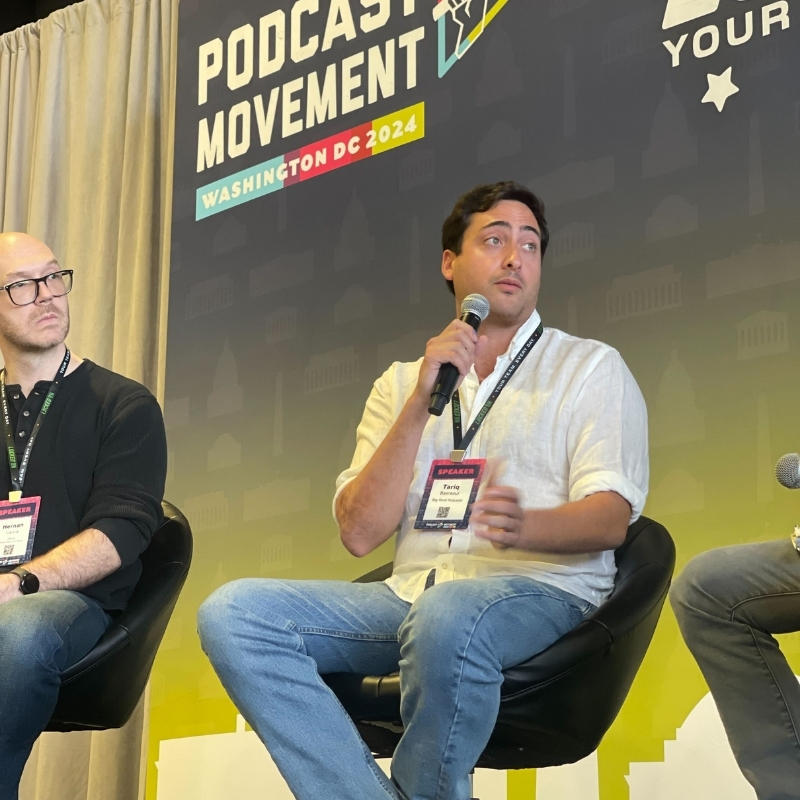
Tariq Basraoui
CEO
Tariq O’Keefe Basraoui, Co-Founder of Big Pond Podcasts, is a seasoned digital marketer and community builder with a track record of success at platforms like TikTok and Zencastr. Known for launching Zencastr’s Creator Network to over 15,000 members in 18 months, his expertise lies in growing user bases and enhancing brand engagement.
His strategic approach to growth and community engagement has established him as a leader in creating some of the fastest-growing media networks in podcasting.
