

Guest swapping vs promo swapping forces creators to choose between high-conversion interviews and high-volume reach. Guest swapping involves trading interview appearances on each other’s shows to build deep listener trust. Promo swapping exchanges pre-recorded or host-read audio trailers across RSS feeds to maximize total impressions. Choose guest swaps to convert loyal, highly engaged listeners through long-form conversations. Choose promo swaps to scale your audience quickly with minimal production time.

The Mechanics of Guest Swapping
Guest swapping is a direct exchange of long-form interview slots. You appear on another creator’s podcast, and they subsequently appear on yours. This format allows you to demonstrate your expertise directly to a highly targeted, captive audience.
The primary mechanic relies entirely on human relationship building. Listeners tune in every week for the specific host they already trust. When that host endorses you by sharing their microphone, the audience transfers that trust directly to you.
This trust transfer is incredibly powerful and hard to replicate with standard advertisements. As one participant noted about the closely related concept of physical home exchanges, “I think the nature of it is more personal and I’m really going to someone’s home that they live in.” The exact same intimacy applies when entering another host’s private audio space.
Across our network of 1,300+ Podcasts, we see these intimate interviews generate the highest listener retention. The conversational format allows you to explore nuanced topics that a thirty-second ad cannot cover. Listeners get to hear your authentic personality, which drives them to search for your show organically.
Shows in the true crime space provide excellent examples of this community building. For instance, the program Surviving the Survivor: #BestGuests in True Crime uses this collaborative approach to build deep listener loyalty. Their audience actively seeks out the guests they feature, proving the efficacy of the model.
The conversational format allows you to explore nuanced topics that a thirty-second ad cannot cover.
Executing this strategy requires significant coordination between both production teams. You must align recording schedules, agree on release dates, and coordinate social media pushes. The logistical overhead is high, but the conversion efficiency justifies the effort for growth-focused creators.
The Mechanics of Promo Swapping
Promo swapping involves exchanging audio advertisements rather than conducting full interviews. Two podcasters agree to drop a short promotional mention into their respective episode feeds. This usually takes the shape of a Host-read ad format delivered naturally by the creator.
Feed swaps do not require the logistical nightmare of scheduling a recorded interview. You simply read a script endorsing their show, and they do the exact same thing for yours. This keeps your production overhead extremely low while guaranteeing exposure.
A standard promo swap typically functions just like a traditional mid-roll ad placement. You can also execute trailer swaps, where you drop their actual show trailer directly into your feed as a bonus episode. Either way, the primary goal is sheer volume and immediate reach over deep intimacy.
Our own network sees an $22.35 Avg. 60-Sec CPM for quality inventory across various genres. Swapping promos saves you from paying those premium rates out of pocket. You effectively trade the unsold inventory you already own to access new listeners without spending cash.
Many growing shows rely on this tactic to cross the initial download thresholds required by major sponsors. By trading spots with five different shows in one month, you compound your reach rapidly. It is the most efficient way to utilize dead air in your back catalog.
However, you must clearly define the terms of the audio exchange beforehand. Hosts must agree on the ad placement location, such as pre-roll versus mid-roll, to ensure equal value. A pre-roll mention generally commands higher completion rates than a post-roll sign-off.
Guest Swapping vs Promo Swapping Comparison Matrix
Understanding the key differences between guest swaps and promo/feed swaps requires looking at specific operational metrics. Time to produce, conversion efficiency, cost, and shelf-life all vary wildly between the two methods. We compiled the following operational data points to clarify this crucial decision.
| Format Option | Use Case | Pricing | Best Feature | Watch Out For |
|---|---|---|---|---|
| Guest Swap | High-conversion listener acquisition | Time investment | Deep audience trust | Scheduling conflicts |
| Host-Read Promo Swap | Rapid, scalable audience reach | Inventory trade | Low production effort | Skipped ad placements |
| Trailer Drop | Exposing listeners to production value | Inventory trade | High fidelity | Feed clutter |
| Hybrid Strategy | Maximum conversion per partner | Combined effort | Multiple touchpoints | Listener fatigue |
| Newsletter Swap | Cross-channel marketing | Asset trade | Direct inbox access | Low open rates |
| Social Media Swap | Brand awareness | Asset trade | Visual engagement | Algorithmic suppression |
| Programmatic Trade | Unsold inventory monetization | Variable | Automated delivery | Lower trust transfer |
| Direct Sponsorship | Corporate revenue generation | Cash transaction | Predictable income | Strict deliverables |
This matrix highlights the strict trade-offs in production effort and time investment. A guest swap might cost nothing in cash but demands hours of intense preparation. A promo swap requires only a few minutes of isolated recording time.
Your choice should align with your current production bottlenecks. If your editing team is overwhelmed, adding more interviews will break your workflow. In that scenario, trading short trailers provides growth without adding post-production stress.
Production Effort and Time Investment
Guest swapping demands significant and unavoidable preparation time. You must research the other host, draft thoughtful questions, and block out an uninterrupted hour for recording. Post-production editing also takes substantially longer for a full conversational interview.
Common pitfalls in podcast cross-promotions often stem from poor planning and rushed execution. Hosts sometimes show up unprepared, resulting in rigid, unengaging interviews that fail to convert listeners. You must treat a swap with the same professionalism as a paid sponsorship gig.
Best practices for hosting and recording cross-promotional content dictate holding a brief pre-interview alignment call. This quick chat establishes rapport and confirms the core topics you will cover. It prevents awkward silences and ensures both parties deliver maximum value to the audience.
Promo swaps bypass these heavy production requirements entirely, freeing up your schedule. You only need to verify the script facts and record a quick audio file. This low friction makes it easy to scale your promotional efforts across multiple partners each month.
However, poor audio quality in a submitted trailer can still derail a successful promo swap. Always review the audio file carefully before inserting it into your RSS feed. A 2026 guide on podcast cross-promotion guest swaps suggests setting clear, non-negotiable technical standards for all swapped audio assets.
Establish a minimum bitrate and require standard volume leveling for all submitted files. If a partner sends a muffled, echoing recording, ask for a revision immediately. Protecting the sonic integrity of your show must remain your top priority.
Audience Trust and Listener Conversion Rates
Audience alignment and niche compatibility dictate your overall conversion success. If your core topics do not overlap, listeners will simply skip the promotional content. Finding the right partner means looking for shared interests without direct, cannibalizing competition.
Guest interviews build immense trust through extended, authentic exposure. When listeners spend an hour hearing your unscripted perspective, they form a strong parasocial bond. This bond leads to significantly higher listener conversion and retention rates compared to a quick ad.
Promo swaps rely entirely on the host’s endorsement to borrow that trust briefly. If the host reads the promo naturally, listeners often engage with the recommendation. But a poorly delivered, rigid scripted read will trigger the skip button immediately.
A recent Nielsen study on podcast ad effectiveness indicates that natural host reads drive massive brand recall. The tone of voice matters just as much as the actual words on the page. You must sound genuinely excited about the show you are promoting.
Trust verification drives successful networking in any modern industry. For example, Livekindred explains how home swapping works by verifying its community of around 400,000 members to ensure safety. Podcasters must similarly vet their swap partners to protect their own audience’s hard-earned trust.
Never recommend a show you have not personally listened to. Your audience relies on your curation skills to find new content. If you promote a low-quality podcast just for the impressions, your listeners will ignore your future recommendations.
Finding and Pitching the Right Swap Partners
Partner matching by show size and download volume ensures a fair and equitable exchange. You should not pitch a show with fifty thousand downloads if you only have five hundred. Look for podcasts that match your current growth stage to keep the value strictly equal.
Pitching podcast hosts for collaborative swaps requires a highly standardized approach. Develop clear outreach and swap agreement templates to streamline your daily communications. Your pitch should explicitly state what listener demographics you offer and what you expect in return.
Focus heavily on audience overlap without creating direct competition. A digital marketing podcast might swap with a B2B sales podcast, providing complementary value to both listener bases. This strategy is essential when navigating niche podcast advertising.
Some creators waste thousands of dollars buying misaligned promotional spots on irrelevant shows. Organic swaps eliminate this dangerous financial risk completely. You can test new audience segments safely through swaps before committing to large paid advertising campaigns.
Some creators waste thousands of dollars buying misaligned promotional spots on irrelevant shows. Organic swaps eliminate this dangerous financial risk completely.
Use a simple spreadsheet to track your outreach targets and response rates. Note their average episode length, publishing frequency, and contact information. Treating your partnership pipeline like a sales funnel yields much better collaborative results.
When the partner agrees, send a standardized release form outlining the timeline. This document confirms the exact dates the episodes or promos will air. Clear written agreements prevent misunderstandings and ensure both parties fulfill their promotional obligations.
Tracking Results and Attribution
Tracking the success of guest swapping vs promo swapping is absolutely mandatory for growth. You must know exactly which partnerships actually drive traffic to your RSS feed. Without hard data, you are simply guessing at your return on time invested.
Analytics and attribution for audio require specific, purpose-built measurement tools. Setting up prefix tracking through platforms like Chartable or Podscribe provides precise download attribution. These tools measure exactly how many listeners converted after hearing the promo in a specific episode.
For guest swaps, rely heavily on vanity URLs and dedicated promo codes. Mention a specific, trackable link naturally during the interview to monitor direct response. You can also use UTM links in the show notes to capture click-through traffic accurately.
If you are unsure where to place these tracking links, reviewing podcast ad placement guidelines can clarify the standard operating procedures. Proper tracking proves the undeniable value of the partnership. It also gives you a tangible advantage when negotiating future swaps with much larger shows.
At Big Pond Podcasts, our team grows your listenership, then sells against it. We understand that accurate data is the foundation of any successful media network. You need verifiable numbers before a platform sells host-read ads on your behalf.
Do not rely solely on overall download spikes to measure success. A general increase in traffic could stem from an algorithm change or a viral social post. Specific, trackable links isolate the exact impact of the cross-promotion campaign.

How to Choose the Right Strategy for Your Podcast

A clear decision matrix helps determine when to choose a guest swap versus a promo swap. Your show’s specific growth stage, available time, and monetization goals dictate the answer. You absolutely do not have to rely on just one single method.
Choose guest swaps if you want to build deep authority and convert highly engaged subscribers. This method works best when you have ample time to record, edit, and promote. It remains the superior choice for establishing thought leadership within your specific niche.
Choose promo swaps if you need rapid, scalable exposure across multiple shows simultaneously. This approach fits creators with limited production time but clear, punchy messaging. It is highly effective for driving quick spikes in top-of-funnel brand awareness.
You can also execute a hybrid strategy for maximum audience impact. How to bundle guest appearances with promo insertions is a common question among advanced audio marketers. You record the interview, and simultaneously run a promo swap in the weeks leading up to the episode release.
Since Big Pond Podcasts sells direct brand deals and sells programmatic ads, we know that consistent audience growth drives revenue. Using both swap methods strategically keeps your listener base expanding month over month. A larger, highly engaged audience directly increases your show’s overall financial potential.
Test both methods for one quarter and review the analytics. The data will reveal which format resonates best with your target demographic. Double down on the strategy that yields the lowest cost per new listener.
Frequently Asked Questions
Do I need a large audience to start swapping?
You do not need a massive listener base to begin cross-promoting your show. You only need to find a partner with a similarly sized, highly engaged audience. Matching your download metrics ensures the exchange remains fair and valuable for both creators.
How long should a promo swap audio file be?
Most audio trailers and promotional mentions range strictly from thirty to sixty seconds. Keeping the file under a minute prevents alienating the host’s loyal audience. Shorter, punchy scripts generally convert much better than long, rambling product endorsements.
Can I swap with competitors in my niche?
Direct competitors usually avoid swapping because of valid audience cannibalization fears. Instead, look for adjacent niches that share your exact listener demographic. A podcast about real estate investing pairs perfectly with a show focused on personal finance.
How many swaps should I run per month?
Running two to four promotional exchanges per month keeps your feed dynamic without overwhelming listeners. Exceeding this limit risks cluttering your episodes with too many external endorsements. Always prioritize your own content quality over excessive cross-promotion deals.
What happens if a partner misses the release date?
Schedule your swaps with a clear written agreement detailing the exact release dates. If a partner misses the deadline, communicate professionally to establish a new publishing timeline. If they repeatedly fail to deliver, remove their promo from your feed and sever the partnership.
Maximizing Your Podcast Inventory
Once you master the basic swaps, you must systemize the outreach process. You can negotiate quarterly deals with trusted partners to ensure consistent inbound traffic. This recurring strategy keeps your show visible to their new listeners over a longer time horizon.
The travel industry uses similar recurring networks to drive consistent value. Yahoo Travel reports on travelers swapping homes to lower costs while maintaining high-quality vacation experiences. Podcasters use recurring audio swaps for the exact same reason: high value at zero financial cost.
As your show scales, manual outreach eventually becomes highly inefficient. You will need a dedicated network to manage these placements and fill your unsold inventory. Until then, standardizing your pitch templates remains your absolute best tool for sustainable growth.
Always focus on the full marketing cycle to maximize your audio assets. Whether you are trading inventory or securing paid placements, consistent audience alignment matters most. If you want to stop guessing and start monetizing, contact our podcast growth experts.
About the author
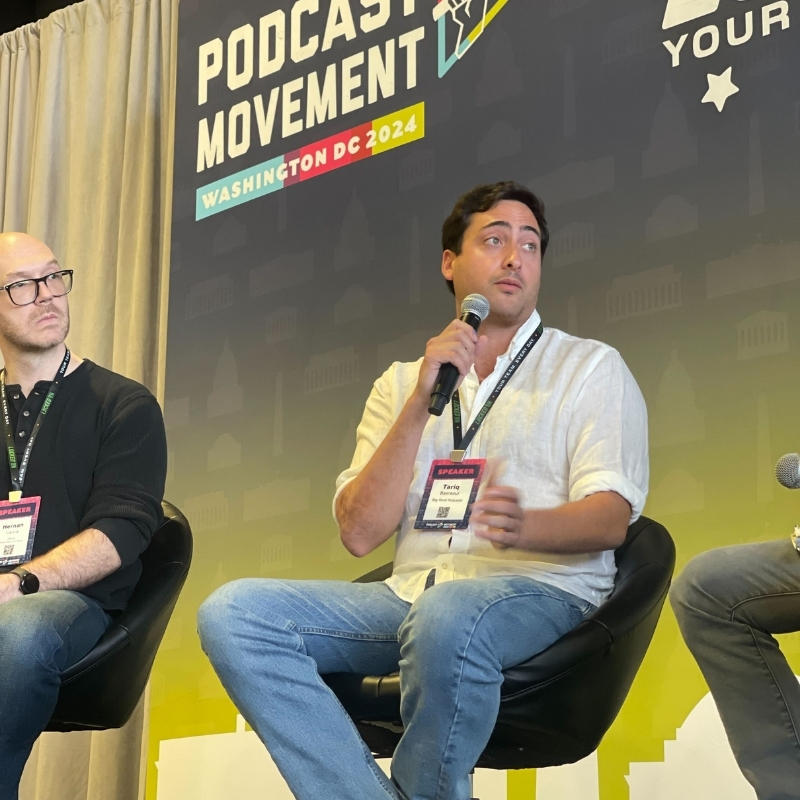
Tariq Basraoui
CEO
Tariq O’Keefe Basraoui, Co-Founder of Big Pond Podcasts, is a seasoned digital marketer and community builder with a track record of success at platforms like TikTok and Zencastr. Known for launching Zencastr’s Creator Network to over 15,000 members in 18 months, his expertise lies in growing user bases and enhancing brand engagement.
His strategic approach to growth and community engagement has established him as a leader in creating some of the fastest-growing media networks in podcasting.
