

A successful podcast test requires 1,000 to 5,000 impressions for each version you are testing. This means a simple A/B test comparing two different ad reads needs a total of 2,000 to 10,000 impressions to yield statistically meaningful data. For direct response campaigns where you are tracking conversions, you should aim for 10,000 impressions or more to gather enough data points. The final number depends entirely on your test’s goal and the level of confidence you need in the results.

What is a Podcast Impression?
A podcast impression is not the same as a download. An impression is counted each time a piece of audio content, like an advertisement, is delivered to a podcast client. A download, according to IAB guidelines, is only counted after at least one minute of content has been delivered.
This distinction is critical for testing. A download tells you someone received the episode file. An impression tells you a specific ad or piece of test content was actually served, which is the metric that matters for measuring an ad’s reach. You can learn more about how impressions are calculated from distribution platforms.
For advertisers, this data is the foundation of campaign analysis. Understanding the difference is key to explaining podcast impression tracking to buyers who are used to digital display metrics.
How Many Impressions Do I Need for a Podcast Test?
The number of impressions you need changes based on what you’re testing. The goal is to collect enough data to make a confident decision. Not all tests are created equal.
A/B Testing Creative Elements
For testing variables like a new intro, different cover art, or a new episode title format, a range of 1,000 to 5,000 impressions per variant is a solid benchmark. The goal here is usually to measure engagement or brand lift. With two variants, you’d need a total of 2,000 to 10,000 impressions to see which one performs better.
Direct Response Ad Tests
When you’re running ads with a specific call to action, like using a promo code or visiting a URL, you need more data. A typical conversion rate is low, so you need a larger impression volume to generate enough conversions to be statistically significant. Aim for a minimum of 10,000 total impressions for these tests, and be prepared to scale up if conversion actions are infrequent.
The faster you can get to a statistically significant number of impressions, the faster you can optimize your campaign and improve your ROI.
For example, testing two ad reads with unique URLs on a show that gets 20,000 downloads per episode could run for a single episode. A smaller show might need to run the test across several episodes to hit the target impression count. Knowing about podcast ad placement will help you structure these tests effectively.

Factors That Influence Your Test Size
Determining the right number of impressions isn’t just about picking a number. It depends on several factors specific to your podcast and your goals.
Audience Size and Engagement
Your podcast’s baseline listenership is the biggest factor in how quickly you can run a test. A podcast with many monthly downloads can collect 10,000 impressions in a single day. A smaller show might need a month. This is why having access to clear performance data and ad metrics is non-negotiable for serious podcasters.
Statistical Significance
The more confident you need to be in your results, the more impressions you’ll need. A 95% confidence level is the standard for most business decisions. This means there’s only a 5% chance that the results you’re seeing are due to random luck.
Don’t confuse downloads with listeners or impressions. A single listener can generate multiple downloads, and a single download might only contain one of your ad variants.
Expected Effect Size
Effect size is the magnitude of the difference you expect to see between your test variants. If you are testing a dramatically different ad read that you believe will double your click-through rate, you’ll need fewer impressions to prove it. If you’re testing a subtle change in wording, you’ll need a much larger sample size to detect the smaller performance difference. Understanding how to maximize impression value helps frame these decisions.
Our network of over 1,300 podcasts provides us with a wide view of these dynamics. Some tests require massive scale, while others can find a clear winner with a smaller, targeted audience. This is where effective podcast marketing strategies become critical for efficient testing. You can see how this works in action with some podcast advertising case studies.
Frequently Asked Questions
How long should I run a podcast test?
Run your test until you hit your target number of impressions, not for a set number of days. For a podcast with a large audience, this might be a single day. For a smaller show, it could take weeks. The goal is data volume, not time.
What’s the difference between an impression and a download again?
A download is the transfer of the episode file to a user’s device (lasting at least 60 seconds). An impression is the delivery of a single ad within that file. One download can contain multiple ad impressions, but it only counts as one download.
Can I run A/B tests with a small podcast audience?
Yes, but it will take longer to accumulate enough impressions for a valid result. You may need to run your test across multiple episodes or for a longer period. Patience is key.
What is a good CPM for podcast ads?
Cost per mille (CPM) varies widely based on audience niche, ad placement, and content. While some general figures suggest an average of $25, a more specific benchmark is useful. For instance, the Big Pond Podcasts network sees an average 60-second CPM of $22.35, reflecting the value of our engaged audiences.
How do I measure the ROI of a podcast ad test?
Measure the return on investment (ROI) by tracking the action you want users to take. For a direct response test, this could be sales from a promo code or sign-ups from a unique URL. Divide the revenue generated by the cost of running the ad impressions to calculate your ROI.
If you’re ready to move beyond guessing and start using data-driven tests to grow your show, we can help you build the right strategy. Get in touch with our team to discuss your podcast marketing strategies.
About the author
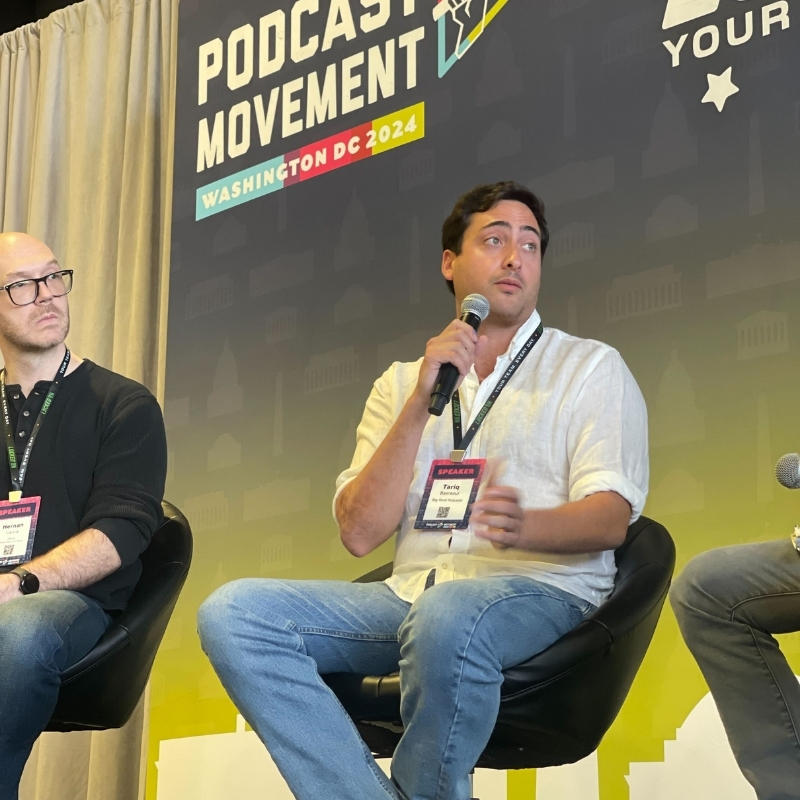
Tariq Basraoui
CEO
Tariq O’Keefe Basraoui, Co-Founder of Big Pond Podcasts, is a seasoned digital marketer and community builder with a track record of success at platforms like TikTok and Zencastr. Known for launching Zencastr’s Creator Network to over 15,000 members in 18 months, his expertise lies in growing user bases and enhancing brand engagement.
His strategic approach to growth and community engagement has established him as a leader in creating some of the fastest-growing media networks in podcasting.
