
How Do You Measure Podcast Ad Campaign Success?
Stop guessing if your podcast ads work. Measuring podcast ad campaign success involves tracking a combination of direct response data, brand lift surveys, and audience engagement metrics. It means moving beyond simple download numbers to understand an ad’s true impact on listener behavior and brand perception. This holistic view confirms ROI, justifies your ad spend, and provides the insights needed to refine future campaigns for better performance. For advertisers, this is how you put your brand in the right ears.

Why is measuring success so different for podcasts?
Unlike a clickable banner ad, podcast ads live in an offline, audio-first world. Listeners often hear ads while driving, exercising, or doing chores. They can’t click a link, creating an attribution gap between hearing the ad and taking action. A listener might hear an ad for a product on Monday, search for it on Wednesday, and finally buy it on Friday. Standard pixel-based tracking will likely misattribute that conversion to the search engine, not the podcast.
This is why relying solely on digital metrics fails. Success in podcasting is built on trust and authenticity. A host-read ads can drive a 4.4x increase in purchase intent, a lift that is difficult to capture with a simple click-through rate. The connection a host builds with their audience is the real vehicle for your message.
Key Metrics for Podcast Ad Performance
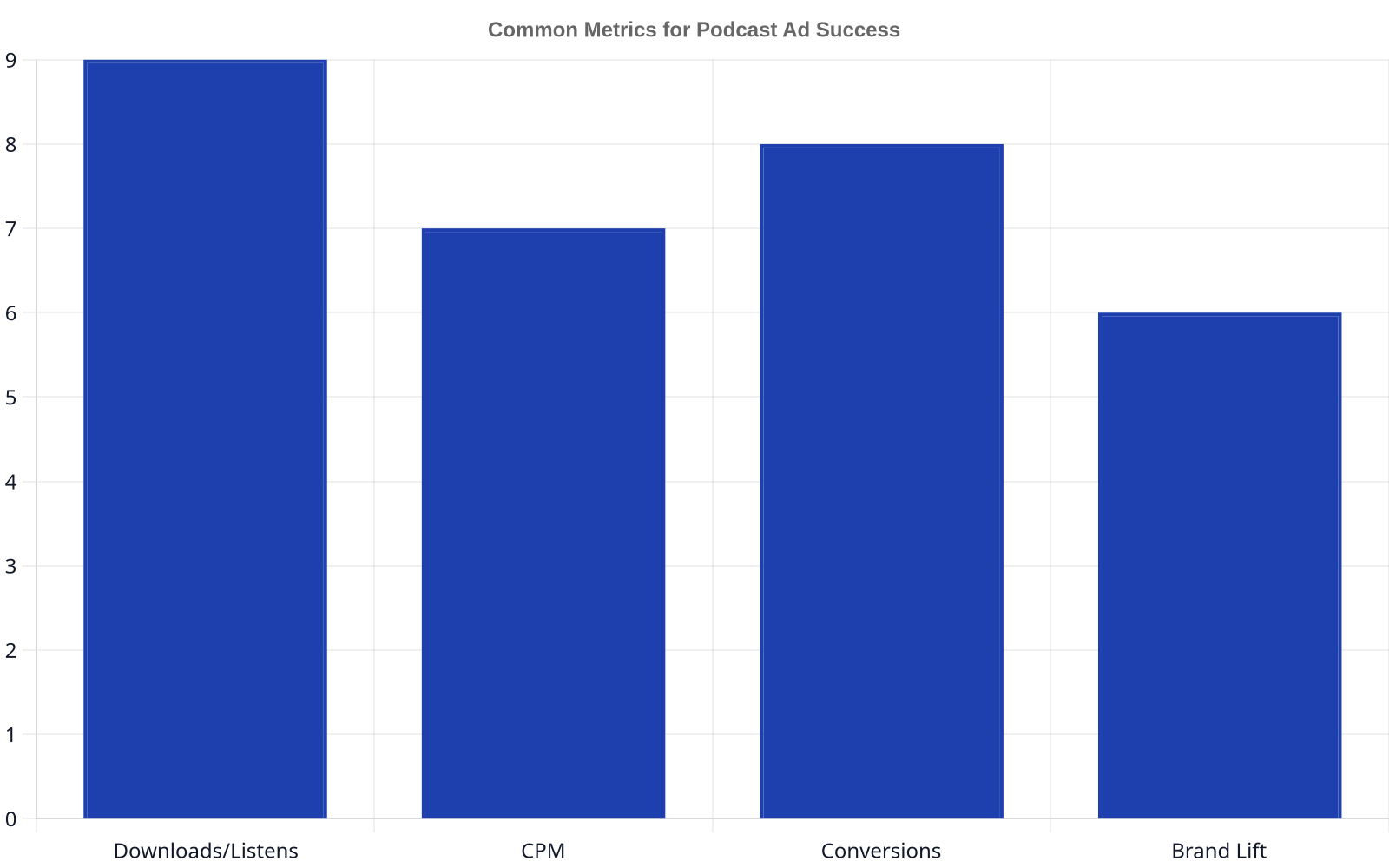
Measuring podcast success requires a mix of metrics tied to specific campaign goals. Whether you want to advertise on podcasts to build brand awareness or drive sales, you need the right key performance indicators (KPIs).
Brand Awareness Metrics
If your goal is top-of-funnel awareness, you’re measuring how many people heard your message and how their perception of your brand changed. Key metrics include:
- Downloads and Streams: The most basic metric, representing the total number of times an episode containing your ad was downloaded. While a good starting point, it doesn’t confirm the ad was actually heard.
- Audience Demographics: Understanding who you reached (age, gender, location). This helps confirm if you hit your target audience.
- Brand Lift Surveys: These surveys measure changes in brand recall, favorability, and purchase intent among listeners who heard the ad versus a control group who didn’t. Tools like Podsights specialize in this.
Performance and Conversion Metrics
For campaigns focused on driving action, you need to track direct responses. This is where you connect the ad to a specific listener action.
- Promo Codes: Unique discount codes for a specific podcast (e.g., “PODCAST20”). It’s one of the oldest and most reliable methods.
- Vanity URLs: A memorable, custom URL created for the campaign (e.g., www.yourbrand.com/podcast). This directs traffic to a specific landing page.
- Post-Purchase Surveys: Asking customers “How did you hear about us?” at checkout. It is a simple but powerful way to capture podcast influence. A Fairing report highlights how these surveys can uncover undervalued channels like podcasts.
Don’t let perfect be the enemy of good. A simple vanity URL and a post-purchase survey will tell you more than a complex attribution model you don’t fully understand.
Understanding Podcast Ad Pricing Models
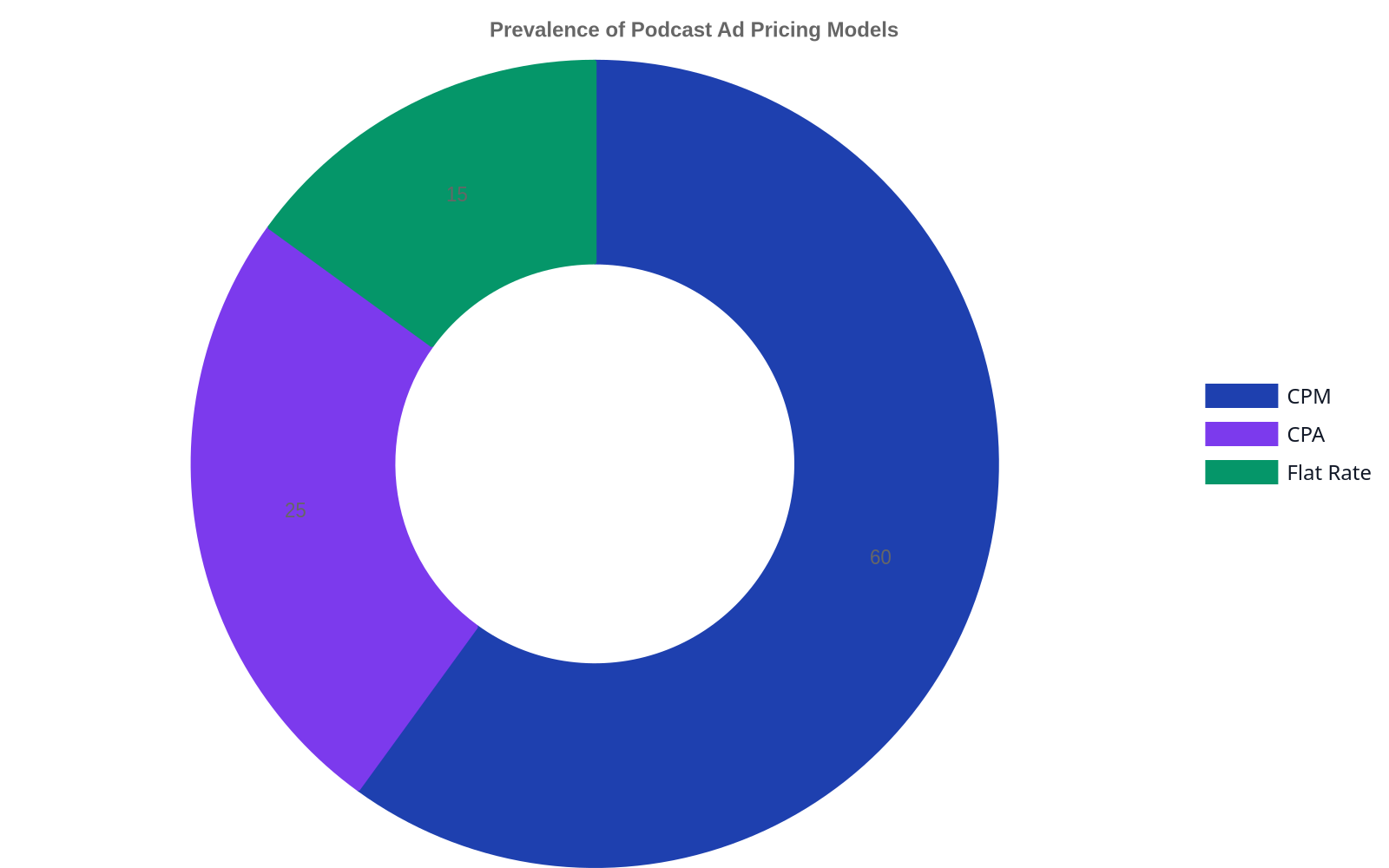
Your ROI calculation depends heavily on the ad pricing model. The two most common are CPM (Cost Per Mille) and CPA (Cost Per Acquisition). For a general idea, our network sees an average 60-second CPM of $22.35. A campaign’s success looks very different under each model.
With CPM, you pay a flat rate per 1,000 downloads. It’s predictable and good for brand awareness campaigns where reach is the primary goal. CPA means you only pay when a listener completes a specific action, like a purchase or sign-up. This model directly ties ad spend to results, making it popular for performance-focused advertisers. You can find more detail by looking at podcast advertising cases.
What is a good ROAS for podcast advertising?
A good Return On Ad Spend (ROAS) is highly subjective and depends on your industry, profit margins, and campaign goals. However, many brands see podcast advertising as a high-performing channel. Some studies have shown an average ROAS of $2.42 for every $1 spent, though this can vary wildly.
Instead of chasing a universal number, set realistic KPIs based on your specific objectives. For a new product launch, a lower ROAS might be acceptable if paired with strong brand lift metrics. For a direct response campaign, you’ll want to see a clear and immediate financial return. Understanding the full picture requires a deeper look into podcast ad reporting.

Measuring podcast ads isn’t about finding one magic number. It’s about gathering evidence from multiple sources to build a case for what’s working and what isn’t.
Ultimately, a successful campaign is one that meets or exceeds the goals you set at the beginning. By combining brand and performance metrics, you get a 360-degree view of your impact and can confidently reinvest in the channels that deliver real value.
Ready to put your brand in front of engaged listeners? Big Pond Podcasts connects advertisers with trusted creators to launch campaigns that resonate. We provide the tools and network to make it happen.
Further reading
- Measuring Social Media Marketing Success – eCornell
- Best Podcast Advertising Platforms Reviews 2026
- Brand Strategy Lessons from Super Bowl Ads
FAQ
What are the most common mistakes in measuring podcast ad success?
The biggest mistake is relying on a single metric, like downloads. Another common error is using last-click attribution models that undervalue the influence of audio. You must also set clear goals from the start; without them, you have nothing to measure against.
How do I track host-read ads versus programmatic ads?
For host-read ads, promo codes and vanity URLs are very effective because the host can integrate them naturally. Programmatic ads often rely more on pixel-based attribution from platforms that can track users across devices, though this is still an evolving technology in audio.
How long does it take to see results from a podcast ad campaign?
Brand lift can be measured within weeks of a campaign launch. Sales and conversions can be immediate if you’re using promo codes, but the tail is long. It’s common for listeners to convert weeks or even months after hearing an ad, so measure for at least 60-90 days post-campaign.
What are podcast attribution tools?
These are software platforms that help connect ad exposure to listener actions. Companies like Chartable, Podsights, and Podtrac use methods like pixel-based tracking and device graphing to measure conversions. They provide dashboards to help you visualize campaign performance.
What is ‘incrementality’ in podcast advertising?
Incrementality aims to measure the conversions that happened only because of your ad campaign, which would not have happened otherwise. This is often tested by running A/B tests with a control group that doesn’t hear the ad, providing a truer measure of an ad’s impact than standard attribution, according to sources.
About the author
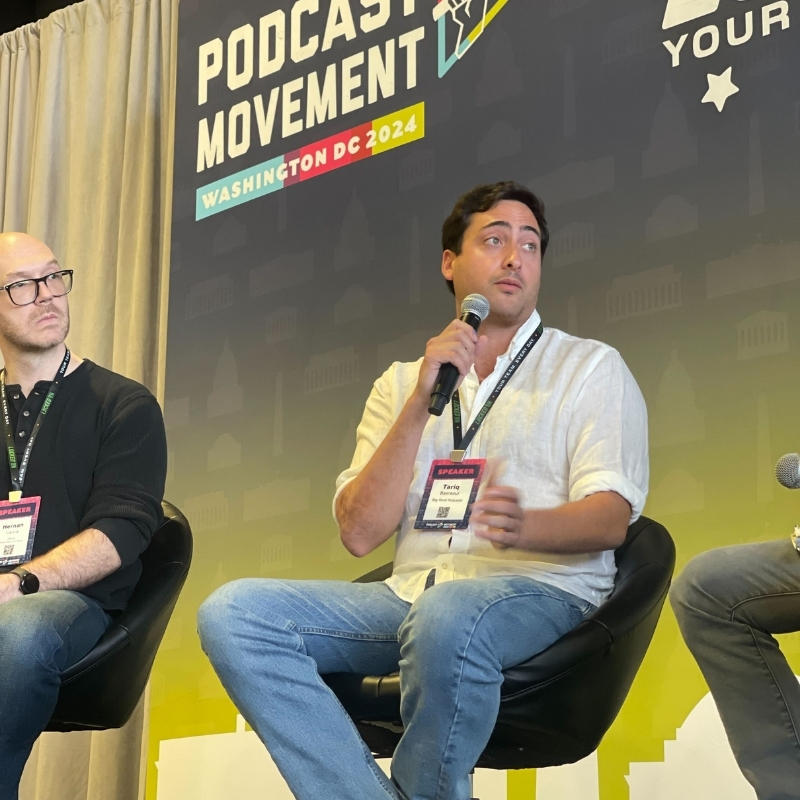
Tariq Basraoui
CEO
Tariq O’Keefe Basraoui, Co-Founder of Big Pond Podcasts, is a seasoned digital marketer and community builder with a track record of success at platforms like TikTok and Zencastr. Known for launching Zencastr’s Creator Network to over 15,000 members in 18 months, his expertise lies in growing user bases and enhancing brand engagement.
His strategic approach to growth and community engagement has established him as a leader in creating some of the fastest-growing media networks in podcasting.
