
Two co-hosts split a sponsorship check with a handshake. No paperwork, no agreement, nothing in writing. Is that a business, or just a liability waiting for a defamation claim to land on it?
That question sits under most of the legal confusion in podcasting. Creators focus on microphones and editing software and leave the business entity for “later.” Later usually arrives the moment a sponsor check gets big enough to matter, or a guest threatens to sue over something said on air. By then the choice of structure isn’t theoretical anymore.
What is the best legal structure for a podcast business?
For most solo podcasters moving from hobby to business, a limited liability company (LLC) is the standard starting point. It separates personal assets from business debts and lawsuits, something a sole proprietorship can’t do.
The IRS lists sole proprietorship, partnership, corporation, S corporation, and LLC as the main business structures available. An LLC is created under state law, not federal law, so the paperwork and fees vary by state.
The trade-off: an LLC costs money to set up and maintain, and some states charge annual fees just for existing. A sole proprietorship costs nothing to start but leaves personal assets exposed. You’re trading a filing fee for liability protection. For a podcast earning sponsorship revenue or handling guest contracts, that trade usually favors the LLC.
What legal entity types can I actually choose for a podcast business?
The IRS recognizes four main forms: sole proprietorship, partnership, corporation, and S corporation. LLCs sit alongside these as a separate category set up under state law rather than federal tax law.
Each has different tax filing, liability, and complexity, as the IRS explains. A sole proprietorship is the default if you do nothing. It’s simple, but you and the business are legally the same entity.
A corporation (C-corp or S-corp) creates more separation and more paperwork. The Small Business Administration notes you must choose a structure before you can register your business with the state. That decision comes first. Everything else, tax IDs, licenses, bank accounts, follows from it.
Do I need an LLC if I’m the only person running my podcast?
Not legally required, but strongly worth it once money starts moving through the show. A sole proprietorship works fine for a hobby.
It stops working once sponsors are paying you, you’re buying equipment under contract, or a guest could claim defamation. Without an LLC, a lawsuit against your podcast is a lawsuit against you personally. Your car, your savings, your house, all exposed.
An LLC draws a legal line between “the podcast’s problem” and “my problem.” That line is the entire point of forming one.
What happens if I co-host a podcast without forming a legal entity?
The IRS automatically treats a business run by two or more people as a general partnership. You don’t get to opt out by not filing paperwork.
This default rule means pass-through taxation, each partner reports their share on personal returns, but also full personal liability for both partners, as Primerus explains. One host’s mistake becomes both hosts’ legal problem.

That’s the part people miss. You can be in a legal partnership with your co-host and never have discussed it. No agreement on who owns the show name. No clarity on how sponsorship revenue splits if one of you walks away. The IRS doesn’t care that you never signed anything, the default applies anyway.
Why does the general partnership default matter for podcast co-hosts specifically?
Because podcasts routinely have shared intellectual property, split sponsorship income, and two people whose public statements can each create liability for the other. A general partnership offers none of the asset protection an LLC does.
If your co-host says something defamatory on air, you’re both exposed under the default partnership structure. Forming a multi-member LLC instead gives each host liability protection and forces the two of you to write an operating agreement. That document should spell out revenue splits, IP ownership, and what happens if someone leaves. Skipping it doesn’t avoid the problem. It just means a court decides those questions for you later, without your input.
What tax ID do I need for my podcast business?
Nearly every structure beyond a basic sole proprietorship needs a federal tax ID number from the IRS. It’s a nine-digit number assigned for tax purposes, and which taxes apply depends on your structure, according to Justia.
Sole proprietors can often use a Social Security number instead. But once you form an LLC, partnership, or corporation, you need an Employer Identification Number (EIN), separate from your personal Social Security number.
Getting an EIN also lets you open a business bank account. That alone makes it easier to keep sponsorship income separate from personal funds, which matters if you ever need to prove your LLC is a real, separately operated business rather than a shell.
Do I file taxes differently depending on my podcast’s legal structure?
Yes, and the difference is bigger than people expect. Partnerships file an information return with the IRS. Every other structure, sole proprietorships, LLCs, corporations, files an annual income tax return, per Justia’s guidance.
That distinction shapes how co-hosts report sponsorship income. In a partnership, the business itself doesn’t pay income tax directly, income passes through to each partner’s personal return. Get the entity type wrong and you can file the wrong form entirely, which creates problems with the IRS down the line.
Do I need a business license to run a podcast?
Depends on your income and how you operate. Once your gross income reaches $12,000 a year, Washington state requires a business license, and similar income thresholds exist in other states, according to the Washington Department of Revenue.
Operating under a name other than your own legal name also triggers the requirement. Call it anything else, and you likely need a license.
When do I need to register with the Secretary of State before applying for a business license?
If you’re forming an LLC, corporation, or certain partnership structures, you typically register with the Secretary of State’s office first, before you can even apply for a state business license. Sole proprietors using their own legal name usually skip this step.
Washington’s Department of Revenue is explicit that certain business structures must file with the Secretary of State before the business license application goes in. The order matters. Try to apply for a license before your entity is officially registered, and you’ll hit a wall.
Check your own state’s Secretary of State website before assuming the process matches another state’s. Filing requirements and fees differ state to state.
Does operating under a show name instead of my own name change anything legally?
Yes. The moment you use a name other than your own full legal name, you’ve crossed into needing formal registration in most states.
This matters more than it sounds. A DBA or trade name filing is often what lets you open a business bank account under the podcast’s name rather than your own.
Should I form an LLC before or after I land my first sponsor?
Before, if you can manage it. Once sponsorship money starts flowing, you want the business structure, bank account, and tax ID already in place, not scrambled together after the fact.
A sponsor contract signed in your personal name, before you’ve formed an LLC, may not transfer cleanly to the business entity later. Revisit it and you may need the sponsor to resign the agreement. Set the structure up first and sponsorship income flows into the business cleanly from day one.
Can my podcast LLC protect me from a copyright claim over music or clips I used?
The LLC protects your personal assets if the business gets sued, but it doesn’t make an infringing use legal. If your podcast gets hit with a copyright claim, the LLC limits what’s at risk to the business’s assets rather than your house or personal savings.
It’s not a shield against the underlying claim itself. Clear your music and clips properly. The LLC is a backstop for when something goes wrong anyway, not a replacement for getting licensing right in the first place.
What’s the difference between an LLC and an S corporation for a podcast business?
An LLC and an S corp both offer liability protection, but they’re taxed differently and have different ongoing requirements. The IRS lists S corporations as a distinct structure, separate from standard LLCs, with their own election process and rules.
S corps often make sense once a podcast business is generating consistent profit and the owner wants to potentially reduce self-employment tax exposure. That’s a conversation for an accountant familiar with your specific income, not a one-size answer. Most podcasters starting out don’t need the added complexity yet.
Who owns the podcast’s intellectual property if there’s no written agreement among co-hosts?
Without a written agreement, ownership of the show’s name, format, and recordings can become genuinely unclear, especially under the default general partnership rule that applies to co-hosted shows. Each partner may have a claim.
This is exactly the kind of dispute that surfaces when a co-host wants to leave and take the show name with them. An LLC operating agreement, or a partnership agreement at minimum, should state upfront who owns what. Waiting until there’s a disagreement to figure out ownership is the expensive way to learn this.
Do I need a lawyer to set up my podcast’s legal structure?
Not strictly required for a basic single-member LLC in most states, many people file the paperwork themselves through their Secretary of State’s website. Multi-host shows with IP and revenue-splitting questions are a different story.
A short consultation with a business attorney before co-hosts sign an operating agreement is worth the cost. The American Bar Association’s business law group publishes podcast episodes covering business formation topics if you want a sense of the issues lawyers actually deal with in this space.
What should I avoid when choosing a structure for my podcast business?
Don’t copy another podcaster’s structure without checking your own state’s rules and your own revenue picture. State filing fees, annual report requirements, and income thresholds for licensing all vary.
Don’t skip the co-host agreement because you trust each other. Trust doesn’t stop the IRS’s general partnership default from applying, and it doesn’t settle an ownership dispute two years from now. Put it in writing while everyone still agrees.
Related topics
- Open up Podcast Advertising Benefits for Your Business
- How to Choose a Podcast Monetization Platform in 2026
- Podcast Host Endorsement Deals: 2026 Guide
Skip the structure conversation now and the bill comes later, usually at the worst possible moment: a sponsor dispute, a co-host breakup, or a copyright claim with your name on it instead of your business’s. None of that gets cheaper or simpler by waiting.
Frequently Asked Questions
What is the best legal structure for a podcast business?
For most solo podcasters moving from hobby to business, an LLC is the standard starting point because it separates personal assets from business debts and lawsuits, something a sole proprietorship can’t do. The IRS lists sole proprietorship, partnership, corporation, S corporation, and LLC as the main business structures available, noting that an LLC is created under state law rather than federal law. That means paperwork and fees vary by state, but for a podcast earning sponsorship revenue or handling guest contracts, the liability protection usually justifies the filing cost.
What legal entity types can I actually choose for a podcast business?
The IRS recognizes four main forms: sole proprietorship, partnership, corporation, and S corporation, with LLCs sitting alongside these as a separate category set up under state law. A sole proprietorship is the default if you do nothing, legally treating you and the business as the same entity. The SBA notes you must choose a structure before you can even register your business with the state, since tax IDs, licenses, and bank accounts all follow from that decision.
Do I need an LLC if I’m the only person running my podcast?
An LLC isn’t legally required, and a sole proprietorship works fine for a hobby. It stops working once sponsors are paying you, you’re buying equipment under contract, or a guest could claim defamation, since without an LLC a lawsuit against your podcast is a lawsuit against you personally.
What happens if I co-host a podcast without forming a legal entity?
The IRS automatically treats a business run by two or more people as a general partnership, and you don’t get to opt out by skipping paperwork. Per Primerus, this default rule means pass-through taxation, each partner reports their share on personal returns, but also full personal liability for both partners. You can be in a legal partnership with your co-host and never have discussed it, and the IRS default still applies.
Why does the general partnership default matter for podcast co-hosts specifically?
Podcasts routinely involve shared intellectual property, split sponsorship income, and two people whose public statements can each create liability for the other, and a general partnership offers none of the asset protection an LLC does. If a co-host says something defamatory on air, both hosts are exposed under the default partnership structure. Forming a multi-member LLC instead gives each host liability protection and forces an operating agreement spelling out revenue splits, IP ownership, and exit terms.
What tax ID do I need for my podcast business?
Nearly every structure beyond a basic sole proprietorship needs a federal tax ID number, a nine-digit number the IRS assigns for tax purposes depending on the business structure, per Justia. Sole proprietors can often use a Social Security number instead, but forming an LLC, partnership, or corporation requires a separate Employer Identification Number (EIN). An EIN also lets you open a business bank account, which helps keep sponsorship income separate from personal funds.
Do I file taxes differently depending on my podcast’s legal structure?
Yes. According to Justia, partnerships file an information return with the IRS, while every other structure, sole proprietorships, LLCs, and corporations, files an annual income tax return. In a partnership, income passes through to each partner’s personal return rather than being taxed at the business level, so getting the entity type wrong can mean filing the wrong form entirely.
Do I need a business license to run a podcast?
It depends on income and how you operate. The Washington Department of Revenue notes that once gross income reaches $12,000 a year, a business license is required, and similar income thresholds exist in other states. Operating under a name other than your own legal name also triggers the requirement.
When do I need to register with the Secretary of State before applying for a business license?
If you’re forming an LLC, corporation, or certain partnership structures, you typically register with the Secretary of State’s office first, before applying for a state business license. Washington’s Department of Revenue is explicit that certain business structures must file with the Secretary of State before the business license application goes in, and filing requirements and fees differ by state.
Does operating under a show name instead of my own name change anything legally?
Yes. Per the Washington Department of Revenue, doing business under a name other than your full legal name is one of the specific triggers for needing a business license. This typically means a “doing business as” filing is also needed, which is often what allows a business bank account to be opened under the podcast’s name rather than your own.
Should I form an LLC before or after I land my first sponsor?
Before, if possible, so the business structure, bank account, and tax ID are already in place when sponsorship money starts flowing. A sponsor contract signed in your personal name before forming an LLC may not transfer cleanly to the business entity later, potentially requiring the sponsor to resign the agreement.
Can my podcast LLC protect me from a copyright claim over music or clips I used?
The LLC protects personal assets if the business gets sued, limiting what’s at risk to business assets rather than personal savings or property, but it doesn’t make an infringing use legal. It’s a backstop for when something goes wrong, not a replacement for properly clearing music and clips in the first place.
What’s the difference between an LLC and an S corporation for a podcast business?
An LLC and an S corp both offer liability protection but are taxed differently and carry different ongoing requirements, with the IRS listing S corporations as a distinct structure with their own election process and rules. S corps often make sense once a podcast is generating consistent profit and the owner wants to potentially reduce self-employment tax exposure, a decision best made with an accountant familiar with specific income details.
Who owns the podcast’s intellectual property if there’s no written agreement among co-hosts?
Without a written agreement, ownership of the show’s name, format, and recordings can become genuinely unclear, especially under the default general partnership rule that applies to co-hosted shows, and each partner may have a claim. An LLC operating agreement, or at minimum a partnership agreement, should state upfront who owns what rather than leaving it to be resolved after a disagreement arises.
Do I need a lawyer to set up my podcast’s legal structure?
A lawyer isn’t strictly required for a basic single-member LLC in most states, since many people file the paperwork themselves through their Secretary of State’s website. Multi-host shows with IP and revenue-splitting questions are different, and a short consultation with a business attorney before co-hosts sign an operating agreement is worth the cost; the American Bar Association’s business law group publishes podcast episodes covering business formation topics for those wanting more context.
What should I avoid when choosing a structure for my podcast business?
Avoid copying another podcaster’s structure without checking your own state’s rules and revenue picture, since state filing fees, annual report requirements, and income thresholds for licensing all vary. Don’t skip a co-host agreement out of trust, since trust doesn’t stop the IRS’s general partnership default from applying or settle an ownership dispute later.
If you want help thinking through how your podcast’s growth and monetization plans intersect with the business decisions above, reach out to our team at Big Pond Podcasts. We work with creators turning shows into real businesses every day.
About the author
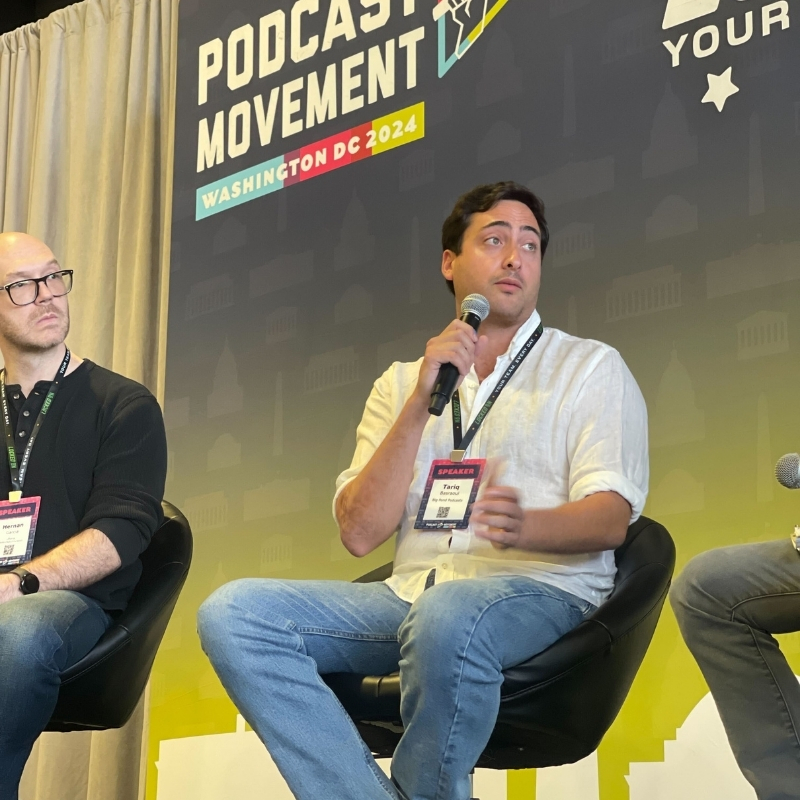
Tariq Basraoui
CEO
Tariq O’Keefe Basraoui, Co-Founder of Big Pond Podcasts, is a seasoned digital marketer and community builder with a track record of success at platforms like TikTok and Zencastr. Known for launching Zencastr’s Creator Network to over 15,000 members in 18 months, his expertise lies in growing user bases and enhancing brand engagement.
His strategic approach to growth and community engagement has established him as a leader in creating some of the fastest-growing media networks in podcasting.
