

Choosing to join a podcast network or remain independent is a critical decision that defines your show’s growth trajectory, creative freedom, and monetization potential. Joining a network offers access to larger advertiser pools, cross-promotional opportunities, and production support, but often requires a revenue share and some loss of autonomy. Staying independent guarantees 100% creative control and revenue, but places the full burden of growth, sales, and marketing squarely on your shoulders. The right choice depends entirely on your show’s current stage and long-term goals.
The 60-Second Decision
- Choose a Podcast Network if: You have a growing audience (typically 10,000+ downloads per episode), want to access larger ad deals you can’t get alone, and are willing to trade a percentage of revenue for growth support and reduced administrative work.
- Stay Independent if: You are in the early stages, prioritize complete creative control and building a direct community, or have a niche so specific that you can effectively sell to sponsors yourself. You keep all the money, but you do all the work.

Podcast Network vs. Staying Independent: Core Differences
| Feature | Podcast Network | Independent Podcasting | |
|---|---|---|---|
| Monetization Opportunities | Access to network-wide ad deals, sponsorships, premium content opportunities. Network often handles sales. | Direct control over sponsorships, affiliate marketing, listener support, merchandise sales. Requires self-management. | |
| Audience Growth | Cross-promotion within network, shared audience, network marketing efforts. | Relies on organic growth, self-promotion, social media, SEO, and listener referrals. | |
| Production Support | Often provides access to studios, editors, sound engineers, equipment, and training. | Requires self-funding for equipment, software, and potential freelancers for editing and production. | |
| Distribution & Marketing | Uses network’s established distribution channels, PR, and marketing expertise. | Requires manual submission to directories, self-managed social media, and paid marketing efforts. | |
| Creative Control | May have some editorial guidelines or content restrictions from the network. | Full creative freedom and control over content, format, and themes. | |
| Ownership | Network may take a share of intellectual property or revenue. Contractual agreements vary. | Full ownership of content, intellectual property, and all revenue streams. | |
| Platform Fees/Revenue Share | Typically involves a revenue share agreement or flat fees for services provided by the network. | Requires payment for hosting platforms, domain names, and any self-funded tools or services. No revenue share. |
The debate over joining a podcast network versus staying independent centers on a trade-off between support and autonomy. A podcast network is an organization that partners with multiple shows to bundle them for advertisers, provide production resources, and facilitate audience growth through cross-promotion. Independence means you operate entirely on your own, managing everything from content creation to sponsorship sales.
What Exactly is a Podcast Network?
A podcast network is a collection of shows that are managed and promoted under one umbrella. It works like a record label for podcasts. The primary function is to bundle the collective downloads of all its shows to attract larger advertisers who wouldn’t bother with smaller, individual podcasts. For example, a network can tell a brand like Walmart or McDonald’s that they can reach a combined audience of millions across dozens of shows, a proposition far more attractive than a single show’s 20,000 listeners.
Networks range from massive corporate entities to small, boutique groups focused on a specific niche like true crime or technology. They typically take a percentage of the ad revenue they secure in exchange for their services. This model is explained well in some guides on how podcast networks work, outlining the value proposition for both creators and advertisers.
Why Join a Podcast Network?
The primary benefit is access. Networks open doors to monetization and audience growth that are difficult to access alone. Unless you command a massive audience, direct sponsorship deals are hard to come by. As one analysis states, “unless you’re getting upwards of 50,000 downloads per episode, you’re not going to get much interest from sponsors.” A network solves this by bundling your show with others.
Here are the specific advantages:
- Larger Ad Deals: Networks have sales teams dedicated to finding sponsors. We see this firsthand; our network connects shows with major brands like American Express and BetterHelp, securing deals that individual creators often can’t land. Quality inventory commands higher rates; our network, for instance, sees an $22.35 Avg. 60-Sec CPM, a strong benchmark for what organized ad sales can achieve.
- Audience Growth: The most powerful growth tool a network offers is cross-promotion. When a popular show in the network gives your podcast a shout-out, you get an instant injection of relevant, engaged listeners. This is far more effective than hoping someone stumbles upon your show.
- Support and Resources: Many networks provide podcast growth support, helping with everything from production quality to marketing strategy. Some offer technical assistance, including advanced Podcast SEO strategies to improve discoverability in apps like Apple Podcasts and Spotify. This offloads significant work from the creator.
The Drawbacks of a Network Agreement
Joining a network isn’t without its costs. The most obvious is the revenue share, which can be anywhere from 30% to 50% of the ad revenue generated. You are trading potential income for support and access. Before signing, you must calculate if the additional revenue a network brings will outweigh the percentage you give up.
Other significant considerations include:
- Loss of Control: You may have to cede some creative control. The network might have guidelines on ad placement, content topics, or episode length to ensure consistency for advertisers. Some networks even claim ownership of your show’s IP for the duration of the contract.
- Restrictive Contracts: Network contracts are legally binding and often exclusive. This means you can’t join another network or, in some cases, even run your own ads. Exit clauses can be strict, making it difficult to leave if the partnership isn’t working out. Scrutinizing the IP rights and termination clauses is non-negotiable.
- Brand Dilution: Being part of a network means your show’s brand is associated with every other show on that network. If another podcast in the roster gets into a controversy, your brand could suffer by association.
The contract you sign with a network is the single most important document defining your show’s future. Read every line, especially regarding intellectual property and exit terms.
The Case for Staying Independent
Independence offers one thing a network can never provide: complete and total freedom. Every decision, from the episode topic to the ad you read to the jingle you use, is yours alone. For many creators, this autonomy is the entire point of podcasting.
Key benefits of independence include:
- 100% Revenue: Every dollar you make from ads, affiliates, merchandise, or listener donations is yours to keep. You don’t have to share it with a sales team or a corporate entity. The success is entirely yours.
- Full Creative Control: Your podcast remains your vision. There are no brand guidelines to follow, no prohibited topics, and no one to tell you an ad read sounds off-brand. This is especially vital for shows built around a strong, unique personality.
- Direct Audience Relationship: As an independent, you build your community directly. You own your email list, your Patreon, and your social media presence without a network intermediary. This direct line to your listeners is an incredibly valuable asset for long-term growth and alternative monetization.
For example, the podcast Simplify cultivated a loyal following over 9 years and 94 episodes, building an asset with more than 4 million downloads that the creators fully owned. This is the power of the independent path. Creators looking for a monetization platform without ceding control can explore various tools; our guide on choose a monetization platform offers a framework for this evaluation.
The Hard Realities of Independence
While the freedom is appealing, the workload is immense. As an independent creator, you are not just a host; you are also the head of marketing, the sales director, the producer, and the bookkeeper. This is the often-unseen side of staying independent.
Notable challenges include:
- Monetization is a Grind: Finding sponsors on your own is a full-time job. It involves identifying potential brands, finding the right contact, creating a pitch deck, negotiating rates, and managing the campaign. Many brands won’t even talk to shows with fewer than 10,000-20,000 downloads per episode.
- Audience Growth is Slow: Without a network’s cross-promotional power, growing your audience is a slow, organic process. It relies on word-of-mouth, social media marketing, and hoping your content gets discovered. There are no shortcuts.
- Burnout is Real: Juggling content creation with all the business-side tasks leads to burnout for many independent podcasters. The dream of hosting a show can quickly become a nightmare of administrative work, as many who decide to go indie discover.
Podcast Network vs. Independent: Key Metrics
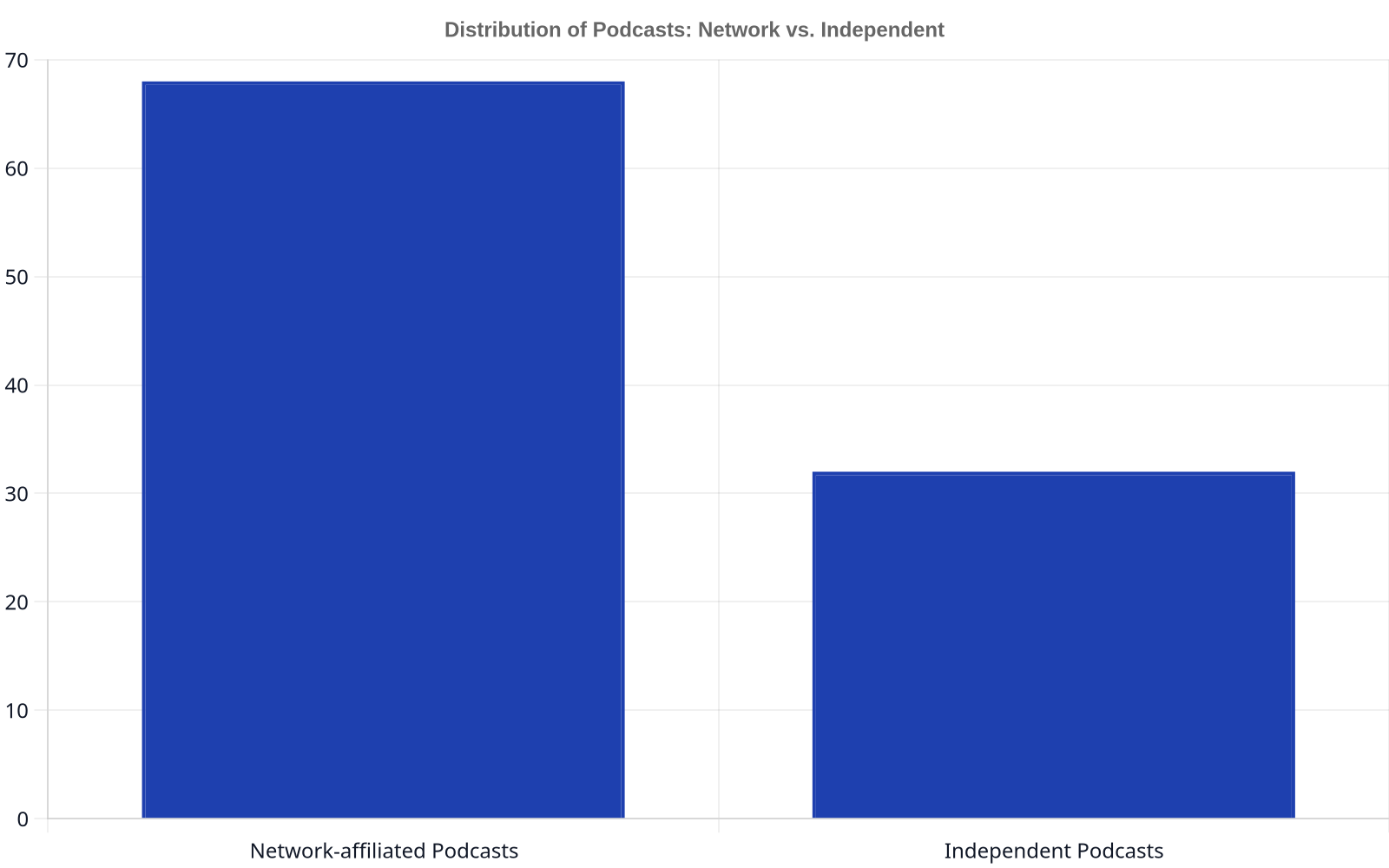
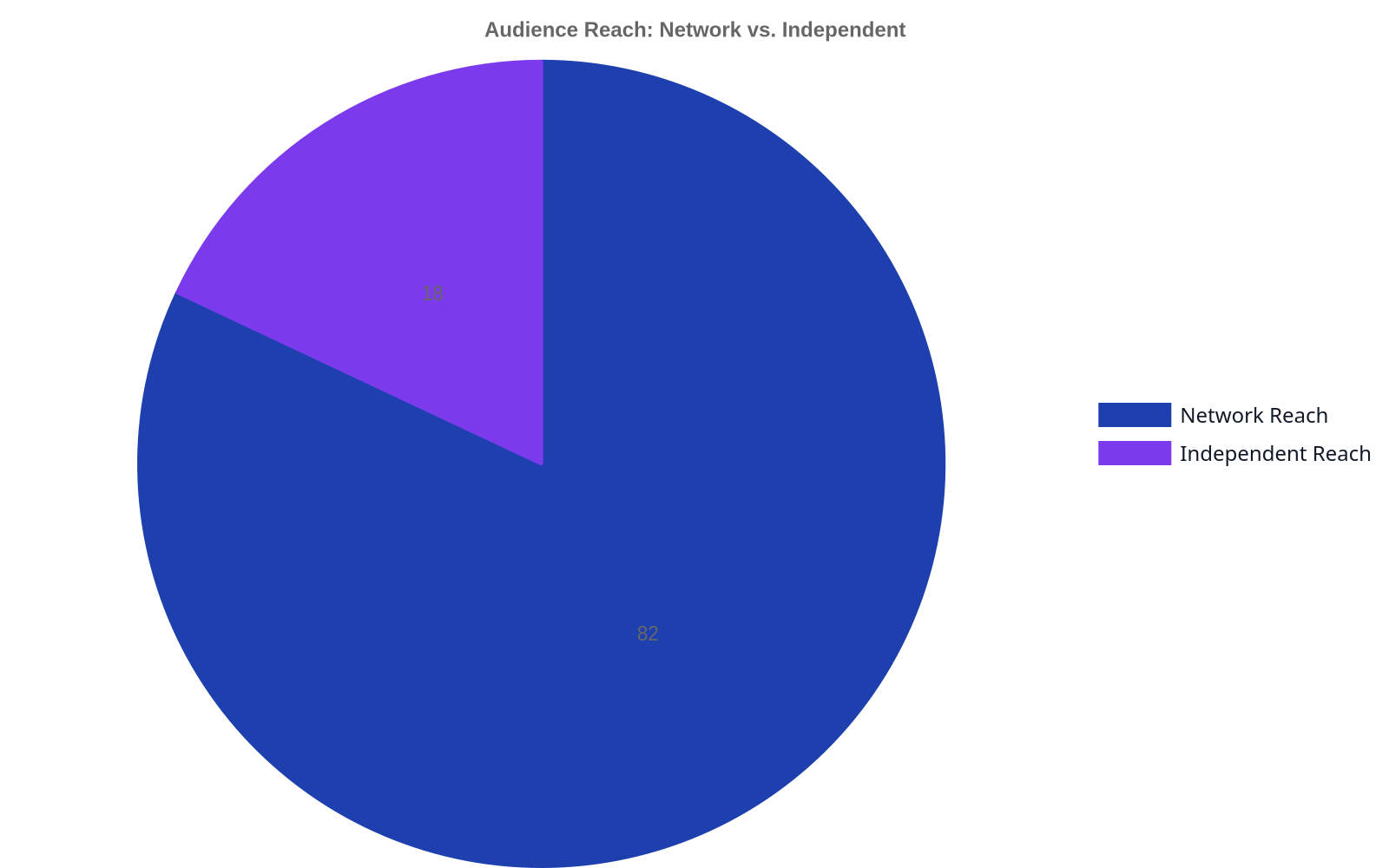
Data shows the podcasting market is a mix of both models, but networks have a significant footprint. While the exact numbers fluctuate, a large portion of total listener downloads are concentrated within network shows. For example, some industry reports have shown that while only 32% of podcasts might be on a network, they can account for up to 68% of the U.S. podcast ad spend.
This highlights the central trade-off: independence gives you a bigger piece of a smaller pie, while a network offers you a smaller piece of a much larger one. The total number of podcasts continues to grow, with estimates putting the figure over 4.6 million, making discoverability harder than ever and pushing many established creators toward the reach that networks provide.
Knowing the best practices for ad placement is crucial for maximizing revenue, whether you are independent or with a network. You can review some common podcast ad placement strategies to understand what advertisers look for.
Monetization and Audience Growth
Ultimately, the podcast network vs. staying independent decision often comes down to monetization strategy. An independent creator might focus on direct support models like Patreon or selling their own products, where a direct relationship with the audience is key. In this scenario, giving up a revenue share for ads they don’t necessarily need makes little sense.
Conversely, a creator whose primary goal is to generate revenue through advertising will likely find a network beneficial. The network’s sales team and higher CPMs can generate more net revenue for the creator, even after the revenue split. Some networks, including Big Pond Podcasts, act as an incubator for shows, providing the resources to grow both audience and revenue simultaneously. We provide the tools and network to monetize your show, which is a significant accelerator for creators ready to scale.
Don’t just compare the revenue split. Calculate the effective CPM and total net income a network can generate versus what you can realistically achieve on your own.
The rise of hybrid models is also changing the equation. Some creators stay independent but use ad networks or marketplaces to fill their ad inventory. This provides some of the monetization benefits without the restrictive contracts of a full-service network, offering a middle ground for those who want some support without giving up total control, a point highlighted by some industry voices.
The Verdict: Which Path Is Right for Your Podcast in 2026?
The right choice is entirely dependent on your goals, resources, and the current stage of your podcast. There is no single correct answer, only the right answer for you. This framework should help you decide.
Choose a podcast network if:
- Your show consistently gets over 10,000 downloads per episode and you’re ready to scale.
- Your primary goal is to maximize ad revenue and you lack the time or contacts to do sales yourself.
- You are willing to trade a percentage of your revenue for production support, marketing, and a lighter workload.
- You understand the contract terms, especially concerning IP and exclusivity, and are comfortable with them.
Stay independent if:
- You are just starting out and still finding your voice and audience.
- Absolute creative control and brand ownership are your top priorities.
- Your monetization strategy relies on direct listener support (Patreon, donations) or selling your own products/services.
- You have the time, skills, and desire to manage the marketing, sales, and administrative aspects of your show.
As the industry matures, the lines are blurring. Hybrid approaches, like using an ad marketplace while remaining independent, are becoming more common. The key is to be honest about your strengths, weaknesses, and what you ultimately want to achieve with your podcast. If you’re exploring how a network partnership could accelerate your growth, you can get in touch with our team to discuss your show.
About the author
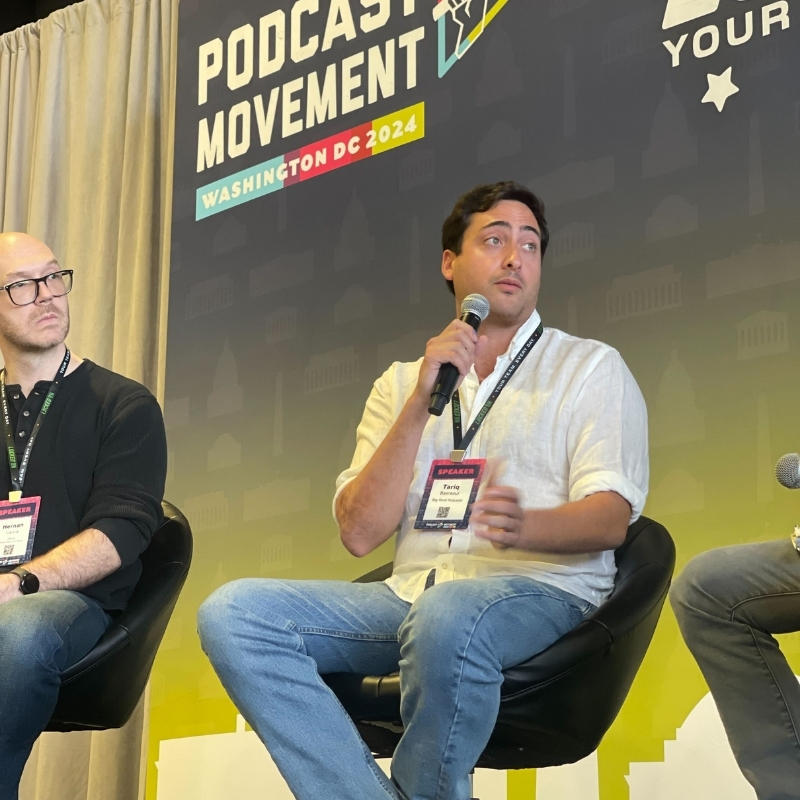
Tariq Basraoui
CEO
Tariq O’Keefe Basraoui, Co-Founder of Big Pond Podcasts, is a seasoned digital marketer and community builder with a track record of success at platforms like TikTok and Zencastr. Known for launching Zencastr’s Creator Network to over 15,000 members in 18 months, his expertise lies in growing user bases and enhancing brand engagement.
His strategic approach to growth and community engagement has established him as a leader in creating some of the fastest-growing media networks in podcasting.
