AI Dubbing for Podcasts: Cost and Reach in 2026
In 2026, AI dubbing for podcasts costs between $1 and $10 per minute for basic services. More advanced platforms with voice cloning and human quality assurance often use subscription models ranging from $50 to over $500 per month. This represents a massive cost reduction compared to traditional human dubbing, which can easily exceed $100 per minute. The final price for AI dubbing for podcasts cost and reach depends on the number of languages, desired voice authenticity, and the level of human review involved.
AI Dubbing vs. Traditional: A Cost Breakdown
Understanding the cost difference requires looking at the individual components of a dubbing project. Traditional dubbing is a labor-intensive service with many distinct line items. AI dubbing consolidates most of these steps into a single, software-driven process, which is why the cost is dramatically lower. Here is a direct comparison of expected costs for a 30-minute podcast episode in 2026.
As the table shows, an AI-driven workflow reduces project timelines from weeks or months to just days or hours. The savings can be up to 90%, making global content strategies accessible to creators who were previously priced out.
Key Factors Driving AI Dubbing Prices

The price for AI dubbing isn’t a single number; it’s a range influenced by your specific needs. The most significant cost drivers are the technology you choose and the quality you require. Understanding these factors helps you select a service that matches your budget and goals.
- Voice Cloning vs. Synthetic Voices: Creating a digital clone of your own voice provides the highest authenticity but comes at a premium. This process often requires an initial setup fee and a higher per-minute or subscription cost. Using a high-quality, pre-built synthetic voice from the platform’s library is the most cost-effective option.
- Number of Languages: Each new language is a multiplier. However, scaling with AI is far cheaper than hiring a new human team for each language. This allows for strategic testing of new markets through
audience targeting by geographybefore committing significant resources. - Level of Human Quality Assurance (QA): Raw AI output is the cheapest but can contain errors in translation, pronunciation, or emotional tone. Platforms offering a ‘human-in-the-loop’ service, where a native speaker reviews and corrects the AI’s work, charge more. This service is critical for high-stakes content where nuance and accuracy are paramount.
- Pricing Model: Services typically fall into two camps. Pay-as-you-go models charge per minute of processed audio, ideal for sporadic projects. Monthly or annual subscriptions offer a set number of minutes and are better for podcasters consistently producing multilingual content.
Sample Budgets for Different Podcasting Goals
To make the AI dubbing for podcasts cost and reach more concrete, let’s look at three common scenarios. Your goals directly determine your budget. This is a core part of how we help our network of over 1,300 creators monetize and grow podcasts effectively.
Scenario 1: The Indie Podcaster
Your goal is to test your show’s appeal in a new, high-potential market like Mexico or Germany. You choose one new language and dub your top five evergreen episodes. You opt for a quality stock synthetic voice to keep costs low.
- Budget: $50 – $150 (as of October 2026) per month on a SaaS subscription.
- Outcome: A low-risk way to gather real-world listener data from a new region.
Scenario 2: The Growing Network
Your goal is to systematically expand your flagship podcast into three new languages to capture a larger international audience. You invest in voice cloning for your main host to maintain brand consistency and use a service with some human QA for accuracy.
- Budget: $300 – $1,000 (as of October 2026) per month.
- Outcome: Professional, consistent multilingual content that can attract new listeners and sponsors.
Scenario 3: The Enterprise Brand
Your goal is a day-one global release for a branded podcast in 10+ languages, with perfect brand voice and cultural adaptation. Cost is secondary to quality and speed. You need a full-service solution with dedicated project management and extensive human oversight.
- Budget: Custom enterprise pricing, likely $2,000 (as of October 2026)+ per month.
- Outcome: A globally synchronized content launch that reinforces a premium brand image.
Translating your audio is only half the battle. If you don’t create localized show notes and titles, your new audience will never find you.
Expanding Your Reach: Beyond Just Translation
Generating multilingual audio files is just the first step. True global reach requires a thoughtful distribution strategy. Without it, your investment in dubbing will be wasted because the right listeners won’t find your content. A major part of this is effective Podcast SEO, ensuring your show is discoverable in each new language.
First, you must address platform requirements. Major platforms like Apple Podcasts and Spotify are implementing rules that require creators to disclose the use of AI-generated content. According to guidelines from services like RSS.com, you may need to use specific tags in your RSS feed to label episodes as containing synthetic voices. Failure to comply could impact your show’s visibility.
Second, consider your distribution logistics. Will you release all languages in a single RSS feed, or create separate feeds for each language? Separate feeds are often better for Podcast SEO and listener experience, as they allow for fully localized titles, descriptions, and artwork. However, this adds a layer of management complexity.
Finally, you need to consider the ethical implications of using AI voices, especially voice clones. The technology is advancing quickly, but it’s crucial to be transparent with your audience about how the content was created. Authenticity and trust are paramount in podcasting, and clear disclosure is key to maintaining that relationship as you expand your global footprint. Exploring podcast advertising costs can help you budget for these new markets.
Where to Cut Costs Without Sacrificing Quality
While AI dubbing is already affordable, there are smart ways to optimize your spending even further. The goal is to achieve the greatest reach for the lowest possible cost, without damaging your brand’s reputation with poor-quality output. This is especially important when you start monetizing a podcast, as every dollar counts.
Start by dubbing only your highest-performing evergreen episodes. Don’t waste your budget translating content that has a short shelf life or low engagement. Identify your top 10 most downloaded episodes and begin there. This maximizes the potential return on your initial investment.
Raw AI output is cheap. The real cost—and value—comes from the human-in-the-loop process that ensures accuracy and cultural relevance.
Adopt a hybrid approach. Use raw AI for the initial translation and dubbing to handle 80-90% of the work at a very low cost. Then, hire a freelance native speaker for a few hours to review the output, correct awkward phrasing, and ensure cultural nuances are respected. This model gives you a professional-sounding result for a fraction of the cost of full human dubbing or premium AI services.
Finally, be strategic with voice choice. While voice cloning offers the best brand consistency, a high-quality stock synthetic voice from a reputable AI platform is often indistinguishable to the average listener. Test a stock voice on a few episodes before committing to the higher cost of cloning. You may find it’s more than good enough for your goals, saving you significant budget that can be reallocated to marketing your newly dubbed show.
Expanding your podcast’s reach globally has never been more attainable. By understanding the costs and strategies behind AI dubbing, you can open up new audiences and growth opportunities. If you’re ready to explore how to grow your show, you can contact our team to discuss your project.
About the author
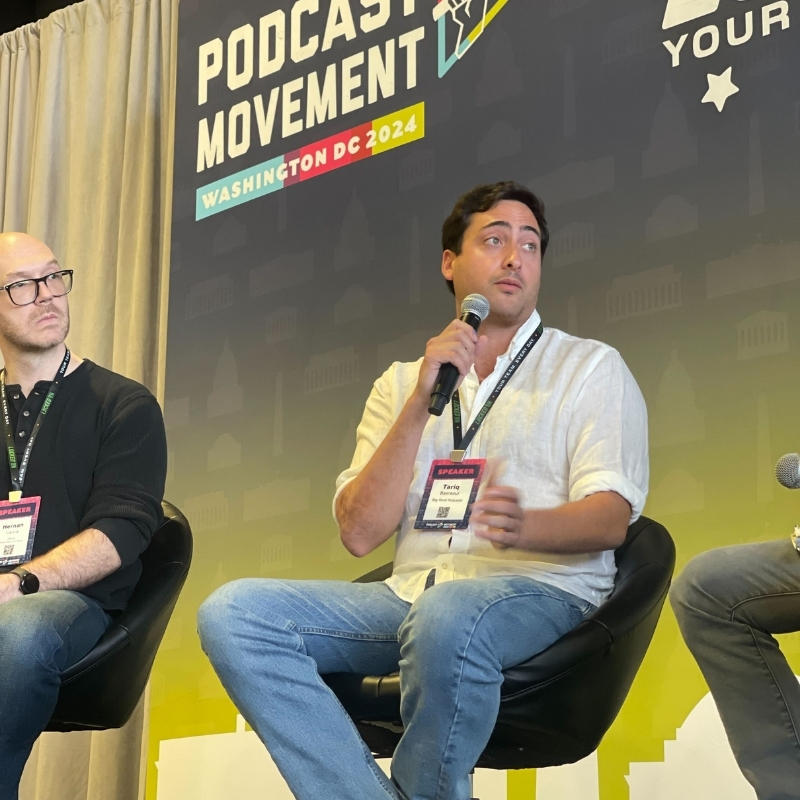
Tariq Basraoui
CEO
Tariq O’Keefe Basraoui, Co-Founder of Big Pond Podcasts, is a seasoned digital marketer and community builder with a track record of success at platforms like TikTok and Zencastr. Known for launching Zencastr’s Creator Network to over 15,000 members in 18 months, his expertise lies in growing user bases and enhancing brand engagement.
His strategic approach to growth and community engagement has established him as a leader in creating some of the fastest-growing media networks in podcasting.
