

A podcast promo swap is a reciprocal advertising agreement where two shows promote each other to their respective audiences, typically for free. To find a partner, you must identify podcasts with a similar target listener demographic and audience size, but non-competitive content. The process involves using podcast directories and communities to find prospects, vetting them for quality and fit, and sending a personalized outreach email that includes your media kit, listener statistics, and a clear proposal for mutual growth.

What Exactly Is a Podcast Promo Swap?
A podcast promo swap, or cross-promotion, is a mutual agreement between two podcasters to advertise each other’s shows. This is not about paid sponsorships. It’s a barter of your most valuable asset: your audience’s attention.
Instead of paying for ads, you trade a promotional spot on your show for a spot on theirs. The core principle is that a listener who already trusts you is more likely to check out a show you personally recommend. It is one of the most direct and authentic ways to reach new, highly engaged listeners who are already dedicated podcast consumers.
The Spectrum of Cross-Promotion: Formats and Strategies
Not all promo swaps are identical. The format you choose depends on your goals, your available time, and the relationship you have with your partner. Understanding the different types is key to understanding podcast cross promotion how it actually works.
Trailer & Ad Read Swaps
This is the most common form of cross-promotion. A trailer swap involves you playing your partner’s 30-60 second trailer on your show, and they play yours. A host-read ad swap is a step up in authenticity, where you and your partner read a personally crafted endorsement for each other’s podcasts, integrating it naturally into an episode.
Guest Appearances & Interview Swaps
Here, you appear as a guest on their show, and they appear on yours. This format requires significantly more coordination but offers the highest potential for deep engagement. It allows you to showcase your expertise directly to a new audience, building authority and giving listeners a substantive reason to check out your own podcast.
Social Media & Newsletter Swaps
This extends the partnership beyond the audio itself. You agree to promote each other’s shows on social media platforms like Instagram or X, or in your email newsletters. While the direct download impact might be lower than an in-episode promo, it reinforces the message and captures audience members who are more active on other channels.
Advanced Tactics: Feed Drops and Co-Hosted Episodes
For established shows with strong trust, a feed drop is a powerful move. This is where you release an entire episode from your partner’s podcast directly into your own feed. A co-hosted episode is a full-fledged collaboration where you and another host create a special, unique episode together, which is then published on both of your feeds.
Here is a breakdown of how these methods compare:
| Type of Swap | Effort Level | Potential Impact | Best For… |
|---|---|---|---|
| Trailer Swap | Low | Low-Medium | Quick, low-commitment audience testing and brand awareness. |
| Host-Read Ad Swap | Medium | Medium-High | Driving authentic endorsements and higher conversion rates. |
| Guest Appearance | High | High | Building deep authority and sharing specific expertise. |
| Feed Drop | Medium | Very High | Maximum exposure by delivering a full, high-value episode to a new audience. |

Why Strategic Swaps Are a Non-Negotiable Growth Tactic
The right promo swap does more than earn you a few new downloads. It’s a foundational piece of a healthy growth strategy that compounds over time. It shows you’re an active member of the podcasting community.
Grow Your Audience Without a Budget
For independent creators or new shows, marketing budgets are often nonexistent. Promo swaps provide a direct line to new listeners at zero financial cost. The currency is your own inventory, making it an accessible growth tool for any podcaster, regardless of revenue.
Build Authority and Credibility in Your Niche
When another trusted host recommends your podcast, you receive a powerful credibility transfer. This endorsement acts as social proof, positioning your show as a valuable resource within your category. It’s a signal to listeners that your content is vetted and respected by other creators in the space, which can be invaluable for establishing your brand.
Access Highly Engaged and Relevant Listeners
Listeners acquired through a promo swap are not cold leads. They are active podcast consumers who have already demonstrated an interest in a topic related to yours. This makes them significantly more likely to subscribe, listen to your back catalog, and become long-term fans compared to audiences reached through broader, less targeted advertising channels.
How to Find a Podcast to Swap Promos With: A Step-by-Step Guide
Finding the right partner is a systematic process, not a game of chance. You need a clear methodology to identify and vet potential shows to ensure the partnership will be mutually beneficial. This is a critical component of our approach to helping creators with their overarching talk about your podcast.
Step 1: Define Your Ideal Partner Profile
Before you start searching, you must know what you’re looking for. Create a profile of your ideal partner podcast based on specific criteria. We encourage our creators to precisely define their listener by demographics, interests, and even podcast genre to find the perfect match. Your profile should include:
- Audience Demographics: Age, gender, location, and interests that align with your own.
- Podcast Niche: Complementary, not competitive. If you host a show about vegan baking, a show about plant-based fitness is complementary; another vegan baking show is competitive.
- Audience Size: A show within a similar download range (e.g., 75% to 150% of your own downloads per episode).
- Production Quality: Clean audio and a consistent publishing schedule.
Step 2: Hunt in the Right Places
Once you have your profile, you can start your search. Look in podcast directories that allow for detailed filtering and on platforms built for this purpose. Good starting points include:
- Podcast Directories: Apple Podcasts, Spotify, and Podchaser allow you to browse by category and view “Listeners Also Subscribed To” sections, which are goldmines for finding related shows.
- Matchmaking Services: Websites like Rephonic and swap-finding communities like the one curated by Tink Media are designed to connect podcasters for cross-promotions.
- Social Media: Search for your niche keywords with #podcast on X or Instagram. Look for active creators in Facebook Groups dedicated to podcasting growth.
Step 3: Vet Your Shortlist with Precision
Your initial search will likely yield a long list of potential partners. Now, you must manually vet each one before reaching out. A bad partnership is worse than no partnership at all.
- Listen to at least two full episodes. Does their tone match yours? Do they have ad breaks where a promo would fit? Is the content something you’d be proud to recommend to your listeners?
- Check their back catalog for consistency. Have they been publishing regularly for at least a few months? A sporadic publishing schedule is a red flag for reliability.
- Analyze their audience reviews and ratings. Look for patterns in feedback on platforms like Apple Podcasts. High ratings and engaged, positive reviews are a strong indicator of a loyal audience.
- Review their social media presence and website. Do they actively engage with their community? A professional online presence suggests they take their podcast seriously.
The Partner Vetting Checklist: Beyond Download Numbers
A common mistake is focusing exclusively on download numbers. While audience size parity is important, qualitative factors are often better predictors of a successful swap. A smaller, hyper-engaged audience can be far more valuable than a large, passive one.
A generic outreach email asking “want to swap?” is the podcasting equivalent of junk mail. Personalization isn’t optional; it’s the only thing that separates your request from the hundred others they deleted that morning.
Audience Alignment Is Everything
Your goal is to find an audience overlap, not a content overlap. A podcast about historical battle strategies and a podcast about high-stakes corporate negotiation might seem unrelated. However, they likely appeal to the same listener archetype: someone interested in strategy, competition, and leadership. This is the kind of nuanced alignment that drives real results. An audience interested in one is likely to explore podcast advertising in the other.
Show Size & Download Parity
Aim for shows in a similar weight class. A show with 50,000 downloads per episode is unlikely to swap with a show that has 500. A good rule of thumb is to look for partners with download numbers between 75% and 150% of your own. This ensures a fair exchange of value. If you don’t know your numbers, you need to find them in your podcast host’s analytics dashboard before you begin outreach.
Content Quality, Brand Safety, and Production Value
Your recommendation is a reflection of your own brand. Before you agree to a swap, ensure your partner’s content aligns with your values. Listen for poor audio quality, controversial topics you’re not comfortable with, or a tone that might alienate your listeners. If their show is filled with jarring, low-quality ads, your thoughtful promo will be lost in the noise.

Crafting an Outreach Pitch That Gets a “Yes”
How you ask is as important as who you ask. A generic, copy-pasted email will almost certainly be ignored. Your pitch needs to be personal, professional, and demonstrate that you’ve done your homework.
The Anatomy of an Effective Podcast Media Kit
Your media kit is your podcast’s resume. It should be a one-page PDF that you can easily attach to your outreach email. According to a guide from She Podcasts, a strong media kit should include:
- Elevator Pitch: A one-sentence description of your show.
- Key Statistics: Average downloads per episode (in the first 30 days), total monthly downloads, and subscriber numbers.
- Listener Demographics: Age, gender, location, and interests. Data from Spotify for Podcasters or your hosting provider is perfect here.
- Links: Links to your show on major platforms and your website.
- Your Photo and Bio: To make the connection more personal.
This document makes it easy for a potential partner to say yes without having to ask you a dozen follow-up questions.
Sample Outreach Email That Works
Subject: Cross-promo idea: [Your Podcast Name] x [Their Podcast Name]
Hi [Host’s Name],
My name is [Your Name], and I host [Your Podcast Name], a show about [your topic]. I’ve been listening to [Their Podcast Name] for a while and particularly enjoyed your recent episode on [specific topic]: your insight on [mention something specific] was fantastic.
I’m writing because I see a strong audience overlap between our shows. My listeners are primarily [describe your audience in 1-2 sentences], and I believe they would love your content.
Our show currently gets [your downloads per episode] downloads per episode in the first 30 days. Would you be open to a simple trailer or host-read promo swap in the coming month? I’ve attached my media kit with more details about my audience and show.
Let me know if this is something you’d be interested in exploring.
Best,
[Your Name]
Common Pitching Mistakes That Guarantee Deletion
- Using a Generic Greeting: “Hi there” or “To the host of…” shows you didn’t take 30 seconds to find their name.
- Making It All About You: Frame the pitch around mutual benefit, not just what you want from them.
- Not Providing Your Stats: Asking for their numbers without offering your own is a major red flag. Be transparent from the start.
- Having No Prior Relationship: Your email shouldn’t be the first time they’ve ever heard of you. Interact with their content on social media or leave a thoughtful review before you pitch.
Finalizing the Swap: Agreements and Tracking
Once you get a “yes,” the next step is to formalize the details to ensure both parties are on the same page. This doesn’t require a 20-page legal document, but a simple written agreement (even just an email) can prevent misunderstandings later.
If you can’t measure it, you can’t prove it worked. Agreeing on a tracking method beforehand—whether it’s a prefix URL, a unique promo code, or a survey question—is what turns a hopeful guess into a repeatable strategy.
What to Include in a Simple Swap Agreement
Your email agreement should clearly state:
- The Deliverable: What is being swapped (e.g., a 60-second host-read ad, a 45-second pre-recorded trailer).
- The Placement: Where in the episode the promo will run (pre-roll, mid-roll, or post-roll). Understanding podcast ad placement is crucial here.
- The Schedule: The specific dates or episode numbers the promos will air on.
- The Tracking Method: How you will measure the results.
Setting Expectations for Placement and Scripts
Decide whether the ad will be “baked-in” (permanently part of the audio file) or inserted dynamically. Dynamic Ad Insertion (DAI) offers more flexibility but requires a hosting platform that supports it. You should also provide your partner with a bulleted list of talking points for a host-read ad, but give them the creative freedom to deliver it in their own authentic voice.
Measuring Success: Tracking and Attribution
To know if a swap is working, you need data. The most effective way to track traffic from another podcast is with a prefix URL from a service like Chartable or Podsights. These services provide a unique tracking URL that redirects to your show, allowing you to see exactly how many listeners came from that specific promo. A simpler method is to create a unique, memorable URL (e.g., yourwebsite.com/partnername) that redirects to your podcast, or ask the partner host to mention a specific keyword.
Frequently Asked Questions
How do I measure the success of a promo swap?
The best method is using a tracking prefix URL from a service like Chartable, which shows you direct download attribution from the partner’s show. Alternatively, you can use a vanity URL (e.g., yoursite.com/partner) or a simple survey in your own show asking new listeners how they found you. Look for a noticeable lift in your baseline downloads on the days the promo runs.
What if a potential partner has a much larger/smaller audience?
If their audience is much larger, you can’t expect a simple 1-for-1 swap. Offer them more value, such as running their promo in two of your episodes for every one of theirs, or offer a guest appearance on your show in addition to the swap. If their audience is smaller, you can still proceed if their listeners are highly niche and perfectly aligned with your content.
How many promo swaps can I manage at once?
When starting out, limit yourself to one or two active swaps at a time. This allows you to properly track results and manage the relationship without getting overwhelmed. Use a simple spreadsheet to keep track of your partners, the agreed-upon terms, and the run dates for each promo.
What should my promo script sound like?
Your script should be a concise 30-60 second spot. It should quickly identify who the show is for, what problems it solves or what value it provides, and end with a clear call to action. For example: “If you’re a freelance graphic designer trying to find better clients, check out the Design Forward podcast. Each week, we share practical tips on marketing and pricing your services. Find Design Forward wherever you get your podcasts.”
Scaling Your Partnership Strategy
Promo swaps are an excellent starting point, but they are just one piece of a larger growth puzzle. While manual outreach is effective, it can become time-consuming as your show grows. This is often the point where creators look to join networks or work with agencies that can facilitate these partnerships at scale.
At Big Pond, we help our 1300+ podcasters monetize and grow their shows by connecting them with both brands and other creators. A solid partnership strategy works hand-in-hand with other growth levers, including optimizing your show’s discoverability through technical Podcast SEO. If you’re ready to move beyond one-off swaps and build a comprehensive growth engine for your show, talk about your podcast.
About the author
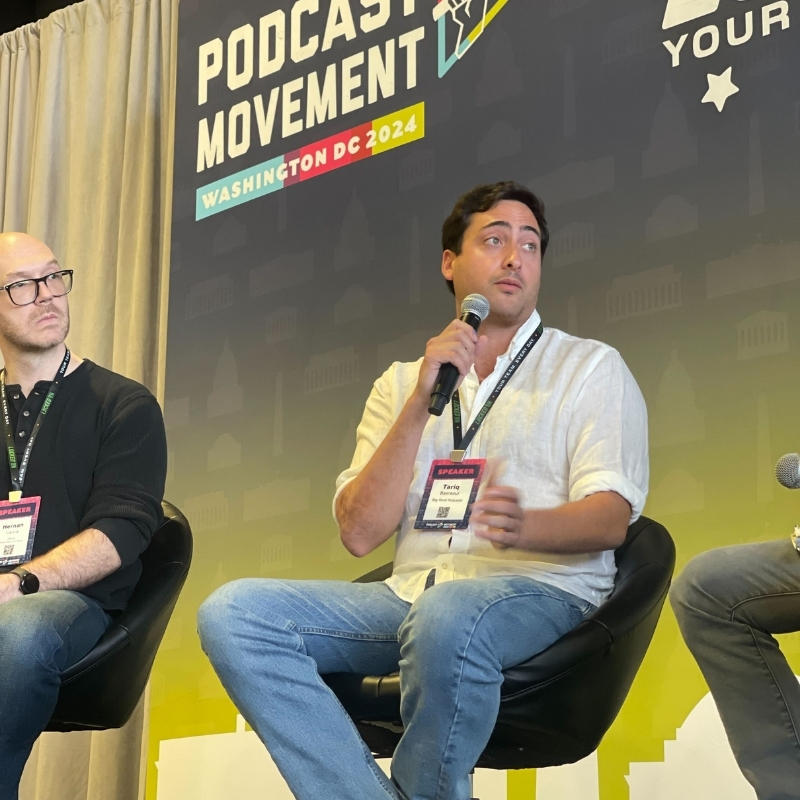
Tariq Basraoui
CEO
Tariq O’Keefe Basraoui, Co-Founder of Big Pond Podcasts, is a seasoned digital marketer and community builder with a track record of success at platforms like TikTok and Zencastr. Known for launching Zencastr’s Creator Network to over 15,000 members in 18 months, his expertise lies in growing user bases and enhancing brand engagement.
His strategic approach to growth and community engagement has established him as a leader in creating some of the fastest-growing media networks in podcasting.
