
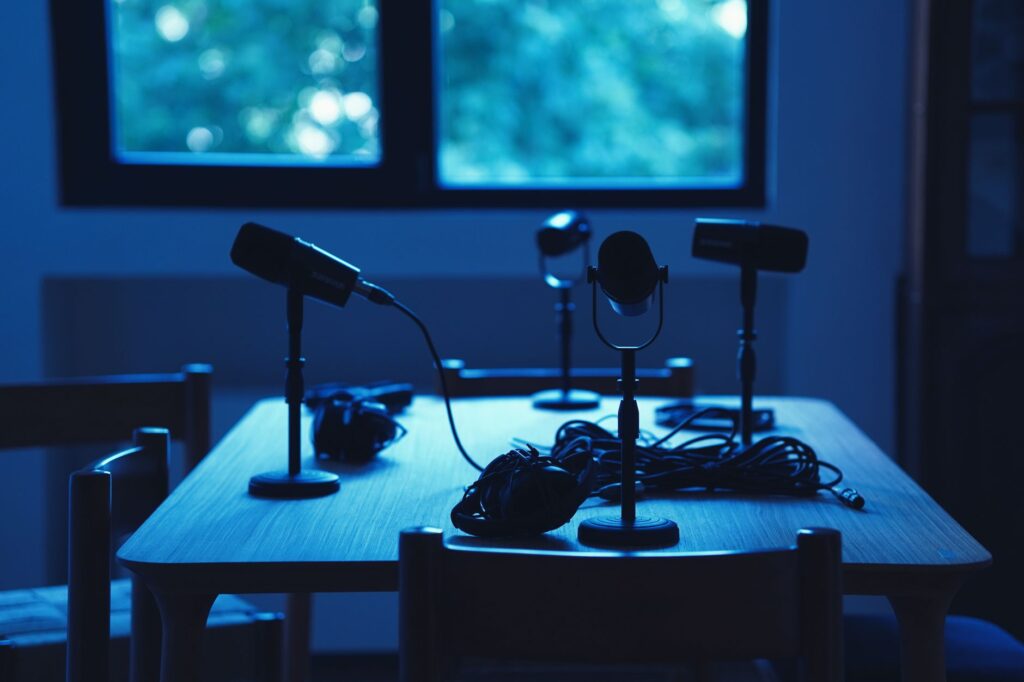
The podcast production process is the complete workflow that turns a raw conversation into a polished, distributed episode. Mastering this pipeline prevents you from burning through resources, settling for poor audio quality, or abandoning an unsustainable workload. When you control each step from tracking to mastering, you build a show that sounds professional and runs efficiently.
The Complete Podcast Production Workflow: Tracking and Gain Staging Audio at the Source
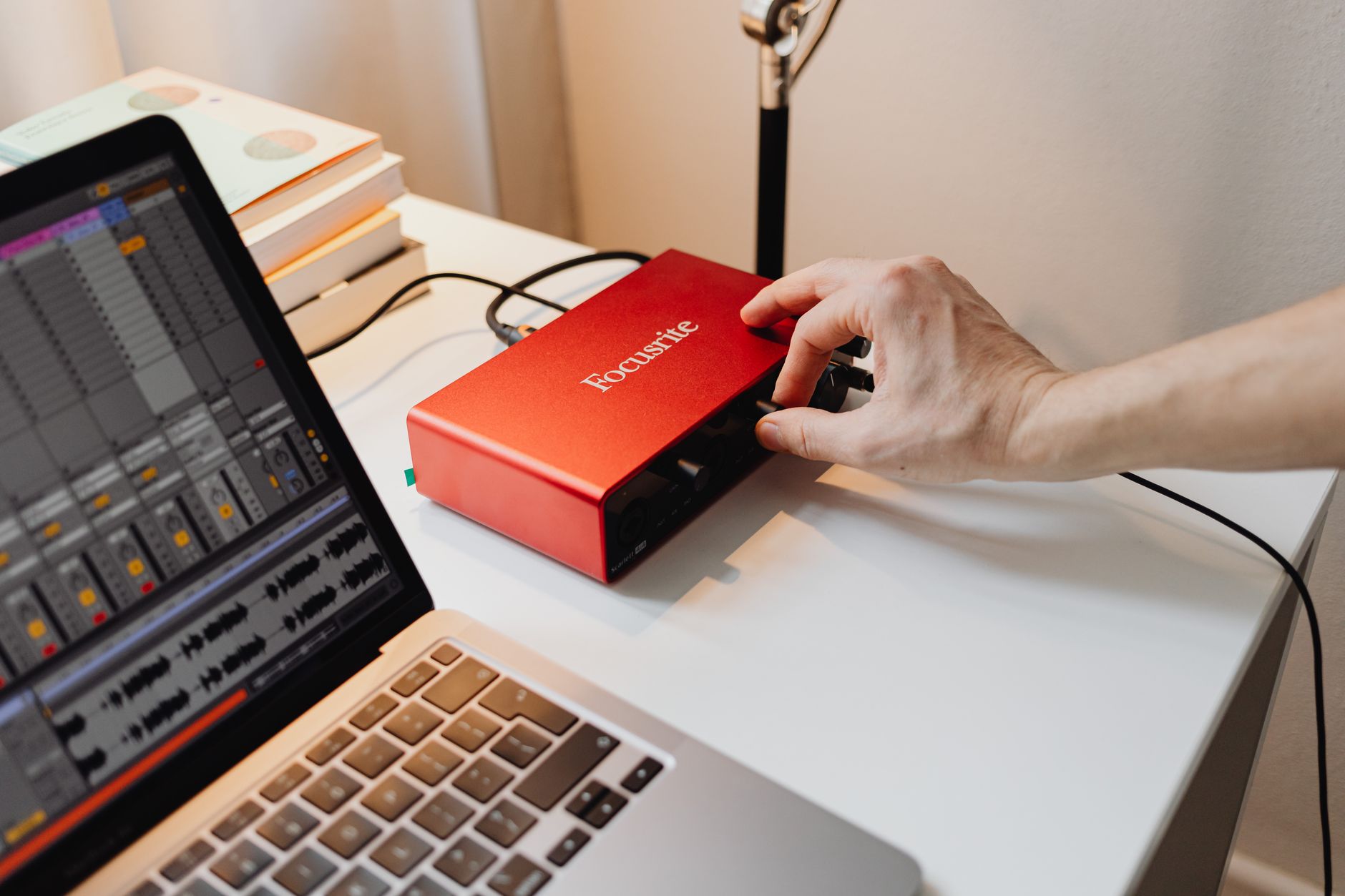
Set incoming audio levels directly at the microphone preamp on your interface to capture healthy sound at the source. This prevents distortion from clipping while keeping your mixer faders safely at their default 0dB position during recording. The goal of gain staging is to establish a balanced signal early, leaving those faders available for fine-tuning track balance later.
Proper mic placement severely impacts the input signal you capture. Sit four to six inches from the mic for most dynamic mics, adjusting for your specific model, and angle slightly off-axis. This distance controls the proximity effect, which often makes vocals sound boomy and muffled if you sit too close.
Record a little quieter to leave adequate headroom on your digital audio workstation (DAW) meter. Pushing the preamp too hot causes peaks on the DAW meter and introduces permanent clipping distortion into the raw files.
Capture raw dialogue using lossless storage formats rather than compressed delivery files. Lossless formats preserve every detail for post-production editing, whereas compressed formats discard data to shrink file sizes. Storing uncompressed WAV files requires more drive space but protects the integrity of your source material.
Suppose your co-host laughs loudly and the interface meter hits the red zone. If you pull down the software fader to fix it, the audio remains distorted because the preamp level was too high. Fix the hardware preamp gain first so the loudest peaks never clip.
Locking the Edit and Handing Off to Post-Production
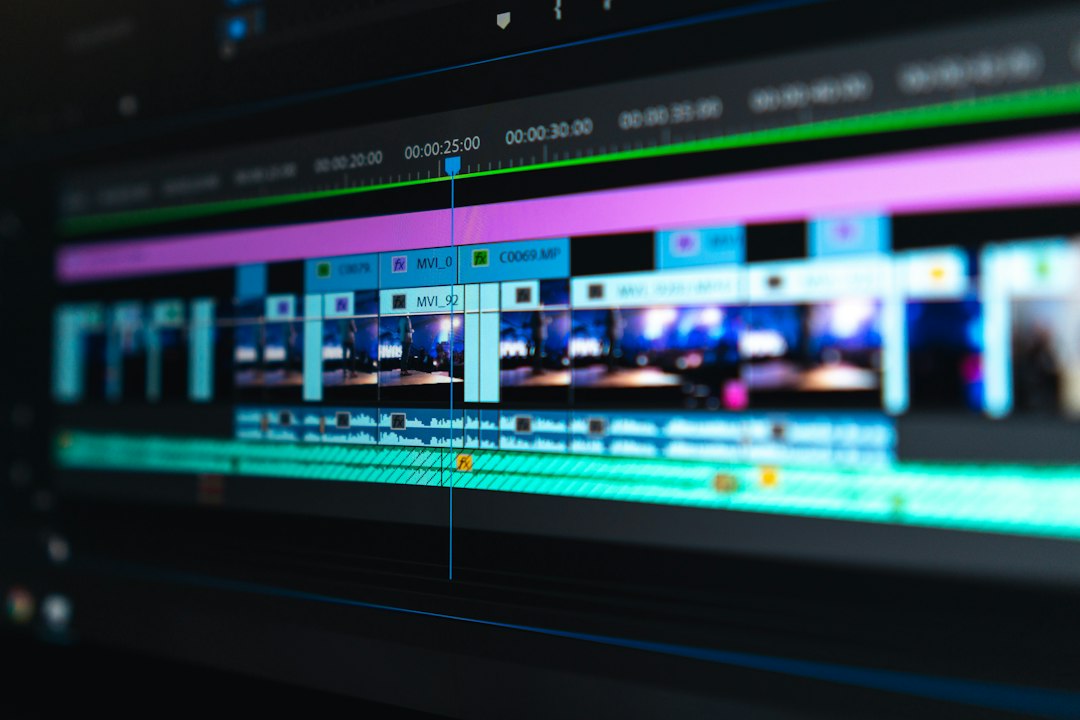
Video editors must reach a final picture lock before any audio mixing or sound design begins, ending all visual changes entirely. Changing a single video cut after audio work starts forces the audio team to scrap their timeline and restart the post-production process. Securing full sign-off on the video prevents these expensive restarts and keeps the project on schedule.
When handing files to an audio engineer, export the project as an Advanced Authoring Format (AAF) file. AAF files retain crucial metadata and bypass the strict 2 GB file size limit associated with Open Media Framework (OMF) formats. You must include uncompressed Broadcast WAVE (.wav) audio recorded at a 48 kHz sample rate and 24-bit depth.
Include audio handles between 5 to 10 seconds on your delivered clips. These extra seconds of hidden media give the sound editor room to create smooth crossfades between dialogue cuts. Without handles, abrupt edits sound unnatural and engineers lose the flexibility to mask sudden background noise shifts.
Insert a 1 kHz synchronization tone, known as a 2-pop, exactly 2 seconds before the video starts. This tone lasts for exactly one frame and makes your separate high-quality audio files align perfectly with the final video track.
Include a copy of all original assets from the production audio, including alternate takes. Having alternate takes available sometimes eliminates the need to re-record faulty dialogue lines.
Mastering Loudness and Peak Limits for Distribution
A standard podcast needs an approximate -18 Loudness Units relative to Full Scale (LUFS) target, pushing it significantly higher than the traditional -24 LUFS standard used for radio broadcasting. Listeners consume podcasts in noisy environments like trains and cars, demanding louder masters to hear the dialogue clearly over background rumble. If you master to radio standards, your listeners will struggle to hear your show even at maximum device volume.
Producers do their initial production work at the lower radio level, preserving the dynamic range of the voices. You then push the final mixed output to the higher podcast target using dedicated limiting software.
Streaming platforms apply their own normalization algorithms, requiring strict adherence to their peak limits. Spotify expects audio mastered to -14dB integrated LUFS while keeping the True Peak ceiling below -1dB maximum. This specific headroom prevents extra distortion from creeping in when Spotify transcodes the file into lossy formats like Ogg/Vorbis or AAC.
When a master naturally pushes louder than the -14dB integrated LUFS target, you must pull the True Peak down to -2dB. Louder tracks suffer worse distortion during the streaming encode process. Controlling these peaks helps the audience hear clear voices instead of digital clipping artifacts.
If you want to streamline your podcast production management, options like Big Pond Podcasts manage this stage directly. Big Pond Podcasts provides tools for podcast management, audience growth, and monetization. Outsourcing shifts the technical burden of True Peak compliance off your internal marketing team.
To finalize the process, log all episode metadata and final deliverables. Enter the metadata for all files and assets you created or used into a centralized spreadsheet.
Frequently Asked Questions
What does the podcast launch process look like?
The launch process moves from strategy and recording to editing, video production, and final distribution. Production teams manage every stage of this workflow to create a polished, professional series that engages the audience. An organized launch pipeline connects content planning directly to long-term audience growth.
Do you offer both audio and video services?
Yes, comprehensive podcast agencies offer both audio and video production services to fit modern distribution needs. Teams like Big Pond Podcasts handle video production, editing, and ongoing technical support. This combined approach lets creators publish across both audio directories and video platforms.
Do you handle the full production, or just editing?
Podcast partners handle the full production cycle or focus solely on editing your raw files. Full-service agencies manage strategy, recording, video production, distribution, and advanced monetization efforts. You choose the exact level of involvement based on your organization’s internal resources and budget.
What is the best podcast audio format for distribution?
Compressed formats work best for podcast distribution because they stream and download efficiently on mobile devices. They trade a small amount of audio detail for a much smaller file size. This means listeners do not consume massive amounts of data when downloading episodes over cellular networks.
What format should I use to record and edit my podcast?
You should use lossless formats to record and edit your raw podcast files. Lossless formats retain every audio detail, giving you maximum flexibility during the demanding post-production phase. They prevent severe quality degradation when you apply heavy noise reduction or equalization to the tracks.
About the author
Tariq Basraoui
CEO
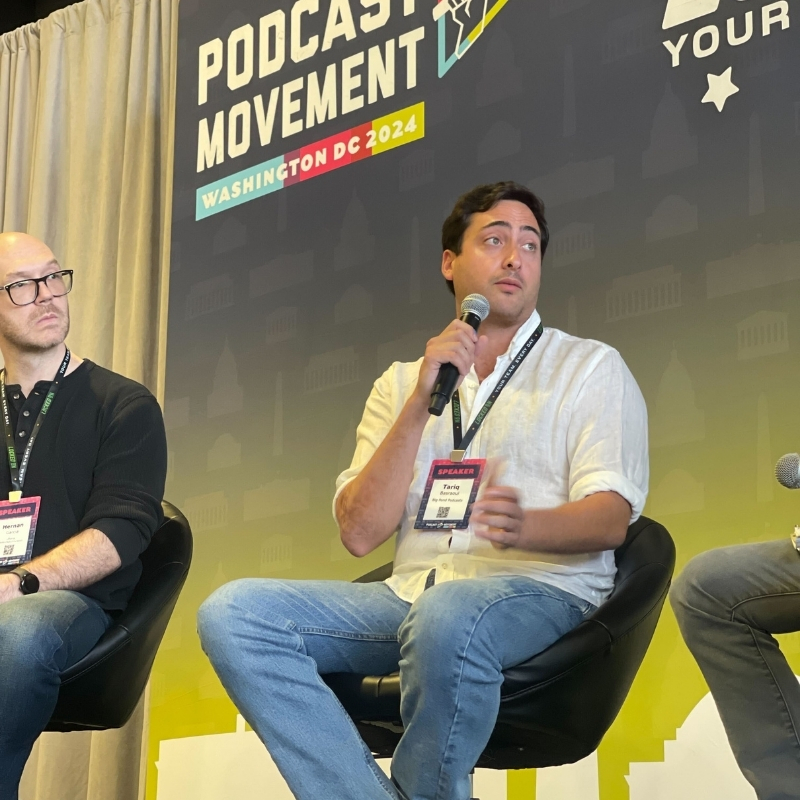
Tariq O’Keefe Basraoui, Co-Founder of Big Pond Podcasts, is a seasoned digital marketer and community builder with a track record of success at platforms like TikTok and Zencastr. Known for launching Zencastr’s Creator Network to over 15,000 members in 18 months, his expertise lies in growing user bases and enhancing brand engagement.
His strategic approach to growth and community engagement has established him as a leader in creating some of the fastest-growing media networks in podcasting.
