
Choosing your podcast platform feels a lot like choosing a record label back in the day. Some are just distributors—they press the vinyl and put it on a truck. Others are true partners who get you studio time, connect you with collaborators, and find the right audience. Too many creators pick the simple distributor. A true podcast platform for creators should be an active growth partner, not just a digital warehouse for your MP3s. It must provide integrated tools for hosting, one-click distribution, detailed analytics, and diverse monetization options to turn your passion into a sustainable venture.
What a “Podcast Platform” Actually Means in 2026
Let’s clear this up: a podcast host is not the same as a podcast platform. A host is a utility. You upload a file, they store it and generate an RSS feed. That’s it. A platform does that, but it also provides the infrastructure to grow and monetize your show.
Think of it as the difference between a storage unit and a full-service workshop. One holds your stuff; the other gives you the tools and support to build something meaningful. A platform integrates analytics, distribution channels like Apple Podcasts and Spotify, and revenue streams into a single environment. At Big Pond, we focus on helping you monetize and grow your podcast, seeing it as a core function, not an afterthought.
Simple Hosting vs. A Growth Platform
Simple hosting services, an early innovation from over 10 years ago, offer cheap storage and a basic RSS feed. They put the burden of distribution, analytics, and monetization entirely on you. You’re left to stitch together a dozen different services to manage your show.
A growth platform, on the other hand, is built for creators who are serious about their craft. It provides a centralized command center. You can see listener demographics, track downloads over time, submit your show to all major directories with a single click, and manage sponsorships—all in one place.
The Role of the RSS Feed
The RSS (Really Simple Syndication) feed is the technical backbone of your podcast. It’s a simple text file that contains all the information about your show and its episodes: titles, descriptions, artwork, and the location of the audio file. Podcast directories like Spotify use this feed to find and display your content.
A good platform gives you granular control over your RSS feed without forcing you to edit code. It should automatically update when you publish a new episode and ensure compliance with the technical specifications of all major directories, which Apple details on its own site.
Key Features to Look for in a Podcast Platform
Not all platforms are created equal. When you’re evaluating your options, the feature set is what separates the pretenders from the partners. Look past the marketing slogans and dig into the actual tools that will help you create and grow.
Core Hosting and Distribution
This is the baseline. Your platform must offer reliable hosting with high-speed delivery through a Content Delivery Network (CDN). It should guarantee high uptime and provide unlimited or at least very generous storage and bandwidth.
Distribution should be a one-click affair. The platform should have direct integrations to submit your show to Apple Podcasts, Spotify, Google Podcasts, and other popular directories. It should also support modern features like podcast chapters for better navigation and automatic transcription services to improve accessibility and SEO.
Audience Growth and Analytics
A platform without strong analytics is a car without a dashboard. You need detailed insights into who your listeners are, where they come from, and how they engage with your content. Look for IAB-certified analytics, which is the industry standard for podcast measurement.
Crucial metrics include:
- Downloads over time: Are you growing month-over-month?
- Listener location: Where in the world is your audience?
- Playback duration: Are people listening to your entire episode?
- Device breakdown: What apps and devices are they using?
Choosing a host based on storage price alone is like buying a car based only on its trunk size. You’re ignoring the engine, the transmission, and whether it will actually get you where you want to go.
Monetization and Integrations
This is where a true podcast platform for creators shines. Basic monetization includes dynamic ad insertion, which allows you to place ads into your back catalog. But a great platform goes further. It facilitates sponsorships, premium subscriptions, and affiliate marketing. We believe in providing a suite of tools that includes everything from securing podcast sponsorships to managing payouts, because your financial success is part of your growth. Finding brands like Airbnb that align with your audience is critical.
Beyond monetization, check for integrations with other creator tools. Can it connect to your email marketing service like Mailchimp or ConvertKit? Does it have integrations with social media scheduling tools to promote new episodes automatically?
Market Share of Top Podcast Hosting Platforms
The podcasting landscape is dominated by a few key players, but market share doesn’t always equate to the best fit for every creator. Some of the largest hosts, like those offered by Spotify (formerly Anchor), prioritize ease of entry, while others cater to professional creators and networks.
According to 2023 market data from Buzzsprout, the distribution of new episodes shows a highly fragmented market. While Spotify for Podcasters leads in pure volume, platforms like Libsyn and Podbean (with over 600,000+ podcasters) hold significant ground, especially among established shows.
| Platform | Best For | Key Monetization Feature | Pricing Model | Video Support? |
|---|---|---|---|---|
| Big Pond Podcasts | Independent creators & networks focused on growth | Integrated sponsorship marketplace & brand deals | Custom/Revenue Share | Yes, up to 4K |
| Podbean | Beginners and small businesses | Ad marketplace, premium content, patron program | Freemium, with paid tiers from $9/mo | Yes, on higher tiers |
| Libsyn | Professional podcasters and enterprises | Dynamic Ad Insertion, Glow.fm subscriptions | Tiered, starting at $5/mo | Yes |
| Transistor | Teams and branded podcasts | Private podcasting, superior analytics | Tiered, starting at $19/mo | No, audio-only |
How Podcast Platforms Make Money
Understanding a platform’s business model is crucial because it reveals their priorities. Are they focused on your success or just on selling you more storage? Most platforms use a mix of these models.
Subscription Tiers (SaaS)
This is the most common model. You pay a monthly fee for a certain amount of storage, bandwidth, and access to features. Lower tiers might have basic analytics and limited monetization, while higher tiers unlock advanced tools. It’s a straightforward model, but watch out for punitive overage fees if you exceed your limits.
Revenue Sharing
In this model, the platform takes a percentage of your advertising or subscription revenue. This can be great for new creators, as it often means lower upfront costs. It also aligns the platform’s success with yours—they make money when you make money. This is a core part of how we partner with creators, ensuring we are motivated to help you find the right opportunities.
A La Carte Features
Some platforms charge extra for specific services. You might pay a base hosting fee, but then add on costs for transcription, advanced analytics, or video hosting. This can be cost-effective if you only need a few specific tools, but the costs can add up quickly. This is where a careful cost-benefit analysis is needed to determine if an all-in-one platform is a better deal.

How a Podcast Platform Works: A Technical Deep Dive
Under the hood, a podcast platform juggles several technical tasks to get your episode from your microphone to your listener’s ears. It’s a process that has become remarkably refined over the last decade.
Here’s the step-by-step workflow:
- Upload: You upload your final audio or video file (e.g., an MP3, M4A, or MP4) to the platform’s dashboard.
- Encoding & Tagging: The platform encodes the file for optimal streaming and tags it with the metadata you provide (title, show notes, episode number, artwork).
- Storage & CDN: The file is stored on the platform’s servers and distributed across a global Content Delivery Network (CDN). This ensures that a listener in Tokyo gets the same fast download speed as a listener in Toronto.
- RSS Feed Update: The platform automatically updates your public RSS feed with the new episode information and a direct link to the media file on the CDN.
- Distribution: Podcast directories like Apple Podcasts and Google Podcasts constantly scan your RSS feed for changes. Within minutes to hours, they detect the new episode and make it available to their users.
- Analytics & Tracking: When a listener downloads or streams the episode, the platform’s servers log the request. This data is then processed to provide you with detailed analytics on your audience and playback statistics.
This entire process is why choosing a platform with a reliable infrastructure is so important. A failure at any step means your episode doesn’t reach your audience.
Key Features and Tools for Creators

While core hosting is the foundation, the tools built on top of it are what empower you as a creator. These features can save you time, improve your quality, and open up new avenues for creativity.
Recording and Editing Tools
Many platforms, especially those targeting beginners, now offer built-in recording and editing tools. Companies like Spotify for Podcasters and Podbean have mobile and desktop apps that allow you to record, edit, add music, and publish from a single interface. While these tools can’t match the power of dedicated DAWs like Adobe Audition or Descript, they are fantastic for creators who need a simple, integrated workflow.
Website and Page Customization
Your podcast needs a home on the web. A good platform will provide you with a customizable website or landing page for your show. Look for options to use your own domain, change colors and fonts, and create pages for individual episodes. This is your brand’s home base, and it should reflect your show’s identity. The best platforms offer tools to create a site that looks professional without needing to hire a developer.
Monetization isn’t about slapping a generic ad on your episode. It’s about finding brand partners who respect your audience as much as you do.
Security and Data Privacy
An often-overlooked aspect is the security of your content and data. Your platform is the custodian of your intellectual property and your listeners’ data. Ensure the platform has clear policies on data ownership and privacy. Features like private, password-protected podcasts are also crucial for creators offering premium content or running internal company podcasts. According to a 2023 report on data privacy, user expectations for data protection are higher than ever.
The Ecosystem of Podcast Platforms: Players and Their Roles
The term “platform” can be ambiguous because it involves a whole ecosystem of interconnected services. Understanding the different players and their roles helps you see where your hosting provider fits into the bigger picture.
Hosting Providers
These are the companies we’ve been focusing on—the Libsyns, Podbeans, and Big Pond Podcasts of the world. Their primary job is to store your files and generate your RSS feed. They are the foundation of your podcast’s distribution.
Podcast Directories
These are the “stores” where listeners find and consume podcasts. Apple Podcasts, Spotify, and Google Podcasts are the biggest directories. They do not host your files; they simply read your RSS feed and display your content to their users. Your relationship with them is managed through your hosting platform.
Ad Networks and Agencies
These are the monetization engines. Companies like Midroll or Megaphone (by Spotify) connect podcasts with advertisers. Some hosting platforms have their own built-in ad networks, which can simplify the process of finding sponsors. Others allow you to work with third-party networks. This is a critical service, and one we help creators navigate by also providing access to top podcast marketing agencies.
Third-Party Analytics Tools
While most platforms offer built-in analytics, some creators want even deeper insights. Companies like Chartable and Podtrac provide third-party tracking and attribution services. They can help you verify your download numbers and track the effectiveness of your marketing campaigns. Many platforms integrate with these services directly.
FAQ
What is the difference between a podcast host and a podcast directory?
A podcast host stores your audio files and creates the RSS feed that contains all your show’s information. A directory, like Apple Podcasts or Spotify, reads that RSS feed to list your show for listeners to discover and play. You need a host to exist; you need directories to be found.
How much does a podcast platform for creators typically cost?
Costs vary widely. Some platforms offer free tiers with significant limitations. Paid plans generally range from $5 to $50 per month for most independent creators, depending on storage needs and feature sets. Enterprise-level plans for large networks can cost hundreds or thousands of dollars per month.
Can I switch my podcast platform later on?
Yes, you can. The process involves setting up a 301 redirect from your old RSS feed to your new one. This tells all the directories to look at the new feed location from now on. A good platform will make this process easy with clear instructions and support, ensuring you don’t lose subscribers in the move.
Do I need video support for my podcast?
It depends on your strategy. Video podcasting is a major growth area, with platforms like YouTube and Spotify investing heavily in it. A study from Semrush shows that video is an increasingly preferred content format. If you plan to engage your audience on YouTube or create video clips for social media, choosing a platform with integrated video hosting and distribution is a smart move for 2026.
Choosing the right podcast platform is one of the most important decisions you’ll make as a creator. It’s about more than just finding a place to park your audio files; it’s about finding a partner that provides the tools, support, and expertise to help you achieve your goals. Whether you want to grow your audience, build a community, or turn your passion into a profession, the right platform is your launchpad. If you’re ready to move beyond simple hosting and find a true growth partner, get in touch with our team at Big Pond Podcasts. We specialize in everything from initial setup to full-scale monetization and are here to help you succeed.
About the author
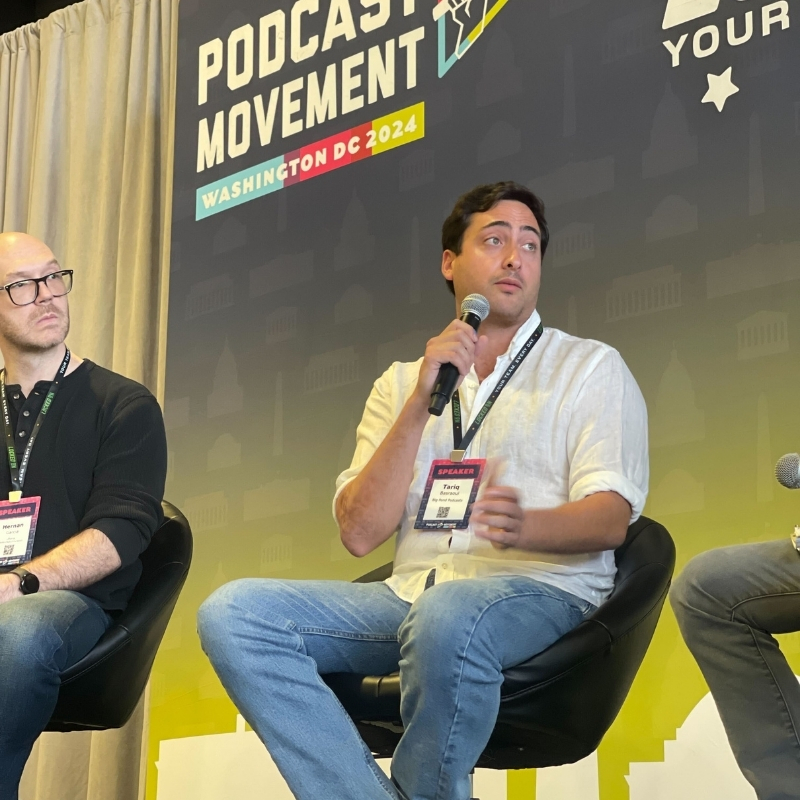
Tariq Basraoui
CEO
Tariq O’Keefe Basraoui, Co-Founder of Big Pond Podcasts, is a seasoned digital marketer and community builder with a track record of success at platforms like TikTok and Zencastr. Known for launching Zencastr’s Creator Network to over 15,000 members in 18 months, his expertise lies in growing user bases and enhancing brand engagement.
His strategic approach to growth and community engagement has established him as a leader in creating some of the fastest-growing media networks in podcasting.
