Our Blog
How to Price Your First Sponsorship at $18 to $50 CPM
Baseline podcast ads run $18 to $50 per thousand downloads. Price your first sponsorship using CPM math, niche demand, and format add-ons.

Most new podcast hosts price off subscriber count. That’s backwards, and it costs them money.
The actual industry benchmark runs on downloads, not followers, and the standard range lands between $18 and $50 per 1,000 downloads for a mid-roll ad, based on the CPM arithmetic sponsorship buyers use. A show averaging 2,000 downloads an episode is worth roughly $60 for that single slot. Below that download count, a flat fee usually beats a CPM pitch.
What formula calculates your baseline sponsorship rate?
Here’s the gap that trips up almost everyone starting out. One formula multiplies downloads by a dollar-per-thousand rate. Another multiplies raw audience size by a tiny fraction of a cent per view. A third ignores downloads entirely and works off who actually opens your email.
Pick the wrong one and you’ll either lowball a sponsor or hand them a number they can’t justify to their own boss.
Start with CPM, the model most buyers already understand. The math is simple: downloads per episode, divided by 1,000, multiplied by your CPM rate. A podcast rate-card guide walks through exactly this: 2,000 downloads at a $30 mid-roll CPM prices that slot around $60 an episode. Scale that up and a show pulling 10,000 downloads an episode at the same CPM is worth $300 per ad read. That’s the number you lead with in a first conversation.
A second model, CPV, shows up more on video platforms but some newsletter-adjacent sponsors still ask for it. Cost per view runs $0.01 to $0.10 per projected view, so a video expected to hit 100,000 views at a $0.04 CPV prices out at $4,000. If a sponsor asks you to quote this way, know the unit before you answer. It’s not downloads. It’s projected eyeballs on one piece of content.
If your show runs a companion newsletter, don’t price that inventory the same way you price an audio slot. Open rate matters more than list size.
A newsletter pricing breakdown spells out the math: 1,000 subscribers at a 53% open rate counts as 530 real impressions, not 1,000. Advertisers will do this math themselves whether you offer it or not. Do it first and you control the framing.
So which formula fits your situation? If you’re selling an in-episode ad read, use downloads and CPM. If a brand wants a dedicated video placement, CPV might come up, but confirm the unit before quoting. If you’re selling newsletter real estate, multiply list size by open rate before you name a number, and say so in the pitch.

Adjust your baseline rate for niche demand
A gaming podcast and a personal finance podcast with identical download numbers aren’t worth the same amount. That’s the part most pricing guides skip past.
Gaming and general entertainment content sits at the low end of the CPM scale, typically $3 to $12 CPM, because that audience is there for entertainment, not purchase decisions. Compare that to finance or B2B content, where buyers pay a premium because the audience is already primed to spend money on the category being advertised.
This changes what your baseline number should be before you’ve even sent a quote. A true-crime show averaging 8,000 downloads shouldn’t anchor its first conversation on the same CPM as a startup-focused interview show with the exact same download count. The second show’s audience skews toward people with budgets and buying authority. Sponsors know this, and they price accordingly.
Here’s the judgment call worth making early: figure out where your content sits on the intent spectrum before you quote anyone. Pure entertainment, broad appeal shows sit at the bottom of the CPM range. Shows built around a specific professional interest, a financial decision, or a software purchase sit higher, sometimes much higher.
Don’t assume your niche automatically qualifies for premium pricing just because the topic sounds serious. A general business-news podcast with a wide, casual audience behaves more like entertainment than a niche B2B SaaS show with a narrow, high-intent listener base. The audience’s buying intent matters more than the topic label on your show.
If you’re unsure where you land, look at who’s already sponsoring shows that sound like yours. That’s a faster signal than guessing from a CPM chart.
Add premiums for exclusivity, format length, and bundle deals
A flat CPM rate is a starting point, not the final invoice. Format and deal structure change the number substantially, and missing this is how creators leave money sitting on the table.
Dedicated, stand-alone placements cost more than quick mentions folded into other content. The multiplier for a dedicated video format runs 1.3x to 1.5x the baseline rate, while a short integration drops to 0.7x to 0.9x, and the shortest formats fall to around 0.5x. The same logic applies to podcast ad reads: a 60-second mid-roll costs more than a 15-second pre-roll mention, because it demands more of the host’s time and more of the listener’s attention.
Exclusivity is a separate lever entirely. If a sponsor wants to be the only brand in their category running ads on your show, that’s worth more than a shared slot. This isn’t a format change, it’s a scarcity premium, and you should price it as an add-on rather than folding it quietly into your base rate.
Bundles work in the opposite direction. When a sponsor books multiple placements at once, say three to five ad slots across several episodes, the expected discount on packaged deals runs 10% to 20% off the gross rate-card total. That’s a real discount, but it’s bounded. A sponsor asking for 30% or 40% off a bundle is asking for more than the market norm supports, and you don’t have to say yes just because the word “bundle” is in the request.
Put these pieces together before your first call. Know your baseline CPM, know your format multiplier, and know your exclusivity add-on. Then when a sponsor asks for a bundle discount, you’re negotiating off a number you already understand, not guessing in real time.
Step-by-Step: Calculating Your Baseline Rate

Walk through this in order, every time, rather than skipping to a gut-feel number.
First, pull your recent download average per episode. Use a true recent window, not an all-time average padded by one viral episode.
Second, pick a CPM anchor based on your niche, somewhere between the low single digits for broad entertainment content and well into the double digits for high-intent categories like finance or B2B.
Third, run the core math: downloads divided by 1,000, multiplied by your CPM.
Fourth, apply a format multiplier if the deal involves a dedicated segment, a longer read, or a shorter mention.
Fifth, decide whether exclusivity or a bundle commitment changes the number, and adjust accordingly.
Finally, don’t hand over one fixed figure. Quote a range and name the format, something like a mid-roll integration in an episode averaging a stated download count, priced between two numbers depending on final script and usage rights. That phrasing, recommended in CreatorRecon’s sponsorship pricing guide, signals you understand the variables and gives the brand room to negotiate inside your range instead of below it.
Frequently Asked Questions
What’s a reasonable CPM for a brand-new podcast with no sponsorship history?
Start near the lower end of your niche’s typical range rather than the top, since you have no track record to point to yet. A general-interest show might open conversations around $18 to $25 CPM, while a finance or B2B show can justify a higher opening number given the niche CPM patterns sponsors already expect to pay. Adjust up once you have a completed campaign and real performance data to show.
Should I ever quote a single fixed price instead of a range?
A range usually serves you better on a first deal. Naming a range and the exact format invites the sponsor to negotiate inside your numbers instead of below a single fixed figure, a tactic described in CreatorRecon’s negotiation guidance. Save fixed pricing for repeat sponsors once you both know what a campaign with them actually delivers.
How do I price a newsletter sponsorship if my list is small but my open rate is high?
Price off the real impression count, not subscriber count. Multiply your list size by your open rate to get the number sponsors should actually evaluate, following the math in the newsletter sponsorship pricing model. A smaller list with strong engagement can out-price a bigger list with weak opens.
What if a sponsor won’t tell me their budget?
Treat that as a signal, not a dead end. Quote your range with the format attached anyway, and watch how they respond. A sponsor who dodges budget questions entirely may still reveal their ceiling through how quickly they accept the top or bottom of your stated range.
Is it a mistake to discount my very first sponsorship just to land a logo?
Be careful here. A steep first-deal discount can anchor every future conversation with that same sponsor, and word travels in small ad-buyer networks faster than creators expect. A modest, clearly-labeled “first campaign” rate is fine. A permanent lowball isn’t, because you’ll be fighting to raise it for every renewal after.
Pricing your first sponsorship wrong in either direction has a cost: underprice and you train every future sponsor to expect that same discount, overprice without proof and you lose the deal before it starts. The safer move is building your number from real downloads or opens, naming your format, and quoting a range instead of a single figure.
If you want a second pair of eyes on your first rate card before you send it to a sponsor, book a call with Big Pond Podcasts and we’ll help you find the number that actually holds up in negotiation. Contact Big Pond Podcasts to talk through your next step.
About the author
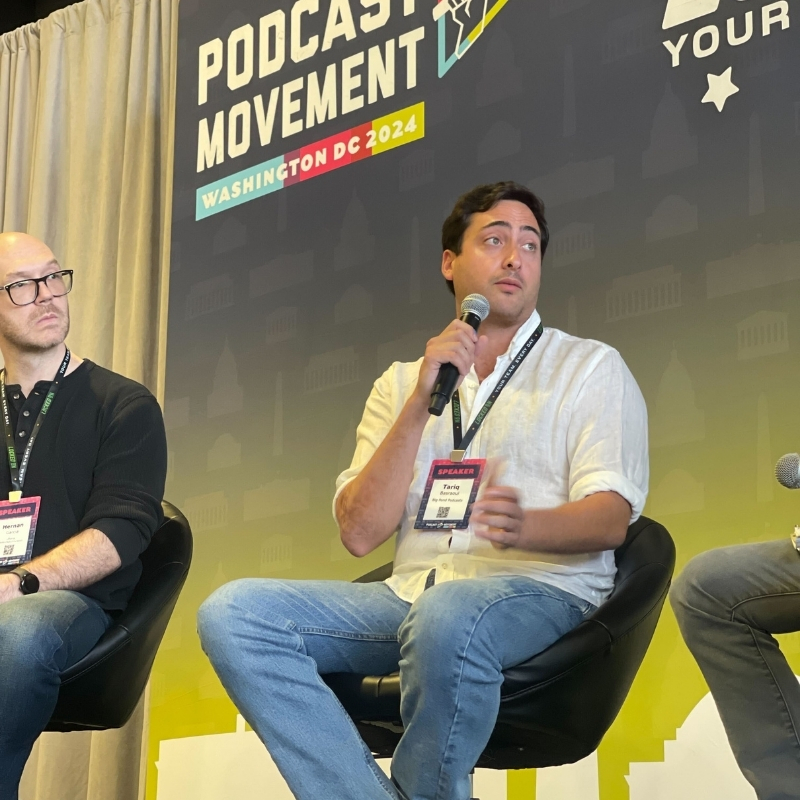
Tariq Basraoui
CEO
Tariq O’Keefe Basraoui, Co-Founder of Big Pond Podcasts, is a seasoned digital marketer and community builder with a track record of success at platforms like TikTok and Zencastr. Known for launching Zencastr’s Creator Network to over 15,000 members in 18 months, his expertise lies in growing user bases and enhancing brand engagement.
His strategic approach to growth and community engagement has established him as a leader in creating some of the fastest-growing media networks in podcasting.