
Introduction: Navigating the Evolving World of Podcast Ad Measurement in 2026
Podcast advertising is no longer the wild west. In 2026, it’s a sophisticated, multi-billion dollar landscape where every ad dollar demands accountability. For podcasters and advertisers alike, success is no longer just about creating great content or buying ad space; it’s about proving tangible impact. This transformation from a passion-driven medium to a core marketing channel has placed a massive emphasis on data and results, moving the industry far beyond its early days of simple download counts.
The Rise of Podcast Advertising
The days of podcasting being a niche hobby are long gone. It is now a primary channel for brands seeking to connect with highly engaged, specific audiences who trust the hosts they listen to. This explosive growth means more competition for both listener attention and advertising budgets. To stand out, creators must demonstrate the value their audience provides, and advertisers must justify their spend with clear evidence of return on investment. The entire ecosystem now hinges on transparent and reliable measurement, creating a marketplace where data-backed decisions are the standard.
Why Accurate Ad Measurement is Crucial
This is where a deep understanding of podcast ad measurement metrics becomes non-negotiable. For advertisers, it’s the difference between a wasted budget and a highly profitable campaign. They need to know if their ads are driving website visits, generating leads, or increasing sales. For podcasters, robust measurement is the key to unlocking higher ad rates and attracting premium sponsors. Simply pointing to listener numbers is no longer sufficient. To thrive, you must be able to tell a compelling story backed by data, showcasing the real-world results your show delivers. This guide will demystify the essential podcast ad measurement metrics you need to know, helping you navigate this evolving world with confidence and drive meaningful growth.
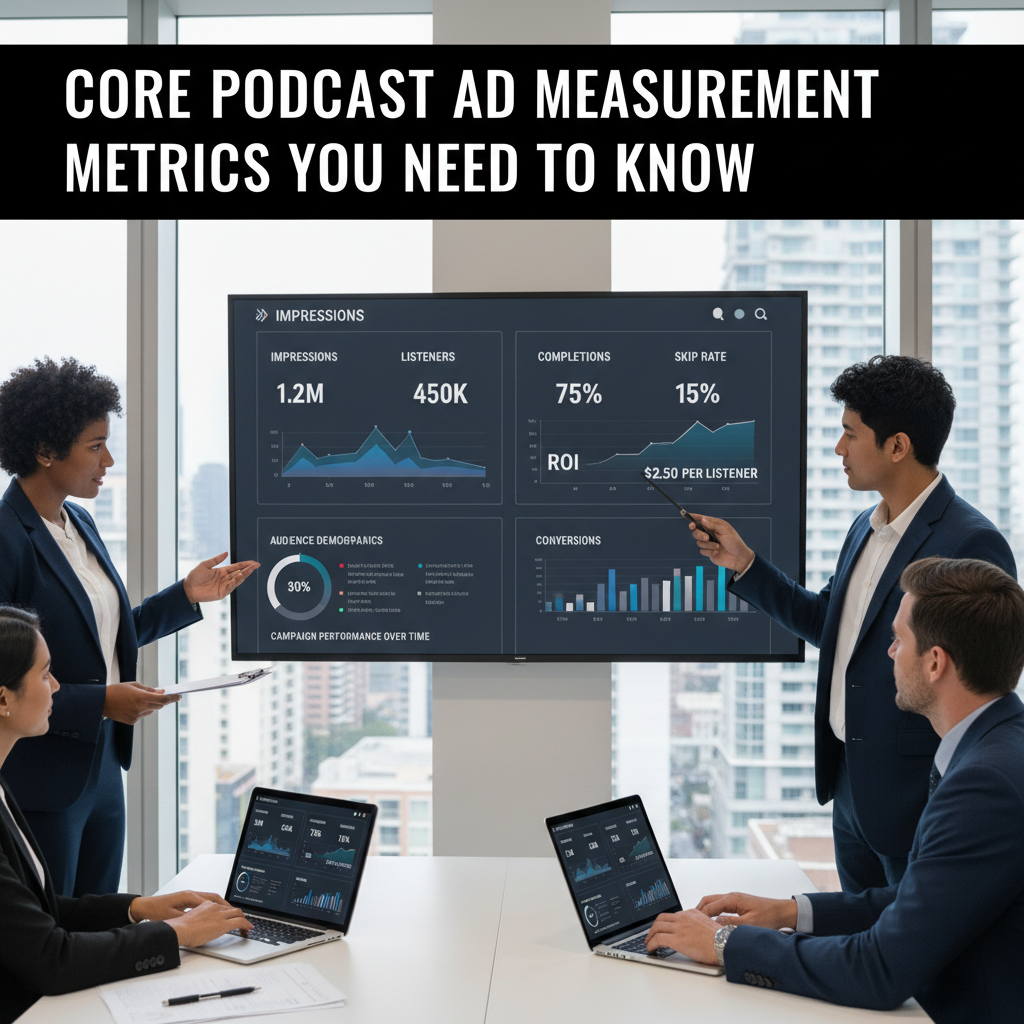
Core Podcast Ad Measurement Metrics You Need to Know
To effectively gauge the success of a campaign, both advertisers and podcasters must speak the same language. This starts with a shared understanding of the core podcast ad measurement metrics that form the foundation of any campaign report. Moving beyond simple vanity numbers is crucial for understanding true impact and optimizing future ad spend.
Understanding Downloads and Listeners
At the most basic level are downloads and listeners, standardized by the ITE Interactive Advertising Bureau (IAB). An IAB v2.1 certified download is not just a click; it represents a file request where at least one minute of the episode’s content is downloaded. This filters out accidental clicks or brief server pings. A unique listener refers to a single device downloading content from a specific podcast within a 24-hour period. This an industry-wide standard helps ensure that when you’re buying or selling ads, the numbers are consistent and trustworthy across different platforms.

Impression-Based Metrics
While downloads measure the episode’s reach, impressions measure the ad’s reach. An impression is counted each time an ad is delivered to a listener’s device. This metric is the basis for the most common pricing model in podcasting: CPM, or Cost Per Mille. CPM represents the price an advertiser pays for one thousand impressions. For instance, a $25 CPM means the advertiser pays $25 for every 1,000 times their ad is heard. To learn more about how this is calculated and what factors influence pricing, explore our deep dive into podcast advertising Cost Per Mille (CPM) in 2026.
Engagement Metrics Beyond the Download
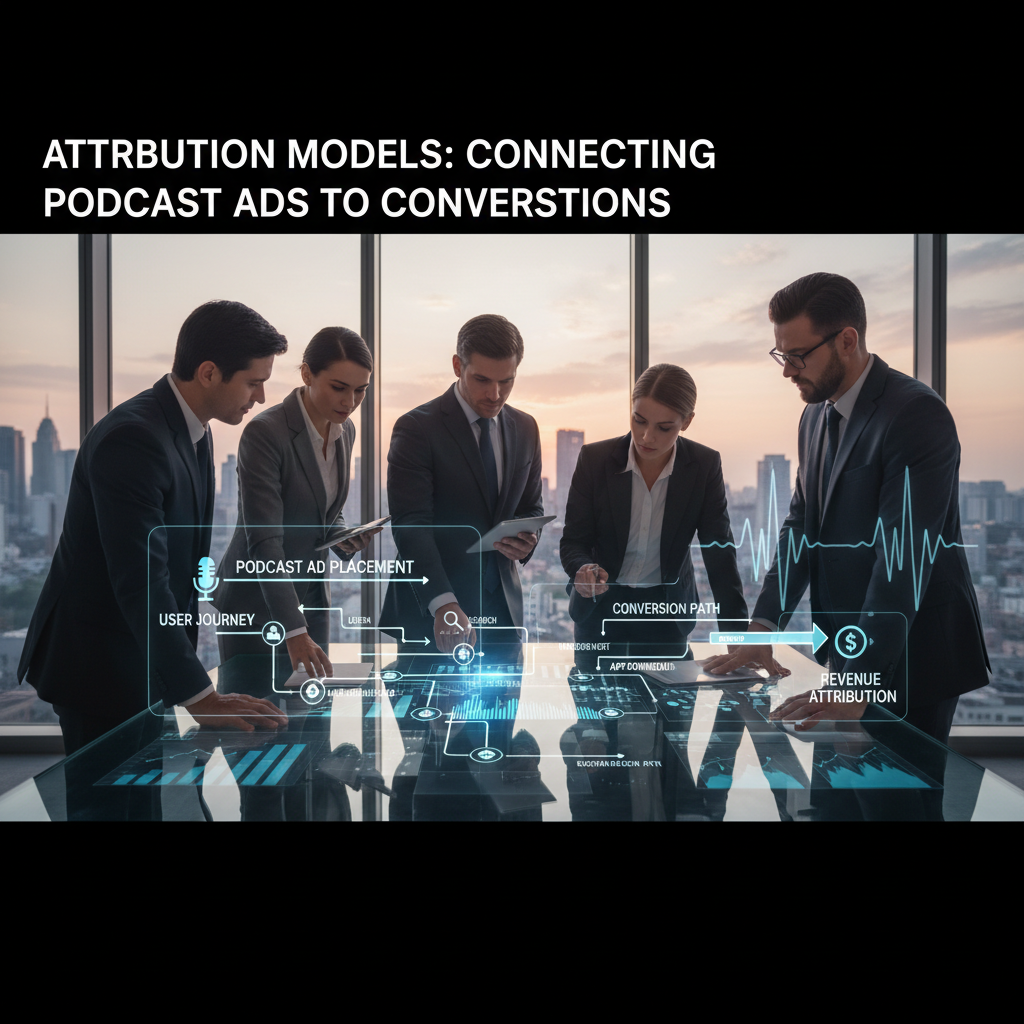
Attribution Models: Connecting Podcast Ads to Conversions
Understanding if your podcast ads are driving sales requires a solid attribution model—the framework for assigning credit to the touchpoints that lead to a conversion. Since listeners can’t click a link in audio, this process is more nuanced than in other digital channels, making it a critical component of your podcast ad measurement metrics.
Last-Touch vs. Multi-Touch Attribution
The simplest model is last-touch attribution, which gives 100% of the credit to the final touchpoint before a customer converts. For example, if a listener hears your ad, later searches for your brand, and clicks a search ad to buy, the search ad gets all the credit. This model often undervalues podcasting’s role in building awareness.
Multi-touch attribution, by contrast, distributes credit across multiple interactions. It recognizes that the podcast ad played a vital role in the customer’s journey, even if it wasn’t the final click. This provides a more holistic view of campaign performance, though it requires more sophisticated tracking.
| Attribution Model | How it Works | Best For |
|---|---|---|
| Last-Touch | Assigns 100% credit to the final interaction before conversion. | Simple, direct-response campaigns with a short sales cycle. |
| Multi-Touch | Distributes credit across several touchpoints in the buyer journey. | Understanding the full impact of brand awareness and consideration campaigns. |
Promo Codes and Vanity URLs: The Basics
The most traditional method for podcast attribution involves direct-response mechanisms. Unique promo codes (e.g., “BIGPOND20”) and vanity URLs (e.g., brand.com/bigpond) are easy for hosts to read and listeners to remember. When a customer uses one, you can directly attribute that sale to the specific podcast campaign. While effective for measuring immediate action, these methods don’t capture listeners who convert later without using the code or URL.
Leveraging Pixel Tracking and Server-Side Solutions
Advanced Analytics for Optimized Campaign Performance
While foundational metrics provide a snapshot of reach, advanced analytics unlock true campaign optimization. Moving beyond simple downloads lets you understand who is listening and how they are reacting, enabling data-driven decisions that maximize ROI with advanced podcast ad measurement metrics.
Geographic and Demographic Targeting
Modern hosting platforms, including Big Pond Podcasts, provide deep insights into your audience. By accessing listener data on geography, age, and gender, advertisers can precisely target ideal customer profiles. This granularity is crucial for measurement. Analyzing performance within specific segments confirms you’re reaching the right people and helps you adjust strategy if a demographic isn’t responding, making every ad dollar work harder.
Brand Lift Studies and Surveys
Not all advertising goals can be measured in clicks or conversions. For campaigns focused on building awareness and shaping perception, brand lift studies are essential. These studies typically involve surveying two listener groups: one exposed to your ad campaign and a control group that wasn’t. By comparing responses on metrics like brand recall, favorability, and purchase intent, you gain tangible proof of your ad’s impact on brand equity. These qualitative podcast ad measurement metrics are vital for proving the value of top-of-funnel initiatives and forming a complete picture alongside quantitative data.
A/B Testing and Creative Optimization
How do you know if your ad creative is as effective as it could be? You test it. A/B testing involves running two variations of an ad to see which performs better. You can test different scripts, calls to action (CTAs), background music, or even unique promo codes for each version. By tracking which ad drives more traffic or redemptions, you can definitively identify the more effective creative. This continuous refinement, a core part of effective podcast advertising segmentation, ensures your message evolves for maximum impact. Ready to put these advanced techniques into practice? See how Big Pond Podcasts can elevate your campaigns.
Choosing the Right Measurement Partner: Why Big Pond Podcasts Leads the Way
Tracking your campaign’s performance requires more than just raw data; it demands a partner committed to clarity, accuracy, and growth. While various platforms offer analytics, the right partner transforms complex numbers into a clear roadmap for success. This is where Big Pond Podcasts distinguishes itself as the ideal solution for both creators and advertisers who are serious about results.
Integrated Analytics and Reporting
Navigating the world of podcast ad measurement shouldn’t require juggling multiple logins and disparate dashboards. Big Pond Podcasts provides a robust, IAB-compliant analytics suite fully integrated into our hosting platform. This means all your critical data—from listener demographics to ad impressions—lives in one place. Because our metrics adhere to the industry’s highest standards, you can trust that the data is accurate, reliable, and comparable across the ecosystem, giving advertisers confidence and creators credibility.
Transparent and Actionable Data
Data is only valuable if you can understand and act on it. We built our dashboard to demystify podcast ad measurement metrics, presenting them in a clean, intuitive interface. Instead of overwhelming you with jargon, we provide clear visualizations that show exactly how your ads are performing. For advertisers, this means transparent validation of your investment. For podcasters, it means easily identifying which ad placements resonate most, allowing you to refine your strategy without needing a data science degree.
Support for Growth and Monetization
Ultimately, the goal of measurement is to fuel growth. Our tools are designed not just to report numbers but to help you grow your show and its revenue. By analyzing listener behavior and ad performance data, you can gain deep insights into what your audience wants. This knowledge empowers you to optimize your content, perfect your ad placements, and make a stronger case to potential sponsors. Armed with this data, creators can build a more compelling story for advertisers, a key component of effective podcast ad campaign reporting. At Big Pond Podcasts, we provide the insights you need to turn listeners into loyal fans and ad slots into sustainable income.
Frequently Asked Questions About Podcast Ad Measurement
What is IAB certification and why does it matter?
IAB (Interactive Advertising Bureau) certification is a technical standard ensuring that podcast download and ad impression data is measured accurately and consistently across different platforms. It matters because it provides a trusted, third-party verified benchmark for advertisers, guaranteeing that the numbers you report are reliable and not inflated. This credibility is crucial for securing sponsorships and building trust.
How do I track conversions without relying solely on promo codes?
While promo codes are effective, you can also use pixel-based attribution. Advertisers place a tracking pixel on their checkout or landing page, which can identify listeners who were exposed to your ad and later made a purchase. Another simple yet powerful tool is the post-purchase survey, which directly asks customers, “How did you hear about us?”
What are the key differences between host-read and programmatic ad measurement?
Host-read ads are often measured by direct-response actions like promo code usage or vanity URL visits, focusing on the host’s influence. Programmatic ad measurement is more aligned with standard digital advertising, centering on impression-based data like downloads and CPM to gauge reach and frequency.
How can small podcasts effectively measure ad performance?
Smaller shows can focus on tangible results: track redemptions of unique promo codes, create simple vanity URLs (e.g., brand.com/podcastname), and monitor website traffic spikes after an episode airs. Direct listener feedback and social media engagement also serve as valuable qualitative data points.
What new trends in podcast ad measurement should I anticipate?
Expect a move toward more sophisticated attribution models that can track a listener’s entire journey across multiple touchpoints. The use of AI to analyze listener behavior and brand lift is also growing. For a deeper look, explore our guide to Podcast Advertising Trends 2026: The Future of Audio Ads.
Conclusion: Mastering Ad Measurement for Podcast Success in 2026 and Beyond
The days of relying solely on download numbers to gauge podcast success are firmly behind us. As we move through 2026, the podcasting industry demands a more sophisticated approach. For both advertisers seeking clear ROI and podcasters aiming to maximize revenue, a deep understanding of comprehensive podcast ad measurement metrics is the cornerstone of sustainable growth. It’s the difference between guessing what works and knowing precisely what drives results for your show and your partners.
The Future of Podcast Ad Measurement
The trajectory of podcast advertising points toward greater precision and accountability. The future isn’t just about tracking how many people heard an ad, but what specific action they took because of it. We’re seeing a significant push for advanced attribution models that connect ad exposure to website visits, purchases, and brand lift studies, all while respecting listener privacy. As technology evolves, the platforms that offer clear, verifiable data without compromising user trust will undoubtedly lead the market. This ongoing shift makes a robust measurement strategy non-negotiable for anyone serious about leveraging the power of audio.
Your Partner in Podcast Growth
Navigating this data-rich environment doesn’t have to be overwhelming. The key is translating complex data points—from listener drop-off rates to conversion attribution—into actionable insights. This is where Big Pond Podcasts excels. We empower creators by providing a suite of intuitive tools designed to demystify advanced podcast ad measurement metrics. Our platform helps you go beyond the basics to truly understand your audience and demonstrate tangible value to advertisers. We believe that when you have clear insights into your performance, you can focus on what matters most: creating incredible content.
Ready to turn your analytics into your greatest asset and unlock new revenue streams? Discover how Big Pond Podcasts can help you grow.
