
Podcast Advertising Rates in 2026: The Definitive Guide to CPMs and ROI
Everyone fixates on Cost Per Mille (CPM), but they’re asking the wrong question. The price of a thousand downloads is a vanity metric if none of those listeners are right for your brand. True podcast advertising success isn’t about the cheapest rate; it’s about the highest affinity. So, what are the current podcasting advertising rates? For 2026, expect to see a wide range, typically between a $15 and $50 CPM. However, this is influenced by factors like ad placement, audience size, niche specificity, and whether the ad is read by the host.
What Are the Standard Podcasting Advertising Rates?
Podcast advertising is primarily priced using the CPM model. This means you pay a set price for every 1,000 listens your ad receives. It’s the industry-standard metric for pricing and comparing ad slots across different shows.
The CPM Model Explained
CPM stands for “Cost Per Mille,” with mille being Latin for a thousand. If a podcast quotes a $25 CPM, an advertiser pays $25 for every 1,000 listeners who download the episode containing their ad. This model directly ties cost to reach. At Big Pond, we see an average $22.35 CPM for a 60-second ad slot across our network, which gives a realistic baseline for well-established shows.
Typical CPM Ranges: Pre-Roll, Mid-Roll, Post-Roll
Ad placement within an episode dramatically affects its price and impact. The rates reflect listener engagement levels at different points in the show.
- Pre-Roll Ads (15-30 seconds): Run at the beginning. They often have lower CPMs, around $15-$25, because listeners may skip them.
- Mid-Roll Ads (60-90 seconds): Run in the middle of the content. These are the premium slots, commanding the highest CPMs—often $25-$50—as listeners are most engaged.
- Post-Roll Ads (15-30 seconds): Run at the end. These are the cheapest, sometimes under $15 CPM, as a significant portion of the audience drops off before the credits.
Host-Read vs. Announcer-Read Ads
A host-read ad, where the podcast creator personally endorses a product, is the gold standard of podcast advertising. It builds trust and feels like a genuine recommendation. Announcer-read (or programmatic) ads are pre-produced spots that can be inserted into various podcasts; they are less personal and typically have lower CPMs.
Understanding Podcast Ad Rate Models: CPM vs. Flat Fee
While CPM dominates, it isn’t the only way to structure a deal. Flat-fee sponsorships are also common, especially with smaller or highly specialized podcasts. Choosing the right model depends on your campaign goals.
When to Use CPM
CPM is ideal for campaigns focused on broad reach and awareness. It’s a scalable and predictable way to spend your budget, especially when working with larger podcasts or networks that have sophisticated ad-serving technology. This is the preferred model for performance-focused brands that need to track impressions and conversions closely. For more on this, check out our guide to monetizing small podcasts.
The Case for Flat-Fee Sponsorships
A flat fee involves paying a single price for an ad to run in one or more episodes, regardless of download numbers. This is common for new shows without stable download metrics or for advertisers who want a deeper, more integrated partnership. This could include multiple ad reads, social media mentions, and other custom promotions. It favors brand affinity over pure impression volume.
A Hybrid Approach
Some of the most effective partnerships blend both models. An advertiser might pay a base flat fee for a set number of episodes and then add a performance bonus tied to a specific action, like website visits or sales using a promo code. This structure aligns incentives for both the podcaster and the advertiser.
Factors Influencing Podcast Ad Rates
No two podcasts can command the same advertising rate, and for good reason. Several key variables determine the final CPM, reflecting the unique value each show offers to advertisers.
Audience Size and Downloads
This is the most straightforward factor. A podcast with 100,000 downloads per episode will have a higher ad rate than one with 5,000, even if the CPM is identical. Across the 1,300+ podcasts in our network, we see this correlation hold true consistently. However, raw numbers are just the start of the conversation.
Niche and Audience Demographics
A smaller audience can be more valuable than a large one if it’s highly targeted. A podcast for enterprise CIOs, for example, might have only 10,000 listeners, but its CPM could be $100 or more because the audience is extremely valuable and hard to reach. General comedy or news podcasts have broader reach but often lower CPMs.
Ad Placement and Ad Type
As discussed, mid-roll ads cost more than pre-roll or post-roll. Likewise, a 60-second, personally endorsed host-read ad will demand a much higher rate than a 15-second, pre-recorded programmatic ad. You are paying for the host’s influence, not just the airtime.
Stop buying downloads and start buying influence. The right host-read ad on a niche show with 10,000 listeners can outperform a programmatic ad on a show with a million.
Dynamic Ad Insertion vs. “Baked-In”
Baked-in ads are part of the original episode audio file forever. Dynamic Ad Insertion (DAI) technology allows ads to be swapped in and out over time. DAI offers incredible targeting capabilities—such as serving different ads to listeners in different geographic locations—and allows older episodes to continue generating revenue. This flexibility often justifies a higher CPM.
Calculating Your Podcast Advertising Budget and ROI
Planning a budget requires more than just picking a CPM. It demands a strategic approach to calculating potential costs and, more importantly, measuring the return on your investment.
A Step-by-Step Guide to Budgeting
- Define Your Goal: Are you seeking brand awareness, lead generation, or direct sales? Your goal dictates the type of shows and ad formats you should pursue.
- Identify Target Shows: Research podcasts that align with your target demographic. Use platforms like Big Pond Podcasts to discover potential partners.
- Estimate Reach and Cost: Find the show’s average downloads per episode. Multiply that by the estimated CPM (e.g., 50,000 downloads / 1000 * $30 CPM = $1,500 per episode).
- Factor in Ad Creation: Will you provide a script or require a host-read ad? Account for any creative costs.
- Run a Test Campaign: Start with a few episodes on a handful of shows. Don’t commit your entire budget at once.
Measuring ROI Beyond Direct Conversions
Direct ROI from promo codes is clean but incomplete. True impact includes brand lift, which can be measured with post-campaign surveys asking listeners about brand recall and purchase intent. According to the IAB, podcast advertising can significantly lift brand favorability, a metric just as crucial as direct sales. Track website traffic from the regions where the podcast is popular during the campaign flight.
Case Study: D2C E-Commerce Brand Success
Consider a direct-to-consumer mattress company that sponsored a dozen wellness and sleep-science podcasts. By using unique vanity URLs (e.g., brand.com/podcastname) and host-read ads, they didn’t just sell mattresses. They created a durable association between their brand and better sleep in the minds of an engaged audience, leading to a 3x return on ad spend within six months and a sustained lift in organic search traffic for their brand name.
| Feature | Dynamic Ad Insertion (DAI) | Baked-In Ads |
|---|---|---|
| Targeting | Geo-targeting, demographic, behavioral | One ad for all listeners |
| Longevity | Ads can be updated in back catalog | Ad is permanent, may become dated |
| Measurement | Precise impression tracking | Download numbers only (less precise) |
| Flexibility | A/B test different ad creatives | No changes possible after publishing |
| Cost | Often higher CPM | Typically lower CPM |
The Future of Podcast Advertising Rates
The podcasting ad space is far from static. The global podcasting market is projected to grow substantially, with some estimates suggesting ad spending will reach $4 billion worldwide in the near future. This growth is fueled by new technology and shifting listener habits.
Emerging Ad Technologies
AI-driven ad insertion is becoming more sophisticated. Imagine ads that are not only targeted by demographics but also by the context of the conversation in the podcast itself. Interactive ads that prompt a listener to say a command word to visit a site or receive a coupon are also on the horizon, promising to increase engagement and make ROI tracking even more precise.
The Rise of Video Podcasts and Cross-Platform Ads
As more podcasts embrace video on platforms like YouTube and Spotify, advertising opportunities are expanding. A single campaign can now run a video pre-roll on YouTube, an audio mid-roll on Apple Podcasts, and a social media clip on TikTok, all featuring the podcast host. This cross-platform approach amplifies the message and justifies higher investment.
A focus on the lowest CPM is a race to the bottom. The real value is in finding the shows where your brand becomes part of the listener’s trusted inner circle.
Predictions for 2027 and Beyond
I expect CPMs for general entertainment podcasts to face downward pressure from programmatic buying, while rates for niche, high-trust shows will continue to climb. We will also see the growth of brand-funded podcasts, where a company produces its own high-quality show, turning content marketing into a primary acquisition channel. You can see the groundwork for this in our guide to producing a great podcast.
How to Negotiate and Buy Podcast Ads
Securing your first podcast ad slot can feel intimidating, but it’s a straightforward process once you know the steps. Building relationships is as important as negotiating rates.
Finding the Right Podcasts
Don’t just look at the top charts. Dig into categories relevant to your business. Listen to several episodes to ensure the tone and values align with your brand. Use podcast media directories or partner with a platform like Big Pond that connects advertisers with our diverse roster of shows, reaching over 200M+ monthly listeners.
The Art of the Pitch
When you reach out to a podcaster, personalize your message. Show that you’ve actually listened to their content. Explain why your brand is a good fit for their audience. Come prepared with a clear proposal but be open to collaboration.
Legal Considerations: FTC Disclosures
It’s legally required for podcasters to disclose when content is sponsored. The Federal Trade Commission’s endorsement guides clearly state that any material connection must be made clear to the audience. This is non-negotiable and protects everyone: the advertiser, the creator, and the listener.
FAQ
How much does it cost to advertise on a top podcast?
Advertising on a top-tier podcast with millions of downloads can cost anywhere from $20,000 to $100,000+ per episode, depending on the ad slot and brand integration. These shows have massive reach and their rates reflect that.
Are podcast ads effective?
Yes, extremely. Because podcasting is an intimate medium, listeners trust hosts. Host-read ads, in particular, perform exceptionally well, often driving higher brand recall and purchase intent than ads on other digital media. Annual ad revenue in the United States surpassed two billion U.S. dollars and continues to grow, proving advertiser confidence.
What is a good CPM for podcast advertising?
A “good” CPM is relative to your goals and the audience you’re reaching. While an average is between $18-$25 for a 60-second ad, a CPM of $50 could be a great deal if you’re reaching a highly valuable, niche audience. A CPM of $15 might be a waste of money on a broad, untargeted show.
How do small podcasts get advertisers?
Small podcasts can find advertisers by highlighting the value of their niche audience. They can join podcast networks, use platforms that connect creators with brands, or directly reach out to companies that would benefit from their focused listener base. Offering a flat-fee “starter package” is a great way to attract first-time advertisers.
What’s the difference between a podcast ad and a sponsorship?
An ad is typically a short spot (15-60 seconds) promoting a product, often priced via CPM. A sponsorship is a deeper partnership that might include multiple ad reads, “brought to you by” mentions, social media posts, and custom content. Sponsorships are usually sold at a flat fee and are more about brand association than direct response.
At Big Pond Podcasts, we help creators navigate the complexities of ad rates and sponsorship deals. Whether you’re looking to monetize and grow your podcast or an advertiser aiming to reach an engaged audience, our platform provides the tools and network to make it happen. Let us connect you with the right opportunities.
About the author
Tariq Basraoui
CEO
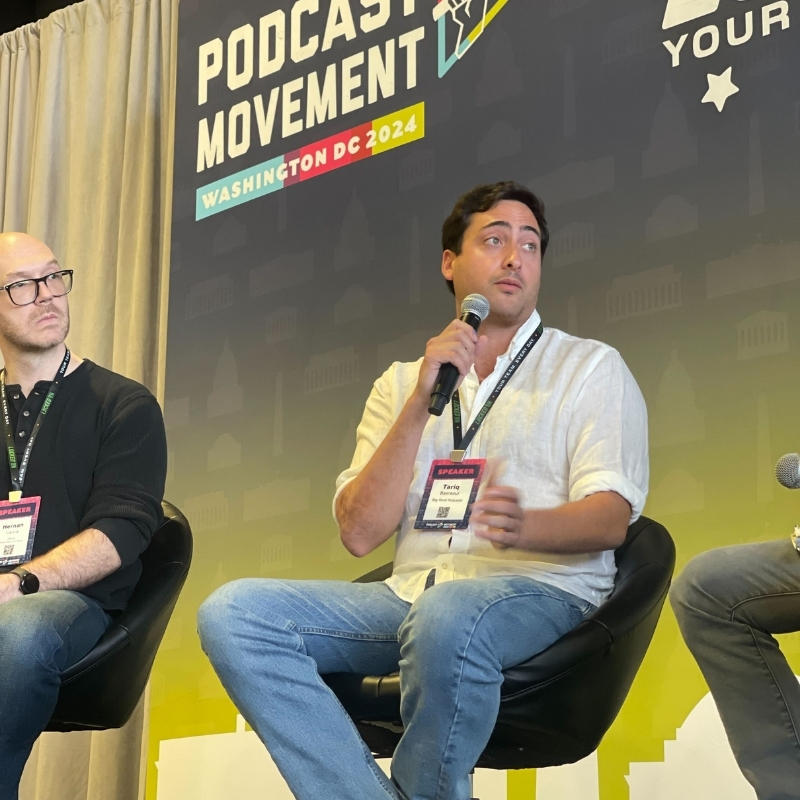
Tariq O’Keefe Basraoui, Co-Founder of Big Pond Podcasts, is a seasoned digital marketer and community builder with a track record of success at platforms like TikTok and Zencastr. Known for launching Zencastr’s Creator Network to over 15,000 members in 18 months, his expertise lies in growing user bases and enhancing brand engagement.
His strategic approach to growth and community engagement has established him as a leader in creating some of the fastest-growing media networks in podcasting.
