
The Best Podcast Community Building Platforms in 2026
The best podcast community building platforms are Discord for real-time chat, Circle for structured course-like communities, and Patreon for direct monetization through tiered content. Your choice depends entirely on your show’s format, your audience’s preferences, and the specific monetization model you plan to implement. A successful community isn’t built on the platform itself but on the engagement strategies you deploy within it. It’s the difference between an empty forum and a thriving hub for your most dedicated listeners.
Building a community is how you turn casual listeners into loyal advocates for your show. It creates a space for listeners to connect with you and with each other, deepening their relationship with your content beyond the weekly episode drop.

This isn’t about just picking the trendiest app. It’s a strategic decision. To rank these platforms, I evaluated them based on three core criteria: monetization flexibility, moderation tools, and the learning curve for both podcasters and their audience. The goal is to find a platform that supports your show’s growth without becoming a second full-time job to manage.
Top Podcast Community Building Platforms to Consider
| Discord | Patreon | Facebook Groups | Circle.so | Geneva | |
|---|---|---|---|---|---|
| Primary Use | Real-time chat & voice | Subscription & exclusive content | Social group interaction | All-in-one community platform | Group chat & live audio |
| Monetization | Limited (server boosts) | Tiered subscriptions | Limited (ads, paid events) | Native paywalls, courses | Limited |
| Customization | High (bots, channels) | Medium (branding) | Low (standard FB features) | High (branding, structure) | Medium (rooms, settings) |
| Ease of Use | Medium | High for patrons, medium for creators | High | Medium | High |
| Key Feature 1 | Voice Channels | Exclusive Content | Wide Audience Reach | Custom Branding | Live Audio Rooms |
| Key Feature 2 | Bots & Integrations | Direct Fan Support | Familiar Interface | Course/Content Hosting | Event Scheduling |
Here are the top platforms I’ve seen podcasters use successfully to build and monetize their communities.
Discord
Discord began as a tool for gamers but has become a powerhouse for all types of creators. It excels at real-time, unstructured conversation through text and voice channels. You can create a server for your podcast with different channels dedicated to specific topics, episode discussions, AMAs, or off-topic chatter. The ability to host live audio events, akin to a live podcast recording, is a significant draw.
Its robust bot ecosystem allows for extensive customization and automation. You can integrate bots to welcome new members, manage roles, poll your audience, or even pull in your latest episodes automatically. For podcasters who want a high-energy, constantly-on environment where listeners can form genuine, instant connections, Discord is unmatched. It feels less like a forum and more like a perpetual backstage pass.
- Best for: Podcasters with a tech-savvy audience who crave real-time interaction and live events.
- Watch out for: Can feel chaotic and overwhelming for new users. Requires active moderation to keep conversations on track and positive.
Patreon
Patreon is less of a standalone community platform and more of a monetization layer that sits on top of your existing content. It allows you to create membership tiers, offering exclusive content like bonus episodes, ad-free shows, early access, or behind-the-scenes videos in exchange for a monthly subscription. This model directly links your community efforts to your revenue.
The community features themselves are basic, consisting mainly of a post feed and direct messaging. However, its real strength lies in its powerful integrations. Many podcasters use Patreon to grant access to a private Discord server or other community space, effectively using it as the financial gateway to a more feature-rich platform. It’s the original and still one of the most effective tools for turning listeners into paying supporters.
- Best for: Podcasters focused on direct monetization through exclusive content and tiered memberships.
- Watch out for: Its native community tools are limited. You’ll likely need to pair it with another platform for deep engagement.
Don’t mistake a payment processor for a community. Patreon is how you charge for the ticket; the real show happens somewhere else.
Circle
Circle.so is a modern, all-in-one community platform designed for creators and brands. It combines the best of forums, chat, and event hosting into a clean, intuitive interface that feels like a private social network for your brand. You can organize discussions into spaces, host live video streams, create courses, and manage member profiles, all under your own branding.
It’s a premium option, but you get what you pay for. The platform is built for structured engagement, making it ideal for podcasters who offer educational content, coaching, or masterminds. Unlike the chaotic feel of Discord, Circle provides a calm, organized environment that encourages thoughtful discussion and knowledge sharing. Its integration with tools like ConvertKit and Teachable makes it a central hub for your entire creator business. For our part as a build your audience, we’ve seen shows thrive by creating this kind of focused environment.
- Best for: Professional or educational podcasters who want a polished, all-in-one platform for courses, events, and structured discussion.
- Watch out for: The higher price point can be a barrier for new podcasters. It’s a significant investment.

Substack
While primarily known as a newsletter platform, Substack has been aggressively building out its community features. Every publication now comes with a chat feature, which functions like a private group chat for your subscribers. It’s a simple, effective way to foster conversation directly where your audience is already reading your content. You can also host discussion threads on individual posts.
This lightweight model is perfect for podcasters who use a newsletter as their primary communication channel. It removes the friction of sending listeners to yet another platform. If you’re a writer-podcaster, Substack allows you to unify your written and audio content with your community in one place. The platform also supports paid subscriptions, making it a direct competitor to Patreon for creators who value simplicity and ownership of their audience list.
- Best for: Podcasters who are also writers and want to consolidate their newsletter, podcast, and community in one place.
- Watch out for: Community features are still less robust than dedicated platforms like Circle or Discord.
Facebook Groups
Despite the rise of newer platforms, Facebook Groups remain a viable option for many podcasters, primarily due to their accessibility. With over 2.9 billion monthly active users, your audience is almost certainly already there. This eliminates the hurdle of convincing listeners to sign up for a new service.
Groups offer a familiar suite of tools: post threads, polls, events, and live video. They are easy to set up and manage, and the algorithm can help surface your community to new potential members. However, you’re building on rented land. You have no control over algorithm changes, and you’re competing with endless distractions in a user’s feed. Data ownership is also a major concern for creators looking to build a long-term, independent asset.
- Best for: Podcasters with a less tech-savvy or older audience demographic who value familiarity and ease of access.
- Watch out for: You don’t own your audience, and you’re subject to Facebook’s ever-changing algorithms and policies.
A listener you can’t reach directly is a borrowed listener. An email list or a dedicated community platform turns them into your audience.
Choosing the Right Community Model
Before you pick a platform, decide on the type of community you want to build. This choice will guide your platform decision, not the other way around. Most podcast communities fall into one of three models.
The Companion Community
This is the most common and lightweight model. It’s a free, accessible space, like a Facebook Group or a public Discord server, where listeners can discuss episodes and interact with each other. The goal is engagement and feedback, not direct revenue. It’s a fantastic starting point and a way to build your audience by creating a feedback loop that improves your show.
The Bonus Content Hub
This model, exemplified by Patreon, layers a paywall on top of the community. Fans pay a monthly fee for access to exclusive content, an ad-free feed, or early releases. The community is a value-add, often hosted on a platform like Discord, but the core driver is the premium content. This is a powerful way to monetize your most dedicated fans, and it works especially well for entertainment and narrative podcasts.
The Full Multimedia Hub
This is the most advanced model, using a platform like Circle or a custom-built site. It’s a fully-branded destination that integrates discussion forums, live events, courses, and premium content into one experience. This approach is best for educational or business-focused podcasts where the community itself is the main product. It requires significant resources but offers the highest potential for both revenue and deep, meaningful engagement.
Summary Comparison of Platforms
| Platform | Best for | Monetization | Primary Use Case |
|---|---|---|---|
| Discord | Real-time chat & live events | Tips, server subscriptions | High-energy fan interaction |
| Patreon | Direct fan support | Tiers, special offers | Gated bonus content |
| Circle | Structured courses & events | Tiers, course sales | Branded professional community |
| Substack | Writer-podcasters | Paid newsletter tiers | Unified content and discussion |
| Facebook Groups | Maximum accessibility | N/A (indirectly via brand deals) | Broad, low-friction engagement |
FAQ
How do I get my listeners to join my community?
Start by consistently promoting it on your podcast. Mention it in your intro, outro, and even mid-episode. Create a simple, memorable URL that redirects to your community platform. Give them a compelling reason to join, such as exclusive Q&As with you, the ability to shape future content, or simply a space to connect with other fans who share their interests. Working with us at Big Pond, we help our 1,300+ podcasts develop these calls to action.
What are the legal risks of running a community?
Managing an online community comes with responsibilities. You need clear moderation policies and terms of service. Be mindful of data privacy laws like GDPR and CCPA, especially if you collect user information. It’s your responsibility to create a safe environment, which means actively moderating for harassment, hate speech, and spam. Having clear, enforceable rules is your best legal protection.
How much time does it take to manage a podcast community?
It depends on the size and platform, but don’t underestimate the commitment. A small, engaged community on a platform like Circle might take 2-4 hours a week. A large, active Discord server could require daily check-ins or even a dedicated community manager. Start small, be consistent, and consider appointing trusted listeners as moderators to help share the load as you grow.
Can a community directly increase my podcast downloads?
Indirectly, yes. A strong community fosters loyalty. Loyal listeners are more likely to listen to every episode, share your show with friends, and leave positive reviews, all of which signal to podcast directories that your show is valuable. The feedback loop from your community can also help you create better content, which organically attracts new listeners. It’s a core part of how we monetize and grow podcasts.
When is the right time to launch a community for my podcast?
Don’t wait until you have a massive audience. You can start building a community with your first 100 listeners. Starting early allows you to build a strong foundation and culture with a core group of dedicated fans. These founding members will become your biggest advocates and help you welcome new listeners as your show grows.
Building a community is a long-term investment in your podcast’s future. It transforms your show from a one-way broadcast into a two-way conversation, creating a resilient brand that isn’t dependent on any single platform or algorithm. If you’re ready to explore how a thriving community can open up new growth and revenue opportunities for your show, let’s have a conversation.
About the author
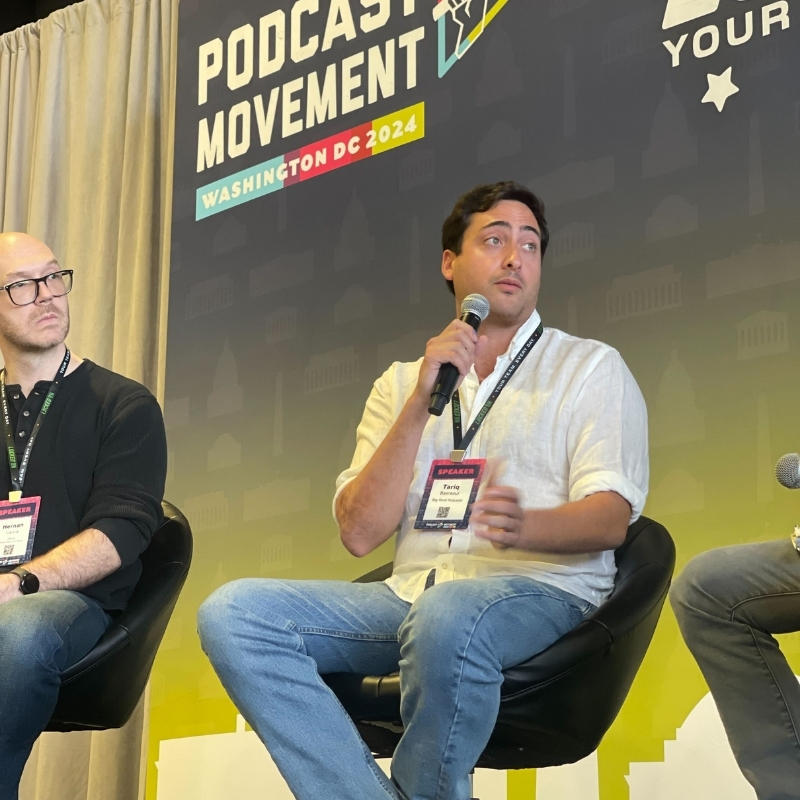
Tariq Basraoui
CEO
Tariq O’Keefe Basraoui, Co-Founder of Big Pond Podcasts, is a seasoned digital marketer and community builder with a track record of success at platforms like TikTok and Zencastr. Known for launching Zencastr’s Creator Network to over 15,000 members in 18 months, his expertise lies in growing user bases and enhancing brand engagement.
His strategic approach to growth and community engagement has established him as a leader in creating some of the fastest-growing media networks in podcasting.
