

Podcast cross-promotion is a reciprocal marketing strategy where two or more podcasters agree to promote each other’s shows to their respective audiences. The core idea is to tap into a new, yet relevant, listener base that is already engaged with podcast content. This approach works best when the partner shows share a similar target demographic but are not direct competitors. Effective podcast cross-promotion techniques are about finding these aligned audiences and creating value for both them and the partner podcaster, driving mutual growth.
This article breaks down the most effective podcast cross-promotion techniques, ranked by a combination of audience impact, setup effort, and strategic flexibility. Our methodology considers feedback from the 1,300+ shows in our network, prioritizing strategies that deliver qualified, engaged listeners. We’ve seen firsthand how these partnerships can be a powerful tool to monetize and grow podcasts when executed correctly.

1. Trailer & Promo Swaps
A trailer or promo swap is the simplest and most common form of cross-promotion. You agree to run another podcast’s short promotional audio (typically 30-90 seconds) in your ad slots, and they do the same for you. It’s a low-effort, high-reach tactic that introduces your show’s concept and tone to a new audience directly in their listening environment.
This method is incredibly efficient. It doesn’t require hosts to coordinate schedules or create new content beyond the initial promo. The key is ensuring the swapped promos are placed effectively, usually in pre-roll or mid-roll slots where listener attention is high.
- Best for: Podcasters new to cross-promotion or those with limited time.
- Watch out for: Low-quality promos that feel jarring or out of place can reflect poorly on your own show.
2. Guest Interviews
Appearing as a guest on another podcast is a powerful way to establish authority and give a new audience a deep, personal introduction to you and your content. Unlike a short promo, a guest spot allows you to showcase your expertise, personality, and the unique value proposition of your own show over an extended period. The host’s endorsement lends you immediate credibility.
This strategy requires more effort in pitching and preparation, but the payoff is a highly qualified new listener. Someone who enjoyed your 30-minute interview is very likely to check out your podcast for more. It forms a stronger connection than a passively heard ad. When seeking partners, look for shows where you can offer genuine value, not just pitch your own content. This is a core part of how we help creators by securing podcast sponsorships and guest opportunities that build their brand.
- Best for: Building authority and creating a strong, personal connection with a new audience.
- Watch out for: Poorly prepared interviews or a mismatch in interview style can fail to engage the audience.
The best cross-promotional guest spots feel less like an advertisement and more like a bonus episode for the host’s regular listeners. You’re there to deliver value first and foremost.
3. Feed & Episode Swaps
In a feed swap, you and a partner podcaster agree to publish one of each other’s full episodes on your own public feeds. This gives your audience a complete, unfiltered taste of the other show’s content and vice versa. It’s a bold move that shows immense trust in your partner’s quality and relevance.
This technique is most effective when the swapped episodes are standout examples of each show’s best work and are highly relevant to the new audience. An introduction from the host explaining the swap is crucial to set listener expectations. For example, the popular show Goalhanger used this tactic to great effect, reaching part of the 50 million people each month who listen to their network on Spotify. An episode swap acts as the ultimate “try before you buy” for a potential new subscriber.
- Best for: Shows with very similar audiences and high-quality, evergreen content.
- Watch out for: A poorly chosen episode can confuse or alienate your existing audience. Ensure the content is a great fit.
- Statistic: Goalhanger, a network that uses cross-promotion, reaches 50 million people each month on Spotify.
4. Collaborative Episodes
Creating a unique, collaborative episode with another host is a fantastic way to merge audiences and create something special that serves both. This could be a co-hosted debate, a joint interview with a third expert, or a roundtable discussion. The novelty of the format itself is a powerful promotional hook.
This approach demands the most coordination but often yields the highest engagement. The final episode is published on both feeds, doubling its reach. The key is to find a topic where both hosts can contribute their unique perspectives, creating a piece of content that is greater than the sum of its parts. This is a powerful tactic for growth, which is a core part of our mission to help podcasters.
- Best for: Established shows looking to create buzz and deepen engagement with their own audience and a partner’s.
- Watch out for: Requires significant time for planning, recording, and editing. Creative differences can also pose a challenge.

5. Paid Ad Reads
While not a “swap,” buying ad space on a relevant podcast is a direct and scalable cross-promotion technique. Instead of a reciprocal arrangement, you pay for a host-read ad or a produced spot on a show with your target audience. This gives you access to larger or more niche podcasts that might not be available for a direct swap.
This method gives you control and predictability. You know exactly when and where your promotion will run. It’s particularly useful for B2B podcasts or those with a clear monetization strategy, where the cost of acquisition can be measured against listener value. You can find more information about this in our guide to podcast ad placement.
- Best for: Podcasters with a budget who want guaranteed access to a specific, targeted audience.
- Watch out for: Can be expensive. Success depends on tracking listener acquisition to ensure a positive return on investment.
6. Social Media & Newsletter Swaps
Cross-promotion doesn’t have to be confined to your audio feed. Partnering with another creator to promote each other’s shows on social media or in email newsletters can be highly effective. This works because you are tapping into their most engaged followers and subscribers outside of the podcast app.
A successful swap here involves more than just a link. It requires a genuine endorsement. For example, a newsletter feature could explain why you love the other show and recommend a specific episode. A social media collaboration could be a joint Instagram Live or a Twitter Spaces conversation, creating an event around the partnership.
- Best for: Podcasters with strong, engaged followings on other platforms like email or social media.
- Watch out for: Vanity metrics. A partner’s large follower count is meaningless if their audience engagement is low.
7. Joint Contests or Giveaways
Hosting a joint contest or giveaway is a creative way to merge audiences and generate excitement. The entry requirements can be designed to drive growth for both shows, such as “subscribe to both podcasts and leave a comment to enter.”
This creates a fun, interactive event for listeners and provides a compelling reason for them to check out a new show. The prize should be something genuinely valuable to your shared target audience. This tactic not only grows subscriber numbers but also fosters a sense of community around the partner shows.
- Best for: Engaging audiences and driving a high volume of new subscribers in a short period.
- Watch out for: Requires careful planning and clear rules. The giveaway must comply with platform terms of service and any local regulations.
Don’t just find a podcast with a similar number of downloads. Find a host who serves an audience that would genuinely thank you for the introduction.
Summary of Podcast Cross-Promotion Techniques
| Technique | Best For | Effort Level | Audience Impact |
|---|---|---|---|
| Trailer Swaps | Quick and easy reach | Low | Moderate |
| Guest Interviews | Building authority | Medium | High |
| Feed & Episode Swaps | High-trust sampling | Low-Medium | High |
| Collaborative Episodes | Creating unique content | High | Very High |
| Paid Ad Reads | Targeted, scalable reach | Low | Scalable |
| Social & Newsletter Swaps | Leveraging other platforms | Low-Medium | Moderate |
| Joint Contests | Driving subscriptions | Medium | High |
Further reading
FAQ
What is podcast cross-promotion?
Podcast cross-promotion is a marketing partnership where two or more podcasters agree to promote each other’s shows. This can take many forms, including swapping promotional trailers, appearing as guests on each other’s shows, or even creating joint episodes. The goal is to gain exposure to new, relevant listeners who are already podcast fans.
How do I find the right cross-promotion partner?
Look for shows that share a similar target audience, tone, and production quality but are not direct competitors. Your listeners should find their content valuable. Use podcast discovery tools, look at “listeners also subscribed to” data in apps like Apple Podcasts, and ask your own audience what other shows they enjoy.
What are the main benefits of podcast cross-promotion?
The primary benefit is audience growth from a highly qualified source. You are reaching people who are already avid podcast listeners. It also builds your authority and credibility through the endorsement of another trusted host. Finally, it can lead to valuable networking opportunities within your niche.
Should I have a formal agreement for cross-promotion?
Yes, even for an informal trailer swap. A simple email outlining the specifics is often enough. It should clearly state what each party will deliver, the timeline for the promotion (e.g., number of impressions or dates), and what will be promoted (e.g., a 60-second pre-roll audio file). This prevents misunderstandings.
How do I measure the success of a cross-promotion campaign?
Track spikes in downloads and new subscribers in your podcast hosting analytics around the time the promotion runs. You can also use trackable links (like from Rephonic or Chartable) in your partner’s show notes. Finally, you can run a simple survey asking new listeners how they found your show.
What are some common mistakes to avoid?
The biggest mistake is partnering with a show that is a poor fit for your audience, either in topic or quality. Another common error is a lack of clear communication about expectations. Finally, don’t just focus on shows with huge audiences; a smaller, highly engaged niche audience can often be more valuable.
Successfully implementing these podcast cross-promotion techniques can significantly accelerate your show’s growth by tapping into engaged communities. To explore how a strategic partnership can fit into your broader growth and monetization plan, get in touch with our team.
About the author
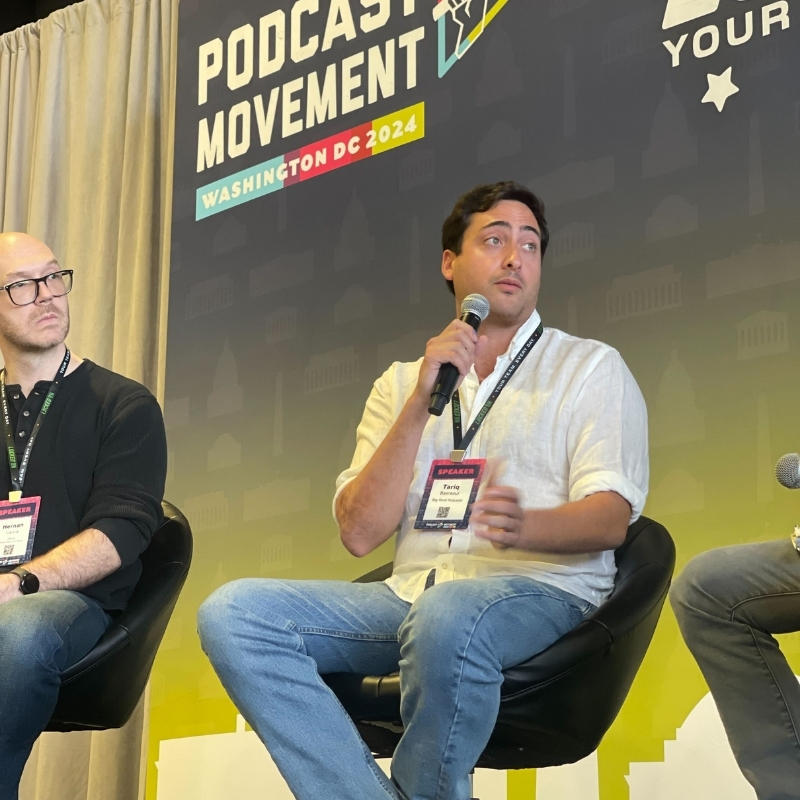
Tariq Basraoui
CEO
Tariq O’Keefe Basraoui, Co-Founder of Big Pond Podcasts, is a seasoned digital marketer and community builder with a track record of success at platforms like TikTok and Zencastr. Known for launching Zencastr’s Creator Network to over 15,000 members in 18 months, his expertise lies in growing user bases and enhancing brand engagement.
His strategic approach to growth and community engagement has established him as a leader in creating some of the fastest-growing media networks in podcasting.
