

Podcast Advertising Audience Targeting: A 2026 Guide
Effective podcast advertising audience targeting is about finding the specific listeners most likely to respond to your message, not just chasing raw download numbers. This means moving past broad categories and using precise data points like listener behavior, demographics, and real-world interests to place your ads within the most relevant shows. Success here means a higher return on ad spend because you’re reaching an engaged, self-selected niche audience that trusts the host and the content they consume.

Why Podcasts are a Goldmine for Audience Targeting
Podcasts offer a uniquely intimate and high-trust environment. Listeners choose their content, often based on very specific interests, creating pre-segmented audiences. This is where advertisers can connect with potential customers in a way that feels more like a recommendation than an interruption.
The Power of Niche, Engaged Audiences
Unlike broadcast radio, podcast listeners are not a passive mass audience. They are active participants who have sought out content that speaks directly to their passions, problems, or professions. A listener tuning into our own featured show, Business of Tech, is likely an IT professional or decision-maker, a far more qualified lead for a B2B tech product than a generic ad buy could ever deliver.
This self-selection creates incredible efficiency for advertisers. You aren’t paying to reach millions of people who will never be your customer. Instead, you are paying to reach the few thousand who are an exact match for your offer. According to a 2019 Edison Research study, there are over 90 million podcast listeners in the U.S. alone, a massive and diverse population segmented into thousands of niches.
Host Trust as a Conversion Multiplier
Host-read ads, in particular, benefit from the parasocial relationship listeners build with hosts. When a trusted host endorses a product, it carries the weight of a personal recommendation. This is not something you can replicate with a programmatic banner ad. The host’s credibility transfers directly to the brand, driving higher engagement and conversion rates.
Defining Your Ideal Podcast Listener
Before you spend a single dollar, you need to know exactly who you’re trying to reach. A spray-and-pray approach is a recipe for wasted budget. Building a detailed listener persona is the foundational step for any successful podcast advertising audience targeting strategy.
Building a Listener Persona
A listener persona is a semi-fictional representation of your ideal customer based on data and research. It should go far beyond basic demographics. What are their job titles? What are their hobbies? What other media do they consume? What problems keep them up at night?
Start with your existing customer data. Look for commonalities in age, location, profession, and interests. Supplement this with market research and social media listening to build a complete picture. This persona will be your north star for every targeting decision you make.
From Persona to Podcast Selection
With a clear persona in hand, you can start identifying the podcasts they are likely to listen to. If your persona is a “35-year-old marathon runner named Sarah who works in finance,” you can search for podcasts about running, personal finance, or even shows popular with ambitious female professionals. The more detailed your persona, the more precise your podcast selection will be. Platforms and agencies can help you find these shows, using your persona criteria to filter their networks.

Types of Audience Targeting Strategies
| Demographic Targeting | Psychographic Targeting | Behavioral Targeting | Contextual Targeting | |
|---|---|---|---|---|
| Definition | Targets based on age, gender, location, income. | Targets based on interests, values, lifestyle, personality. | Targets based on past actions, listening habits, app usage. | Targets based on podcast content, keywords, themes. |
| Data Source | Census data, user surveys, self-declared info. | Surveys, social media activity, purchase data. | Listening data, app analytics, web tracking. | Episode metadata, transcripts, show notes. |
| Precision Level | Broad | Moderate to High | High | High |
| Pros | Easy to implement, foundational. | Deep audience insight, emotional connection. | Highly relevant, active engagement. | Brand safety, direct relevance. |
| Cons | Generic, potential for stereotypes. | Data collection can be complex. | Privacy concerns, data availability. | Requires content analysis, can be too narrow. |
Once you know who your audience is, you need to choose the right method to reach them. Modern podcast advertising offers a range of targeting options, from broad demographic strokes to granular behavioral signals. Understanding these methods is key to optimizing your campaigns.
Demographic Targeting
This is the most basic form of audience targeting. It involves segmenting listeners based on quantifiable characteristics like age, gender, location, income level, and education. While it can be a good starting point, relying solely on demographics is a blunt instrument. It assumes everyone in a given demographic bucket thinks and behaves the same way, which is rarely true.
Psychographic & Interest-Based Targeting
Psychographic targeting goes a layer deeper, segmenting audiences based on their values, attitudes, lifestyles, and interests. This is where you can start to target based on a listener’s personality and motivations. For example, you could target listeners who have an interest in sustainability, outdoor adventures, or mindfulness. This is far more powerful than just targeting an age bracket. Some platforms derive this data from listening habits, surveys, and third-party data integrations.
Behavioral and Contextual Targeting
Behavioral targeting uses data about a listener’s past actions, such as their listening history, device usage, or even purchase behavior, to predict future interests. Contextual targeting, on the other hand, places ads within podcast episodes whose content is directly relevant to the ad. For example, a company selling running shoes could place an ad in a podcast episode specifically about marathon training. Our strategy for clients often involves a blend, from securing podcast sponsorships on relevant shows to dynamically inserting ads based on listener data.
The most effective campaigns don’t just target listeners. They target moments. Placing a meal-kit delivery ad in a podcast about busy working parents at 5 PM on a Tuesday is more powerful than just targeting an age group.
Key Advertising Platforms and Their Capabilities
The podcast advertising ecosystem includes a variety of platforms, each with its own targeting tools and inventory. Your choice of platform will depend on your budget, your target audience, and your campaign goals. Some platforms allow direct buys, while others focus on programmatic ad serving.
Direct Buys vs. Programmatic Platforms
Buying ads directly from a podcaster or their network gives you maximum control over placement and a close association with the host. This is ideal for host-read ads where authenticity is paramount. Programmatic platforms, like AudioGo, offer scale and efficiency, allowing you to buy ads across a wide range of podcasts using automated, data-driven targeting. Many advertisers use a mix of both. An AudioGo campaign can start with a budget as low as $250, making it accessible for testing.
Platform-Specific Targeting Features
Different platforms offer different levels of targeting granularity. Spotify Ads Manager, for example, which has a 4.4-star rating on Gartner Peer Insights, allows targeting based on listening habits, playlists, and a wealth of first-party user data from its massive user base. Acast offers advanced contextual targeting and allows advertisers to target listeners based on the specific conversation topics within an episode. At Big Pond, we help brands navigate these options to build a media plan that reaches their ideal customer across our network of over 1,300 podcasts.
Comparing Major Podcast Ad Platforms
| Feature | Direct Buy (via Network/Agency) | Programmatic (e.g., AudioGo) | Self-Serve (e.g., Spotify) |
|---|---|---|---|
| Primary Strength | Host trust, deep integration | Scale, efficiency, real-time bidding | Control, first-party data |
| Best For | Brand building, high-impact endorsements | Performance marketing, broad reach | Small businesses, granular testing |
| Targeting Basis | Show genre, host persona, audience survey data | Demographics, behavior, interests, contextual | Listening habits, playlists, fan base |
| Common Ad Format | Host-read (baked-in or dynamic) | Announcer-read pre/mid/post-roll | Announcer-read, dynamically inserted |
| Cost Model | Flat fee, CPM | CPM (auction-based) | CPM, Cost-per-listen |
The Role of Data and Analytics in Refining Strategy
Launching a campaign is just the beginning. The real work lies in measuring performance and optimizing your targeting over time. A data-driven approach is essential for maximizing your return on investment. Your ability to track results is a critical component of a successful campaign.
Key Metrics to Track
Beyond basic downloads, you need to track metrics that tie back to your business goals. These can include:
- Impressions/Reach: How many unique listeners heard your ad?
- Frequency: How many times did the average listener hear your ad?
- Click-Through Rate (CTR): For ads with a visual component (e.g., on a podcast app) or a clear call to action with a vanity URL.
- Conversion Rate: How many listeners took the desired action (e.g., made a purchase, signed up for a newsletter)? This is often tracked using promo codes or vanity URLs.
- Cost Per Acquisition (CPA): How much did it cost to acquire a new customer through the campaign?
Attribution and Measurement Tools
Podcast ad attribution has historically been a challenge, but tools are rapidly improving. Vanity URLs (e.g., yourbrand.com/podcast) and unique promo codes are simple and effective. More advanced solutions from providers like Chartable and Podsights use pixel-based tracking and other methods to measure ad exposure and subsequent website visits or purchases. These tools provide the data you need for a deeper understanding of podcast advertising success.
Continuous Optimization
Use your performance data to continually refine your targeting. If a particular podcast genre or audience segment is delivering a high CPA, shift your budget to better-performing areas. Test different ad creatives, calls to action, and landing pages. A/B testing is not just for digital ads; it’s a powerful tool for optimizing podcast campaigns as well.

The Financials of Targeted Podcast Advertising
Understanding the cost structure of podcast advertising is crucial for budgeting and for evaluating campaign performance. While pricing can vary widely, it’s generally based on a Cost Per Mille (CPM) model, meaning the cost per one thousand listeners.
Understanding CPM and Bidding
CPM rates are influenced by several factors: the size and engagement of the podcast’s audience, the ad placement (pre-roll, mid-roll, or post-roll), and the level of targeting involved. Broadly targeted campaigns on smaller shows might have a CPM in the $10-$25 range. Highly targeted ads on top-tier podcasts can command much higher rates. On our network, for instance, we see an average $22.35 Avg. 60-Sec CPM, which provides a solid benchmark for what quality, targeted inventory can cost. This data is essential when evaluating a podcast advertising strategy.
The ROI of Precision
While highly targeted campaigns may have a higher CPM, they often deliver a much better return on investment (ROI). Paying more to reach the right person is more efficient than paying less to reach a thousand wrong ones. The goal isn’t to find the cheapest ad slot; it’s to find the most profitable one. Precise targeting minimizes wasted ad spend and maximizes the impact of every dollar.
The biggest mistake in podcast advertising is treating it like a spreadsheet. A low CPM is worthless if the listeners aren’t a fit. I’d rather pay an $80 CPM to reach 1,000 chief technology officers than a $15 CPM to reach 10,000 random commuters.
Avoiding Common Pitfalls in Audience Targeting
Even with sophisticated tools, it’s easy to make mistakes. Awareness of common pitfalls can save you time, money, and frustration. From ethical missteps to strategic blunders, here are some key areas to watch.
The Ethics of Data and Listener Privacy
As targeting becomes more granular, the ethical implications grow. Advertisers and platforms have a responsibility to be transparent about what data they collect and how they use it. Relying on first-party data from listeners who have opted in is always preferable to using third-party data of dubious origin. Respecting listener privacy isn’t just good ethics; it’s good business. A brand that comes across as creepy or invasive will damage its reputation and alienate potential customers. A SiriusXM Media article highlights the importance of this trust.
Over-Targeting and Sacrificing Scale
While precision is important, it’s possible to be too specific. If you narrow your audience down to a handful of listeners, you sacrifice the scale needed to make a meaningful impact. It’s a balancing act. You need an audience that is both relevant and large enough to drive your desired business outcomes. Our network, with a 200M+ Monthly Listeners Reach, allows brands to find that sweet spot between niche relevance and significant scale.
Mismatching the Ad Creative to the Audience
The most precise targeting in the world won’t work if the ad itself doesn’t resonate. The creative must be tailored to the audience and the podcast’s tone. A formal, corporate-sounding ad will fall flat on a comedy podcast. A joke-filled ad might not land with a serious business audience. Always consider the context and craft your message accordingly.
FAQ
What is podcast advertising audience targeting?
Podcast advertising audience targeting is the process of identifying and reaching specific groups of listeners with your ads. This is done by using data like demographics, interests, listening behavior, and the podcast’s content to ensure the ad is heard by people most likely to be interested in the product or service.
How do I target a specific audience with podcast ads?
You can target specific audiences by choosing podcasts that cater to a particular niche, or by using advertising platforms that offer granular targeting options. These options can include demographics (age, gender), geography, psychographics (interests, lifestyle), and behavioral data (listening habits).
Which platforms offer the best podcast ad targeting?
Different platforms excel at different types of targeting. Spotify Ads Manager is strong for its first-party data on listening habits. Acast offers powerful contextual targeting capabilities based on episode content. Full-service platforms and agencies, like us at Big Pond, can create a custom media plan using a mix of direct buys and programmatic placements across various networks to achieve the best results.
What does audience targeting cost in podcasting?
The cost is typically based on a CPM (cost per thousand listeners) model. General audience CPMs might range from $10-$25, but this can increase significantly for highly-niched or in-demand audiences. While targeted campaigns have a higher CPM, they usually result in a better ROI by reducing wasted ad spend.
How is campaign success measured with targeted ads?
Success is measured using metrics like impressions, reach, frequency, and conversion rates. Tracking methods include vanity URLs, unique promo codes, and post-campaign surveys. More advanced attribution partners can also track pixel-based conversions to measure how many listeners visited a website or made a purchase after hearing an ad.
Ultimately, a successful podcast advertising strategy is built on a deep understanding of your ideal customer. By combining detailed persona work with the powerful targeting tools now available, you can cut through the noise and put your brand in the right ears. If you’re ready to build a campaign that truly connects with your target audience, reach out to our team and let’s talk about what’s possible.
About the author
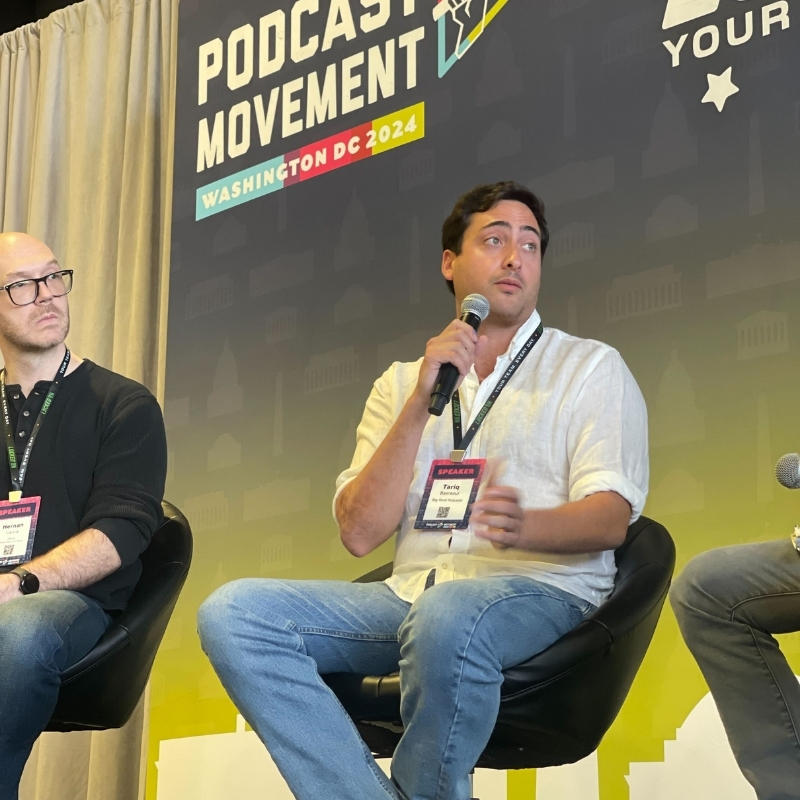
Tariq Basraoui
CEO
Tariq O’Keefe Basraoui, Co-Founder of Big Pond Podcasts, is a seasoned digital marketer and community builder with a track record of success at platforms like TikTok and Zencastr. Known for launching Zencastr’s Creator Network to over 15,000 members in 18 months, his expertise lies in growing user bases and enhancing brand engagement.
His strategic approach to growth and community engagement has established him as a leader in creating some of the fastest-growing media networks in podcasting.
