
Stop thinking a great microphone and a compelling story are enough. They aren’t. The best podcasts are built on a hidden scaffolding of software that automates the tedious work of production, distribution, and growth. These essential podcast management tools are what separates the hobbyist from the professional, and this guide explains which tools matter and why. The right stack automates tasks, provides critical audience data, and directly enables monetization, letting you focus on creating content instead of getting lost in administrative quicksand. It is the operational backbone of any serious show, especially when considering how businesses choose.

To create this list, we focused on tools that offer a clear return on investment, either through time saved or new revenue generated. We analyzed platforms based on their core function, integration capabilities, and scalability for growing shows. Our ranking prioritizes tools that solve the most significant bottlenecks podcasters face: chaotic production workflows, opaque audience analytics, and clumsy monetization processes.
1. Descript: For AI-Powered Audio & Video Editing
Descript changed the game by turning audio and video editing into a word processor. You edit the transcript, and the media files change automatically. This dramatically lowers the barrier to entry for creators who find traditional timeline-based editors like Audition or Pro Tools intimidating.
Its “Studio Sound” feature removes background noise and enhances voice quality with a single click. For teams, the collaboration features are a huge time-saver, allowing producers, editors, and hosts to comment and make changes within the same project. It’s an all-in-one solution that covers recording, transcription, editing, and even social clip creation.
- Best for: Creators who want to edit spoken-word content quickly without a steep learning curve.
- Watch out for: It’s resource-intensive on older computers and the subscription can be pricey for those on a tight budget. A report from 2023 noted the podcast advertising market is set to hit $4 billion in 2024, making efficient production more valuable than ever.
2. Buzzsprout: For Hosting and Distribution
Your podcast needs a home. A reliable hosting provider stores your audio files and generates the RSS feed that syndicates your show to directories like Apple Podcasts, Google Podcasts, and Overcast. Buzzsprout is a leader in this space because it combines a user-friendly interface with powerful features.
Their “Magic Mastering” feature is an impressive tool that automatically optimizes your audio files to meet industry loudness standards. They also provide some of the clearest analytics in the business, showing you what apps people use to listen, where they are from, and which episodes are most popular. This data is critical for understanding your audience and making informed content decisions. For an even deeper look at listener data, you might want to learn about what a good podcast analytics dashboard should offer.
- Best for: Podcasters of all levels, from beginners to established shows, who value simplicity and great support.
- Watch out for: The platform’s included free minutes per month are limited, so high-frequency publishers will need a paid plan. There are over 4.1 million podcasts listed, making discoverability a major challenge without proper distribution.
Don’t confuse a hosting platform with a production tool. Your host is the distribution engine; it ensures your content reaches listeners everywhere, but it won’t help you edit a single second of audio.
3. Zencastr: For High-Quality Remote Recording
Poor audio quality is one of the fastest ways to lose a listener. Zencastr solves the problem of recording remote interviews by capturing separate, high-fidelity audio and video tracks for each guest directly from their browser. This avoids the compressed, glitchy audio common with platforms like Zoom.
Each participant’s track is saved locally, so an unstable internet connection doesn’t ruin the recording. The platform now includes basic editing and post-production tools, including a soundboard for live effects. As co-founder of Big Pond Podcasts, my work building the Zencastr Creator Network to over 15,000 members showed me firsthand how vital reliable recording technology is for creators.
- Best for: Podcasters who frequently conduct remote interviews and prioritize pristine audio quality.
- Watch out for: It relies on guests using a compatible browser (like Chrome or Firefox) and having a decent microphone for best results. Remote work trends have made these tools essential; 55% of employees would prefer to be remote at least three days a week, a trend that extends to podcast guesting.
4. Headliner: For Social Media Promotion
Your podcast episode isn’t finished when you hit publish. You need to promote it. Headliner makes it incredibly simple to create short, shareable video clips from your audio to post on platforms like Instagram, TikTok, and LinkedIn.
It automatically transcribes audio snippets and overlays them as animated captions, which is crucial since many users watch social videos with the sound off. You can choose from various templates or create your own branded look. This is a non-negotiable tool for audience growth in 2026. This focus on promotion is key to our mission at Big Pond Podcasts, where we help creators monetize and grow podcasts by connecting them with the right audience.
- Best for: Any podcaster serious about using social media to attract new listeners.
- Watch out for: The free version includes a watermark, and rendering times can be slow during peak hours. 91% of businesses use video as a marketing tool, and podcasters are competing for that same attention.
5. Big Pond Podcasts: Essential Podcast Management Tools Explained for Monetization
Once you have an audience, you need a way to generate revenue. Big Pond Podcasts is a platform designed specifically for this. We connect podcasters with advertisers, streamlining the entire process from discovery to payment. This kind of tool is a vital part of the essential podcast management tools explained for any serious creator.
We focus on making monetization accessible and straightforward. Our platform helps with securing podcast sponsorships and managing brand deals and payouts, which are often the most complex and time-consuming tasks for independent creators. This lets you focus on your content while we handle the business side. For a look at what advertisers use on their end, you can check out our list of podcast ad tools.
- Best for: Podcasters ready to generate revenue through sponsorships and brand collaborations.
- Watch out for: Best suited for shows with an established and engaged listener base, as advertisers look for proven reach.
Monetization isn’t a switch you flip; it’s a system you build. It requires a dedicated tool that handles contracts, ad insertion, and payments, otherwise you’ll spend more time on admin than on creating.
Podcast Management Tools: A Comparison
| Tool | Primary Function | Best For | Key Feature |
|---|---|---|---|
| Descript | AI-Powered Editing | Fast-paced content creators | Edit audio by editing text |
| Buzzsprout | Hosting & Distribution | All levels, especially beginners | Magic Mastering & clear analytics |
| Zencastr | Remote Recording | Interview-based shows | Local, uncompressed recordings |
| Headliner | Social Promotion | Growth-focused podcasters | Audiogram & video clip creation |
| Big Pond Podcasts | Monetization | Shows ready for revenue | Sponsorship and brand deal management |
FAQ
Do I need all these tools to start a podcast?
No, you don’t need all of them on day one. To start, you need a microphone, recording software (like Audacity or Zencastr), and a hosting provider like Buzzsprout. Tools like Descript and Headliner become more valuable as you look to improve your workflow and grow your audience.
How much should I budget for podcast management tools?
Your budget can range from nearly zero to several hundred dollars per month. Many tools offer free starter plans (like Headliner and Zencastr) or affordable entry-level tiers (like Buzzsprout).
Can I use my website to host my podcast audio files?
While technically possible, it’s strongly discouraged. Standard web servers are not optimized for large media file delivery and lack the tools to create a compliant RSS feed for podcast directories. A dedicated podcast host ensures reliable downloads for your listeners and provides essential analytics that a website cannot.
At what point should I start thinking about monetization tools?
Start thinking about monetization once you have a consistent publishing schedule and a growing, engaged audience. Building a community first makes your show much more attractive for a platform like Big Pond Podcasts, which helps with managing brand deals and payouts.
What is the single most important tool for a new podcaster?
A reliable podcast hosting platform is the most critical tool. Without a host, you have no way to get your show onto Apple Podcasts, Google Podcasts, or any other listening app. It is the foundational piece of infrastructure upon which everything else is built.
How do I choose the right editing software?
Choosing the right editing software depends on your technical comfort and workflow. If you value speed and simplicity, a text-based editor like Descript is ideal. If you require advanced audio engineering capabilities, a traditional Digital Audio Workstation (DAW) like Adobe Audition or the free Audacity might be a better fit.
About the author
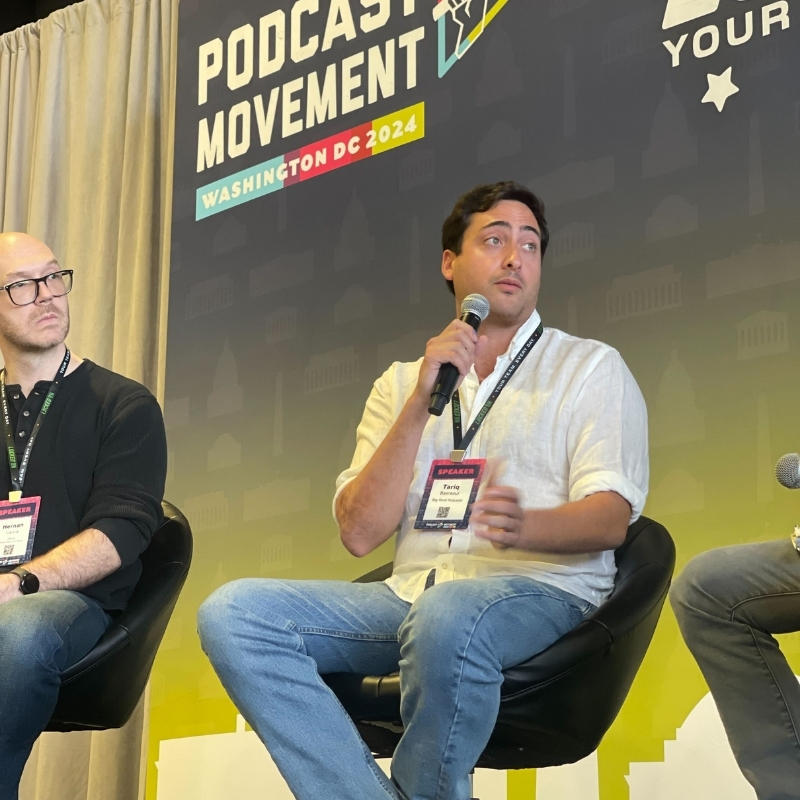
Tariq Basraoui
CEO
Tariq O’Keefe Basraoui, Co-Founder of Big Pond Podcasts, is a seasoned digital marketer and community builder with a track record of success at platforms like TikTok and Zencastr. Known for launching Zencastr’s Creator Network to over 15,000 members in 18 months, his expertise lies in growing user bases and enhancing brand engagement.
His strategic approach to growth and community engagement has established him as a leader in creating some of the fastest-growing media networks in podcasting.
