
Stop trying to make your podcast sound like everyone else’s. The biggest mistake creators make is chasing yesterday’s successful formats. In 2026, the path to growth isn’t about imitation; it’s about radical differentiation. Forget what you think you know about podcasting. The new podcast trends for 2026 are focused on hyper-niche communities, interactive audio experiences, and AI-driven content workflows. Success means moving from broad appeal to deep connection, transforming passive listeners into active participants through personalized content, dynamic monetization beyond simple ads, and building true communities around vertical topics, especially as podcast listenership grows to 500 million monthly globally.

The Rise of Vertical Podcasts and Niche Communities
| Attribute | Traditional Podcast | Vertical Podcast | |
|---|---|---|---|
| Audience Reach | Broad | Niche/Specific | |
| Content Focus | General/Diverse | Highly Specialized | |
| Community Engagement | Mass appeal | Deeply Engaged | |
| Monetization Strategy | Volume-driven ads | Premium/Community-focused | |
| Production Style | Standardized | Often Bespoke |
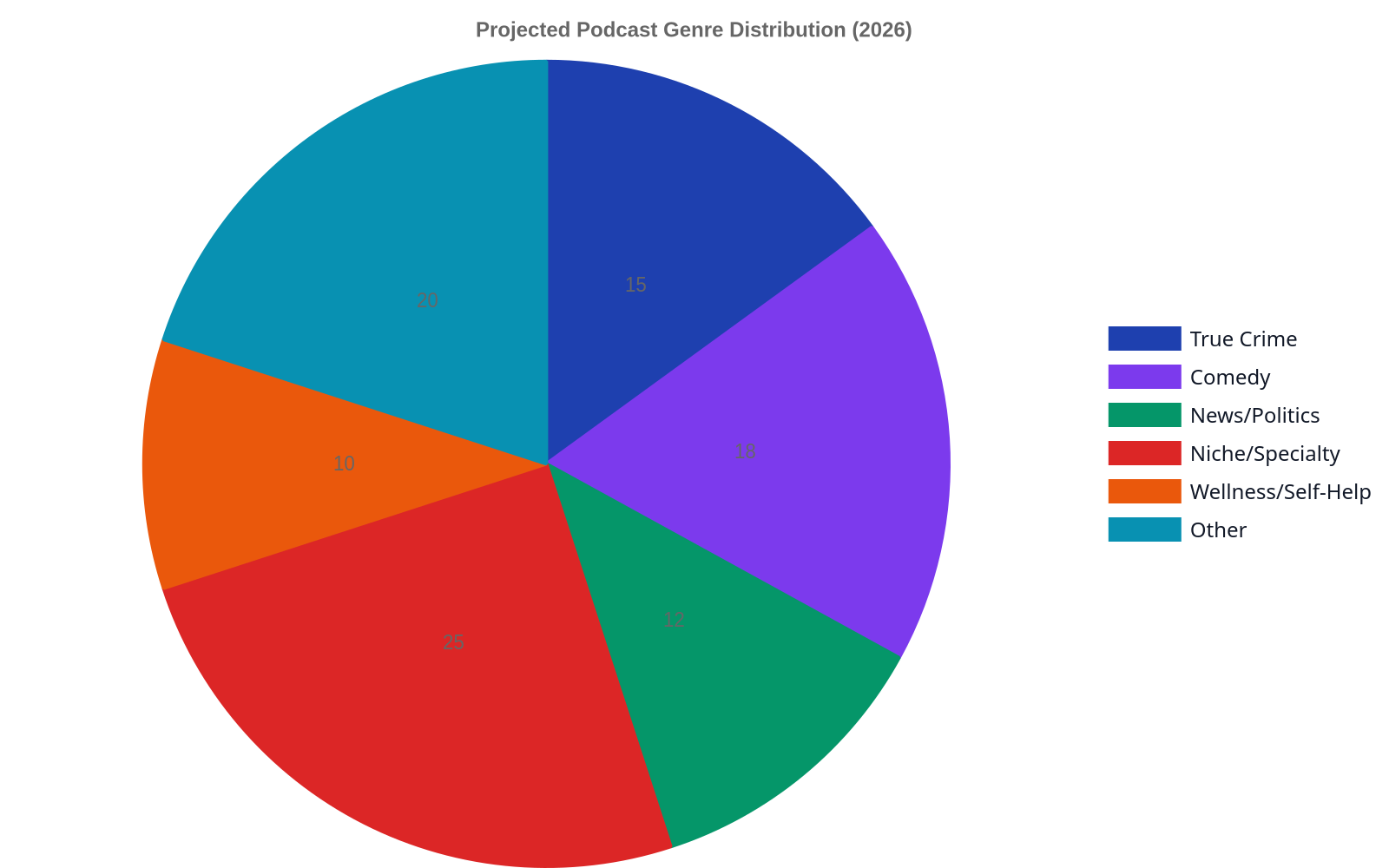
For years, the goal was to top the Apple Podcasts charts. This meant creating content with the broadest possible appeal. But as the market saturates, that strategy is delivering diminishing returns. The most significant of the new podcast trends 2026 is the pivot from broad to deep. It’s about “vertical podcasts”shows that go incredibly deep on a single, narrow topic for a highly specific, passionate audience.
From Broad Appeal to Hyper-Niche
Instead of a general “business” podcast, think “SaaS pricing strategies for B2B fintech companies.” Instead of a generic “true crime” show, imagine one focused exclusively on cold cases in the Pacific Northwest from the 1980s. This level of specificity is magnetic to a core audience. According to a 202543% of listeners actively seek out podcasts that cater to their specific hobbies and interests. That number is only going to grow. These hyper-niche shows build communities, not just audiences. They create a space where listeners feel understood and connected.
Building a Moat with Community
The defensibility of a vertical podcast isn’t its topic, but the community built around it. While anyone can start a podcast about knitting, it’s harder to replicate a thriving community that has its own inside jokes, terminology, and shared identity. Platforms like Discord, Geneva, and even private Slack channels are becoming integral parts of the podcast ecosystem. They provide a space for listeners to connect with each other and the host, transforming the podcast from a one-way broadcast into a two-way conversation. This is where real loyalty is forged. For a look at how to leverage these communities for revenue, our guide on podcast ad placement offers some key insights.
Monetizing the Micro-Audience
A smaller, more engaged audience is often more valuable than a large, passive one. Vertical podcasts excel at monetization because the audience is so clearly defined. An advertiser selling a specific type of fly-fishing reel knows that every single listener of “The Steelhead Angler” podcast is a potential customer. This allows for premium CPMs. Across our own network of over 1,300 shows, we see niche podcasts commanding higher ad rates than general interest shows with larger download numbers. It’s a shift from audience size to audience quality.
Generative AI in Content Creation
AI is no longer a futuristic concept; it’s a practical tool in the 2026 podcasting toolkit. But it’s not about replacing hosts. The real trend is using generative AI to augment and streamline the creative workflow, freeing up creators to focus on what they do best: creating compelling content and connecting with their audience.
AI for Ideation and Research
Staring at a blank page is the enemy of creativity. Generative AI tools like ChatGPT-4 and Perplexity AI can act as powerful brainstorming partners. You can feed them a topic and ask for potential episode angles, guest suggestions, or interview questions. They can summarize dense research papers or find obscure facts, cutting down research time from hours to minutes. For example, a history podcaster could ask an AI to generate a timeline of events for the Punic Wars, complete with key figures and sources, in seconds.
Automated Post-Production and Show Notes
Post-production is often the most time-consuming part of podcasting. Tools are emerging that can automate huge chunks of this process. AI-powered software can now remove filler words (“ums,” “ahs”), balance audio levels, and even generate a full transcript with speaker labels. Services like Descript have been pioneers here, but the 2026 landscape will see these features become standard. Furthermore, AI can take that transcript and automatically generate detailed show notes, a blog post summary, and social media posts, solving the content distribution problem for many creators.
Don’t fear AI taking your job. Fear creators who are skilled at using AI taking your audience. The advantage goes to those who adapt their workflow, not those who ignore the tools.
Synthetic Voices and Dynamic Content
This is where things get really interesting. High-quality synthetic voice cloning is now accessible. While ethical considerations are paramount, this technology opens up new possibilities. Imagine being able to fix a misspoken sentence in post-production by simply typing the correct words. Or consider creating dynamically inserted ads in your own voice, tailored to the listener’s location or interests, without having to record hundreds of variations. The technology for this is here, and it’s becoming a key part of the professional podcaster’s arsenal. Projects the global voice and speech recognition market to reach $53.8 billion by 2026, a clear indicator of the investment pouring into this space.

Interactive and Personalized Audio Experiences
The one-size-fits-all, linear listening experience is starting to feel dated. The next evolution in audio is making it interactive and personalized. Listeners are no longer content to be passive consumers; they want to be part of the story. This is a core component of the new podcast trends 2026.
Choose-Your-Own-Adventure Audio
Remember those “Choose Your Own Adventure” books? That concept is coming to podcasts. Using chapter markers and linking capabilities within podcast players, creators can build branching narratives. A true crime podcast could let the listener decide which lead to follow next. A business podcast could let the user choose to hear a deep dive on a specific topic or skip to the next section. This transforms a monologue into a dialogue, dramatically increasing listener engagement and time spent with the content.
Dynamic Content Insertion
Dynamic Ad Insertion (DAI) has been around for a while, but the trend is moving beyond just ads. Imagine a podcast that greets you by name. Or one that references your local weather in the introduction. By using data points (with user consent), podcasts can become personalized experiences. A fitness podcast could deliver different training tips based on the listener’s stated goals. This technology makes the content feel more relevant and personal, fostering a much stronger connection between the host and the listener.
Listener Participation as Content
This trend closes the loop between creator and community. Instead of just reading listener emails, hosts are integrating audience contributions directly into the fabric of their shows. Tools that allow listeners to easily record and submit high-quality audio questions or stories are becoming popular. Shows like “My Favorite Murder” have built a massive following by incorporating listener-submitted “hometown” stories. This not only provides a steady stream of content but also gives the community a real sense of ownership over the show.
Monetization Evolution: New Revenue Streams
For too long, podcast monetization has been a one-trick pony: sell ads. While advertising remains a crucial revenue stream, relying on it alone is a risky strategy. The smartest creators in 2026 are building diversified revenue models that are more resilient and often more lucrative.
Programmatic vs. Host-Read Ads
The debate over programmatic (automated) versus host-read ads continues, but the trend is towards a hybrid approach. Programmatic ads are great for filling unsold inventory, but they lack the authenticity that makes podcast advertising so effective. Host-read ads, where the host personally endorses a product, deliver much higher ROI for advertisers. Host-read ads drive significantly higher brand recall and purchase intent. Our own data backs this up, with our network average for a 60-second host-read spot sitting at a $22.35 CPM. The future is dynamic, host-read ads, which combine the authenticity of a personal endorsement with the targeting of programmatic technology.
Direct Listener Support
The creator economy has shown that fans are willing to pay for content they love. This is a massive opportunity for podcasters. Moving beyond simple donation buttons, platforms like Patreon, Memberful, and even YouTube’s Channel Memberships allow creators to offer premium content in exchange for a monthly subscription. This could include ad-free episodes, bonus content, early access, or community features. It provides a predictable, recurring revenue stream that is decoupled from download numbers.
Affiliate Marketing and Direct Commerce
Why send your listeners to someone else’s product when you can sell them your own? Many podcasts are evolving into full-fledged media brands with their own product lines. This could be anything from merchandise (t-shirts, mugs) to digital products (courses, ebooks) or even physical products related to the podcast’s niche. Affiliate marketing is another powerful tool. By recommending products and services they genuinely use and believe in, hosts can earn a commission on sales. This is often more profitable and authentic than running traditional ads.
Relying on a single revenue stream is like building a house with only one wall. The savviest creators in 2026 are building a diversified financial foundation with direct support, affiliate income, and advertising.
The Changing Landscape of Audio Discovery
How do listeners find new podcasts? For years, the answer was “the charts” or “word of mouth.” But this is changing rapidly. As the number of podcasts explodes (there are over 3 million active shows ), discovery is becoming a major challenge. The new podcast trends 2026 show a shift towards more algorithmic and social discovery.

Algorithmic Recommendations
Platforms like Spotify and YouTube Music are investing heavily in algorithmic recommendations. Their goal is to surface content they think you’ll like, based on your listening history. This makes having a well-defined niche and consistent metadata (show notes, titles, keywords) more important than ever. If the algorithm understands what your show is about, it can recommend it to the right people. This is a departure from the old model of simply trying to get featured on a curated list.
The Rise of “Pod-Clipping” on Social Media
Short-form video platforms like TikTok, Instagram Reels, and YouTube Shorts have become powerful podcast discovery engines. Creators are finding huge success by taking short, compelling clips from their episodes and turning them into shareable videos. A 60-second clip of a powerful emotional moment or a shocking revelation can go viral, driving thousands of new listeners to the full episode. This visual-first approach to audio discovery is a fundamental shift in how podcasts are marketed.
Cross-Promotion and Collaboration
One of the most effective growth strategies has always been collaboration. This trend is accelerating as creators realize it’s better to grow the entire pie than to fight over their slice. This goes beyond simple guest swaps. We’re seeing more co-hosted series, feed drops (where one podcast features an episode from another), and collaborative projects. It’s a powerful way to tap into an adjacent, engaged audience. Building these relationships is a key part of our strategy at Big Pond Podcasts, where we help our 1,300+ shows find promotional partners within our network to reach a collective audience of over 200 million monthly listeners.
Comparison of Podcast Trends: 2023 vs. 2026
To see how far we’ve come, it’s useful to compare the dominant strategies from a few years ago with the emerging trends of 2026.
| Feature | Typical Approach (c. 2023) | Emerging Trend (2026) |
|---|---|---|
| Audience Strategy | Broad appeal, general topics | Vertical focus, hyper-niche communities |
| Content Format | Linear, one-way broadcast | Interactive, branching narratives, personalized |
| Production Workflow | Manual editing, separate transcription | AI-assisted editing, automated show notes, voice cloning |
| Primary Monetization | Single revenue stream (programmatic ads) | Diversified: Direct support, affiliate, host-read ads |
| Discovery Method | Chart-chasing, word of mouth | Algorithmic recommendation, social media clips |
| Community | Passive listener base, social media page | Active, integrated communities (Discord, Geneva) |
FAQ
What is the biggest new podcast trend for 2026?
The single most important trend is the shift from broad appeal to vertical niches. Instead of trying to be for everyone, successful podcasts will cater to a specific, passionate community. This focus allows for deeper engagement, more loyal listeners, and better monetization opportunities through targeted advertising and direct support.
How will AI change podcasting?
AI will primarily act as a co-pilot for creators, not a replacement. It will automate time-consuming tasks like editing filler words, generating transcripts, and creating show notes. This frees up creators to focus on research, storytelling, and community engagement. We’ll also see more use of AI for personalized content and dynamic ad insertion.
Is it too late to start a podcast in 2026?
It’s too late to start a generic, unfocused podcast. However, it’s the perfect time to start a vertical podcast that serves a specific, underserved niche. The barrier to entry on a technical level is lower than ever, and the tools for building a community and monetizing are more powerful. Success is no longer about being first; it’s about being different and better for a defined audience.
What are the best ways to monetize a podcast in 2026?
The best strategy is a diversified one. Don’t rely solely on one income stream. A healthy monetization mix includes high-value, host-read advertising, direct listener support through platforms like Patreon, affiliate marketing for relevant products, and potentially selling your own products or services. As a platform dedicated to helping creators monetize and grow podcasts, we see this multi-pronged approach as the most sustainable path.
How important is video for podcasts now?
Video is becoming increasingly critical, but not necessarily in the way people think. While full video episodes on YouTube are popular, the bigger trend is using short video clips (“pod-clips”) on platforms like TikTok and Instagram Reels for discovery. A visually engaging clip is one of the most effective ways to attract new listeners to your audio-first show.
Podcasting in 2026 is more exciting and more competitive than ever. The creators who succeed will be those who embrace these new trends. They will build deep, meaningful connections with a niche audience, use technology to their advantage, and diversify their revenue streams. The opportunity to build a powerful media brand from your passion has never been greater. If you’re ready to take your podcast to the next level, we’re here to help you navigate the future of audio.
Related reading
About the author
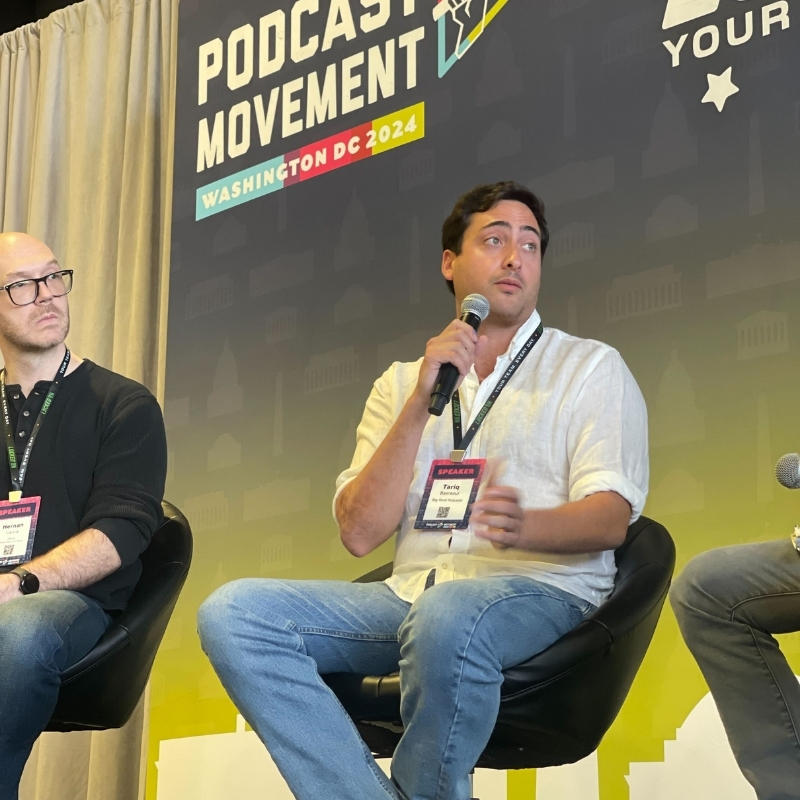
Tariq Basraoui
CEO
Tariq O’Keefe Basraoui, Co-Founder of Big Pond Podcasts, is a seasoned digital marketer and community builder with a track record of success at platforms like TikTok and Zencastr. Known for launching Zencastr’s Creator Network to over 15,000 members in 18 months, his expertise lies in growing user bases and enhancing brand engagement.
His strategic approach to growth and community engagement has established him as a leader in creating some of the fastest-growing media networks in podcasting.
