
How to Find and Vet Brand Podcast Collaboration Opportunities
Choosing the wrong podcast partner can cost more than just your budget. A mismatched collaboration can dilute your brand message, alienate a host’s core audience, and generate zero meaningful return, forcing you to write off tens of thousands of dollars and months of effort. The best brand podcast collaboration opportunities are built on strategic alignment, not just audience size. They require vetting multiple criteria to ensure the partnership strengthens both the brand and the podcast.

1. Audience Alignment and Demographics
This is the most critical factor. Pouring your message into the wrong ears is a complete waste of resources. You aren’t just buying access to a number of downloads; you are renting the trust a host has built with a specific community. If that community doesn’t match your ideal customer profile, the message, no matter how compelling, will fall flat.
To check this, go beyond the podcast’s stated category. Request a detailed audience survey or media kit that breaks down listener age, location, interests, and professional roles. A 2023 HBR article highlights how social media can be used to analyze a potential partner brand’s audience. A good partner can provide this data without hesitation.
2. Host Authenticity and Influence
Listeners choose podcasts for the host. Their voice, personality, and credibility are the foundation of the relationship. A host who genuinely uses and believes in a product creates an endorsement that feels like a recommendation from a trusted friend, which is far more powerful than a scripted ad read. This is a core part of our mission to help you grow your brand.
To vet this, listen to at least three back episodes, specifically focusing on how they handle other brand mentions or ads. Do they sound engaged and natural, or are they just reading a script? Look for hosts who integrate sponsorships into their content seamlessly.
The best host-read ads don’t sound like ads at all. They sound like a genuine, off-the-cuff recommendation from someone the listener trusts. That’s what you’re paying for.
3. Engagement Metrics, Not Just Downloads
Download numbers are often a vanity metric. A show with 50,000 downloads but a passive, unengaged audience is less valuable than a show with 10,000 highly engaged subscribers who actively participate in a community. High engagement signals a loyal, attentive audience that is more likely to act on a host’s recommendation. Across our network of over 1300+ podcasts, we see this correlation daily.
Ask for more than just download stats. Inquire about listener retention rates from episode to episode, social media engagement on posts about the podcast, and community activity in places like a Discord server or Facebook group. A podcast with a thriving community is a hotbed for brand advocacy. A recent study on podcasting partnerships underscores this focus on engagement over sheer numbers.
4. Content Quality and Production Value
Poor audio quality, inconsistent editing, or rambling, unstructured content can make a podcast unlistenable. Associating your brand with a low-quality production reflects poorly on you. It suggests a lack of care and professionalism, which listeners will transfer to your brand by association. This is why we help creators monetize and grow their podcasts with an eye on quality.
Listen for clear audio, minimal background noise, and professional editing. Is the conversation focused and valuable, or does it meander without a point? A well-produced show demonstrates the creator’s commitment, suggesting they’ll bring the same level of professionalism to your brand collaboration.
5. Collaboration Flexibility and Creativity (The Overlooked Criterion)
Many brands focus exclusively on pre-roll or mid-roll ad slots because they are easy to measure. This is a mistake. The true power of podcasting lies in creative, custom integrations that feel like part of the show, not an interruption. This criterion gets overlooked because it requires more upfront creative work than just supplying ad copy.
Discuss potential collaboration types beyond a simple ad read. Could you co-create a special bonus episode, host a joint webinar for both of your audiences, or create a unique product bundle? A partner who is open to and excited by these ideas is one who understands the medium. A partner who only wants to talk about their CPM for a 30-second spot is thinking like a radio station, not a modern creator.
Questions to Ask Before You Commit
Before signing any contract, get direct answers to these questions. The responses are as important as the numbers in their media kit.
- Can you share your most recent audience survey or demographic breakdown?
- What are your average episode downloads within the first 30 days?
- What is your listener retention rate from one episode to the next?
- Can you provide a case study or results from a previous brand collaboration?
- Who is your target listener, and what problem do you solve for them?
- How do you measure audience engagement beyond downloads?
- What types of collaboration formats are you open to (e.g., guest swaps, co-created content)?
- What is your process for integrating a brand partner into an episode?
- Do you have a standard rate card, and what factors influence your pricing?
- What are the terms of your standard partnership agreement?
- How do you handle performance tracking and reporting?
Red Flags to Watch For
Spotting warning signs early can save you from a failed campaign.
- Vague or Missing Data: If a podcaster can’t provide clear data on their audience demographics or engagement, they either don’t know their audience or have something to hide.
- No Previous Partnerships: While not a deal-breaker for a new show, a complete lack of experience with brand deals means you will be doing all the teaching.
- Poor Communication: A potential partner who is slow to respond, misses meetings, or provides evasive answers during the vetting process will likely be difficult to work with.
- Misaligned Values: If the host’s tone, language, or views clash with your brand identity, the association can cause brand damage regardless of the audience size. As HBR notes, collaborating with competitors can work, but only with extreme strategic alignment.
- Focus Only on Money: A creator who only asks about budget and never about your brand goals is a mercenary, not a partner. They won’t go the extra mile to ensure your success.
A Decision Framework for Choosing a Partner
Don’t give every criterion equal weight. Adjust your scoring based on your primary campaign goal. Use this simple scorecard:
- If your priority is immediate sales or lead generation: Weight Audience Alignment (1) and Host Authenticity (2) highest. A perfect demographic match with a trusted host is the fastest path to conversion.
- If your priority is brand awareness and reach: Weight Audience Alignment (1) and Engagement Metrics (3) highest. You need to ensure your message is reaching an active and attentive audience, even if they don’t convert immediately.
- If your priority is content creation and thought leadership: Weight Content Quality (4) and Collaboration Flexibility (5) highest. You are looking for a creative peer who can help you produce valuable content that showcases your expertise.
Finding the right brand podcast collaboration opportunities is about finding a true partner. It requires looking beyond the numbers to find a creator who can authentically connect your brand with their audience. The work you put into vetting will pay for itself in campaign performance and brand lift. For more insights on financial arrangements, explore our tips for podcast brand deals.
FAQ
What are the main types of brand podcast collaborations?
The most common types are host-read ads, sponsored episodes, and affiliate marketing. However, deeper collaborations can include co-creating an entire series, guest appearances by brand experts, and joint venture content where both parties promote a shared product or event.
How do I find podcasts to partner with?
You can use podcast directories and charts, but a more targeted approach involves searching social media for conversations in your niche or using a marketplace. A podcast sponsorship opportunities marketplace connects brands directly with vetted podcasts that are actively seeking partners, saving significant time.
What are typical costs for a podcast sponsorship?
Costs vary dramatically based on audience size, engagement, and ad format. Pricing is often quoted in CPM (cost per mille, or 1,000 listeners), which can range from $18 to $50. However, many smaller or niche podcasts will negotiate a flat fee per episode, which might be a few hundred to several thousand dollars.
How do you measure the ROI of a podcast collaboration?
Direct ROI can be tracked with unique promo codes, custom landing pages (URLs), or post-purchase surveys asking customers where they heard about you. Indirect ROI is measured through metrics like brand mention lift on social media, growth in branded search traffic, and overall audience growth during the campaign.
What legal considerations are there for podcast partnerships?
Always have a formal agreement or contract in place. It should clearly define the scope of work (number of episodes, ad placement), content approval processes, payment terms, usage rights for the content, and disclosure requirements (e.g., FTC guidelines for endorsements). These contracts are key to mitigating risk as detailed in some partnership analyses.
About the author
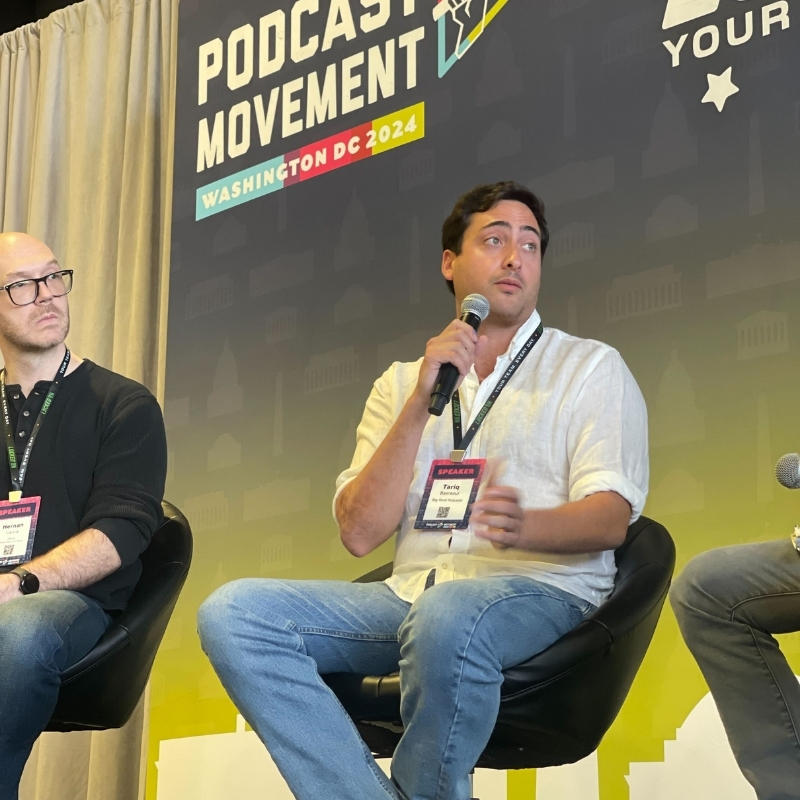
Tariq Basraoui
CEO
Tariq O’Keefe Basraoui, Co-Founder of Big Pond Podcasts, is a seasoned digital marketer and community builder with a track record of success at platforms like TikTok and Zencastr. Known for launching Zencastr’s Creator Network to over 15,000 members in 18 months, his expertise lies in growing user bases and enhancing brand engagement.
His strategic approach to growth and community engagement has established him as a leader in creating some of the fastest-growing media networks in podcasting.
