
Picking the wrong podcast sponsorship platform costs more than just a subscription fee. It costs you wasted hours pitching to unresponsive brands, deals that undervalue your audience, and worst of all, months of stagnant growth. A great podcast sponsorship opportunities marketplace connects you with relevant advertisers efficiently. The right platform should streamline discovery, negotiation, and payment, letting you focus on creating content instead of chasing invoices. For sponsors, finding the right tools is just as crucial; discover the best podcast platform for sponsors to maximize your ROI. It’s a direct line to sustainable revenue, not just a directory of names.
1. Quality and Relevance of Opportunities
This is the most critical factor. A marketplace with thousands of brands is useless if none of them are a good fit for your show. You need partners who align with your content and whose products will resonate with your listeners. A mismatch here leads to low conversion rates for the advertiser and can erode the trust you’ve built with your audience. I’ve seen shows with incredible engagement fail to monetize because they were on platforms that only served massive, generic brands.
How do you check this? Before committing, browse the live opportunities. Look for brands in your niche or in adjacent ones. For instance, a podcast about sustainable living should see brands related to eco-friendly products, not just a random assortment of mobile games and meal kits. Many platforms allow some level of browsing before you sign up; if they don’t, that’s a red flag. To effectively buy podcast ad slots, you need to assess audience, ad format, placement, and other key metrics. A 2024 report from Sounds Profitable highlighted that brand suitability and contextual alignment are top priorities for advertisers, so a good marketplace must facilitate this.
2. Monetization Tools and Payout Management
Getting a “yes” from a sponsor is only half the battle. The other half is the administrative headache: generating insertion orders, tracking campaigns, invoicing, and chasing payments. A top-tier podcast sponsorship opportunities marketplace should handle this for you. We believe in taking the stress out of getting paid, which is why we focus on **managing brand deals and payouts** for creators. Your job is to make a great podcast, not to be an accounts receivable department. For those looking to buy ad slots, understanding pricing models is key.
Look for platforms with integrated payment processing. Do they handle invoicing automatically? What are the payout terms? A platform that holds your money for 60-90 days is a financing company, not a partner. Check their fee structure carefully. Is it a percentage of the deal, a flat subscription fee, or a mix? A transparent fee structure is non-negotiable. According to a recent Insider Intelligence forecast, podcast ad spending is projected to surpass $3 billion, and effective platforms ensure creators get their fair share of that pie without unnecessary delays or hidden costs.
3. Data and Analytics Access
Sponsors don’t buy on vibes; they buy on data. You need to be able to provide clear, verifiable metrics about your audience. A worthwhile marketplace will offer robust analytics that go beyond simple download numbers. This includes listener demographics (age, gender, location), consumption data (average listening time, drop-off points), and campaign-specific metrics (ad impressions, click-through rates for dynamically inserted ads).
When evaluating a platform, ask for a demo of their analytics dashboard. Can you easily export reports to share with potential sponsors? Does the platform provide the kind of granular data that justifies your ad rates? A platform that only shows top-level download stats is not equipped for the modern advertising landscape. Advertisers want to know exactly who they are reaching. Platforms that make this easy, like we do for our network of over 1,300+ podcasts, give you a significant advantage when it comes to securing podcast sponsorships.
Understanding Podcast Advertising Costs: CPMs Explained
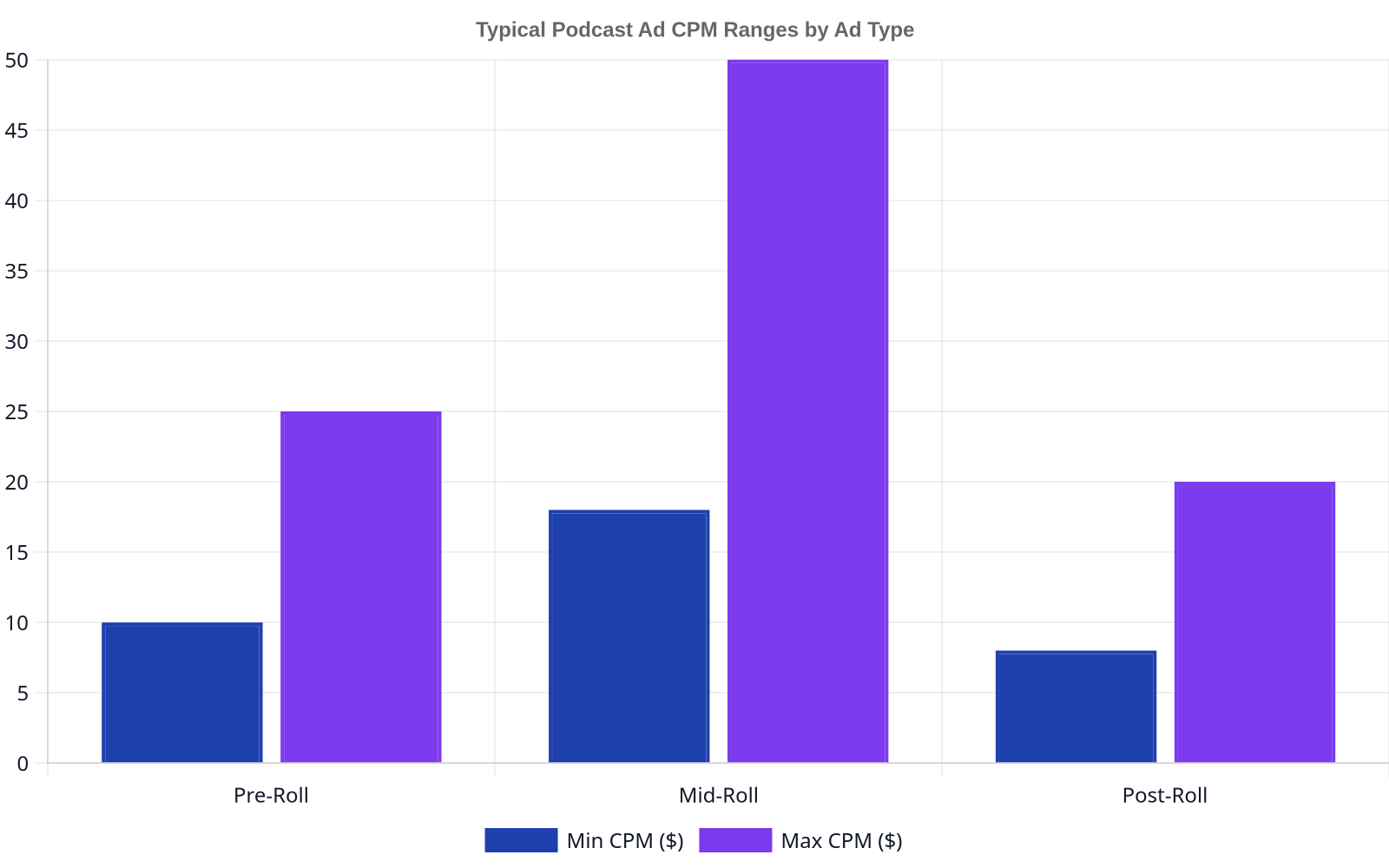
CPM, or “cost per mille,” means cost per thousand listeners. It’s the standard pricing model in podcast advertising. For example, a $25 CPM means an advertiser pays $25 for every 1,000 downloads an episode receives. A quality marketplace will help you set and justify a competitive CPM based on your audience size, engagement, and niche. For a deeper look at setting your rates, our guide on crafting a crafting a podcast sponsorship proposal is a great place to start.
Don’t fall into the trap of thinking a lower CPM is more attractive. Premium, niche audiences often command higher CPMs because they offer more targeted value to the right sponsor.
4. Control Over Ad Placements (The Overlooked Criterion)
Many podcasters focus so much on finding a sponsor that they forget to consider how the ads will actually be implemented. This is a huge mistake. Does the marketplace lock you into specific ad formats, like only pre-roll or mid-roll? Can you approve every advertiser and piece of creative before it goes live on your show? You must retain creative control.
This gets overlooked because it feels like a “later” problem. It’s not. An ad that doesn’t match your show’s tone can be jarring for listeners. Host-read ads drive significantly higher brand recall and purchase intent because they feel authentic. If a marketplace’s system strips that authenticity away by forcing generic, pre-produced ads into your episodes, it’s devaluing your greatest asset: your voice and connection with your audience.
5. Support and Educational Resources
Your first sponsorship deal can be intimidating. A good platform doesn’t just list opportunities; it helps you succeed. Look for a podcast sponsorship opportunities marketplace that provides resources like pitch templates, media kit examples, and guides on negotiation. This is especially important for emerging creators who are still learning the ropes of monetization.
What does their support look like? Is it just a generic email address, or do you have access to actual people who understand the industry? As someone who helped build a creator network to over 15,000 members, I know that community and support are not just nice-to-haves; they are essential for growth. Check if the platform has a community forum, webinars, or a dedicated account manager. These resources are invaluable and signal that the company is invested in your success, not just in taking a cut of your revenue. You can find more strategies for finding the right partners in our post about niche podcast advertising.
Questions to Ask Before You Commit
Before signing up for any podcast sponsorship opportunities marketplace, get clear answers to these questions:
- Can I see a list of active brand campaigns before I join?
- What percentage of your listed podcasters have successfully monetized in the last six months?
- What is your exact fee structure (subscription, commission, or both)?
- What are your standard payout terms and methods?
- What specific audience data and analytics will I have access to?
- Can I refuse a sponsorship deal if the brand isn’t a good fit?
- Do I have final approval over all ad creative that runs on my show?
- Do you support both baked-in host-reads and dynamically inserted ads?
- What happens to my contracts if I decide to leave your platform?
- What educational resources do you provide to help me create better pitches?
Red Flags to Watch Out For
- Guaranteed Income Promises: No platform can guarantee you a specific income. Success depends on your show, your audience, and your niche.
- Opaque Fees: If you can’t get a straight answer on how they make money, walk away.
- Lack of Vetting: A platform that lets any podcaster or any brand join is a red flag. Quality control is a sign of a serious marketplace.
- Exclusivity Clauses: Be very wary of any contract that requires you to work exclusively with one platform, especially when you are starting out.
A Simple Decision Framework
Choosing the right platform isn’t about finding a “perfect” one, but the one that’s right for your show now. Use this weighting to guide your choice:
- If your priority is finding your very first sponsor: Weight Criterion #1 (Quality of Opportunities) and #5 (Support/Resources) the highest. You need relevant brands and the help to land one.
- If your priority is scaling your revenue: Weight Criterion #2 (Monetization Tools) and #3 (Data/Analytics) the highest. Efficiency and powerful data are key to managing multiple deals and proving your value at a higher price point.
- If your priority is protecting your brand and listener experience: Weight Criterion #4 (Control Over Ad Placements) highest. You’ve built trust with your audience; don’t let a bad platform ruin it.
Ultimately, a podcast sponsorship opportunities marketplace is a tool to help you monetize and grow your podcast. Choose a partner that respects your work and provides the infrastructure you need to thrive.
FAQ
How many downloads do I need to get a sponsor?
There is no magic number. Focus on audience fit first.
What is a typical commission for a podcast sponsorship marketplace?
Some platforms may also charge a monthly or annual subscription fee in addition to, or instead of, a commission. Always clarify the full fee structure before signing up.
Can I work with multiple sponsorship platforms at once?
This depends on the platform’s terms of service. Many platforms operate on a non-exclusive basis, allowing you to source deals from multiple places. However, some may require exclusivity. It’s a critical question to ask upfront, as non-exclusive arrangements give you the most flexibility.
What’s the difference between a sponsorship and affiliate marketing?
A sponsorship is typically a flat-fee or CPM-based payment for a set number of ad reads. Affiliate marketing is a performance-based model where you earn a commission for every sale or lead generated through your unique link or code. Many podcasters use a mix of both.
How long does it take to get a sponsorship through a marketplace?
It varies widely. It could take a few days if your show is a perfect fit for an active campaign, or it could take months. Success depends on your show’s niche, audience size, the quality of your pitch, and the inventory of available campaigns on the platform. A report by Libsyn noted that consistent publishing and a clear niche can speed up the process.
About the author
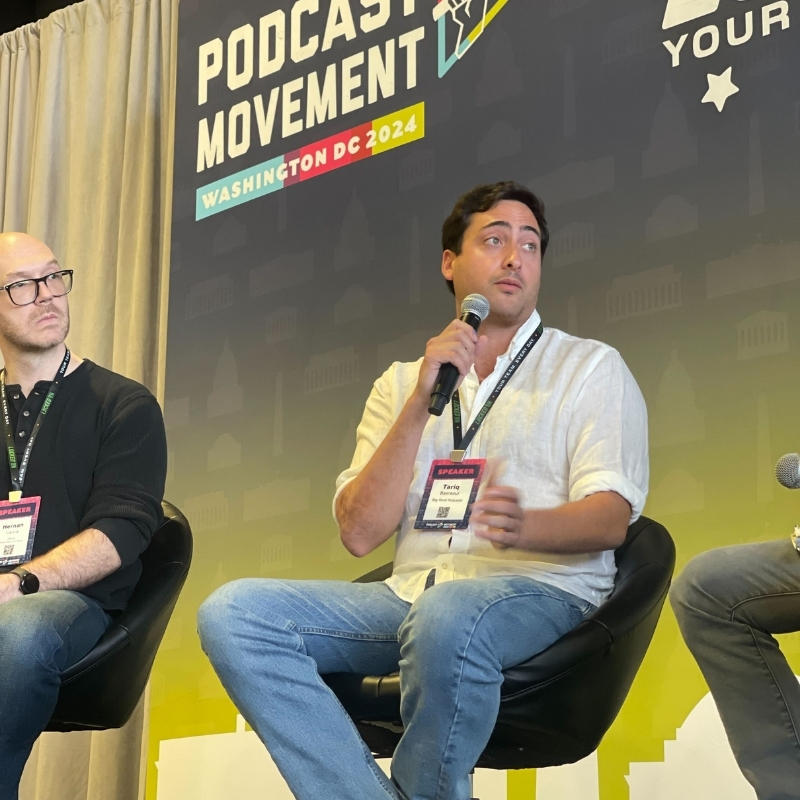
Tariq Basraoui
CEO
Tariq O’Keefe Basraoui, Co-Founder of Big Pond Podcasts, is a seasoned digital marketer and community builder with a track record of success at platforms like TikTok and Zencastr. Known for launching Zencastr’s Creator Network to over 15,000 members in 18 months, his expertise lies in growing user bases and enhancing brand engagement.
His strategic approach to growth and community engagement has established him as a leader in creating some of the fastest-growing media networks in podcasting.
