The Only Podcast Ad Copy Examples That Actually Work in 2026
Most podcast ads are just bad radio spots shoehorned into a new medium. They interrupt, they blare, and they get skipped. Effective podcast ad copy doesn’t sell a product; it solves a problem, tells a story, and respects the listener’s trust in the host. The best examples are authentic, integrated, and offer genuine value, often read by the host themselves. This transforms an interruption into a recommendation from a trusted friend, driving recall and action without alienating the audience you’ve worked so hard to build. To understand more about what a podcast ad is, including its format, costs, and campaign structure, explore our detailed guide.
Over our time working with 1300+ podcasts, we’ve seen firsthand that the right ad strategy is a critical part of a creator’s ability to monetize and grow their show. The wrong copy doesn’t just fail to convert; it actively harms the listener experience. A shocking number of brands still get this wrong.
Why Most Podcast Ad Copy Fails
The core issue is a misunderstanding of the medium. Listeners choose podcasts for connection and niche content. A generic, pre-produced ad with loud sound effects and a corporate announcer voice shatters that intimate connection. It signals “this is an advertisement,” and listeners tune out. More than 90% of regular podcast listeners multitask while tuning in, meaning your ad needs to capture attention without being jarring.
Another major failure point is a script that talks at the listener instead of with them. It lists features without benefits. It uses corporate jargon. It lacks a clear, compelling call-to-action that feels natural for a podcast environment.
Preparing for Your Podcast Ad Campaign
Before you write a single word, you need a plan. First, define your target audience with extreme precision. Who are they, and what podcasts do they trust? This is fundamental to finding the right shows to advertise on.
Next, determine your goal. Is it brand awareness, lead generation, or direct sales? Your objective dictates the entire structure of the ad. A brand awareness ad might be a short, story-driven mid-roll, while a direct sales ad needs a strong offer and a simple vanity URL or promo code.
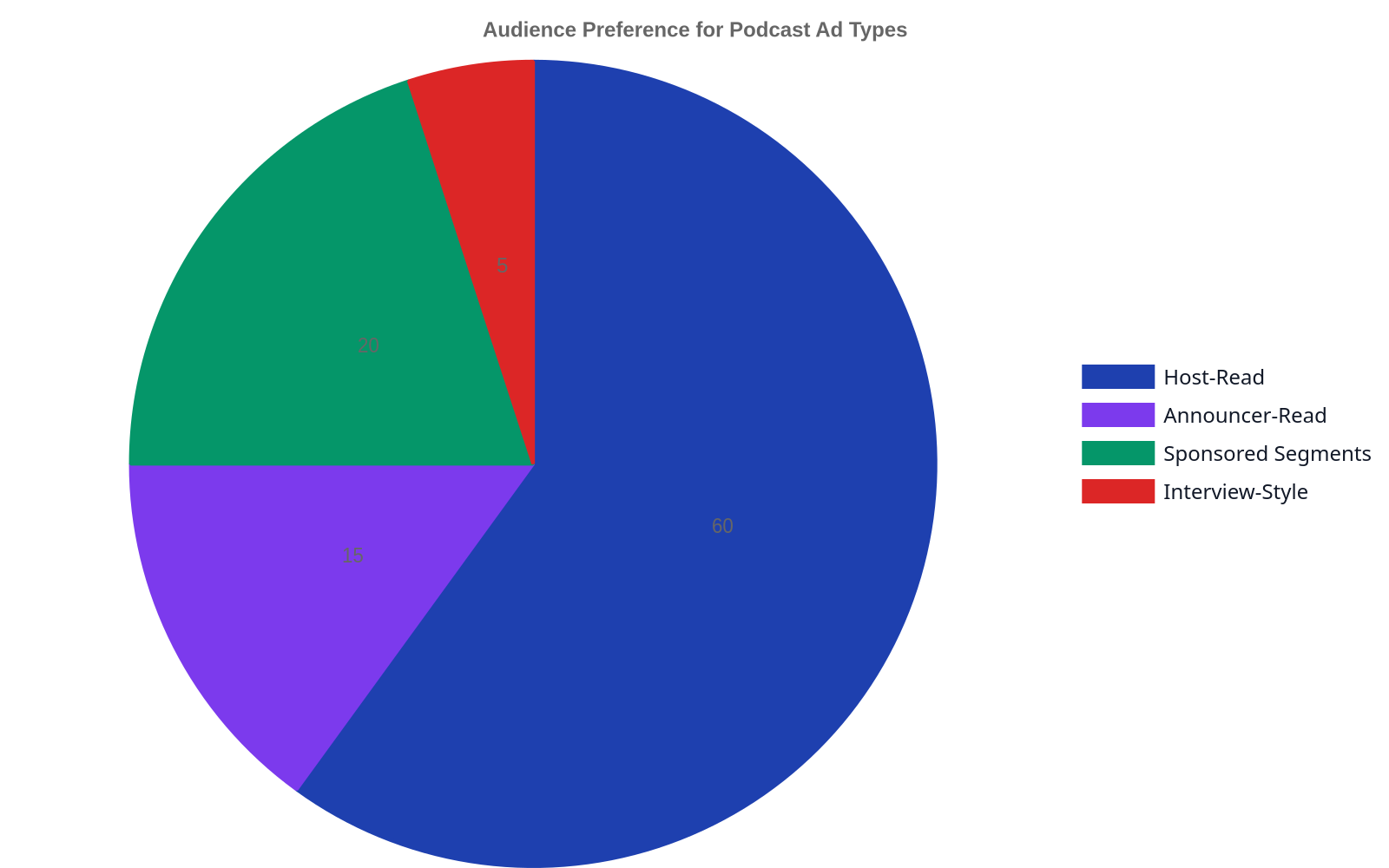
Finally, decide on the ad format. Will it be a host-read ad, where the host organically weaves your message into their show, or a dynamically inserted pre-produced spot? A SiriusXM Media report highlights that host-read ads feel the most authentic to listeners.
The Anatomy of High-Performing Podcast Ads
Effective ads have several key features. They are built on authenticity, storytelling, and a clear value proposition. The delivery is just as important as the message itself, which is why host-read ads consistently outperform other formats. We work with partners like Ad Results Media to place these kinds of effective, host-integrated campaigns.
Factual vs. Storytelling Podcast Ads
Factual ads are direct and to the point. They state what the product is, what it does, and why the listener should care. This works best for simple, high-value offers where the benefits are self-evident.
Storytelling ads are more immersive. They wrap the product in a narrative, often a personal experience from the host. This approach builds a much deeper emotional connection and is incredibly effective for lifestyle brands or products that require more context. According to Rephonic, storytelling can make an ad feel less like an ad and more like a genuine recommendation.
The best podcast ad isn’t an interruption of the show. It becomes part of the show. The listener shouldn’t want to press the skip button; they should feel like they’re getting an inside tip from a friend.
Types of Podcast Ads and Delivery
Understanding the landscape of ad types is crucial for your campaign. Your choice impacts budget, creative, and listener reception.
- Host-Read Ads: The host reads your copy in their own voice. These can be “baked-in” (a permanent part of the episode audio) or dynamically inserted. They carry the highest trust factor.
- Announcer-Read / Pre-produced Ads: These are produced separately, like a traditional radio ad, and then inserted into the episode. They offer more creative control with sound design but often feel less personal.
- Dynamic Ad Insertion (DAI): This technology allows you to insert different ads into the same episode slot over time. This means you can target listeners by geography or other data and keep ad content fresh. More advanced strategies are a key part of our mission to help creators monetize and grow podcasts.
Ad Placement: Pre-Roll, Mid-Roll, Post-Roll
- Pre-Roll (15-30 seconds): Runs at the very beginning of the episode. Good for brand awareness, but easily skipped.
- Mid-Roll (60-90 seconds): Runs in the middle of the episode. These are the most valuable and have the highest listener engagement, as people are already invested in the content. A significant 79% of listeners have taken action as a result of a podcast ad, and mid-rolls are a huge driver of this.
- Post-Roll (15-30 seconds): Runs at the end. These have the lowest engagement and are best for very strong calls-to-action for a dedicated audience.
Winning Podcast Ad Copy Examples & Templates
Here are some practical podcast ad copy examples and templates you can adapt. Notice how they differ in tone and structure based on the product and goal.
Example 1: The SaaS Product (Host-Read, Mid-Roll)
- Goal: Drive sign-ups for a free trial.
- Template:
* Hook (Relatable Problem): “You know how much time I waste every week trying to coordinate schedules for this show? It’s a mess of emails and back-and-forth.”
* Introduce Solution: “Well, a few months ago I started using [SaaS Product]. It completely automated my booking process. I just send a link and guests pick a time that works for us both.”
* Key Benefit/Story: “Last week, I booked our next three interviews in about five minutes total. That time is now going back into scripting the show. It’s been a huge relief.”
* Call-to-Action (CTA): “If you’re tired of the scheduling headache, you have to try it. Big Pond listeners can get a 60-day free trial, which is double the usual. Go to [product.com/bigpond] to claim it. That’s [product.com/bigpond].”
Example 2: The Direct-to-Consumer Brand (Host-Read, Mid-Roll)
- Goal: Drive sales with a promo code.
- Template:
* Hook (Personal Story): “I’ve never been a great sleeper, and for years I thought a mattress was just a mattress. I was wrong.”
* Introduce Solution: “I switched to a [Mattress Brand] mattress about two months ago, and the difference is incredible. It’s not just about comfort; it’s about waking up without the back pain I thought was normal.”
* Key Benefit/Feature: “They use this [proprietary foam] that is somehow both supportive and soft. And the best part? It doesn’t trap heat, which has been a problem for me.”
* Call-to-Action (CTA): “They gave me a special offer for you all. You can get 20% off your order plus two free pillows by using the code BIGPOND at checkout. Visit [brand.com] and use code BIGPOND.”
Don’t just list product features. Translate each feature into a direct benefit for the listener. Nobody cares about your ‘patented quad-core processor’; they care that their video will export twice as fast.
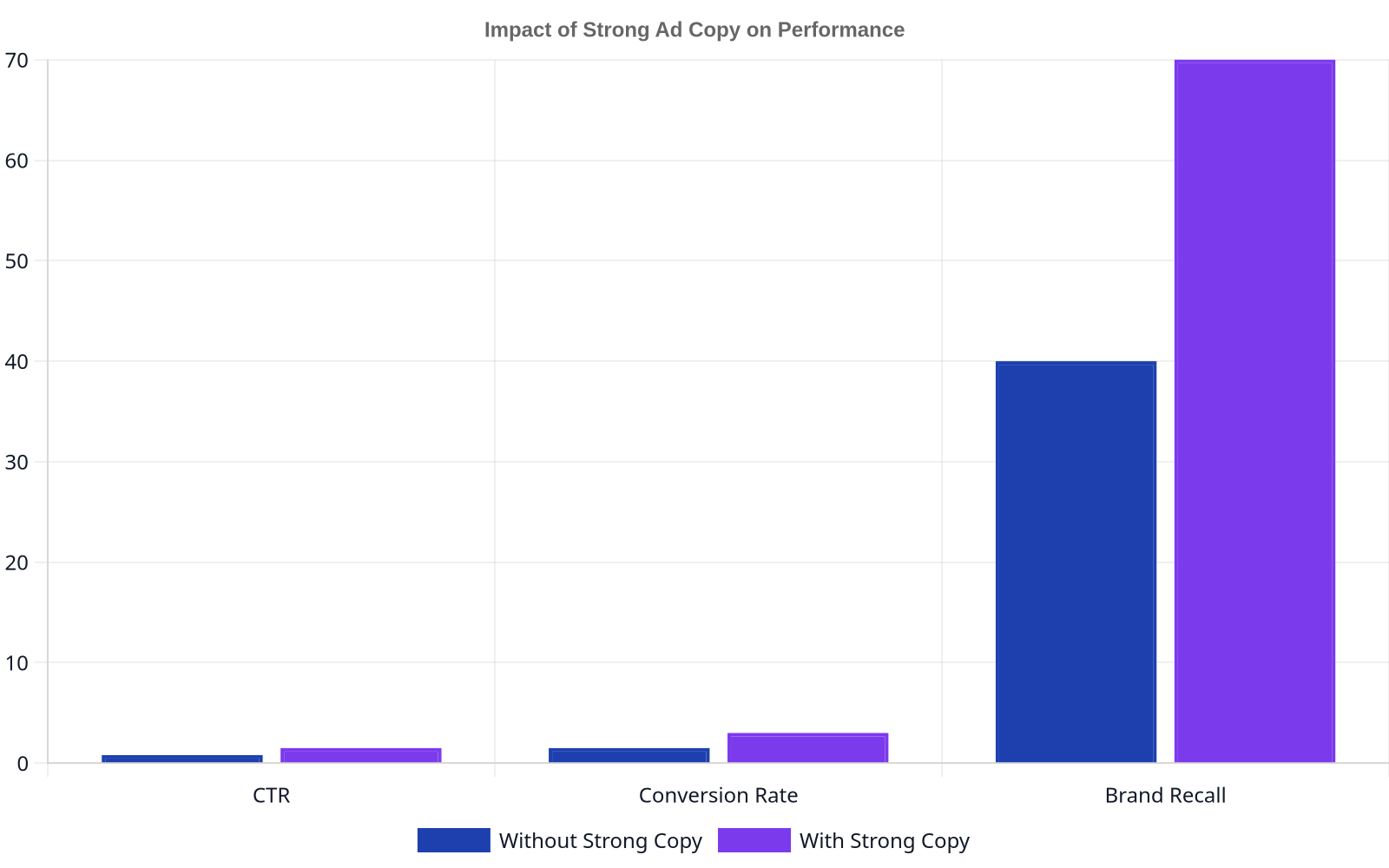
The Impact of Strong Podcast Ad Copy
Types of Podcast Ad Copy and Their Effectiveness
Measuring and Optimizing Your Ad Copy
Your campaign isn’t over once the ad goes live. Measuring performance is how you turn a good campaign into a great one. For a full breakdown of what goes into pricing, see our guide on podcast ad costs.
Key Performance Indicators (KPIs)
- Vanity URLs & Promo Codes: The most direct way to track conversions. How many people visited
yourbrand.com/podcastor used the codePODCAST20? - Lift in Brand Mentions: Use social listening tools to track mentions of your brand before and after the campaign.
- Conversion Lift Surveys: Some platforms allow you to survey listeners, asking if they recall hearing an ad for your brand on the show.
A/B Testing Your Copy
You should always be testing. Run one version of your ad copy on a set of shows and a second version on another, similar set. Test different elements:
- The Offer: Is a 20% discount better than a free gift?
- The CTA: Does a vanity URL work better than a promo code?
- The Hook: Does a storytelling intro capture more attention than a factual one?
Common Mistakes to Avoid
- A Complicated CTA: If the URL is hard to spell or the promo code is complex, no one will use it. Keep it simple.
- No Clear Offer: “Visit our website to learn more” is a weak CTA. Give listeners a specific, compelling reason to act now.
- Ignoring FTC Guidelines: All sponsored content, including host-read ads, needs to be clearly disclosed as an advertisement. An IAB study found that clear disclosure builds trust rather than diminishing the ad’s impact. Be upfront.
- Poor Sound Design: For pre-produced ads, avoid jarring sound effects or music that doesn’t match the podcast’s tone. The ad should sonically blend with the show.
Ultimately, great podcast advertising requires a thoughtful approach that respects the listener. For more ideas on how to grow your show, check out these podcast marketing strategies.
Further reading
FAQ
How do you write good podcast ad copy?
Good podcast ad copy starts with understanding the show’s audience and the host’s voice. It should tell a story or solve a problem, integrate naturally into the episode, and provide a clear, simple call-to-action. Authenticity is more important than a polished script.
What are the main types of podcast ads?
The primary types are host-read ads, where the host delivers the message, and pre-produced ads, which are created by the brand and inserted. They can be delivered via “baked-in” audio or through dynamic ad insertion (DAI), which allows for more targeted and flexible campaigns.
How long should a podcast ad be?
Ad length depends on placement. Pre-roll and post-roll ads are typically short, around 15-30 seconds. Mid-roll ads are the longest and most common, usually running 60-90 seconds, as they occur when the audience is most engaged.
What is a call-to-action (CTA) in a podcast ad?
A CTA is the part of the ad that tells the listener what to do next. For podcasts, this should be an easily memorable action, like visiting a simple URL (e.g., brand.com/podcast) or using a specific promo code (e.g., “BIGPOND”) at checkout. A recent study showed that 72% of listeners who have been tuning in for over a year have made a purchase from a podcast ad, proving that strong CTAs work.
Are there legal requirements for podcast ads?
Yes. In the United States, the Federal Trade Commission (FTC) requires that any paid endorsement be clearly and conspicuously disclosed as an advertisement. The host must make it clear that they are being compensated to promote the product or service.
About the author
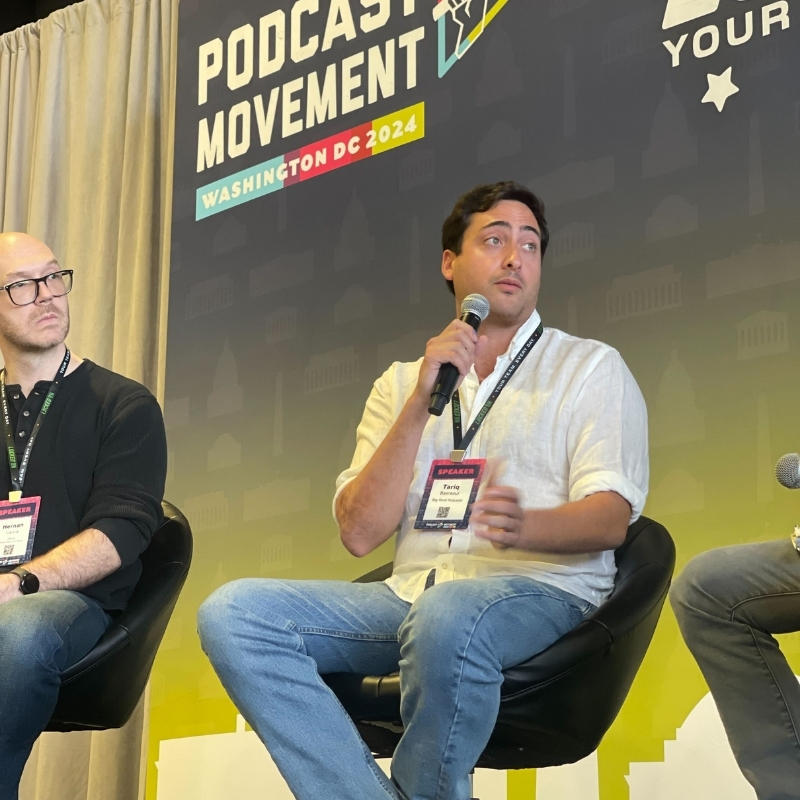
Tariq Basraoui
CEO
Tariq O’Keefe Basraoui, Co-Founder of Big Pond Podcasts, is a seasoned digital marketer and community builder with a track record of success at platforms like TikTok and Zencastr. Known for launching Zencastr’s Creator Network to over 15,000 members in 18 months, his expertise lies in growing user bases and enhancing brand engagement.
His strategic approach to growth and community engagement has established him as a leader in creating some of the fastest-growing media networks in podcasting.
