The Real Cost of Advertising on Podcasts in 2026: A No-Filler Guide
Stop asking about the average CPM for podcast ads. It’s the wrong question. Asking for the average cost is like asking for the average price of a car without specifying if you want a used sedan or a new luxury SUV. The number itself is useless without context, and focusing on it can lead you to waste thousands on the wrong audience.
The cost of advertising on podcasts in 2026 typically ranges from a $15 to $50 CPM (cost per thousand listeners). A standard 30-second ad on a popular show could cost between $1,800 and $5,000 per episode. However, this price is heavily influenced by factors like audience size, ad placement (pre, mid, or post-roll), and format (host-read vs. produced). The final budget must also account for ad production, platform fees, and attribution tracking to understand the true investment.
How Podcast Ad Rates Are Calculated (The CPM Model)
The primary model for pricing podcast ads is CPM, which stands for “Cost Per Mille” or cost per thousand listeners. It’s a standard metric borrowed from digital advertising that helps normalize costs across shows with different audience sizes. If a podcast charges a $25 CPM and gets 100,000 downloads per episode, the cost for one ad is $2,500.
What is CPM? A Quick Definition
CPM is calculated with a simple formula: (Total Campaign Cost / Total Number of Impressions) x 1000. For podcasting, an “impression” is typically counted as a download. An advertiser pays a set price for every 1,000 people who download an episode containing their ad. This model is straightforward and easy to compare across different shows.
Standard CPM Ranges for 2026
Industry benchmarks are a useful starting point. Generally, you can expect podcast advertising CPM for a standard 30- or 60-second ad to fall between $15 and $25. Highly specialized or popular shows can command CPMs of $50 or more. Across the Big Pond Podcasts network of over 1300+ shows, our data shows an average 60-second CPM of $22.35, landing squarely within that industry sweet spot.
Why You Shouldn’t Obsess Over a “Low” CPM
A low CPM feels like a good deal, but it can be a vanity metric. An ad on a general pop culture podcast with a $15 CPM might reach a broad, unfocused audience. In contrast, an ad on a niche podcast for financial advisors with a $50 CPM reaches a highly specific, valuable demographic that is more likely to convert. The higher price is often a reflection of audience quality, not a sign of being overpriced.
Factors Influencing Podcast Advertising Costs
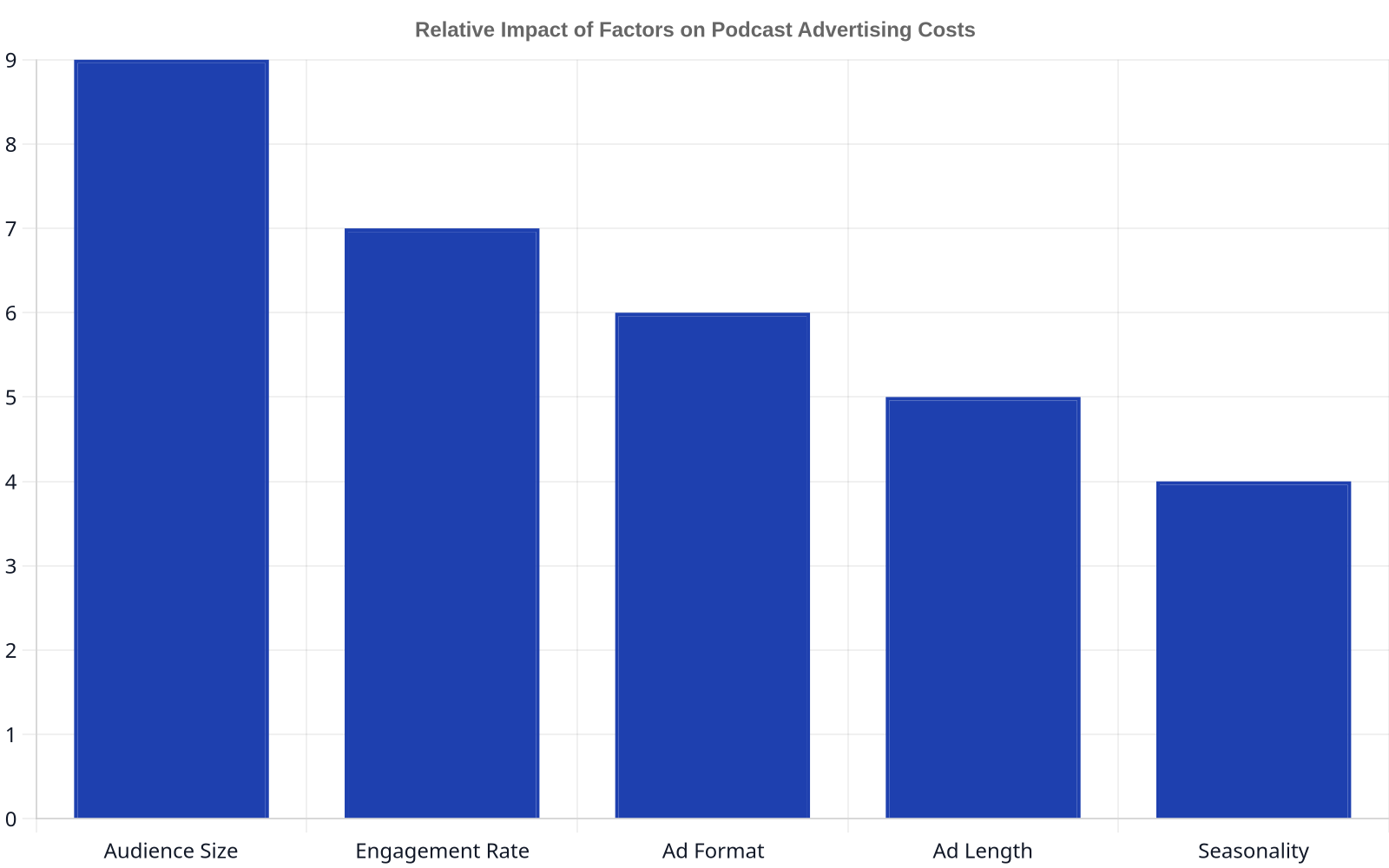
No two podcasts have the exact same ad rates. The price you pay is a cocktail of several interconnected factors. Understanding them is key to negotiating fair prices and finding the right fit for your brand.
Audience Size and Engagement
This is the most obvious factor. A podcast with 200,000 downloads per episode will charge more than one with 5,000. But downloads aren’t everything. A highly engaged audience—one that posts on social media, joins a Patreon, and trusts the host—is more valuable than a passive, larger one. Hosts with strong communities can rightfully charge a premium.
Niche and Demographics
Niche topics command higher CPMs. A podcast about enterprise software development has a more commercially valuable audience than a general movie review show. If your product is for a specific profession (like doctors or lawyers) or a high-income hobby (like yachting or watch collecting), expect to pay more to reach those listeners.
Ad Format: Host-Read vs. Announcer-Read
Host-read ads are the bedrock of podcast advertising. The host reads your ad script in their own voice, often adding personal anecdotes. This format builds immense trust and feels like a genuine recommendation. Announcer-read or pre-produced ads are created separately and inserted into the episode, much like a traditional radio spot. Host-read ads are almost always more expensive but typically deliver a much higher return, as a Nielsen study on ad effectiveness confirms they drive higher brand recall and purchase intent.
Ad Placement: Pre-Roll, Mid-Roll, Post-Roll
The position of your ad within an episode significantly impacts its cost and effectiveness.
- Pre-Roll: A 15-30 second ad at the very beginning of the episode. Cheaper than mid-roll, but listeners might skip it.
- Mid-Roll: 60-90 second ads placed in the middle of the content. These are the most expensive and most effective, as listeners are already engaged.
- Post-Roll: A brief ad at the end. These are the cheapest and have the lowest engagement, as many listeners drop off before the episode finishes.
A host-read ad isn’t an interruption. It’s a personal recommendation from a trusted friend, and that’s an asset you can’t buy with programmatic bidding.
Industry Benchmarks and Averages
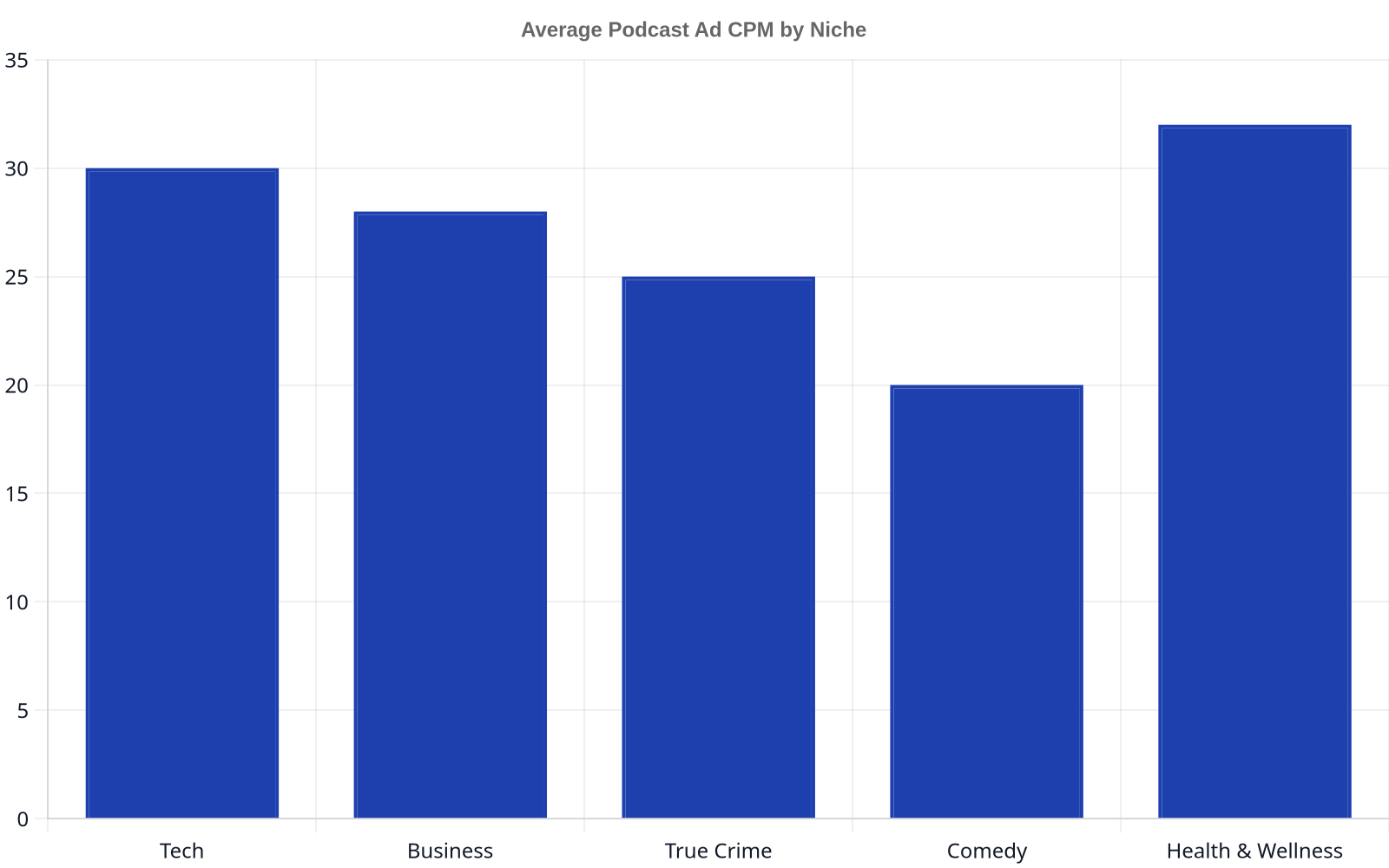
While CPMs vary, it helps to see how they differ by genre. A B2B brand will pay more to reach decision-makers than a DTC brand selling socks. Here’s a general idea of what to expect for a 60-second mid-roll ad based on common podcast categories.
| Podcast Niche | Typical CPM Range |
|---|---|
| Business / Finance / Tech | $30 – $80 |
| Health & Fitness | $25 – $60 |
| True Crime | $20 – $40 |
| Comedy | $18 – $35 |
| News & Politics | $22 – $45 |
These numbers fluctuate based on the specific show and host influence, but they provide a solid baseline for budgeting. The key is aligning your product with the listener’s mindset in that category.
Beyond CPM: The Hidden Costs of a Campaign
Your total investment goes beyond the CPM rate. First-time advertisers often overlook these additional costs, which can significantly impact the final budget and ROI calculations. The true cost of advertising on podcasts must include these elements.
Ad Production Costs
If you opt for a pre-produced spot instead of a host-read ad, you need to budget for its creation. This can involve scriptwriting, voice actors, sound design, and mixing. Costs can range from a few hundred dollars for a simple ad to several thousand for a high-quality, sound-rich production.
Ad Attribution and Reporting Tools
How do you know if your ads are working? You need tools to measure ROI. This often involves using special services to create vanity URLs (e.g., yourbrand.com/podcast), unique promo codes, or post-purchase surveys. Some attribution platforms charge thousands per month, which must be factored into your campaign budget. More advanced methods like pixel-based tracking are becoming more common, as detailed in the IAB’s programmatic audio guide.
Agency or Platform Fees
If you work with a podcast advertising agency or a platform like ours, they will take a percentage of your ad spend as a fee for their services. This fee covers sourcing shows, negotiating rates, managing creative, and reporting on performance. It’s a cost, but it saves your team dozens of hours of manual work. The goal isn’t just to buy impressions; it’s to find the right audience. To understand more about how these costs are determined, read our guide on podcast advertising rates. That’s our entire focus at Big Pond—helping creators monetize and grow podcasts by connecting them with advertisers who value their specific listener base.
Pricing Models for Podcast Advertising
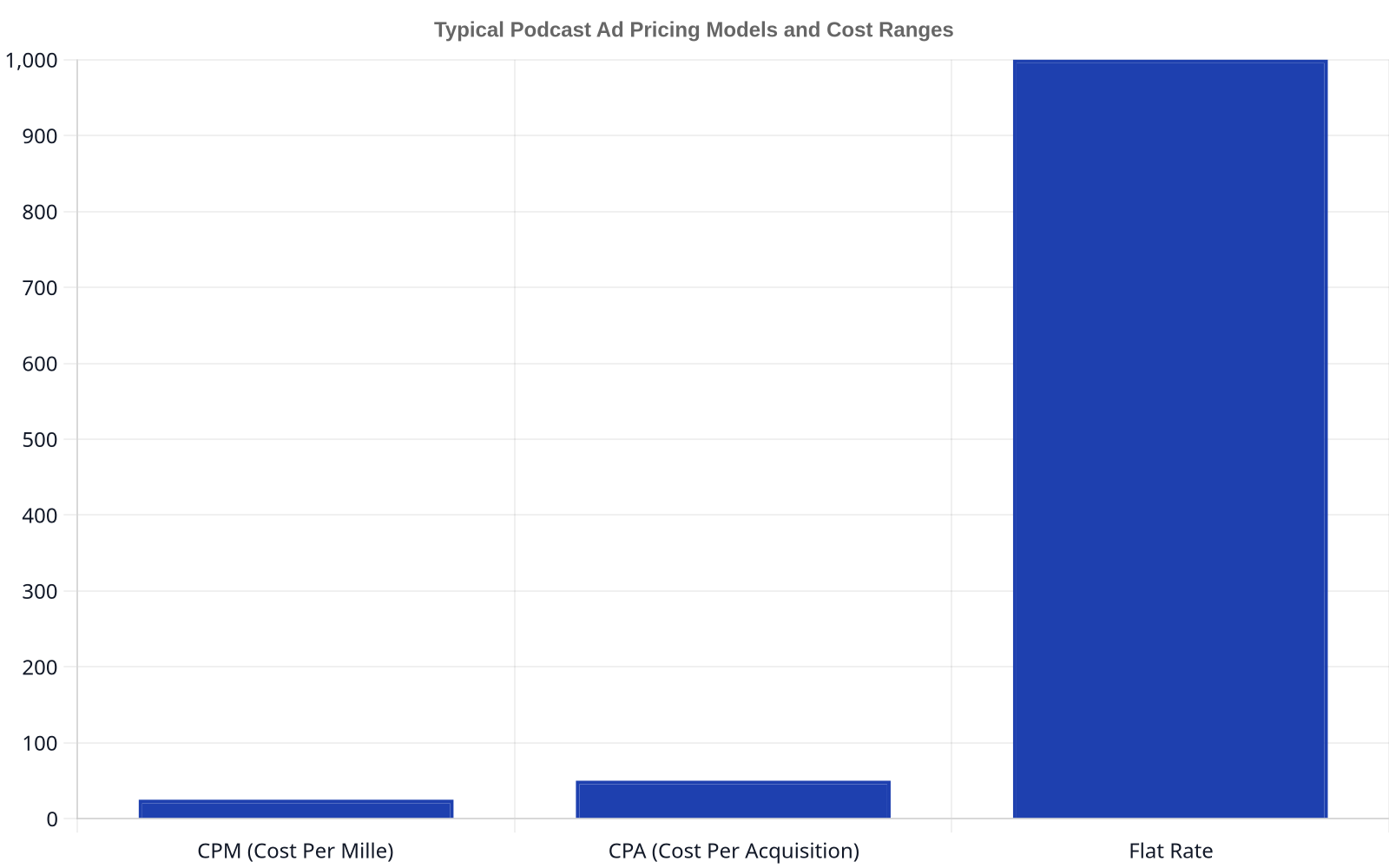
| CPM (Cost Per Mille) | CPA (Cost Per Acquisition) | Flat Fee | |
|---|---|---|---|
| Definition | Pay per 1,000 impressions (listens/downloads) | Pay only when a specific action (e.g., sale, sign-up) occurs | Fixed price for a set ad slot or sponsorship package |
| Best For | Brand awareness, reach, large audience campaigns | Direct response, measurable conversions, e-commerce | Sustained brand presence, direct sponsorships, niche podcasts |
| Pros | Predictable cost per impression, wide exposure | Low risk, directly tied to ROI, performance-driven | Simple budgeting, clear terms, consistent placement |
| Cons | Doesn’t guarantee conversions, variable ROI | Higher risk if conversion rates are low, requires tracking | Less flexible, may not scale efficiently, fixed value regardless of performance |
CPM is the most common model, but it’s not the only one. Depending on your goals, an alternative structure might be more effective.
| Pricing Model | How It Works | Best For | Risk Profile |
|---|---|---|---|
| Cost Per Mille (CPM) | You pay a flat rate per 1,000 downloads. | Brand awareness campaigns where reach is the primary goal. | Low risk for podcasters, moderate risk for advertisers (payment not tied to performance). |
| Cost Per Acquisition (CPA) | You only pay when a listener completes an action (e.g., makes a purchase, signs up). | Direct response campaigns focused on immediate conversions. | High risk for podcasters (might get zero revenue), low risk for advertisers. |
| Flat-Fee Sponsorships | You pay a fixed price per episode or for a block of episodes, regardless of downloads. | Sponsoring smaller, niche shows or testing a new market. | Predictable costs for advertisers, stable income for podcasters. |
Is Podcast Advertising Worth It? Calculating Your ROI
With two-thirds of the U.S. population now listening to digital audio monthly, the reach is undeniable. The question is whether you can turn that reach into revenue. The answer depends on your ability to track performance.
Measuring Brand Awareness Lift
For brands focused on awareness, success isn’t measured in immediate sales. Instead, look at metrics like spikes in brand name searches in Google Trends, direct traffic to your website, or social media mentions. You can also run brand lift surveys before and after the campaign to measure changes in audience perception and recall.
Tracking Direct Response
This is more straightforward. The two classic methods are still the most reliable:
- Vanity URLs: A custom, easy-to-remember URL just for the podcast audience (e.g.,
brand.com/show). - Discount Codes: A unique code that gives listeners a special offer (e.g., “Use code SHOW15 for 15% off”).
By tracking the usage of these, you can directly attribute sales to the podcast campaign and calculate your return on ad spend (ROAS).
Don’t chase the lowest CPM. Chase the highest listener affinity. A $50 CPM on a niche show that converts at 5% is infinitely better than a $15 CPM on a general show that converts at 0.1%.
Strategies for Buying Podcast Ads
Securing the right ad placements requires a strategic approach. Here’s a simple process for getting started with more effective podcast marketing strategies.
Direct Outreach vs. Networks
You can reach out to individual podcasters directly or work with a podcast network. Direct outreach gives you more control and can build a stronger relationship with the host, but it’s time-consuming. Networks and platforms like Big Pond offer access to a large inventory of vetted shows, simplifying the buying process and providing unified reporting. As the market matures, more ad buying is moving to exchanges and platforms, as detailed by Insider Intelligence projections.
Negotiating Rates and Terms
Don’t be afraid to negotiate. Most podcasters have some flexibility in their rates, especially if you’re buying multiple spots. Here is a step-by-step process:
- Start with a small test buy. Propose a two-episode test before committing to a larger campaign.
- Ask for a rate card. This shows their official pricing for different ad types and placements.
- Offer a longer commitment. Propose a quarterly or annual buy in exchange for a 10-20% discount on the per-episode rate.
- Inquire about value-adds. Ask if they can include a social media mention or a link in the show notes at no extra cost.
- Confirm attribution details. Ensure you can use a vanity URL and promo code and that they will be read clearly.
Budgeting for Small Businesses
You don’t need a massive budget to start. Many smaller, niche podcasts with a few thousand listeners per episode offer sponsorships for just a few hundred dollars. These can be incredibly effective for reaching a targeted audience. Start with a test budget of $1,000-$5,000 to experiment with 2-3 different shows and see what drives results before scaling up.
Further reading
- How Much Does Podcast Advertising Cost?
- Understanding Podcast Advertising Cost
- Podcast Advertising Cost and Rates
FAQ
What is a good CPM for podcast advertising?
A good CPM depends on your industry and goals. While the industry average hovers around $15-$25, a “good” CPM for a high-value B2B audience might be $60, while a good CPM for a general consumer brand could be $20. Focus on return on investment, not just the initial cost.
How much does it cost to advertise on a top podcast?
Advertising on a top-tier podcast with millions of downloads, like The Daily or SmartLess, can cost anywhere from $50,000 to over $500,000 for a single mid-roll ad slot. These shows often have long waiting lists and are sold through major advertising agencies.
Are host-read ads more expensive?
Yes, host-read ads are typically 1.5x to 2x more expensive than pre-produced or announcer-read ads. The premium price reflects the trust, authenticity, and higher engagement that comes from a personal endorsement by the host.
How long should my podcast ad be?
The most common ad lengths are 30 and 60 seconds. Pre-roll ads are often shorter (15-30 seconds), while mid-roll ads are longer (60-90 seconds) to allow for more storytelling. A 60-second mid-roll is generally considered the sweet spot for performance.
Can I advertise on podcasts with a small budget?
Absolutely. There are hundreds of thousands of podcasts outside of the top 100 charts. Look for up-and-coming shows in your niche with 1,000-10,000 downloads per episode. Many offer ad slots or sponsorships for a few hundred dollars, providing an accessible entry point.
Ultimately, understanding the true cost of advertising on podcasts requires you to look past the CPM. It’s about finding the right listeners, crafting a message that resonates, and aligning your brand with a host the audience trusts. By thinking in terms of partnerships instead of just media buys, you can build a sustainable and profitable advertising strategy. When you’re ready to find those partnerships, we can help.
About the author
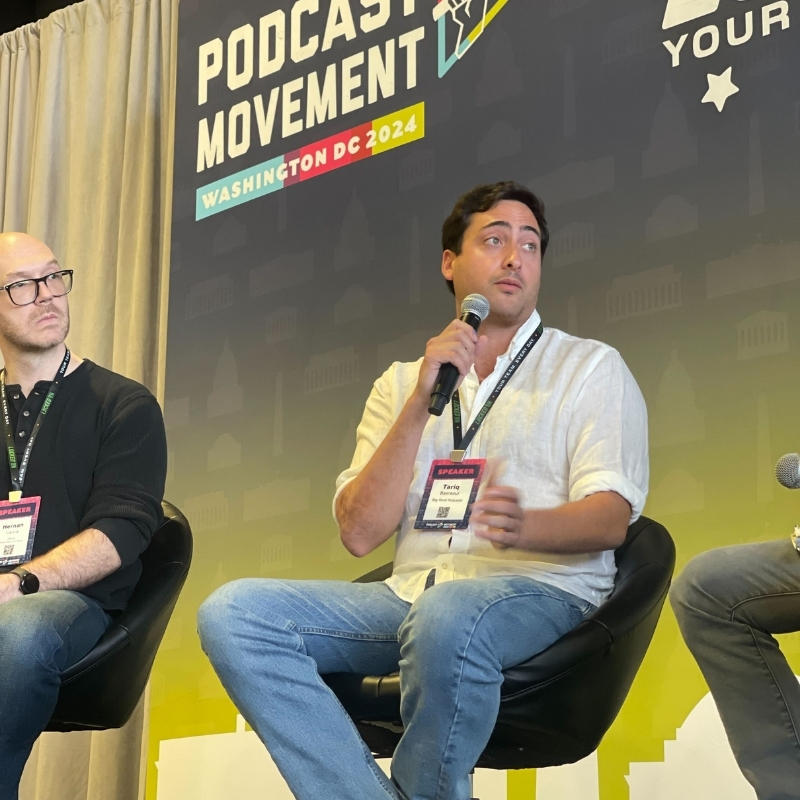
Tariq Basraoui
CEO
Tariq O’Keefe Basraoui, Co-Founder of Big Pond Podcasts, is a seasoned digital marketer and community builder with a track record of success at platforms like TikTok and Zencastr. Known for launching Zencastr’s Creator Network to over 15,000 members in 18 months, his expertise lies in growing user bases and enhancing brand engagement.
His strategic approach to growth and community engagement has established him as a leader in creating some of the fastest-growing media networks in podcasting.
