
The Ultimate Podcast Mic FAQ for 2026
I want to start by stating that this article is purely subjective. As Bandrew Scott, a prolific microphone reviewer, says, “There is no such thing as the ‘best’ microphone because there are many factors that need to be accounted for when selecting a microphone.” He’s right. The perfect mic for a solo narrative show in a treated studio is the wrong choice for a roving reporter recording on the street.
The best podcast mic is one that fits your budget, recording environment, and vocal tone. For most new podcasters, a hybrid USB/XLR dynamic microphone like the Shure MV7 is the top choice, offering excellent voice isolation and connection flexibility without requiring an expensive preamp. It provides professional sound quality that can grow with your show, from a simple USB setup to a more advanced XLR configuration. This adaptability is key for long-term value.
This guide answers the most common questions we hear from the creators of the 1300+ podcasts on our network. We’ll cover the fundamental choices, specific model recommendations, and the accessories you actually need to sound great.
What’s the difference between a USB and XLR podcast mic?
An XLR microphone is an analog standard that connects to an audio interface or mixer using a three-pin cable. A USB microphone connects directly to your computer. USB mics are simpler to set up, but XLR offers more flexibility, higher quality potential, and the ability to use multiple mics at once through a mixer.
Which connection type is better for a new podcaster?
For absolute beginners, a USB microphone is the fastest way to start recording. However, a hybrid mic with both USB and XLR outputs, like the Shure MV7 or Fifine AM8, offers the best of both worlds. You can start with the simple USB connection and later upgrade to an XLR setup without buying a new microphone.
What’s the difference between a dynamic and condenser mic?
Dynamic microphones are less sensitive and great at rejecting background noise, making them ideal for untreated rooms like a home office or bedroom. Condenser microphones are more sensitive, capturing a detailed and nuanced sound, but require a quiet, sound-treated environment. Most of the iconic “radio voice” sound comes from dynamic mics like the Shure SM7B.
So, which type should I choose for podcasting?
Nine times out of ten, a dynamic microphone is the better choice for podcasting. The focused pickup pattern helps isolate your voice from room echo, computer fan noise, and other ambient sounds. This is a crucial feature for achieving clean audio without a professional studio.
What do microphone pickup patterns mean?
A microphone’s pickup pattern determines its directional sensitivity. The most common for podcasting is Cardioid, which captures sound directly in front of the mic while rejecting sound from the sides and rear. Other patterns include Omnidirectional (captures sound from all directions) and Bidirectional (captures sound from the front and back), which are better for group recordings with a single mic.
The single most important factor for audio quality isn’t your microphone—it’s your recording environment. A $100 mic in a quiet, treated room will sound better than a $1,000 mic in an echo-filled kitchen.
What’s the best budget podcast mic?
The Fifine AM8 is a fantastic choice for creators on a tight budget. It has both USB and XLR connections, a headphone jack for monitoring your audio directly, and delivers clear vocal reproduction. It provides a professional look and sound for a fraction of the cost of premium models.
I have a bit more to spend. What’s a good mid-tier option?
The Shure MV7 is the undisputed champion of the mid-tier. It’s modeled after its legendary big brother, the SM7B, and offers both USB and XLR outputs. Its voice isolation technology is exceptional, making your voice the star of the show, which is a production quality advertisers like Airbnb have come to expect from top-tier shows.
What is the industry-standard professional podcast mic?
The Shure SM7B is the gold standard. For decades, it has been the go-to microphone for professional broadcasting, music vocals, and high-end podcasting. It requires a powerful audio interface with a good preamp, but it delivers a warm, rich vocal tone that is unmatched.
What’s a good podcast mic for recording in a noisy room?
The Shure SM58 is a legendary dynamic microphone known for its durability and excellent noise rejection. While often seen on live music stages, its ability to focus on the person directly in front of it makes it a secret weapon for podcasters in loud or untreated environments. It’s an affordable and nearly indestructible workhorse.
Do I need an audio interface for my podcast mic?
If you choose an XLR microphone, you will need an audio interface. An interface converts the analog signal from the mic into a digital signal for your computer and also provides power (called “phantom power”) that some mics need. Brands like Focusrite and Maono make popular interfaces for podcasters.
Which audio accessories are actually necessary?
Start with a proper boom arm or mic stand; holding a mic is not a viable option. You also need a pop filter, which is a screen that sits in front of the mic to reduce harsh “p” and “b” sounds. A shock mount, which isolates the mic from vibrations, is also highly recommended, especially if you type or move around a lot during recording.
How can I troubleshoot common audio issues like hum?
A low-frequency hum is often caused by electrical interference. Ensure your microphone and interface cables are not running parallel to power cables. In a YouTube video with over 40,000 views that tested 22 different podcast microphones, proper cable management was key to a clean signal. Background noise can be reduced by choosing a dynamic mic and recording in a room with soft surfaces.
How does my podcast format affect my mic choice?
For a solo host, one high-quality USB or XLR mic is perfect. For a two-person interview, two identical mics connected to an audio interface will give you the best control. Panel shows with three or more people absolutely require an interface or mixer that can handle multiple XLR inputs to ensure everyone has their own dedicated audio track.
How Much Do Podcast Mics Cost?
Microphone pricing varies dramatically based on connection type, build quality, and included features. Budget USB mics can start around $50, while professional XLR models can cost over $400, not including the required interface. Investing in a quality mic from a reputable brand like Shure or Maono is a wise decision, as it’s the most critical piece of gear in your audio chain.
Further reading
Frequently Asked Questions
Can I use a gaming headset for podcasting?
You can, but you shouldn’t if you’re serious about quality. Headset microphones are typically low-quality condensers that pick up a lot of mouth noise and background sound. A dedicated podcast mic is one of the most important investments you can make; for a solid start, check out our guide on how to plan podcast production.
How far should I be from my podcast mic?
For most dynamic mics like the Shure SM58 or MV7, a distance of 3-6 inches is ideal. This proximity gives you a strong, clear signal without being so close that you introduce plosives or distortion. Maintaining a consistent distance throughout your recording is key to a professional sound.
Do I need to soundproof my room for podcasting?
You don’t need a perfectly soundproof room, but you should dampen it. Hard surfaces like bare walls and windows create echo. Adding soft furniture, carpets, blankets, or acoustic panels can absorb these reflections significantly. An acoustically treated room is a vital part of your podcast production workflow.
What’s the difference between a pop filter and a windscreen?
A pop filter is a mesh screen that sits between you and the microphone to block plosives (p-pops). A windscreen is a foam cover that goes over the microphone capsule itself, primarily used outdoors to block wind noise. For podcasting, a pop filter is almost always the correct choice.
How do I connect multiple XLR mics for an interview?
You need an audio interface or a mixer with at least two XLR inputs. Each microphone connects to its own input on the device. The device then connects to your computer via USB, allowing you to record each person on a separate audio track for easier editing.
About the author
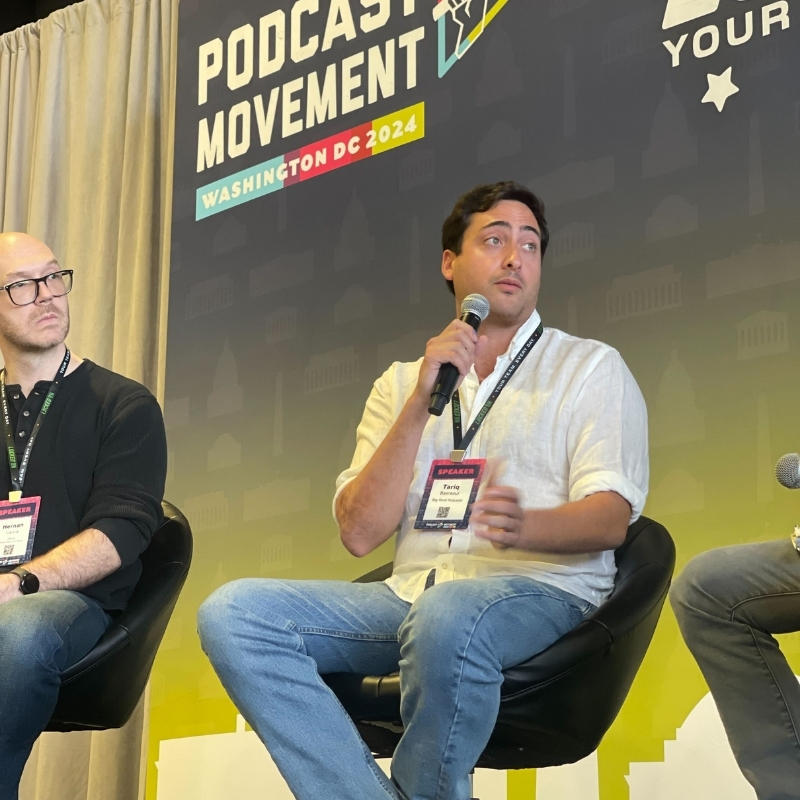
Tariq Basraoui
CEO
Tariq O’Keefe Basraoui, Co-Founder of Big Pond Podcasts, is a seasoned digital marketer and community builder with a track record of success at platforms like TikTok and Zencastr. Known for launching Zencastr’s Creator Network to over 15,000 members in 18 months, his expertise lies in growing user bases and enhancing brand engagement.
His strategic approach to growth and community engagement has established him as a leader in creating some of the fastest-growing media networks in podcasting.
