
Stop asking which podcast format is “best.” That question is a trap. The real question is which format aligns with your specific audience, your unique strengths, and your monetization goals for 2027 and beyond. The landscape is not about a single winner; it’s about finding the perfect tool for the job.
The most popular podcast formats for 2027 are shifting from broad-appeal shows to highly specific, niche-driven content. While interviews and co-hosted conversations remain foundational, expect explosive growth in video-first podcasts, serialized narrative storytelling, and interactive formats that build deep community engagement. For creators, success no longer hinges on a single format, but on a hybrid approach that matches the right structure to the right audience and monetization strategy. The choice of format directly impacts listener loyalty and revenue potential, as explored further in our analysis of podcast growth trends. Understanding how to optimize for discoverability, as detailed in our look at podcast seo trends, will be crucial for creators navigating these changes.
The Interview: Still King, But the Rules Have Changed
The interview is the bedrock of podcasting for a reason. It offers fresh perspectives, leverages a guest’s audience for growth, and has a straightforward production workflow. But the low-barrier-to-entry has created a sea of sameness. In 2027, a successful interview show isn’t just about asking questions; it’s about creating a must-listen event.
The Rise of the Thematic Interview
Generic, celebrity-driven interviews are losing ground to thematic shows. Instead of a random slate of guests, top-performing podcasts are building a reputation around a single, focused topic. Think of a show that only interviews aerospace engineers, or one dedicated entirely to the founders of sustainable fashion brands. This specificity attracts a highly dedicated, monetizable niche audience. According to a 2025listeners who seek out podcasts for educational purposes have higher-than-average engagement rates.
Pre-Production is the New Performance
Great interviewers are made long before they hit “record.” The best shows in 2027 will be defined by their research. Deeply understanding a guest’s work, preparing questions that challenge their assumptions, and structuring the conversation like a narrative arc are no longer optional. A well-researched interview feels less like a Q&A and more like a masterclass, delivering immense value to the listener.
Moving Beyond Audio-Only
If your interview isn’t available on video, you’re leaving a huge audience on the table. Platforms like YouTube are becoming primary podcast consumption apps. An engaging video interview, complete with multiple camera angles and dynamic visuals, creates a far more intimate and shareable experience. We’ve seen firsthand that youtube for podcasting is a critical growth lever.
Solo and Co-Hosted: The Power of Personality
While interviews bring in outside voices, solo and co-hosted shows build a brand around the host’s personality and expertise. These formats are powerful vehicles for establishing authority and building a loyal community that feels personally connected to the show.
The Solo Host as Niche Expert
A solo-hosted podcast is one of the fastest ways to become a recognized authority in your field. This format allows for deep dives into complex topics without interruption. It’s a direct, unfiltered channel between you and your audience. Shows hosted by financial analysts breaking down market trends or historians explaining complex events thrive here. The key is unwavering consistency and a genuine depth of knowledge.
Co-Hosted Chemistry: The Magic of Banter
Two hosts can create a dynamic that’s impossible to replicate alone. The appeal of a co-hosted show lies in the chemistry, the differing perspectives, and the natural, unscripted conversation. Listeners don’t just tune in for the topic; they tune in to “hang out” with the hosts. This format excels at building a strong sense of community, but it lives or dies on the relationship between the hosts. If the chemistry isn’t authentic, listeners will know immediately.
Don’t confuse banter with a lack of preparation. The best co-hosted shows are built on a foundation of rigorous research and a clear episode structure, which then allows the hosts’ personalities to shine.
Narrative and Scripted: The Audio Storytelling Boom
Fueled by the success of shows like Serial and the rise of high-quality audio fiction, narrative and scripted formats are moving from a niche category to a mainstream powerhouse. These are high-effort, high-reward productions that command listener attention in a way other formats can’t.
Investigative Journalism and True Crime
Episodic, deep-dive investigations continue to dominate podcast charts. They combine meticulous research with compelling storytelling techniques, often unfolding a story over an entire season. Production values are non-negotiable here; sound design, scoring, and professional narration are essential to creating an immersive experience. Podcast advertising revenue is projected to continue its double-digit growth, with high-production narrative shows capturing a significant share of premium ad dollars.
Audio Fiction & Audio Dramas
Once the domain of radio plays, scripted audio fiction is experiencing a massive resurgence. These are essentially movies for the ears, complete with voice actors, sound effects, and original music. Brands are even getting into the space, creating scripted series that embed their message into a compelling story. While the production lift is significant, the audience engagement is off the charts, with listeners often binging entire seasons.
Choosing the Right Podcast Format: A Comparison
Selecting a format can be daunting. This table breaks down the most popular podcast formats for 2027 by their core characteristics to help you align your resources with your goals.
| Format | Production Effort | Audience Engagement | Monetization Path | Best For |
|---|---|---|---|---|
| Thematic Interview | Medium | High | Sponsorships, Affiliate | Niche experts, B2B marketing |
| Solo Host | Low-Medium | Medium-High | Direct Response, Courses | Thought leaders, Coaches |
| Co-Hosted | Medium | High | Host-Read Ads, Community | Building a loyal community |
| Narrative/Storytelling | Very High | Very High | Premium Sponsorships, IP | Master storytellers, Brands |
| Video Podcast | High | Very High | YouTube AdSense, Brand Deals | Creators targeting a younger demo |
The Rise of Niche Content and Specialized Formats
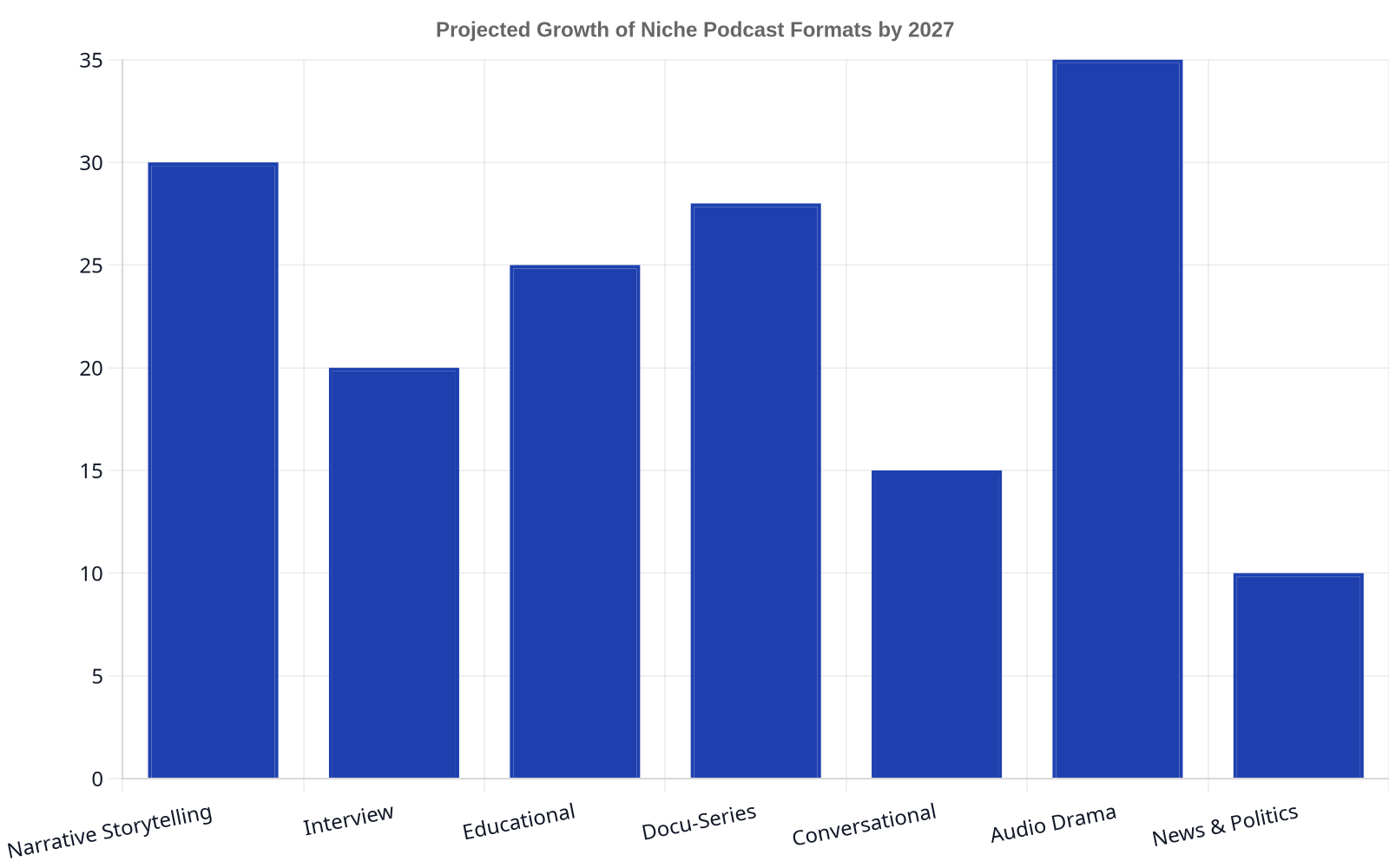
As the podcasting universe expands, the biggest opportunities are in the niches. Broad, general-interest shows are being outmaneuvered by podcasts that cater to hyper-specific communities. Across the 1300+ podcasts on our platform, we see this trend accelerating. It’s a clear signal that depth is winning over breadth.
Micro-Podcasting: The Daily Brief
Attention spans are short. Micro-podcasts—shows with episodes under 10 minutes—are designed to fit into the busiest schedules. They typically focus on a single news story, a daily tip, or a quick piece of inspiration. This format is incredibly effective for building a daily habit with your audience. The production cycle is fast, but it demands relentless consistency.
Interactive Q&A and AMA Shows
These formats turn the one-way broadcast into a two-way conversation. By sourcing questions directly from your audience via social media, email, or a platform like Discord, you create content that is perfectly tailored to their needs. This builds a powerful feedback loop and fosters an incredibly loyal community. It also provides a direct line to understanding what products or services your audience truly wants.
Audience Engagement Metrics by Format
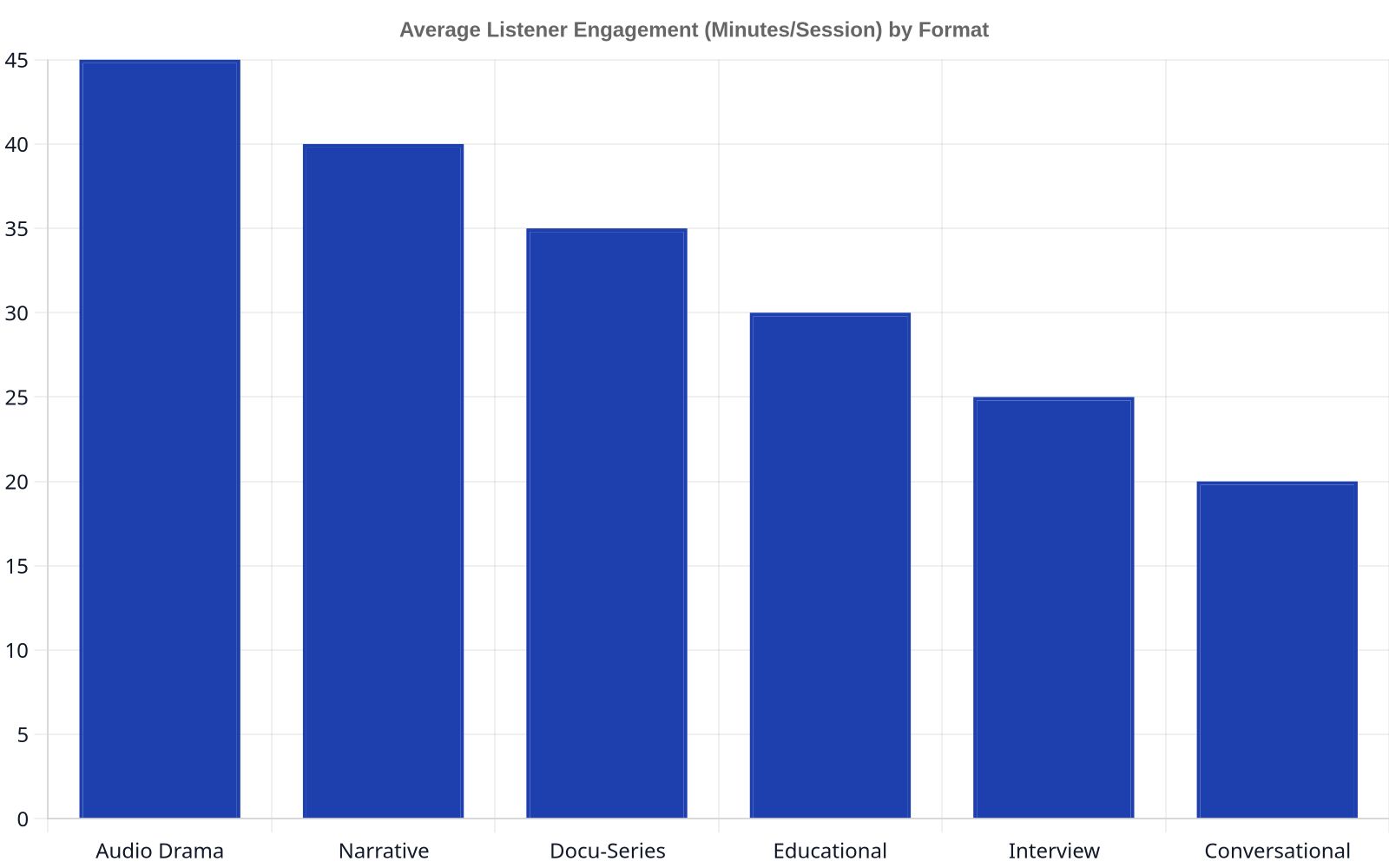
Not all listens are created equal. An “auto-download” that is never played is a vanity metric. True success lies in engagement: how long are people listening, and are they coming back for more? Different formats generate different levels of engagement, which directly impacts a show’s value to advertisers and its ability to grow.
Completion Rate as the North Star
For narrative shows, completion rate is the critical metric. A high completion rate tells you that your story is compelling and your pacing is right. For interview or co-hosted shows, a drop-off at a certain point in the episode can be a valuable diagnostic tool. A 2024 report on podcast consumption habits highlights that engaged listeners are significantly more receptive to advertising messages, making this a key metric for monetization.
From Downloads to Community
Beyond simple downloads, which now reach over 200M+ monthly listeners collectively for our partners, the real metric of success is community. How many listeners join your email list, follow you on social media, or support you on Patreon? Interactive formats like Q&As are designed to maximize this type of engagement. They turn passive listeners into active participants.
Monetization Trends Across Podcast Formats
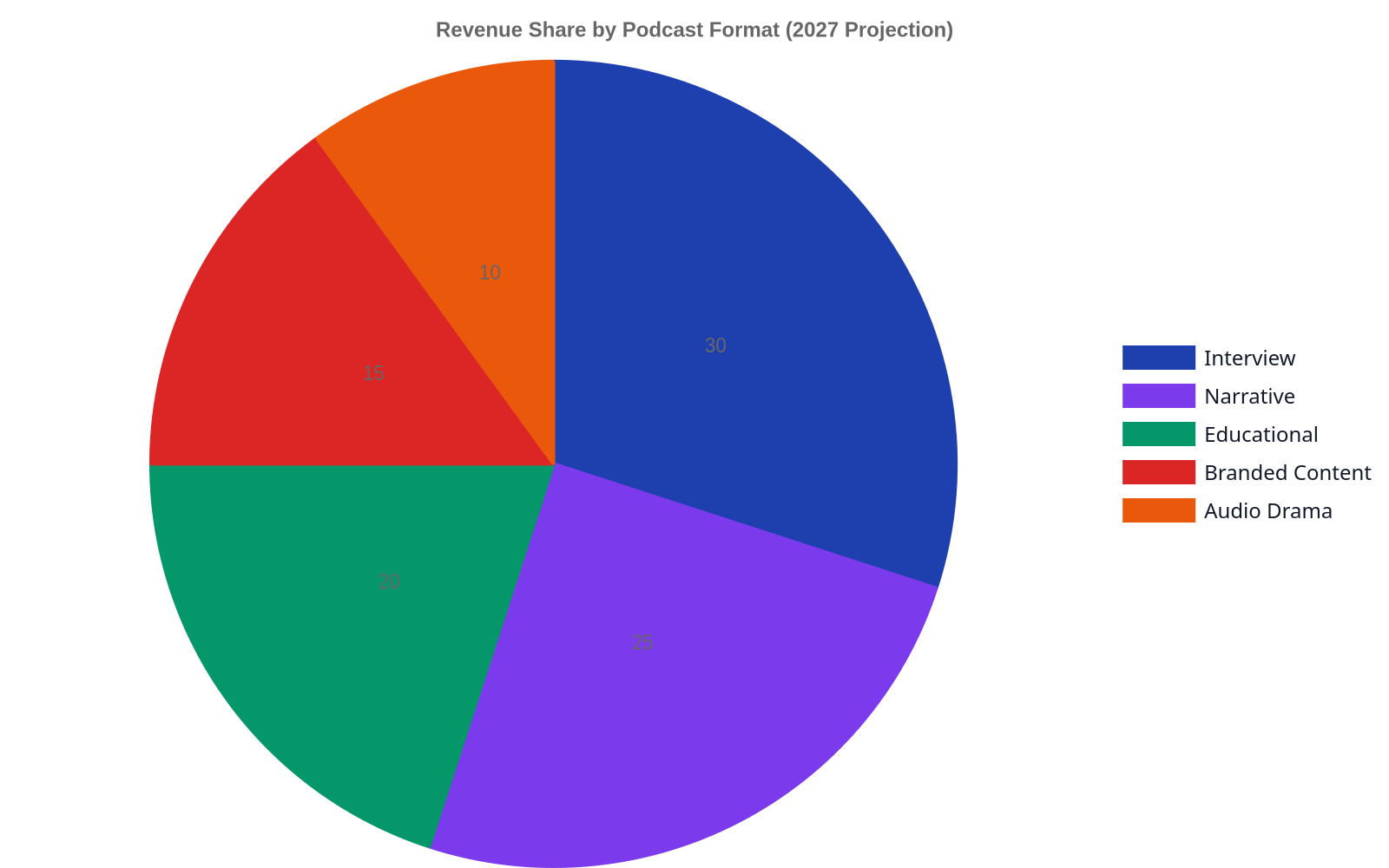
The format you choose has a direct and profound impact on how you make money. A solo host selling a high-ticket course has a different monetization model than a narrative show funded by brand sponsorships. As a company dedicated to helping creators monetize and grow podcasts, we see these patterns play out daily.
Host-Read Ads in Conversational Formats
Co-hosted and interview shows are ideal for host-read ads. The trust and rapport the hosts have built with their audience transfers to the advertised product. Brands like BetterHelp have used this strategy effectively to build trust. This method consistently outperforms pre-recorded, programmatic ads because it feels authentic and integrated. It’s a core reason why learning about learning about podcast advertising costs is so important for new creators.
Direct Monetization for Expert Hosts
Solo hosts who are established experts in a field are perfectly positioned for direct monetization. They can sell courses, consulting services, books, or paid newsletters. The podcast acts as the top of the funnel, building trust and demonstrating expertise at scale. The listener feels like they are receiving valuable free content, making the eventual sales pitch feel earned and natural.
Your podcast format isn’t just a creative choice; it’s a business model. Aligning your format with your revenue goals from day one is the single most important strategic decision you will make.
5 Steps to Choose Your Podcast Format
- Define Your “Why”: What is the core purpose of your podcast? Is it to build authority, generate leads, tell a story, or build a community? Your goal dictates your format.
- Profile Your Ideal Listener: Who are you trying to reach? A busy executive needs a short, scannable format. A fiction lover wants an immersive, long-form experience.
- Assess Your Strengths: Are you a great interviewer? A natural storyteller? A subject matter expert? Be honest about your skills and aversions. Don’t choose a format you will hate producing.
- Analyze Production Feasibility: Be realistic about your time, budget, and technical skills. A daily solo show is far more manageable than a weekly, highly-produced narrative drama. HubSpot’s guide to podcasting offers a great breakdown of the equipment and resources needed for different levels of production.
- Align with Monetization Goals: If your goal is premium brand sponsorships, a high-production narrative show is a strong contender. If you plan to sell your own digital products, a solo expert format is a more direct path.
FAQ
What is the most popular podcast format right now?
Currently, the interview and co-hosted conversational formats remain the most common and popular. However, the fastest-growing categories are video podcasts and high-production narrative storytelling, especially in genres like true crime and investigative journalism.
How long should a podcast episode be in 2027?
There is no magic length. The ideal length is determined by your content and your format. A daily news brief might be 5 minutes, a co-hosted comedy show 45-60 minutes, and a deep-dive narrative episode could be 90 minutes. The rule is: be as long as you need to be to hold attention, and not a second longer.
Can I mix different podcast formats?
Absolutely. This is becoming an increasingly popular strategy. You could have a primary interview format but release a monthly solo “insights” episode or a quarterly narrative special. This keeps the feed fresh and allows you to experiment with what resonates most with your audience.
Which podcast format is easiest to start with?
The solo host or monologue format generally has the lowest barrier to entry. It requires the least amount of coordination and technical setup, allowing a new creator to focus on developing their voice and content. However, it places all the burden of being engaging squarely on one person.
How important is video for podcasting in 2027?
It is becoming essential. For many listeners, particularly younger demographics, YouTube is their primary podcast platform. Not having a video component means you are invisible on one of the world’s largest search engines and discovery platforms. Even a simple, static-camera recording is better than being audio-only.
Choosing the right structure is foundational to success in the evolving audio landscape. The most popular podcast formats for 2027 reward specificity, high production value, and deep audience connection. By aligning your format with your strengths and goals, you can build a show that not only finds an audience but creates a sustainable and profitable platform for your voice. If you’re ready to find the right strategy for your show, we can help.
About the author
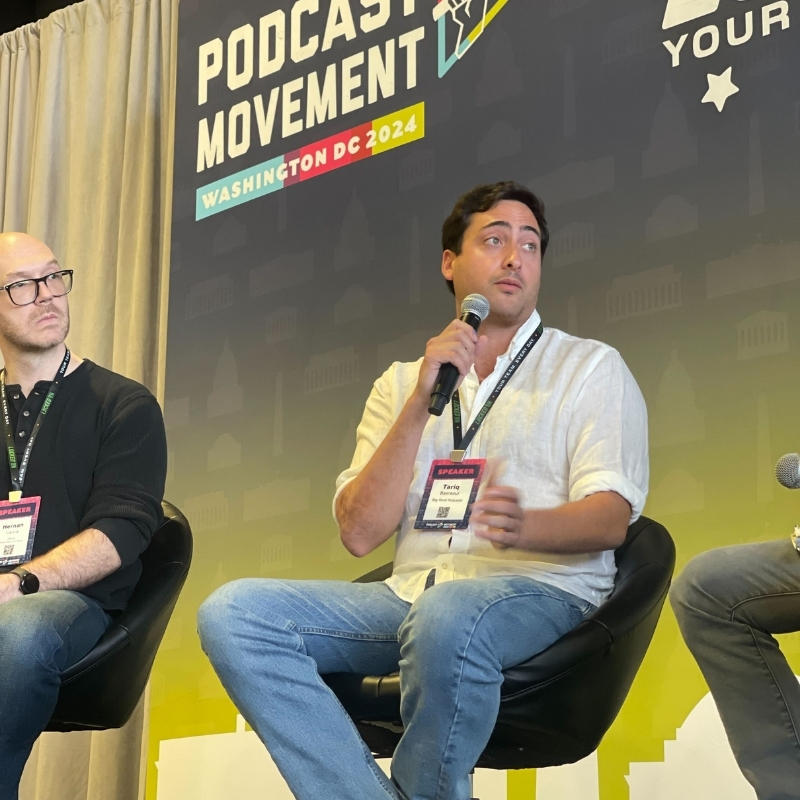
Tariq Basraoui
CEO
Tariq O’Keefe Basraoui, Co-Founder of Big Pond Podcasts, is a seasoned digital marketer and community builder with a track record of success at platforms like TikTok and Zencastr. Known for launching Zencastr’s Creator Network to over 15,000 members in 18 months, his expertise lies in growing user bases and enhancing brand engagement.
His strategic approach to growth and community engagement has established him as a leader in creating some of the fastest-growing media networks in podcasting.
