

Believing your podcast’s title is the most important part of its SEO is a 2020 mindset. It’s a dangerous oversimplification in today’s audio landscape. The game is no longer won by simply being listed in a directory with a catchy name and hoping for the best.
The most critical podcast SEO trends for 2026 are the shift from show-level to episode-level optimization, the dominance of AI in personalizing discovery, and the necessity of multimodal content like video. Success is no longer about just a clever title and a directory listing. It now requires a deep focus on structured data, machine-readable transcripts, and optimizing for conversational voice search queries. These elements are what search engines like Google and Spotify are using to surface specific moments from your episodes directly in search results, much like how podcast listenership grows to 500 million monthly listeners by 2026.
At Big Pond Podcasts, our mission is to help creators monetize and grow podcasts by mastering these exact shifts. We’ve seen firsthand across our network of over 1,300 shows how discoverability has become a technical discipline. This is not about tricks; it’s about building a solid technical foundation so your great content can actually be found.
The Evolving Landscape of Podcast Discovery
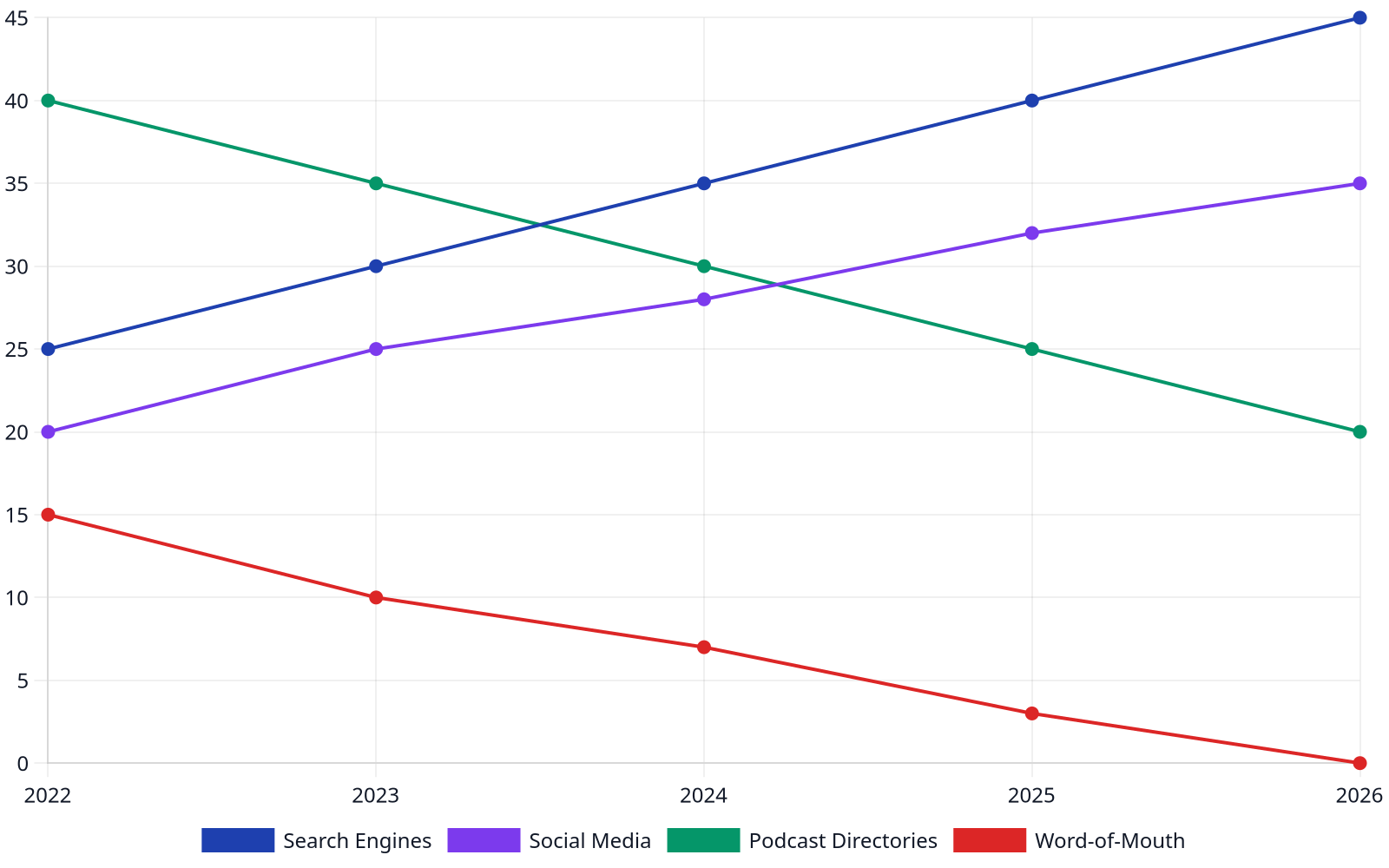
For years, podcast discovery was a passive experience. Listeners browsed charts in Apple Podcasts or Spotify, relying on curated lists and word-of-mouth. That era is over. Discovery in 2026 is an active process, driven by search.
From Manual Directories to Algorithmic Feeds
Early podcasting platforms were little more than digital phonebooks. You submitted your RSS feed and hoped someone would stumble upon your show. Now, platforms use sophisticated algorithms to recommend content based on listening history, user behavior, and explicit search queries. Your show isn’t just a single entry; it’s a collection of hundreds of potential entry points, with every episode and every chapter being a new door for a listener to walk through.
The “Google-ification” of Podcast Search
Google now indexes and plays podcasts directly from search results. With Google holding over 90% of the search market, you can no longer treat your podcast as an audio-only asset separate from the web. Google’s crawlers are parsing your audio, reading your transcripts, and using that information to answer user queries directly. This means a user searching for “how to bake sourdough bread” might be shown a 3-minute segment from your baking podcast’s episode on fermentation, completely bypassing traditional podcast apps.
Key Pillars of Podcast SEO in 2026
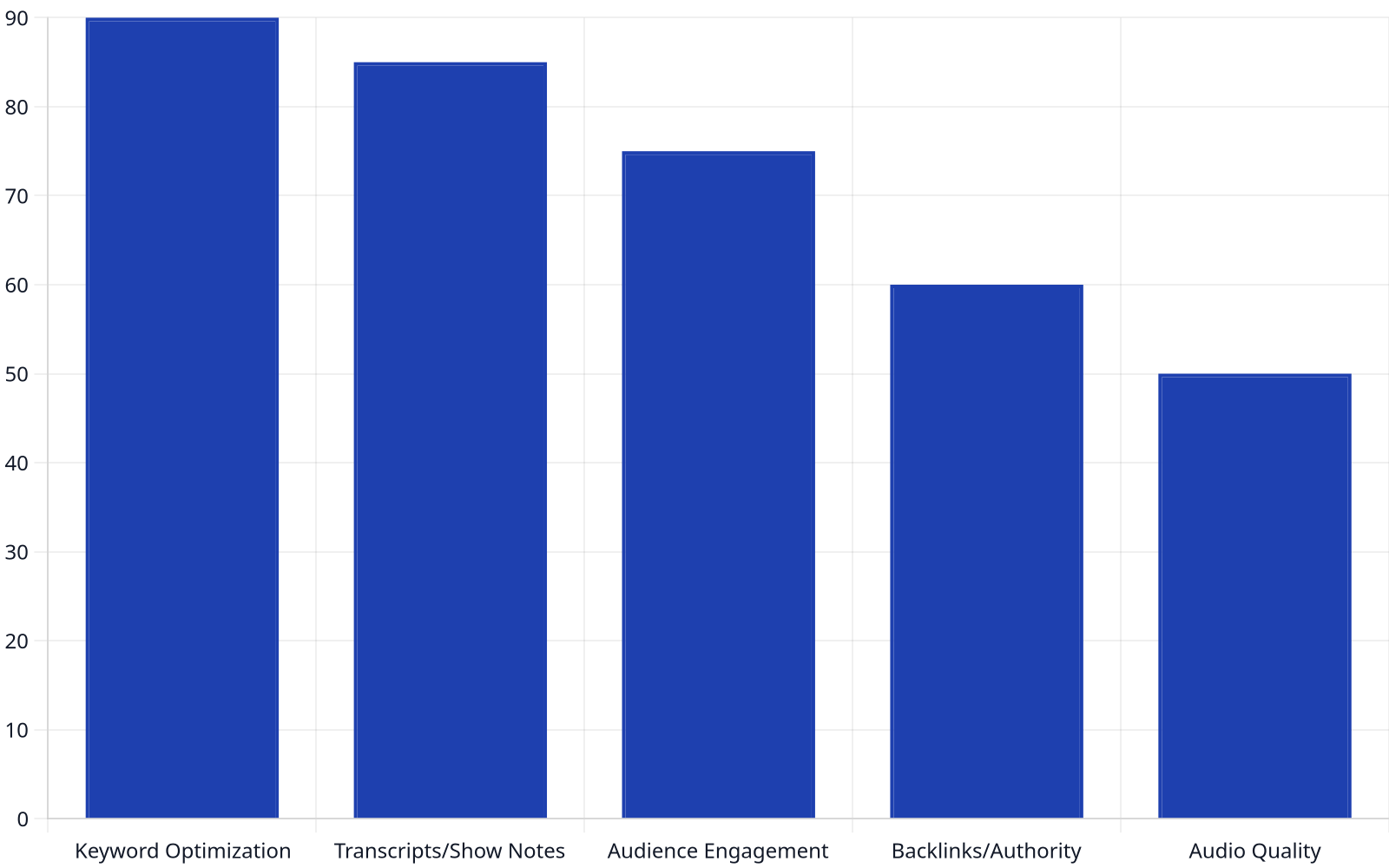
To compete effectively, you must adapt to the new realities of search-driven discovery. The foundational elements have expanded beyond basic keyword stuffing in your show description. These are the non-negotiable pillars of modern podcast SEO.
Episode-Level SEO: Beyond the Show Title
Thinking only about your overall show’s ranking is a mistake. Each episode must be optimized as a standalone piece of content designed to answer a specific question or serve a specific niche. This involves:
- Descriptive Episode Titles: Instead of “Episode 105: Chat with John,” use “How to Negotiate a Salary with Confidence ft. John Doe.” The second title is a searchable solution to a problem.
- Detailed Show Notes: Use show notes to outline the episode’s key topics, list resources, and include relevant keywords. This is prime real estate for search engine crawlers.
- Chapter Markers: Breaking your episode into logical, time-stamped chapters with descriptive titles helps both users and search engines navigate your content. A platform like YouTube heavily rewards this, and audio platforms are following suit.
Here’s a comparison of old versus new approaches:
| SEO Tactic | The Old Way (Pre-2024) | The New Way (2026) |
|---|---|---|
| Titles | Creative, catchy show titles. Vague episode numbers. | Descriptive, keyword-rich episode titles. |
| Keywords | Stuffing keywords into the main show description. | Focusing on semantic keywords within episode transcripts and show notes. |
|---|---|---|
| Content | Audio file is a black box. | Fully transcribed audio with structured data and chapter markers. |
| Discovery | Relies on app charts and features. | Driven by specific topic searches in Google, Spotify, and YouTube. |
Structured Data and Schema Markup: Speaking the Language of Search Engines
Structured data, or schema markup, is a standardized format for providing information about a page and classifying its content. For podcasters, it’s like creating a detailed label for your audio that search engines can read instantly. By implementing PodcastEpisode schema, you can explicitly tell Google the title of the episode, the date it was published, a description, and even provide a link to the transcript.
Implementing this is a technical but crucial step:
- Generate the JSON-LD Script: Use a schema generator or work with your web developer to create the script for each episode.
- Include Key Properties: Ensure you include properties like
name,description,datePublished,timeRequired, andassociatedMedia(the audio file). - Embed in Your Website: Place the script within the
section of your episode’s specific webpage. - Validate: Use Google’s Rich Results Test to ensure the schema is implemented correctly and there are no errors.
This process makes your content eligible for rich snippets in search results, such as a playable episode directly on the results page, which dramatically increases visibility.
The Undeniable Power of Transcripts and Show Notes
An audio file is invisible to a search engine crawler. A transcript is a text-based map of that audio file. Publishing a full, accurate transcript for every episode is arguably the single most impactful SEO action you can take. It turns every word you speak into a keyword that can be indexed and ranked.
Don’t treat transcripts as a mere accessibility feature. They are your primary SEO asset, turning your spoken words into a searchable, indexable database of expertise.
This isn’t just about keywords. It’s about providing context. A engaged listening is on the rise. A detailed transcript allows search algorithms to understand nuance and context, matching your content to highly specific user queries and capturing that engaged audience.
AI-Powered Podcast SEO: Personalization and Predictive Analytics
The integration of Artificial Intelligence is the driving force behind the next wave of podcast SEO trends 2026. AI is moving beyond simple automation and into the realm of predictive analysis and deep personalization, changing how content is created, discovered, and monetized.
Generative AI for Topic and Keyword Research
Tools like ChatGPT and Google’s Gemini can act as incredibly powerful brainstorming partners. Instead of just looking at keyword volume, you can use generative AI to identify semantic clusters, user intent, and question-based queries related to your topic. For instance, you could prompt an AI with, “I have a podcast about personal finance. Generate 20 episode ideas based on common questions people ask during a recession, framed as ‘how-to’ guides.”
Predictive Analytics for Audience Behavior
AI algorithms on platforms like Spotify are constantly analyzing listener behavior. They track skips, replays, and completion rates to understand what content resonates. As a creator, you can use this data to inform your content strategy. If you notice a high drop-off rate during a certain segment, you can learn to avoid that type of content. Conversely, if a segment has a high replay rate, that’s a clear signal to create more content around that specific topic.
Automated Show Notes and Chapter Markers
Manually creating detailed show notes and chapters is time-consuming. AI tools can now listen to your episode and automatically generate accurate transcripts, concise summaries, and logical chapter markers with titles. This not only saves you hours of work but also ensures that every episode is perfectly optimized for search from the moment it’s published. This is a core part of building a scalable content strategy, something we emphasize for creators looking to move beyond the hobbyist phase. If you’re building a serious show, check out our guide on how to start a podcast.
Voice Search Optimization: Conversational Keywords and Schema Markup
With the proliferation of smart speakers and voice assistants, optimizing for voice search is no longer optional. People don’t speak to their Google Home the way they type into a search bar. This requires a shift in keyword strategy from short-tail keywords to long-tail, conversational phrases.
“Near Me” Is Now “About This” for Audio
For local businesses, the classic voice search query is “restaurants near me.” For podcasts, the equivalent is a query about a specific topic: “Hey Google, find me podcasts about the history of the Ottoman Empire.” Your job is to ensure your episode titles, descriptions, and transcripts contain the natural language phrases people will use when asking for information.
Optimizing for Natural Language Queries
Think about the questions your ideal listener would ask. Instead of targeting the keyword “stoicism,” target the question “What is the best way to practice stoicism in daily life?” This conversational approach aligns perfectly with how voice assistants work. They are designed to find and deliver direct answers, and your podcast episode could be that answer. More than 146 million people in the US use voice assistants monthly, a number that continues to climb.
The Rise of Video and Multimodal Content
Thinking of your podcast as an audio-only medium is a critical error in 2026. Video is now a dominant force in podcast discovery, primarily through YouTube. Ignoring it means leaving a massive potential audience on the table.
YouTube as a Primary Podcast Discovery Engine
YouTube is the world’s second-largest search engine, and it’s heavily invested in podcasts. Publishing a video version of your show—even if it’s just a static image with your audio—gets you access to this powerful discovery platform. YouTube’s own creator resources highlight features specifically designed to promote podcasts, making it an essential channel for growth.
Your podcast isn’t just an audio file anymore. It’s a piece of intellectual property that should be adapted and distributed across multiple platforms, with video being the most crucial.
Repurposing Content for Visual Platforms
Beyond full episodes on YouTube, you should be creating short-form video clips for platforms like TikTok, Instagram Reels, and YouTube Shorts. A compelling 60-second clip from a two-hour episode can be a powerful discovery tool, driving new listeners to your full-length content. This strategy of integrating video podcasting is no longer a novelty; it’s a fundamental part of reaching a modern audience.
Monetization Trends and SEO’s Role
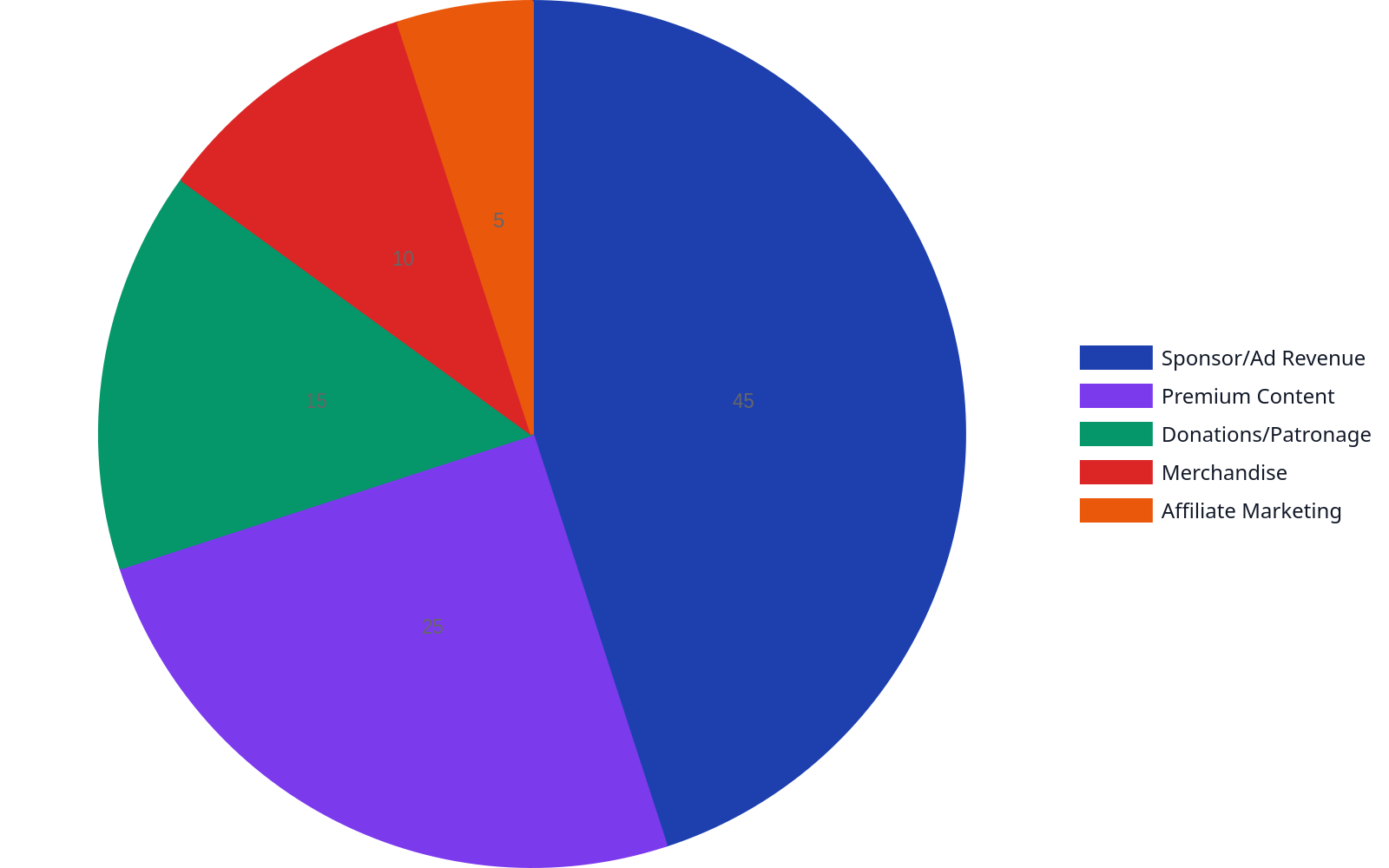
Strong SEO does more than just boost your download numbers. It directly impacts your ability to generate revenue. A well-optimized show attracts a more engaged and specific audience, which is exactly what advertisers are willing to pay a premium for.
Driving High-Intent Listeners for Better CPMs
When a listener finds your show by searching for a specific solution, they are a high-intent audience member. They didn’t just stumble upon your show; they actively sought it out. This level of intent is incredibly valuable to advertisers. It’s the difference between a random person hearing an ad and the right person hearing it at the right time. This is how we see shows on our network achieve a high average CPM. For example, our network’s average is a $22.35 Avg. 60-Sec CPM, a rate driven by connecting brands with these highly engaged, well-targeted audiences. To learn more about industry benchmarks, see our full guide to podcast advertising rates.
SEO for Affiliate and Direct Commerce Models
SEO’s role extends beyond ad revenue. If you’re using affiliate marketing or selling your own products, search is your best friend. Optimizing an episode around a product review or a tutorial can drive traffic for years. An episode titled “The Best Microphones for Podcasting in 2026” that ranks well on Google can become a consistent source of affiliate income long after it’s published.
FAQ
How is podcast SEO different from website SEO?
While they share principles like keywords and authority, podcast SEO has unique elements. It involves optimizing for audio-specific platforms like Spotify and Apple Podcasts, relies heavily on transcripts to make audio content readable by search engines, and increasingly incorporates video platforms like YouTube as primary discovery channels.
Do listener ratings and reviews still matter for SEO in 2026?
Yes, but indirectly. While they aren’t a direct ranking factor like a keyword, high ratings and positive reviews act as social proof. They signal to algorithms and potential listeners that your content is high-quality, which can increase click-through rates and listener retention, both of which are positive signals for discovery algorithms.
How long does it take to see results from podcast SEO?
SEO is a long-term strategy, not a quick fix. You might see some initial traction from episode-level optimization within a few weeks, but building significant authority and ranking for competitive terms can take 6-12 months of consistent effort. The key is consistency in publishing high-quality, well-optimized content.
What’s one podcast SEO trend I can implement today?
Go back to your top five most popular episodes and publish a full, accurate transcript for each one on your website. Create a blog post for each episode, embed the player, and paste the entire transcript below it. This is a high-impact action that makes your best content immediately more discoverable to search engines.
Mastering the podcast SEO trends for 2026 is about treating your podcast like a sophisticated digital media product. It requires a multi-platform mindset, a commitment to technical details, and a focus on creating value for the listener at every turn. If you’re ready to grow your audience and unlock new revenue opportunities, Big Pond Podcasts is here to help. Contact us today to learn how we can amplify your voice.
About the author
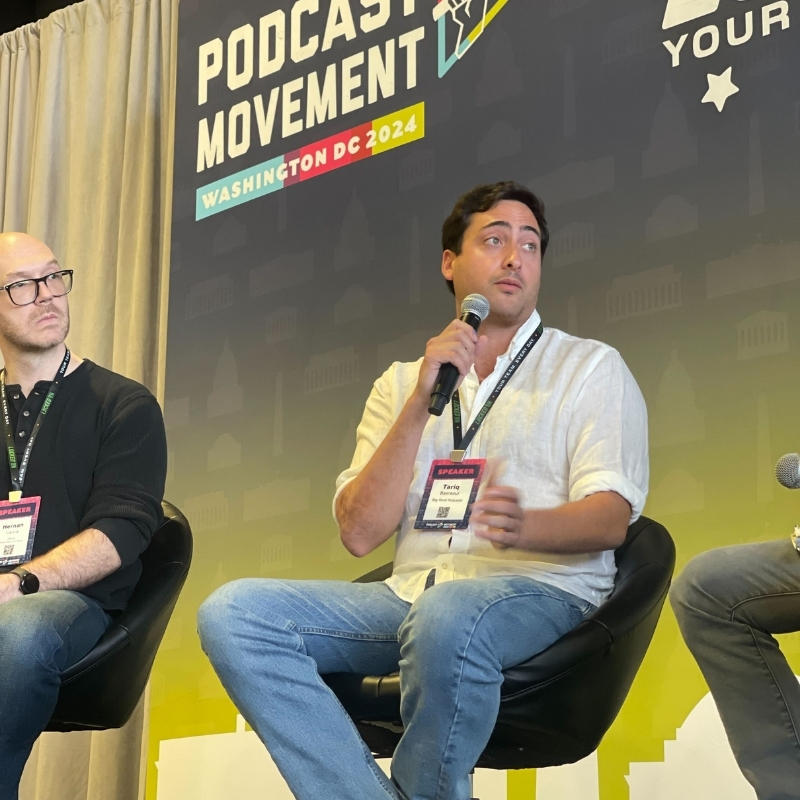
Tariq Basraoui
CEO
Tariq O’Keefe Basraoui, Co-Founder of Big Pond Podcasts, is a seasoned digital marketer and community builder with a track record of success at platforms like TikTok and Zencastr. Known for launching Zencastr’s Creator Network to over 15,000 members in 18 months, his expertise lies in growing user bases and enhancing brand engagement.
His strategic approach to growth and community engagement has established him as a leader in creating some of the fastest-growing media networks in podcasting.
