

Chasing download numbers is the biggest mistake you can make. It’s a vanity metric that says nothing about audience quality or revenue potential. The most successful podcast marketing strategies build a sustainable ecosystem around your show, not just a leaky bucket of one-time listeners. This involves defining your ideal listener, optimizing for search across platforms, consistently repurposing content, building a direct line of communication via email, and engaging in strategic cross-promotions. The goal is creating multiple entry points to discover your show and deepening your relationship with the audience you already have.
First, Define Your Ideal Listener Persona
Before you spend a dollar or an hour on promotion, you must know who you’re trying to reach. A vague target like “millennial entrepreneurs” isn’t good enough. You need to get granular.
Beyond Demographics: Psychographics and Goals
Demographics tell you what your listener is. Psychographics tell you who they are. What do they believe, what are their aspirations, and what problems are they trying to solve by tuning into your podcast?
Use frameworks like “Jobs to Be Done” to understand their true motivation. Are they hiring your podcast for entertainment during a commute, for specific knowledge to advance their career, or for a sense of community? Answering this question shapes your entire content and marketing approach.
Where Does Your Listener Hang Out Online?
You can’t market to people where they aren’t. Identify the specific subreddits, LinkedIn groups, newsletters, and YouTube channels your ideal listener already follows. According to research from The Podcast Host, understanding these watering holes is fundamental to effective audience targeting.
Core Podcast Marketing Strategies

A solid foundation is non-negotiable. These are the core pillars that support all other growth activities. Without them, your promotional efforts will lack direction and impact.
Podcast SEO: More Than Just Keywords
Search engine optimization for podcasts is a multi-layered discipline. It applies to your audio, your show notes, and any written content you produce. Google is now transcribing and indexing podcast episodes, making the words you speak in an episode just as important as your titles.
Ensure your episode titles are clear, compelling, and include relevant terms. Your show descriptions should function like meta descriptions, summarizing the value for a potential listener. This detailed approach is a key part of how we help over 1300+ podcasts grow their audience.
The Syndication Checklist: Be Everywhere
Your podcast needs to be available on every major listening app. Submitting your RSS feed is a one-time task that pays dividends forever. Don’t assume listeners will find you on your preferred platform; make it easy for them to listen wherever they are.
- Submit to the majors: Apple Podcasts, Google Podcasts, and Pocket Casts are essential.
- Submit to aggregators: Platforms like Overcast, Castro, and Podcast Addict pull from the Apple directory, but a direct submission is always best practice.
- Don’t forget video: If you have a video version, ensure it’s distributed to YouTube and other video platforms.
Building Your Home Base: The Podcast Website
A dedicated website is your central hub. It’s the one piece of online real estate you completely own and control. It’s a place to post your full episode archive, provide detailed show notes, and, most importantly, capture email addresses.
Your site becomes the ultimate destination for your marketing efforts, driving traffic from social media, guest appearances, and search engines. For a complete system from launch to growth, explore our guide to how to produce a podcast.
Content-Driven Podcast Growth

Your core product—the podcast episode—is also your most powerful marketing asset. Repurposing it intelligently creates a web of content that draws listeners in from different platforms and formats. This strategy amplifies your reach without requiring you to create entirely new material from scratch.
The Art of Repurposing: One Episode, Many Assets
One 60-minute interview can be transformed into dozens of marketing assets. Stop thinking of it as a single audio file. Think of it as a content goldmine.
Don’t just release an episode and hope for the best. Break it down into its most valuable components and spread them across the internet.
Pull out 2-3 audiogram clips for social media. Transcribe the full episode and publish it as a blog post for SEO. Turn the key takeaways into an infographic or a carousel post for Instagram. Transform a powerful guest quote into a standalone graphic for X (formerly Twitter). Each asset is a new hook.
Social Media: Platform-Specific Tactics
Don’t just dump the same link everywhere. Tailor your approach to what works on each platform. On TikTok and YouTube Shorts, short, punchy video clips with bold captions perform best.
A viral clip is not an accident; it’s engineered. One creator’s video about a niche hobby received 1588 views and 47 likes in its first day simply by adding trending audio and on-screen text that posed a question. On LinkedIn, a more professional text post summarizing the business lessons from an episode will resonate more effectively.
Building Your Email List From Day One
An email list is the only audience you truly own. Social media algorithms can change, but a direct inbox connection is priceless. Offer a valuable lead magnet—like a checklist, eBook, or resource guide related to your podcast topic—in exchange for an email address.
Email marketing platforms like ConvertKit provide the tools to nurture this relationship, sending out new episode alerts and exclusive content to your most engaged fans. This is a fundamental part of turning listeners into a community.
Growth Through Collaboration
Leveraging other people’s audiences is the fastest way to grow your own. Collaboration puts you in front of new, relevant listeners who already trust the source that’s recommending you.
Guesting on Other Shows
Being a guest on another podcast is one of the most effective podcast marketing strategies. It provides social proof and a warm introduction to a pre-existing audience. Research shows that listeners are highly likely to check out a new show when recommended by a host they already follow.
Focus on podcasts that share your ideal listener persona, even if the topic is slightly different. Come prepared with a unique story or expertise, and have a clear call-to-action to your own podcast at the end.
Hosting Great Guests to Tap Their Audience
When you invite a guest with a substantial following onto your show, you create a cross-promotional opportunity. Make it easy for them to share the episode by providing pre-written social media copy, audiograms, and custom graphics. Their promotion introduces your show to their entire audience.
Paid Growth and Advanced Tactics
Once your organic foundation is solid, paid advertising can act as a powerful accelerant. It’s not a replacement for good content and community-building, but a way to amplify what’s already working.
When to Use Paid Advertising
Paid ads work best when you have a clear goal: driving traffic to a high-converting webpage, promoting a special series, or targeting a very specific listener demographic for a new show launch. Platforms like Meta and Google offer sophisticated targeting options that can put your message in front of the right people at the right time. For brands looking to maximize their ad spend and navigate the complex audio ecosystem, consider working with a podcast advertising agency. For a deeper look at the costs, see our breakdown of understanding podcast advertising rates.
Paid promotion isn’t a strategy to find your audience. It’s a strategy to scale your audience once you know exactly who they are and what they respond to.
Comparison of Podcast Promotion Tools
Several categories of tools can streamline your marketing workflow. Choosing the right stack depends on your budget and primary growth channels. Here’s a breakdown of the main types.
| Tool Category | Primary Function | Example Use Case | Key Feature to Look For |
|---|---|---|---|
| Audiogram Creators | Turn audio clips into shareable videos | Promoting an episode highlight on Instagram | Customizable templates and auto-captioning |
| Cross-Promotion Networks | Connect with other podcasters for promo swaps | Finding a comparable show to trade ad reads with | Audience demographic filtering |
| Link Attribution Tools | Track downloads back to specific campaigns | Measuring the ROI of a newsletter sponsorship | Platform-specific and channel-specific links |
| Scheduling Platforms | Plan and automate social media posts | Creating a multi-week campaign for a new episode | Bulk upload and evergreen content queues |
Emerging Podcast Marketing Trends
Staying ahead requires understanding where the industry is going. The strategies that worked two years ago are already being replaced by more sophisticated and technology-driven approaches. With a network reach of over 200M+ monthly listeners, we see these trends playing out at scale.
AI in Promotion and Content Creation
Artificial intelligence is rapidly changing the content landscape. AI tools can now assist in generating show notes, suggesting episode titles, identifying viral-worthy clips from long recordings, and even drafting social media posts. As detailed by Goldcast, embracing these tools can save hundreds of hours and allow creators to focus more on quality.
The Rise of Niche Community Platforms
Listeners are craving deeper connections than a comment section can provide. Smart podcasters are building communities on platforms like Discord, Circle, or dedicated forums. These spaces allow for direct engagement, listener feedback, and the creation of a loyal super-fan base that becomes your most powerful marketing engine.
How to Measure Podcast Marketing Success
Moving beyond the download number is critical for understanding what’s actually working. A focus on engagement and conversion will give you a much clearer picture of your marketing ROI.
Metrics That Matter More Than Downloads
Downloads are a starting point, not the destination. Focus on metrics that signal listener commitment and engagement. These include audience retention rates (how much of an episode people listen to), subscriber growth, website clicks from your show notes, and email list sign-ups.
Calculating Marketing ROI
To measure ROI, you need to track both your costs and your returns. A 2024 Nielsen study on ad effectiveness highlights the importance of tracking outcomes like purchase intent or brand recall. For podcasters, this could mean tracking how many listeners who clicked a link from a specific ad campaign actually signed up for a course or bought a product. This is essential for a business model focused on helping creators monetize and grow podcasts.
Monetization Strategies Tied to Growth
Audience growth and monetization are two sides of the same coin. A highly engaged niche audience is often more valuable to an advertiser than a massive, disengaged one. As your audience grows, you unlock more powerful ways to generate revenue.
From Audience to Revenue: Sponsorships and Subscriptions
Sponsorships are the most common form of monetization, where brands pay to have their message read by the host. Subscriptions, powered by platforms like Patreon or Apple Podcasts Subscriptions, offer listeners premium content like ad-free episodes or bonus segments for a monthly fee. These models thrive on the trust you build through your marketing efforts, and you don’t need a huge audience to get started with monetizing small podcasts.
Further reading
Frequently Asked Questions
How much should I spend on podcast marketing?
There is no single answer. Start with a “time budget” by focusing on organic strategies like guesting and social media. Once you have a clear understanding of your listener acquisition cost, you can set a monetary budget for paid ads that aligns with your goals, from $100/month for experiments to thousands for a major launch.
How long does it take for podcast marketing to work?
Be patient. You may see small wins in the first 1-3 months, but building a sustainable audience takes consistency over 6-12 months. Focus on executing your strategy every week, and the cumulative results will follow.
What is the most effective podcast marketing strategy?
The most effective strategy is a diversified one. However, for new podcasts, being a guest on other shows in your niche offers the highest ROI. It provides direct access to an engaged, relevant audience with a trusted endorsement from the host.
Do I need social media to market my podcast?
Yes, but you don’t need to be on every platform. Pick the one or two platforms where your ideal listeners are most active and create content specifically for them. A strong presence on one platform is better than a weak presence on five.
How often should I release new episodes?
Consistency is more important than frequency. Whether you choose weekly, bi-weekly, or monthly, stick to a predictable schedule. This trains your audience to know when to expect new content from you.
Ready to put these strategies into action and unlock your podcast’s full potential? At Big Pond Podcasts, we provide the tools and expertise to help you grow your audience and connect with advertisers. Get started today and let us help you build a thriving show.
About the author
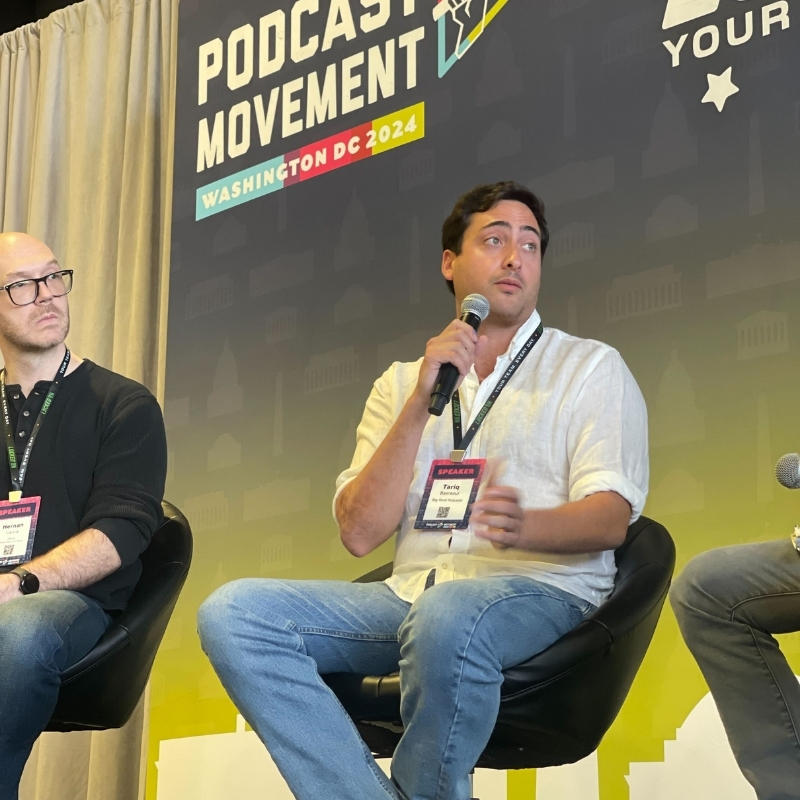
Tariq Basraoui
CEO
Tariq O’Keefe Basraoui, Co-Founder of Big Pond Podcasts, is a seasoned digital marketer and community builder with a track record of success at platforms like TikTok and Zencastr. Known for launching Zencastr’s Creator Network to over 15,000 members in 18 months, his expertise lies in growing user bases and enhancing brand engagement.
His strategic approach to growth and community engagement has established him as a leader in creating some of the fastest-growing media networks in podcasting.
