Your Podcast Is Already on YouTube. You’re Just Not the One Who Put It There.
Stop thinking of your podcast as an audio-only product. You are not making a radio show for the car; you are building a modern media brand. By understanding how to make a podcast, creators can leverage platforms like YouTube, which is no longer an experiment but a primary growth strategy. By uploading video podcasts or audio with static images, creators tap into YouTube’s massive user base and powerful search algorithm for audience discovery. This method unlocks new monetization features like ad revenue sharing, channel memberships, and Super Chats, turning casual listeners into a dedicated community and maximizing a show’s reach and revenue potential far beyond traditional audio platforms.
Even if you aren’t uploading your show, your listeners are. They’re creating clips, sharing highlights, and discussing your content on the world’s second-largest search engine. The choice isn’t whether your podcast will be on YouTube; it’s whether you will control the presentation, monetization, and community around it.
The Shifting Landscape: Why YouTube is the New Podcasting Frontier
YouTube is the number one platform for podcast consumption in the United States. This isn’t a future prediction; it’s the current reality. If your show is only available on traditional audio apps, you are invisible to a massive and growing segment of the listening public. Some data shows that a full 25% of podcast listeners in the U.S. actually prefer a video format.
This shift is driven heavily by younger audiences. A recent study found that an incredible 84% of Gen Z podcast listeners in the U.S. have discovered a new podcast on YouTube. They don’t browse directories; they search, and they watch what the algorithm recommends. By neglecting YouTube, you are essentially telling an entire generation of potential fans that you don’t exist.
The debate is over. You don’t have a podcasting strategy for 2026 if it doesn’t start with YouTube.
Audience Growth: Tapping into YouTube’s Algorithmic Power
Traditional podcast platforms are libraries. YouTube is a discovery engine. An old episode in an audio-only RSS feed is effectively buried, but on YouTube, it can be surfaced by the algorithm years later if it matches a viewer’s interest.
Mastering this requires thinking like a YouTuber. Your titles need to be keyword-rich and curiosity-driven. Your descriptions should be packed with relevant terms, links, and timestamps to help both the algorithm and the viewer. Use tools like YouTube Shorts to create compelling, sub-60-second clips from your episodes, acting as trailers that drive viewers to the full-length content.
We work with over 1,300+ podcasts at Big Pond, and the shows that see explosive growth are the ones that treat YouTube as a core part of their marketing strategy. They actively engage in the comments, use the Community Tab for polls and updates, and cross-promote their YouTube channel in their audio-only episodes. They understand they aren’t just uploading files; they are building a community.
Monetization Musings: Unlocking Revenue Streams on YouTube
For too long, podcast monetization has been stuck on pre-rolls and mid-rolls sold on a flat CPM. YouTube blows this model out of the water. Once you reach eligibility for the YouTube Partner Program (YPP)—typically 1,000 subscribers and 4,000 watch hours—you can start earning a share of the ad revenue on your videos.
But the real opportunity is in diversified revenue. Channel Memberships allow your most dedicated fans to pay a monthly fee for exclusive perks like badges, custom emojis, or members-only content. Super Chat and Super Thanks let viewers pay to have their comments highlighted during live streams or on video uploads. These features create a direct financial connection between you and your audience, something most podcasting platforms simply cannot offer. Our focus is to help creators monetize and grow podcasts, and the suite of tools on YouTube is a key part of that conversation, especially as you consider video podcasting.
From Audio to Video: It’s Easier Than You Think
Many creators freeze at the thought of “doing video.” They imagine expensive cameras and complex editing. That’s a dated perspective. While a full multi-camera setup can be great, it’s not the only way.
You can start by simply repurposing your existing audio. Creating a “static video” with your cover art and a waveform visualizer using services like Headliner is a perfectly valid first step. The next level up might be recording the video of your remote interview via Zencastr or Riverside and doing a simple edit.
Here’s how to get your podcast on YouTube, step-by-step:
- Set up your Brand Channel: Don’t use your personal Google account. Create a dedicated Brand Channel for your podcast.
- Navigate to YouTube Studio: This is your command center. In the “Content” tab, select the “Podcasts” page.
- Create a New Podcast Playlist: YouTube now has a formal “podcast” designation for playlists. You can either create a new podcast playlist for videos you upload directly or link your existing RSS feed.
- Upload or Link: You can upload your video files (MP4, MOV, etc.) directly. Or, if you want YouTube to automatically create static-image videos from your audio feed, you can now connect your podcast’s RSS feed.
- Optimize Everything: Write a compelling title and a keyword-rich description. Create a custom thumbnail; this is your episode’s “book cover” and is critically important.
This process is fundamental to any modern workflow to produce podcast. The initial setup takes some effort, but it quickly becomes a routine part of your publishing process.
The barrier to entry for video isn’t the gear; it’s the mindset. Stop seeing it as a bigger production and start seeing it as a bigger opportunity.
The “Purity” Argument Is a Red Herring
Some podcasters argue that video distracts from the intimacy of audio. They worry about production values and being “camera-ready.” This is an honest concern, but it misses the point.
Your most dedicated audio listeners will likely continue to listen on their preferred apps. You are not losing them. Adding a YouTube presence is about reaching a new audience that prefers the platform and an audience that would otherwise never find you. According to Pew Research Center, about half of Americans have listened to a podcast in the last year, and they are increasingly finding those shows on video platforms.
Even since we founded Big Pond in 2023, the rate of change has been staggering. The tools to create simple, effective video have become more accessible, and audience expectations have evolved. Resisting this shift isn’t a stance for audio purity; it’s a strategic decision to stagnate.
Further reading
FAQ
Do I need to be a video editor to start a podcast on YouTube?
No. You can start by creating static videos using your podcast cover art and an audio visualizer. Many tools and services can automate this process, requiring no editing skills.
Can I upload my existing audio podcast to YouTube?
Yes. While you can’t upload an MP3 file directly, you can easily convert it into a video file with a static image. You can also now link your podcast’s RSS feed in YouTube Studio, and YouTube will automatically generate videos for your episodes.
How much does it cost to start a YouTube podcast?
It can be free. You can record video using your smartphone and edit with free software like DaVinci Resolve. The biggest investment is your time in learning the platform and optimizing your content.
Will YouTube hurt my audio-only download numbers?
This is a common fear, but it’s largely unfounded. People consume podcasts in different contexts. Those who listen while driving or exercising will likely stick to audio apps. YouTube captures a different audience and different listening moments, making it additive, not cannibalistic.
What are the YouTube Partner Program requirements?
To monetize your channel, you need to be accepted into the YouTube Partner Program. The current eligibility requirements are 1,000 subscribers and 4,000 hours of valid public watch time in the last 12 months, or 10 million valid public Shorts views in the last 90 days.
How do I optimize my YouTube podcast for discovery?
Focus on search engine optimization. Use relevant keywords in your video titles, descriptions, and tags. Create eye-catching custom thumbnails. Encourage likes and comments to boost engagement signals for the algorithm.
What’s more important: video quality or audio quality?
For a podcast, audio quality always comes first. Viewers will tolerate mediocre video quality if the audio is crisp and clear. However, they will quickly click away from a video with poor, unintelligible audio, no matter how good the picture is.
About the author
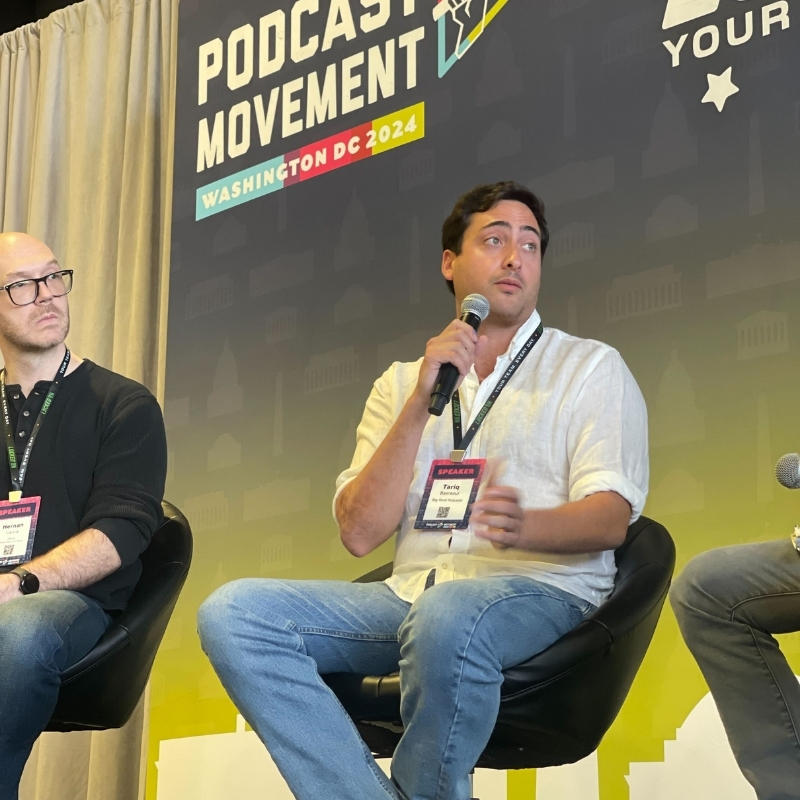
Tariq Basraoui
CEO
Tariq O’Keefe Basraoui, Co-Founder of Big Pond Podcasts, is a seasoned digital marketer and community builder with a track record of success at platforms like TikTok and Zencastr. Known for launching Zencastr’s Creator Network to over 15,000 members in 18 months, his expertise lies in growing user bases and enhancing brand engagement.
His strategic approach to growth and community engagement has established him as a leader in creating some of the fastest-growing media networks in podcasting.
